Peoples and Empires Part 2Diego SerratoHistory 140
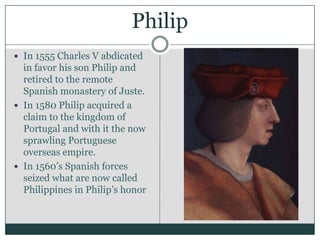
Philip In 1555 Charles V abdicated in favor his son Philip and retired to the remote Spanish monastery of Juste. In 1580 Philip acquired a claim to the kingdom of Portugal and with it the now sprawling Portuguese overseas empire. In 1560’s Spanish forces seized what are now called Philippines in Philip’s honor
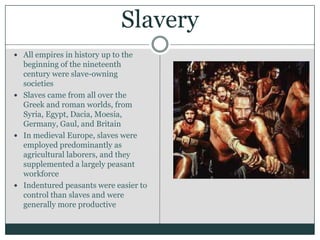
SlaveryAll empires in history up to the beginning of the nineteenth century were slave-owning societiesSlaves came from all over the Greek and roman worlds, from Syria, Egypt, Dacia, Moesia, Germany, Gaul, and BritainIn medieval Europe, slaves were employed predominantly as agricultural laborers, and they supplemented a largely peasant workforceIndentured peasants were easier to control than slaves and were generally more productive
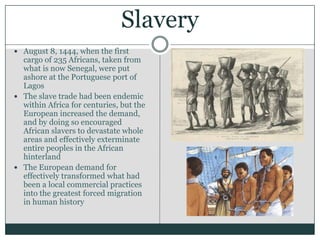
SlaveryAugust 8, 1444, when the first cargo of 235 Africans, taken from what is now Senegal, were put ashore at the Portuguese port of LagosThe slave trade had been endemic within Africa for centuries, but the European increased the demand, and by doing so encouraged African slavers to devastate whole areas and effectively exterminate entire peoples in the African hinterland The European demand for effectively transformed what had been a local commercial practices into the greatest forced migration in human history

Peoples and empires part2

  • 1.
    Peoples and EmpiresPart 2Diego SerratoHistory 140
  • 2.
    Philip In 1555Charles V abdicated in favor his son Philip and retired to the remote Spanish monastery of Juste. In 1580 Philip acquired a claim to the kingdom of Portugal and with it the now sprawling Portuguese overseas empire. In 1560’s Spanish forces seized what are now called Philippines in Philip’s honor
  • 3.
    SlaveryAll empires inhistory up to the beginning of the nineteenth century were slave-owning societiesSlaves came from all over the Greek and roman worlds, from Syria, Egypt, Dacia, Moesia, Germany, Gaul, and BritainIn medieval Europe, slaves were employed predominantly as agricultural laborers, and they supplemented a largely peasant workforceIndentured peasants were easier to control than slaves and were generally more productive
  • 4.
    SlaveryAugust 8, 1444,when the first cargo of 235 Africans, taken from what is now Senegal, were put ashore at the Portuguese port of LagosThe slave trade had been endemic within Africa for centuries, but the European increased the demand, and by doing so encouraged African slavers to devastate whole areas and effectively exterminate entire peoples in the African hinterland The European demand for effectively transformed what had been a local commercial practices into the greatest forced migration in human history