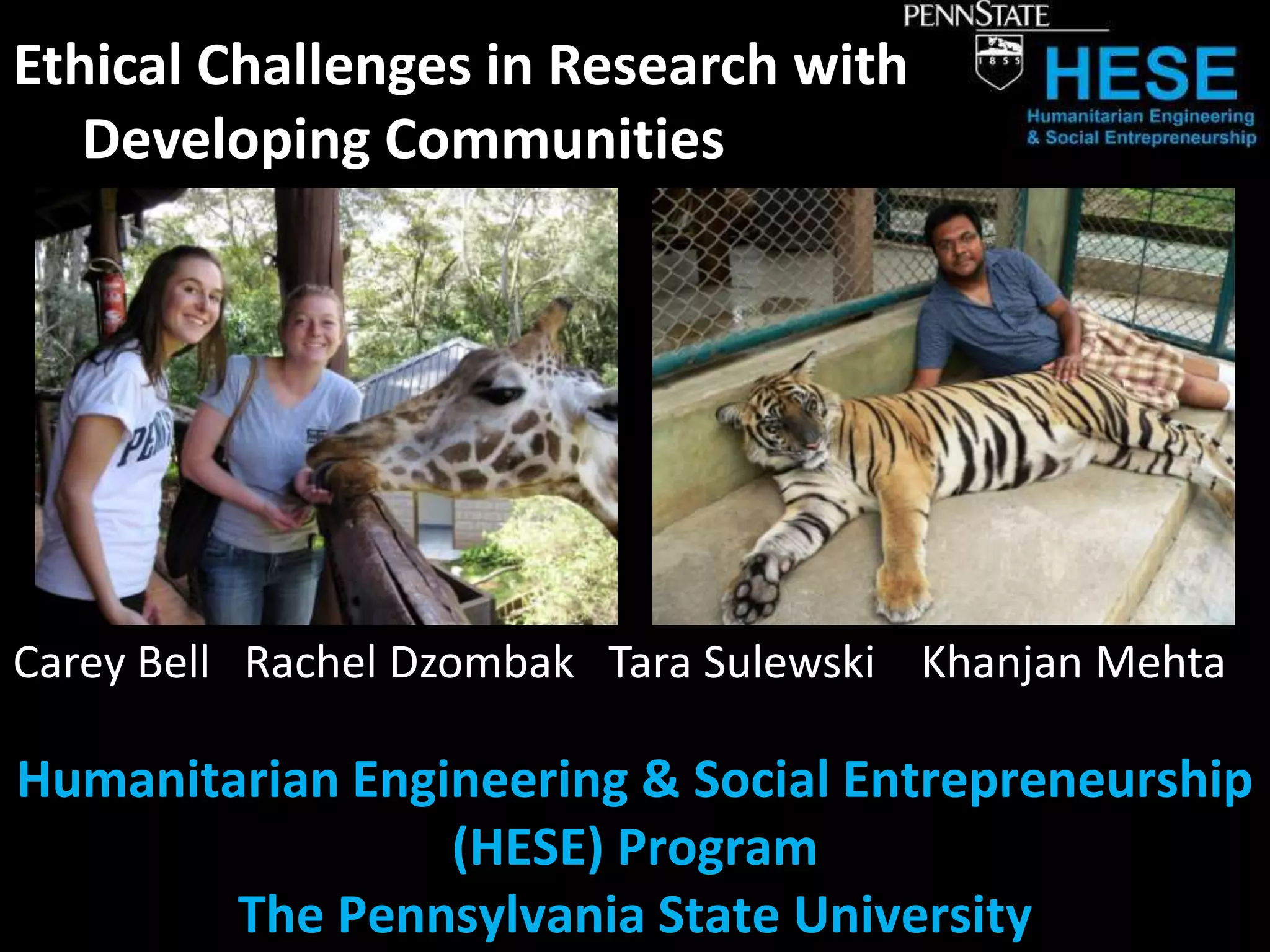
Ethical Challenges in Research with     Developing CommunitiesCarey Bell   Rachel Dzombak   Tara SulewskiKhanjan MehtaHumanitarian Engineering & Social Entrepreneurship (HESE) ProgramThe Pennsylvania State University
Road Map Current Ventures
 Importance of ‘Research’
 The Institutional Review Board (IRB)
 Challenges Faced & Lessons LearnedNavigating the IRB processConducting study in KenyaLarger Conflicts and Challenges
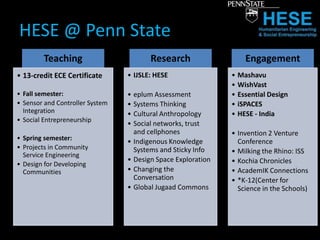
HESE @ Penn State
the ventures 
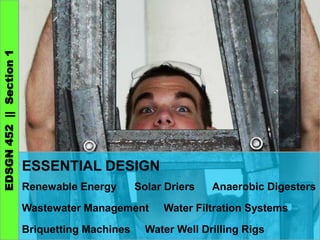
EDSGN 452  ||  Section 1ESSENTIAL DESIGNRenewable Energy      Solar Driers      Anaerobic DigestersWastewater Management     Water Filtration SystemsBriquetting Machines     Water Well Drilling Rigs
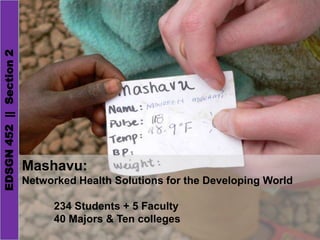
EDSGN 452  ||  Section 2Mashavu: Networked Health Solutions for the Developing World234 Students + 5 Faculty 40 Majors & Ten colleges
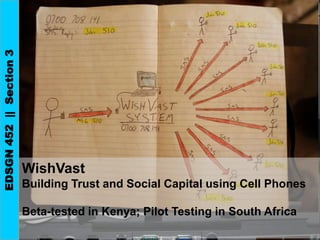
EDSGN 452  ||  Section 3WishVastBuilding Trust and Social Capital using Cell PhonesBeta-tested in Kenya; Pilot Testing in South Africa
EDSGN 452  ||  Section 4iSPACES: Rethinking Science Education in TanzaniaBachelors of Education (Science) DegreeScience, Systems and Entrepreneurship
EDSGN 452  ||  Section 5Project Prerana + MpowerICT Solutions for Women’s Education Affordable Technologies for Maternal Health
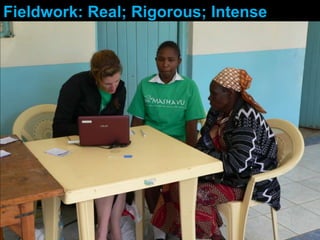
Fieldwork: Real; Rigorous; Intense
Research EmphasisApplied Science, Designs,Methodologies, Curricular ModelsLessons Learned & Resources23P; 6R; 9M; 5D; 12N
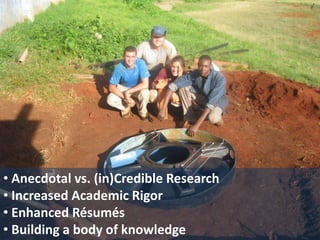
Why Research?
 Anecdotal vs. (in)Credible Research
 Increased Academic Rigor
 Enhanced Résumés
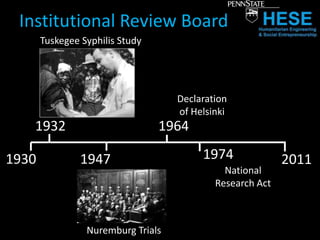
 Building a body of knowledgeInstitutional Review BoardTuskegee Syphilis StudyDeclaration of Helsinki193219641974194719302011National Research ActNuremburg Trials
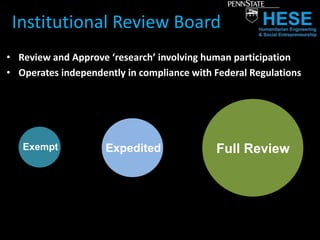
Institutional Review BoardReview and Approve ‘research’ involving human participationOperates independently in compliance with Federal RegulationsExemptExpeditedFull Review
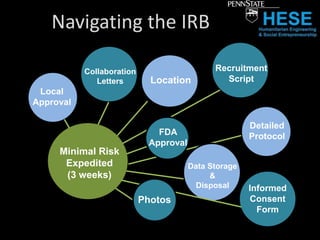
Navigating the IRBInformed Consent FormFDA ApprovalLocal ApprovalDetailed ProtocolMinimal RiskExpedited(3 weeks)Data Storage &DisposalPhotosLocationCollaboration LettersRecruitment Script
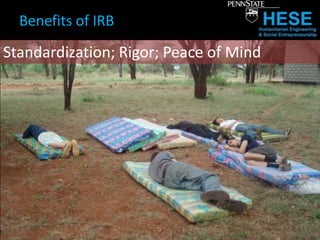
Benefits of IRB Standardization; Rigor; Peace of Mind
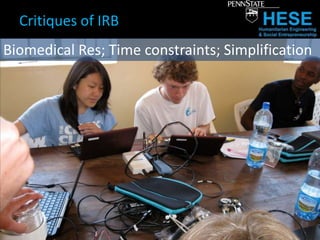
Critiques of IRB Biomedical Res; Time constraints; Simplification
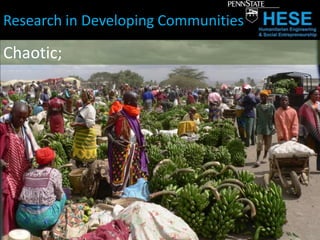
Research in Developing CommunitiesChaotic;
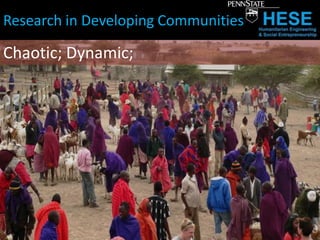
Research in Developing CommunitiesChaotic; Dynamic;
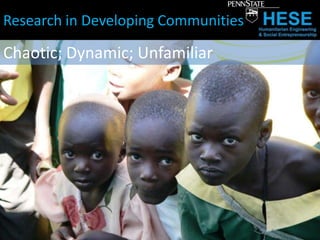
Research in Developing CommunitiesChaotic; Dynamic; Unfamiliar
Countdown: Lessons Learned9876543210
10: KumiPreparing ProtocolSTART EARLY!!!
9: TisaPreparing ProtocolBe concise; Meet Face to Face; Get Letters
8: NanePreparing ProtocolRisk Management: What if???
HakunaMatata7: SabaRecruitment and Consent
6: SitaHakunaMatataLanguage Barrier
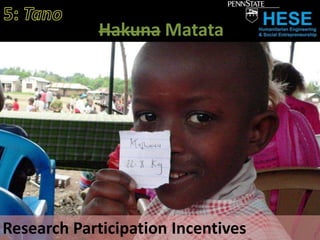
5: TanoHakunaMatataResearch Participation Incentives
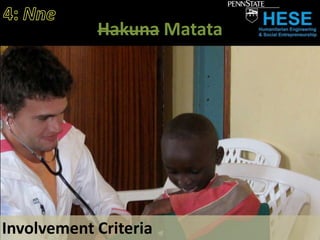
4: NneHakunaMatataInvolvement Criteria

Penn State - Institutional Review Board - Open 2011

Editor's Notes

  • #3 Current VenturesImportance of ‘Research’The IRBLessons LearnedNavigating the IRB processWhile in KenyaPreparing Research ProposalsLarger Conflicts and ChallengesCurrent VenturesImportance of ‘Research’The IRBLessons LearnedNavigating the IRB processWhile in KenyaPreparing Research ProposalsLarger Conflicts and Challenges
  • #4 Innovative Designs
  • #14 Anecdotal vs. (in)Credible ResearchIncreased Academic RigorEnhanced RésumésBuilding a body of knowledge
  • #15 Two of the most notorious of these abuses were the experiments of Nazi physicians that became a focus of the post-World War II Doctors' Trial, and the Tuskegee Syphilis Study, a project conducted between 1932 and 1972 by the U.S. Public Health Service on black men in rural Alabama  to study the natural progression of untreated syphilis in poor, rural black men who thought they were receiving free health care from the U.S. government.[1]. Tuskegee Syphilis Study Exposed in 1972  ethical standards; primarily because researchers knowingly failed to treat patients appropriately after the 1940s validation of penicillin as an effective cure for the disease they were studyingThe Nuremberg Code is a set of research ethics principles for human experimentation set as a result of the Subsequent Nuremberg Trials at the end of the Second World War. Declaration of helsinkiwas developed by the World Medical Association (WMA), as a set of ethical principles for the medical community regarding human experimentation, and is widely regarded as the cornerstone document of human research ethics. The Declaration is an important document in the history of research ethics as the first significant effort of the medical community to regulate research itself, and forms the basis of most subsequent documents.Prior to the 1947 Nuremberg Code there was no generally accepted code of conduct governing the ethical aspects of human research, although some countries, notably Germany and Russia, had national policies [3a]. The Declaration developed the ten principles first stated in the Nuremberg Code . The Declaration more specifically addressed clinical research,Nuremberg Code and the related[1] Declaration of Helsinki are the basis for the Code of Federal Regulations Title 45 Volume 46 [3], which are the regulations issued by the United States Department of Health and Human Services governing federally-funded research in the United Statespassed by Congress National Commission for the Protection of Human Subjects of Biomedical & Behavioral Research established to oversee and regulate the use of human experimentation in medicine
  • #16 taraFormal structure….operate independently from their parent structure and in compliance with federal regulationsDon’t know what picture to put here *
  • #17 RachelHow many IRBs did we have to submit for our trip, this is what I came up with:Mashavu’s IRBs: Health Clinic Interview Health Interview Fun Survey Community Focus Groups Doctor and Nurse Focus groupsWishvast: Community Interviews (more detail)Essential Design: Anaerobic Digester communityinterviewsChartak’s Nairobi Interviews (may have mispelled his name)
  • #18 Standardize Research Methods and approach to ethical dilemmasDevelop students as researchers
  • #19 Biomed researchTimeAmerican contextRegulations impede research, particularly in the social sciencesTime constraintsFrustration leads to simplifying research
  • #20 Rachel
  • #21 rachelInherently chaotic and unpredictable
  • #22 rachelInherently chaotic and unpredictable
  • #23 Rachel
  • #24 RachelBe concise while eliminating potential points of misunderstanding.Penn state requires 5 days to approve exempt reviews, ours took 2 months for approval,IRB is inundated with IRB requests at this time of the year
  • #25 RachelBe concise while eliminating potential points of misunderstanding.If irb approval is needed, must get approvalIf not, approval from local officials is necessaryUPS situation
  • #26 RachelBe concise while eliminating potential points of misunderstanding.Splitting of IRBs to reduce riskHave to consider “what if? “Something happens on the ground? IRB expects protocols to be in place]Someone comes very sick to the clinic – emergency hospital
  • #27 CareyRecruitment and Consent
  • #28 Language Barrier
  • #29 No direct incentive for participation, customary to conduct over food/drink which is more just part of the businessWe also gave our stamps with infoResearch Participation Incentives
  • #30 CareyInvolvement CriteriaIRB approval for a kids kiosk for play, no data collected
  • #31 CareyNon-medical students and medically oriented research
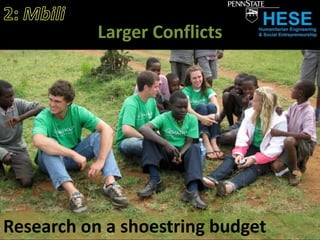
  • #32 Strictures of the IRB and those of a Student Research BudgetAs our IRB admitted, most of these IRB are performed on large budget sufficient staff
  • #33 RachelBe concise while eliminating potential points of misunderstanding.Research or entrepreneurship? Entities that focus on both, particularly troubled by researchers that swoop in, do their research and fly out, gathering what they need from the community and leaving nothing behindWhat happens when they do collide? Khanjan comes in, next we are looking at:Blah blahblah, ethical and business issues that arrise when eship and research collide.
  • #34 Pick either 24 or 25 couldn’t decide what I liked betterThe discipline of research and chaos of eship