PEER REVIEW OF
   TEACHING
    Prepared by Kathryn Andrus
   Teaching and Learning Center
             July 2009
PEER REVIEW: BASICS

Definitions and types

Uses

Typical forms

Optimal forms

Process of developing system
PEER REVIEW OF
TEACHING IS


“A fair, systematic process originating with the unit and out by an
informed colleague or colleagues who will use clearly stated
criteria for gathering a multidimensional body of evidence from
multiple sources for the purpose of evaluating the teaching
performance of a faculty member”
PEER REVIEW IS AT
WORK IN
Hiring                    Promotion and tenure

Communities of Practice   Sabbatical approvals

Coaching new faculty      Teaching awards

Review for merit raises   Post-tenure review

Contract renewals

Assigning courses
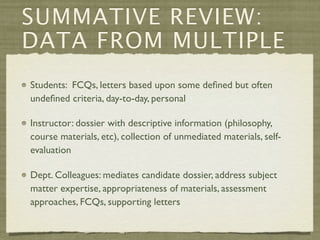
SUMMATIVE REVIEW:
DATA FROM MULTIPLE
Students: FCQs, letters based upon some defined but often
undefined criteria, day-to-day, personal

Instructor: dossier with descriptive information (philosophy,
course materials, etc), collection of unmediated materials, self-
evaluation

Dept. Colleagues: mediates candidate dossier, address subject
matter expertise, appropriateness of materials, assessment
approaches, FCQs, supporting letters
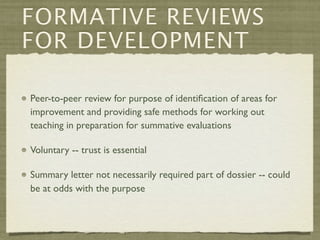
FORMATIVE REVIEWS
FOR DEVELOPMENT

Peer-to-peer review for purpose of identification of areas for
improvement and providing safe methods for working out
teaching in preparation for summative evaluations

Voluntary -- trust is essential

Summary letter not necessarily required part of dossier -- could
be at odds with the purpose
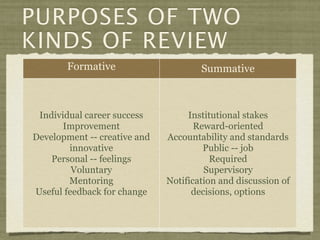
PURPOSES OF TWO
KINDS OF REVIEW
       Formative                      Summative


 Individual career success         Institutional stakes
       Improvement                   Reward-oriented
Development -- creative and   Accountability and standards
        innovative                     Public -- job
    Personal -- feelings                 Required
         Voluntary                     Supervisory
        Mentoring             Notification and discussion of
Useful feedback for change          decisions, options
TYPES OF PEER REVIEW
ACTIVITIES FOR
Classroom visits -- multiple times over long term

Class materials review (including online)

Learning outcomes and assessments used to measure

Teaching portfolios -- display of best work in all of its complexity

Review and discussion of videotaped lectures

Exchanging ideas in colloquia, workshop
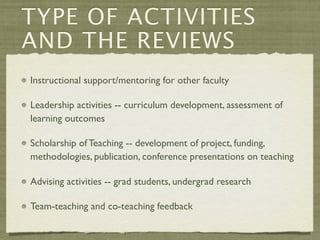
TYPE OF ACTIVITIES
AND THE REVIEWS
Instructional support/mentoring for other faculty

Leadership activities -- curriculum development, assessment of
learning outcomes

Scholarship of Teaching -- development of project, funding,
methodologies, publication, conference presentations on teaching

Advising activities -- grad students, undergrad research

Team-teaching and co-teaching feedback
SMALL GROUP
INSTRUCTIONAL
REASONS FOR
EXPANDING PEER
Making teaching public to all constituents

Teaching as community property of unit

Scholarship of Teaching and Learning

Professionalism

Teaching awards criteria strengthend

Making expectations explicit for faculty success
MORE REASONS

Opportunity for revising/creating explicit standards for evaluation

Faculty motivation enhanced?

Accountability

Improved evaluation process to go beyond FCQs

raise teaching to the level of research by using peer review
PEER REVIEW PROCESS

Institutional framework for evaluation in place

Goals and objectives of teaching and learning excellence

Establish criteria and procedures (handout)

Establishing appropriate means for evaluations, with specific
instructions for faculty reviewed

Creating instruments for data gathering: rubrics (handouts)

Training for reviewers
RESISTENCE FOR
EXPANDING PR
How can somebody not in my field tell me how to teach?

It’s all about performance. I’m good at what I do, but I don’t
entertain.

We do it already. It works.

More stuff to do? Forgeddaboutit.

We hate each other in my department. I would get trashed.

Just another administrative hoop to jump through.
NON- NEGOTIABLE
ASSUMPTIONS
The institution values teaching enough to put resources toward
the process

There are evaluative criteria, standards and methods in place that
are fair, valid and reliable

There are motivating factors for the unit to participate and share
the responsibilities

Reviewers will be trained, committed to the process and their
work supported & valued
DEVELOPMENT OF
CRITERIA
Founded on what the unit believes is excellence in teaching --
varies among disciplines and is MOST CHALLENGING PART OF
THE PROCESS

Should be designed like assessments -- linked to goals and
objectives of unit

Start with Categories, then Tasks with specific qualifiers

Content should be treated by peers in field, but products for and
of good teaching can be assessed by non-experts
PEER REVIEWERS
Must be prepared with training in appropriate evaluation for the
teaching context (lecture, active learning, clinical)

Must create or be provided with rubrics based upon the
evaluation criteria decided by the unit

Must be protected from reprisal

Should be part of a group with responsibility and relative
autonomy

Can be part of a group whose findings are summarized in a single
FACULTY TO BE
REVIEWED
Pro-active self-interest

Regential expectation for mentoring

New areas of scholarship for P/T

Clear expectations allow for self-monitoring

Continuous collecting documention and feedback to demonstrate
development activity
GOAL: THE TEACHING
FACULTY WILL HAVE
Objectives: the faculty member will

  Have current knowledge of the field (breadth)

  Have specific [doctoral level, practical] expertise/experience in
  a subfield (depth)

  Demonstrate continuous updating of knowledge base through
  reading, conference attendance, and supervising graduate
  research in field
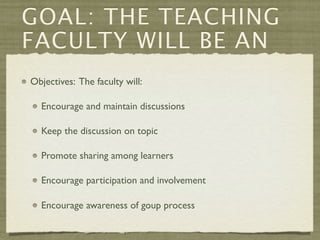
GOAL: THE TEACHING
FACULTY WILL BE AN
Objectives: The faculty will:

  Encourage and maintain discussions

  Keep the discussion on topic

  Promote sharing among learners

  Encourage participation and involvement

  Encourage awareness of goup process
CASE-STUDIES RUBRIC
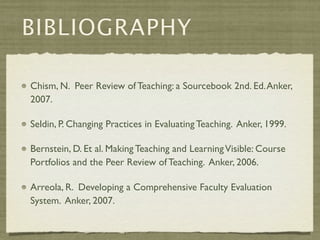
BIBLIOGRAPHY

Chism, N. Peer Review of Teaching: a Sourcebook 2nd. Ed. Anker,
2007.

Seldin, P. Changing Practices in Evaluating Teaching. Anker, 1999.

Bernstein, D. Et al. Making Teaching and Learning Visible: Course
Portfolios and the Peer Review of Teaching. Anker, 2006.

Arreola, R. Developing a Comprehensive Faculty Evaluation
System. Anker, 2007.

Peer Review

  • 1.
    PEER REVIEW OF TEACHING Prepared by Kathryn Andrus Teaching and Learning Center July 2009
  • 2.
    PEER REVIEW: BASICS Definitionsand types Uses Typical forms Optimal forms Process of developing system
  • 3.
    PEER REVIEW OF TEACHINGIS “A fair, systematic process originating with the unit and out by an informed colleague or colleagues who will use clearly stated criteria for gathering a multidimensional body of evidence from multiple sources for the purpose of evaluating the teaching performance of a faculty member”
  • 4.
    PEER REVIEW ISAT WORK IN Hiring Promotion and tenure Communities of Practice Sabbatical approvals Coaching new faculty Teaching awards Review for merit raises Post-tenure review Contract renewals Assigning courses
  • 5.
    SUMMATIVE REVIEW: DATA FROMMULTIPLE Students: FCQs, letters based upon some defined but often undefined criteria, day-to-day, personal Instructor: dossier with descriptive information (philosophy, course materials, etc), collection of unmediated materials, self- evaluation Dept. Colleagues: mediates candidate dossier, address subject matter expertise, appropriateness of materials, assessment approaches, FCQs, supporting letters
  • 6.
    FORMATIVE REVIEWS FOR DEVELOPMENT Peer-to-peerreview for purpose of identification of areas for improvement and providing safe methods for working out teaching in preparation for summative evaluations Voluntary -- trust is essential Summary letter not necessarily required part of dossier -- could be at odds with the purpose
  • 7.
    PURPOSES OF TWO KINDSOF REVIEW Formative Summative Individual career success Institutional stakes Improvement Reward-oriented Development -- creative and Accountability and standards innovative Public -- job Personal -- feelings Required Voluntary Supervisory Mentoring Notification and discussion of Useful feedback for change decisions, options
  • 8.
    TYPES OF PEERREVIEW ACTIVITIES FOR Classroom visits -- multiple times over long term Class materials review (including online) Learning outcomes and assessments used to measure Teaching portfolios -- display of best work in all of its complexity Review and discussion of videotaped lectures Exchanging ideas in colloquia, workshop
  • 9.
    TYPE OF ACTIVITIES ANDTHE REVIEWS Instructional support/mentoring for other faculty Leadership activities -- curriculum development, assessment of learning outcomes Scholarship of Teaching -- development of project, funding, methodologies, publication, conference presentations on teaching Advising activities -- grad students, undergrad research Team-teaching and co-teaching feedback
  • 10.
  • 11.
    REASONS FOR EXPANDING PEER Makingteaching public to all constituents Teaching as community property of unit Scholarship of Teaching and Learning Professionalism Teaching awards criteria strengthend Making expectations explicit for faculty success
  • 12.
    MORE REASONS Opportunity forrevising/creating explicit standards for evaluation Faculty motivation enhanced? Accountability Improved evaluation process to go beyond FCQs raise teaching to the level of research by using peer review
  • 13.
    PEER REVIEW PROCESS Institutionalframework for evaluation in place Goals and objectives of teaching and learning excellence Establish criteria and procedures (handout) Establishing appropriate means for evaluations, with specific instructions for faculty reviewed Creating instruments for data gathering: rubrics (handouts) Training for reviewers
  • 14.
    RESISTENCE FOR EXPANDING PR Howcan somebody not in my field tell me how to teach? It’s all about performance. I’m good at what I do, but I don’t entertain. We do it already. It works. More stuff to do? Forgeddaboutit. We hate each other in my department. I would get trashed. Just another administrative hoop to jump through.
  • 15.
    NON- NEGOTIABLE ASSUMPTIONS The institutionvalues teaching enough to put resources toward the process There are evaluative criteria, standards and methods in place that are fair, valid and reliable There are motivating factors for the unit to participate and share the responsibilities Reviewers will be trained, committed to the process and their work supported & valued
  • 16.
    DEVELOPMENT OF CRITERIA Founded onwhat the unit believes is excellence in teaching -- varies among disciplines and is MOST CHALLENGING PART OF THE PROCESS Should be designed like assessments -- linked to goals and objectives of unit Start with Categories, then Tasks with specific qualifiers Content should be treated by peers in field, but products for and of good teaching can be assessed by non-experts
  • 17.
    PEER REVIEWERS Must beprepared with training in appropriate evaluation for the teaching context (lecture, active learning, clinical) Must create or be provided with rubrics based upon the evaluation criteria decided by the unit Must be protected from reprisal Should be part of a group with responsibility and relative autonomy Can be part of a group whose findings are summarized in a single
  • 18.
    FACULTY TO BE REVIEWED Pro-activeself-interest Regential expectation for mentoring New areas of scholarship for P/T Clear expectations allow for self-monitoring Continuous collecting documention and feedback to demonstrate development activity
  • 19.
    GOAL: THE TEACHING FACULTYWILL HAVE Objectives: the faculty member will Have current knowledge of the field (breadth) Have specific [doctoral level, practical] expertise/experience in a subfield (depth) Demonstrate continuous updating of knowledge base through reading, conference attendance, and supervising graduate research in field
  • 20.
    GOAL: THE TEACHING FACULTYWILL BE AN Objectives: The faculty will: Encourage and maintain discussions Keep the discussion on topic Promote sharing among learners Encourage participation and involvement Encourage awareness of goup process
  • 21.
  • 22.
    BIBLIOGRAPHY Chism, N. PeerReview of Teaching: a Sourcebook 2nd. Ed. Anker, 2007. Seldin, P. Changing Practices in Evaluating Teaching. Anker, 1999. Bernstein, D. Et al. Making Teaching and Learning Visible: Course Portfolios and the Peer Review of Teaching. Anker, 2006. Arreola, R. Developing a Comprehensive Faculty Evaluation System. Anker, 2007.