Paediatric Aesthetic Dentistry
Dr. Sudeep Madhusudan Chaudhari
Dept. of Paediatric & Preventive Dentistry
Contents
 Introduction
 Aesthetic restorations in primary dentition
 Direct restorations
 Full coronal restorations
 Biologic restorations
 Prosthetic rehabilitation of missing primary teeth
 Tooth discoloration
 Conclusion
 References
Introduction
 In the last decade or so dentistry has undergone a complete
image makeover with dentists no longer being associated only
with pain relief or disease management only. Today more and
more patients seek dental treatment for restoring or even
enhancing the smile. Paediatric dentistry with its unique
challenge of managing little children has had overcome the
traditional mind set of parents that deciduous teeth are
temporary and they do not warrant treatment.
 Greater awareness towards oral health as wall as understanding
by the parents that decay in their child’s front teeth may rob the
child of his/her smile has ensured that paediatric dentistry too
has jumped onto the “aesthetic bandwagon.”
Aesthetic restorative materials for primary teeth
Direct restorative materials
• Composite resin
• Glass ionomer cement
Full coronal restoratives
• Strip crowns
• Open-faced stainless steel crowns
• Preveneered stainless steel crowns
A) Direct restorative materials
1) Composite resins –
 Are the most popular anterior restorative materials.
 Provide excellent aesthetics, mechanical properties and help
conserve tooth structure.
 With the incorporation of nanotechnology and advances in
bonding techniques reducing the steps in placement, they have
become fairly easy to use in paediatric dentistry.
 Disadvantage –
 strict moisture control has to be maintained throughout the
procedure, which is often difficult in younger children.
 high coefficient of thermal expansion and greater occlusal wear
in areas of high occusal stress.
 To overcome these problems modifications were made in their
composition and newer materials were introduced which are –
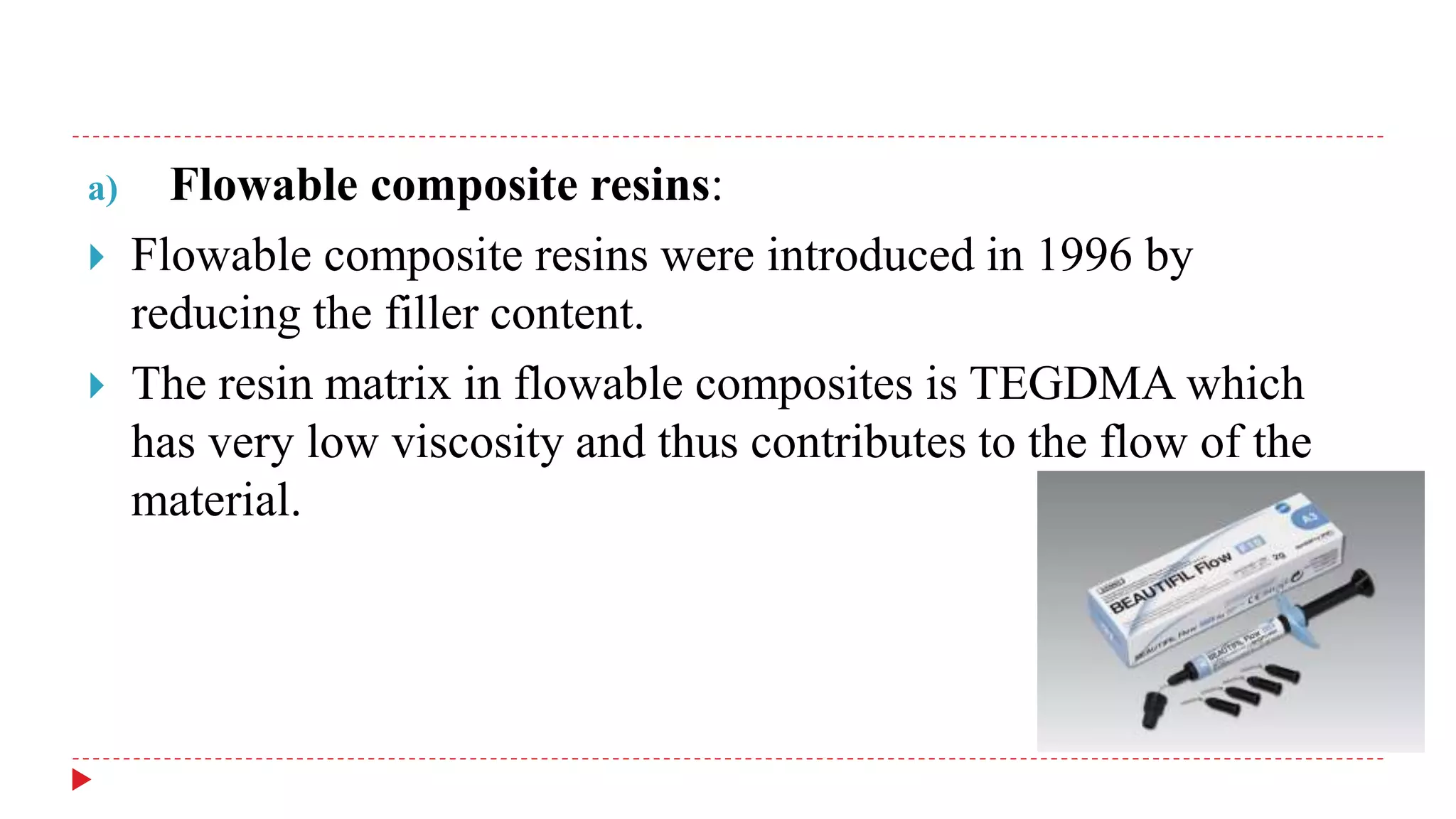
a) Flowable composite resins:
 Flowable composite resins were introduced in 1996 by
reducing the filler content.
 The resin matrix in flowable composites is TEGDMA which
has very low viscosity and thus contributes to the flow of the
material.
b) Packable composite resins:
 These are a special category of composite resins developed in
the late 1990s for use in posterior teeth.
 The fillers of packable composites is present as a continuous
network of short fibers of silica and alumina.
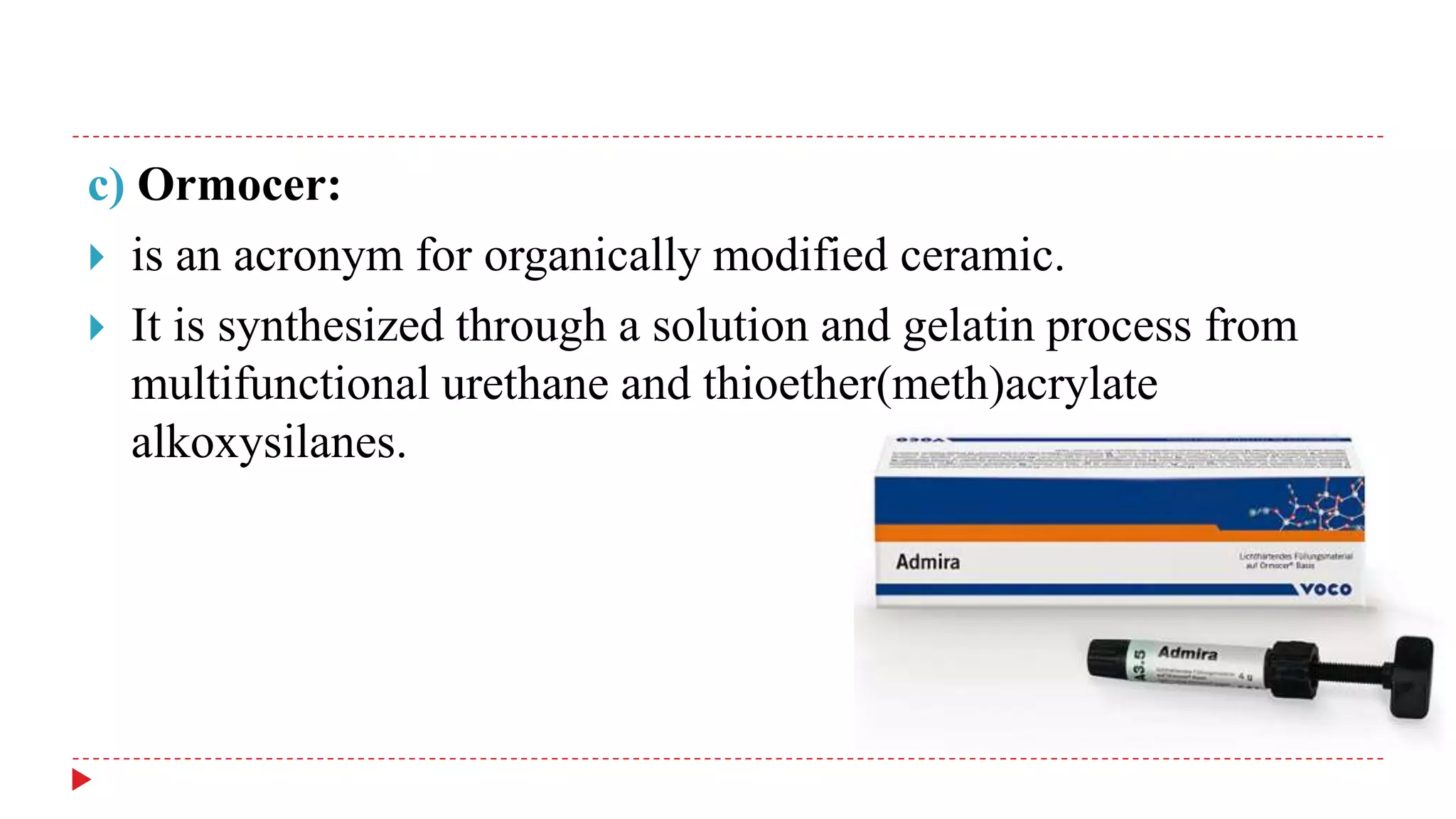
c) Ormocer:
 is an acronym for organically modified ceramic.
 It is synthesized through a solution and gelatin process from
multifunctional urethane and thioether(meth)acrylate
alkoxysilanes.
 Ormocers basically consist of three components-organic and
inorganic portions and the polysiloxanes.
 It reduces shrinkage and shrinkage stress by up to 50%
compared to conventional composites and leads to an
outstanding shade stability.
d) Ion- relesasing composite resin:
 In 1998, a new approach was begun with the development of
an ion-releasing composite resin called Ariston pH.
 Composite resin has an alkaline glass filler which releases
calcium, hydroxyl and fluoride ions at low pH .
e) Nanofilled composites:
 These have nanofillers that are 0.005 to 0.04μm in size.
 Nanofilled composites do not absorb visible light as they
exhibit small filler size as compared to wavelength of visible
light.
f) Compomer:
 are a new variety of tooth-colored restorative materials
introduced in the early 1990s.
 They were developed to combine the durability of composite
resin and fluoride-releasing capability of glass ionomer
cements. Hence the name “compomers.”
 These are commercially available as tooth-colored compomers
named Dyract-Xtra, Compoglass-F, etc.
 Recently colored compomers have also been made available
with the name of MagicFil and Twinky Star.
g) Fiber-reinforced composites (FRC):
 In 1998, a novel approach was developed in composite resin
technology.
 This consisted of fibers of glass or polyethylene and resin
matrix being coupled during the manufacture of the composite
resin.
 They are used in metal-free restorations, periodontal splinting
and the restoration of endodontically treated teeth.
h) Giomers:
 Giomer is a resin-based dental adhesive material releases
fluoride that comprises of pre-reacted glass ionomer (PRG)
fillers.
 The advantages are fluoride release, biocompactibility,
excellent aesthetics.
2) Glass ionomer cement –
 Developed by Wilson & Kent and have been in use in
dentistry since 1969.
 Less desirable alternatives for anterior restorations although
they are now available in various shades.
 The chemical bond with enamel and dentin and their fluoride
uptake and release are advantageous.
 Have good thermal stability and are less technique sensitive
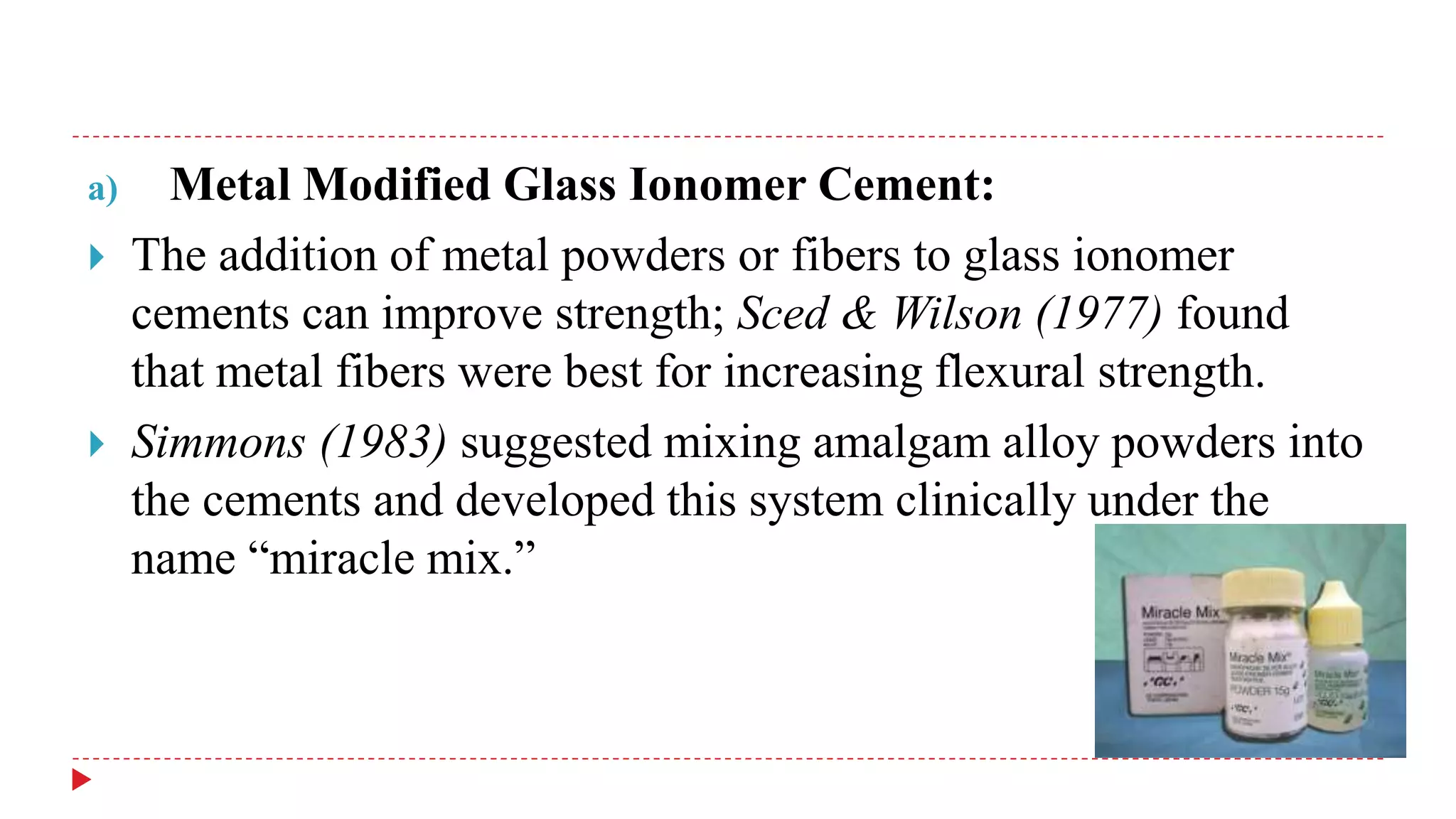
a) Metal Modified Glass Ionomer Cement:
 The addition of metal powders or fibers to glass ionomer
cements can improve strength; Sced & Wilson (1977) found
that metal fibers were best for increasing flexural strength.
 Simmons (1983) suggested mixing amalgam alloy powders into
the cements and developed this system clinically under the
name “miracle mix.”
b) Cermet (glass sintered with silver):
 In order to improve the strength which is both tensile and
compressive of conventional glass ionomer cement, cermet has
been introduced by McLean & Gasser (1985), by fusing glass
powder with silver particles.
 The abrasion resistance of cermet is greater than glass ionomer
cement.
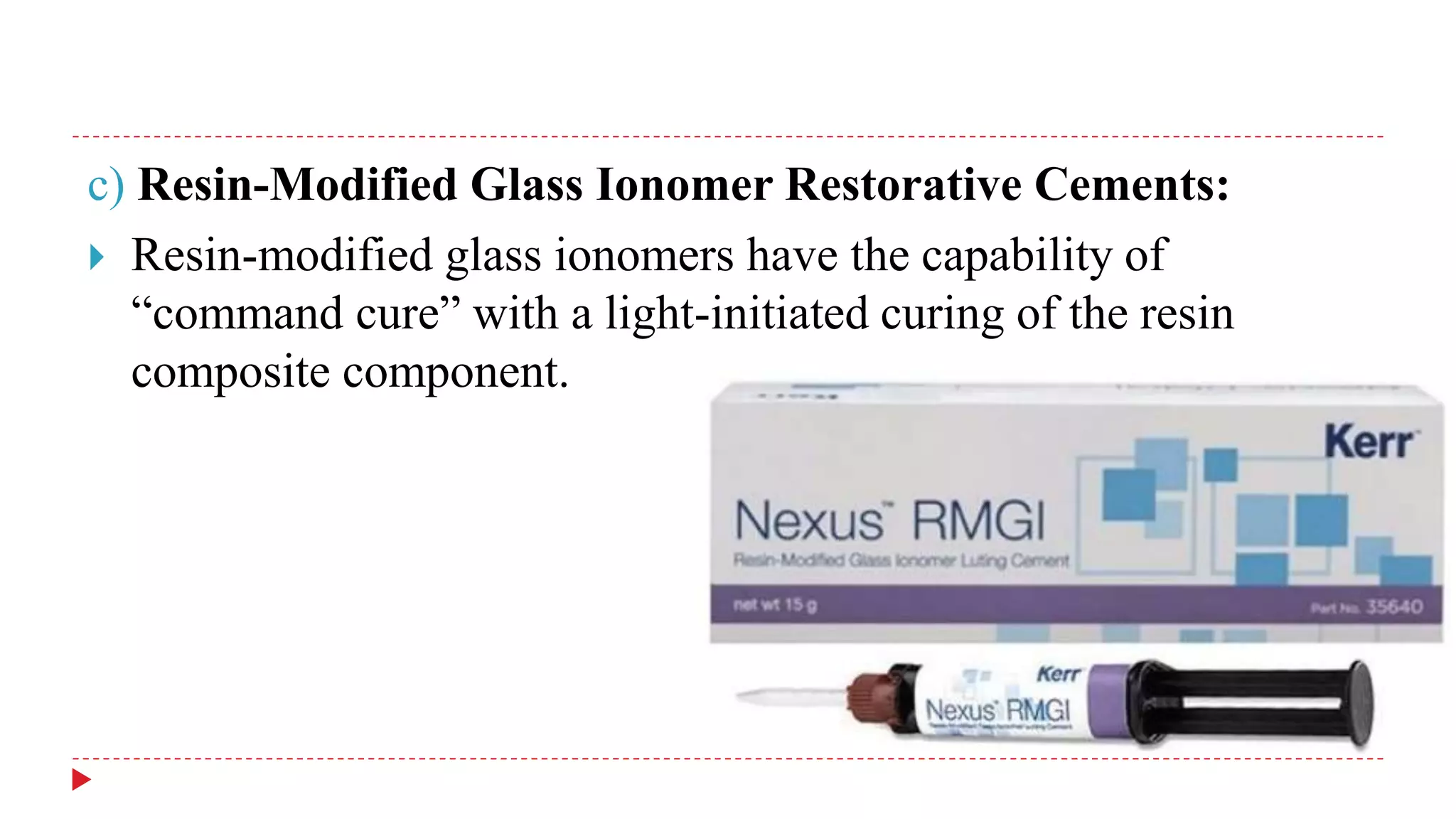
c) Resin-Modified Glass Ionomer Restorative Cements:
 Resin-modified glass ionomers have the capability of
“command cure” with a light-initiated curing of the resin
composite component.
 advantages are such as greater working time, command set on
application of visible light, good adaptation and adhesion,
acceptable fluoride release, and superior strength
characteristics.
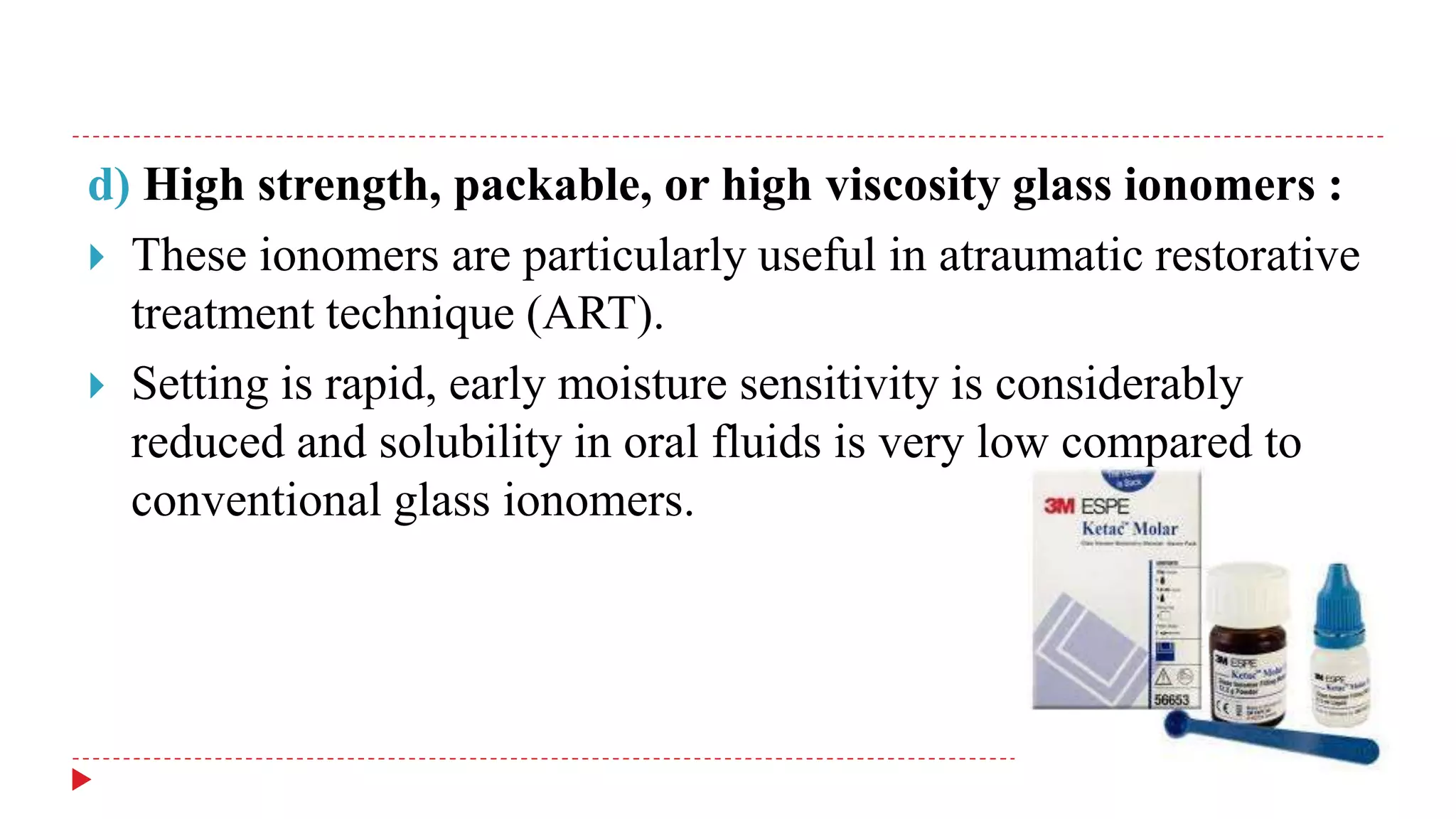
d) High strength, packable, or high viscosity glass ionomers :
 These ionomers are particularly useful in atraumatic restorative
treatment technique (ART).
 Setting is rapid, early moisture sensitivity is considerably
reduced and solubility in oral fluids is very low compared to
conventional glass ionomers.
B) Full coronal restoration (Crowns)
 A primary objective of placing crown is to achieve an esthetic
improvement. A remarkable change is also seen in the patient’s
self image after correction of the texture, shade and shape
along with good physiological form and function which
prevents further breakdown
i) Polycarbonate Crowns:
 These are heat molded acrylic resin used to restore primary
anterior teeth.
 It is esthetic than SSC, easy to trim and can be adjusted with
pliers.
 These crowns do not resist strong abrasive forces thus leading
to occasional fracture, hence it is contraindicated in cases of
Severe bruxism and deep bite.
ii) Strip crowns :
 Composite strip crowns are composite
filled celluloid crowns forms.
 Composite strip crowns rely on dentin
and enamel adhesion for retention.
Therefore the lack of tooth structure, the
presence of moisture or hemorrhage
contributes to compromised retention.
Advantages -
 It provides superior aesthetics. The cost of materials are
reasonable.
 The time for placement is reasonable.
 Ram D and Fuks AB (2006) observed that the high success rate
of resin-bonded composite strip crowns with a long-term
follow-up time suggested that this treatment modality is an
aesthetic and satisfactory means of restoring decayed primary
incisors in young children.
 The retention rate is lower in teeth with decay in three or more
surfaces, particularly in children with a high caries risk.
Ram D, Fuks AB. Clinical performance of resin‐bonded composite strip crowns in primary incisors: a retrospective study.
International journal of paediatric dentistry. 2006 Jan;16(1):49-54.
iii) Pedo jacket
 It is a tooth colored copolyester material which is filled with
resin and left on tooth after polymerization instead of being
removed.
 It does not split, stain or crack. Crowns can be easily trimmed
with scissors.
 Disadvantage :
 Only one size is available.
 Cannot be trimmed with bur
iv) New millennium crown -
 This is similar in form to the strip crown, except that it is lab
enhanced composite resin material.
 Like others, this is also filled with resin material and bonded to
the tooth.
v) Glastech
 Made of Artglass, which is a polymer glass.
 It gives a natural feel, bondability and kindness associated with
composite but the esthetics and longevity of porcelain.
 It is color stable, wear of polymer glass is similar to enamel,
kind to opposing dentition and is plaque resistant.
 The unique filler materials of microglass and silica are
proposed to provide greater durability and esthetics than strip
crowns.
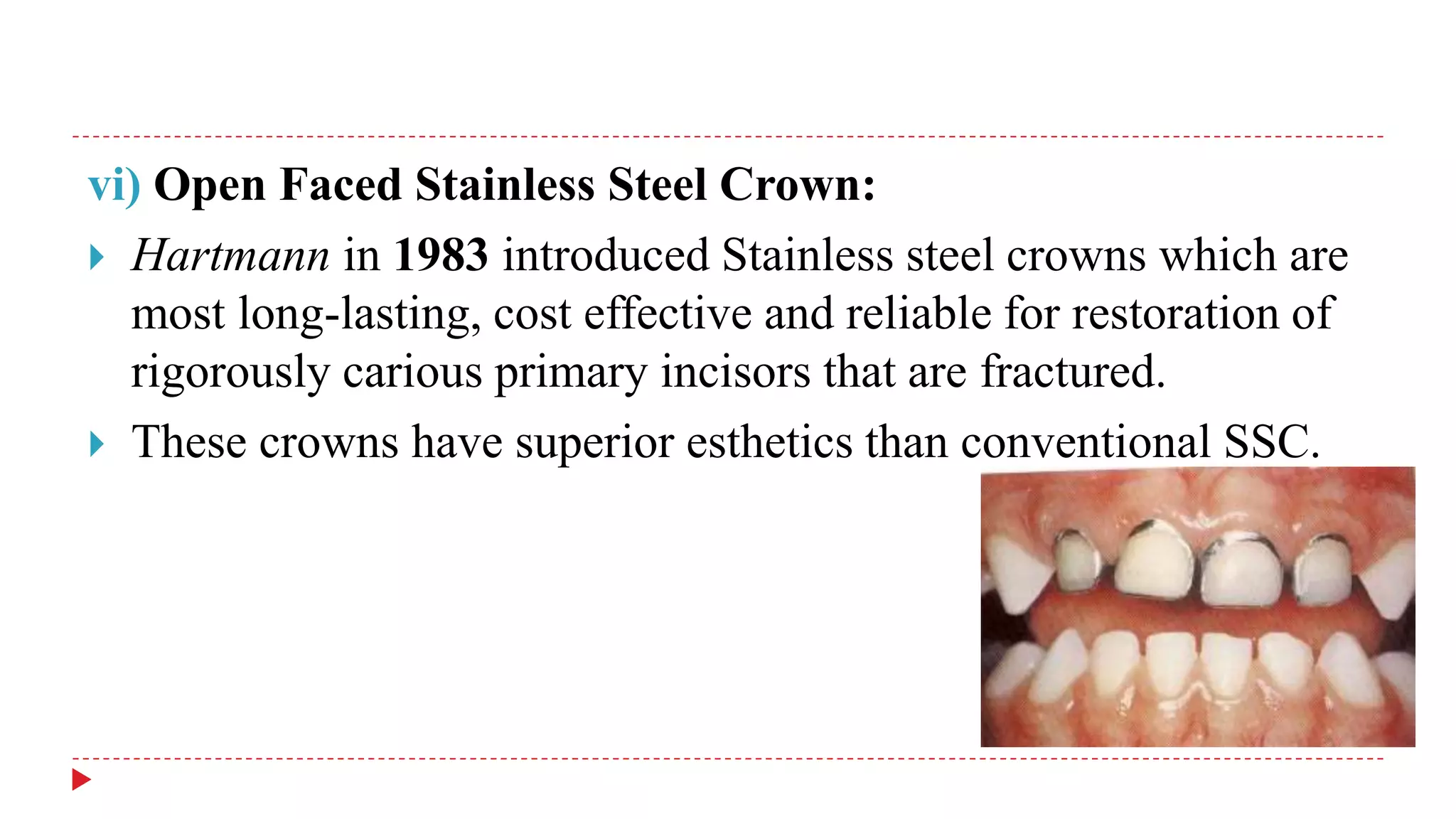
vi) Open Faced Stainless Steel Crown:
 Hartmann in 1983 introduced Stainless steel crowns which are
most long-lasting, cost effective and reliable for restoration of
rigorously carious primary incisors that are fractured.
 These crowns have superior esthetics than conventional SSC.
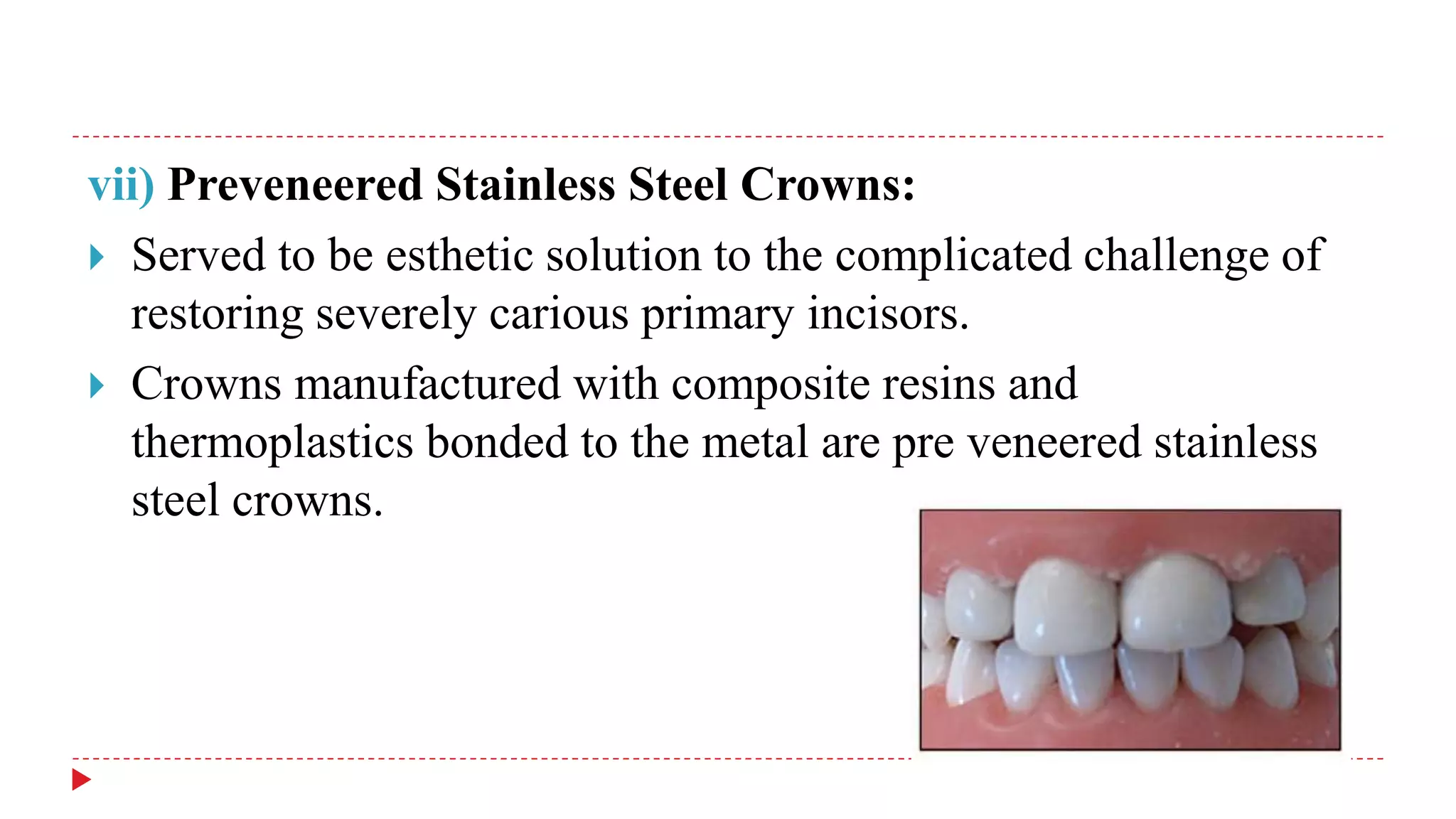
vii) Preveneered Stainless Steel Crowns:
 Served to be esthetic solution to the complicated challenge of
restoring severely carious primary incisors.
 Crowns manufactured with composite resins and
thermoplastics bonded to the metal are pre veneered stainless
steel crowns.
viii) Pedo Compu Crowns:
 These are stainless steel anterior crowns with high quality
composite facing and mesh based with a light cured composite
crown, easily matches natural dentition and helps to reduce
plaque accumulation.
ix) Pedo Pearls:
 These crowns are made of aluminum instead of stainless steel
because the epoxy coating adheres much better to the former.
This was first introduced in 1980.
 They are easy to cut and crimp without chipping and the
composite can be added afterwards also.
x) Zirconia crowns –
 Zirconia crown was developed by John
P Hansen & Jeffery P Fisher (2010).
 Zirconia is a dioxide form of zirconium.
 Possessing both esthetics and strength.
 Zirconia crowns is the strongest material
used in dentistry and can be used for
both primary as well as for permanent
dentition.
 EZ-Pedo, Loomis, CA, USA
 NuSmile ZR Primary Crowns, Houston, TX, USA
 Hu-Friedy Mfg. Co., LLC, Chicago, IL, USA
 Kinder Krowns, St. Louis Park, MN, USA
 Cheng Crown, Exton, PA, USA
 Zirkiz-Hass Corp. Korea
C) Biological Restorations
 Biological restoration can be defined as proper reconstruction
of extensively damaged teeth through the fragment.
 Biological restorations are not preserve the tooth structures but
also provide natural colour and anatomic form.
 The technique requires professional expertise to adequately
prepare and adapt the natural crowns to the cavity.
i) Fragment reattachment-
 Fragment reattachment is the most conservative option which
establishes functional as well as esthetic harmony.
 Chosack & Eildeman published the first case report on
reattachment of a fractured incisor fragment in 1964.
 Tooth fragment reattachment is a conservative approach which
allows the tooth restoration with minimal loss of remaining
tooth structure
ii) Natural Tooth Pontic-
 Could be a alternative technique as it provides the benefits of
being the right size, shape, colour and economically feasible.
 It can be easily modified for a temporary fixed replacement
which reduces the psychological impact on the patient .
Selection of restorative material
Primary factors
Number of surfaces
involved
Secondary factors
Caries risk
Cooperation abality
Age of exfoliation of the
involved tooth
1. One surface restoration –
 Include – class V cavities, which are so common in early
childhood caries and pit defects.
 Composite resins are the material of choice.
 Other material that may be used are – traditional GICs,
RMGICs and compomers when cooperation potential of
child is not very high or cavity extends subgingivally and
isolation and hemostasis cannot be achieved.
2) Two surface restorations –
 Include class III cavities on the proximal surface involving
either the labial or lingual surface.
 The labial or lingual surface that is not involved acts as
the base on which the restoration is placed.
 The material of choice – composite, compomers or
alternatively GICs.
3) Three surface restorations –
 Categorized as –
a. Small 3 surface restoration
b. Large 3 surface restoration
a. Small 3 surface restoration –
 Caries involves the proximal, labial as well as lingual
surfaces, but at the same time does not extend beyond
one-third the clinical height of the crown.
 May restored with direct composite after incorporating
dovetail or extend bevel modification so as to improve the
retention.
b. Large 3 surface restoration –
 When the caries involves more than one third of the
crown height or in severely decayed teeth, full crown
restoration recommended
Prosthetic rehabilitation of missing primary teeth
 Prosthetic treatment can play an important role in cases where
normal dentition fails to develop.
 Indeed being edentulous has many consequences like,
handicapped child, deforming lingual habits and a poor
nutrition, due to the fact that mastication is difficult or
impossible.
i) Modified Hawley’s Appliance-
 This appliance is most often used, constructed in 1920’s is an
active removable appliance.
 It incorporates clasps on molar teeth and a characteristic outer
labial bow with adjustment loops, extend from canine to
canine.
 In case of intrusion, luxation or avulsion, extensively carious
and fracture of teeth in children creates psychological impact
on both the parents and the child especially tooth structure.
 These factors necessitate the replacement of the anterior teeth
by an appliance that satisfies the aesthetics and functional
needs.
 Thus, a modification of the appliance is done wherein acrylic
teeth are embedded onto acrylic and stabilized on the labial
bow of Hawley’s appliance to restore anterior aesthetics and
functions.
ii) Modified Nance Palatal Arch-
 It was first described by Nance in 1947 and it is very popularly
used in pediatric dentistry even today.
 The palatal arch is attached to first molar bands, acrylic button
is embedded in rugae area.
 The modified Nance palatal arch appliance is simple to
construct, easy to maintain and a cost-effective, intermediates
tooth replacement option.
 In modified Nance palatal arch, acrylic teeth were placed in
anterior extension of acrylic button.
 The fixed prosthesis is given because it does not need the
patient to be compliant and hence cannot be lost or broken, as
in the case of a removable partial denture.
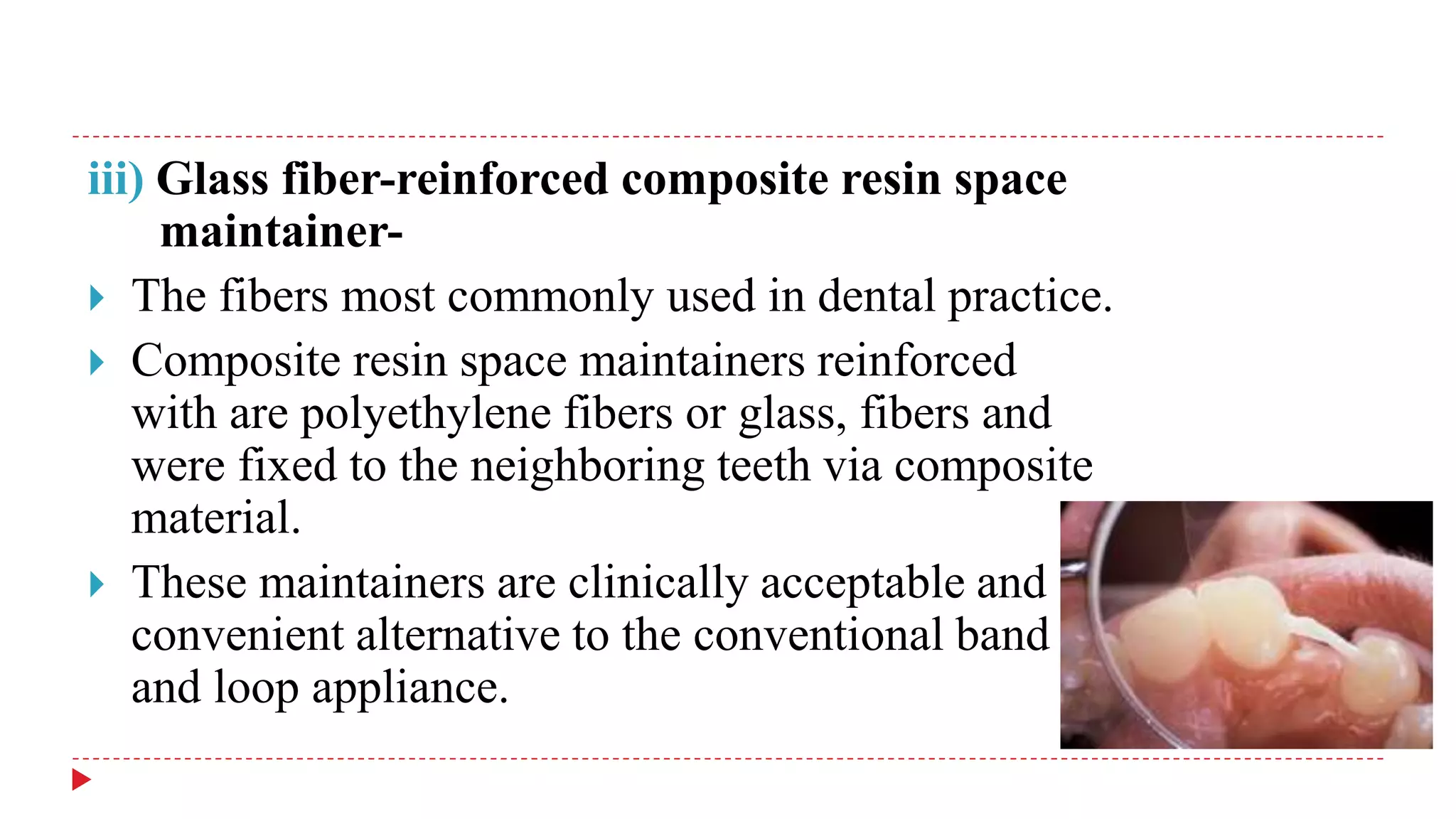
iii) Glass fiber-reinforced composite resin space
maintainer-
 The fibers most commonly used in dental practice.
 Composite resin space maintainers reinforced
with are polyethylene fibers or glass, fibers and
were fixed to the neighboring teeth via composite
material.
 These maintainers are clinically acceptable and
convenient alternative to the conventional band
and loop appliance.
iv) Removable Partial Denture (RPD):
 A RPD is defined as a dental prosthesis that restores one or
more but not all of the natural teeth.
 Many patients require replacement of missing teeth and
associated structures to enhance appearance, improve
masticatory efficiency and to improve the esthetics.
v) Complete Denture:
 In the cases of edentulous young patients, who do not finish
their craniofacial growth, treatment with conventional complete
denture is a suitable alternative.
 Ectodermal dysplasia is not a single disorder, but a group of
syndromes all deriving from abnormalities of the ectodermal
structures.
 Typical features, such as frontal bossing, depressed nasal
bridge, protuberant lips, scarce hair and brittle nails, are
visualized during the extraoral examination.
 The intraoral inspection and radiographic analysis reveals
oligodontia, dental malformation and prolonged retention of
deciduous teeth at maxilla and total edentulism at mandible.
 To treat such cases complete denture is a viable option and can
be used effectively for recovery.
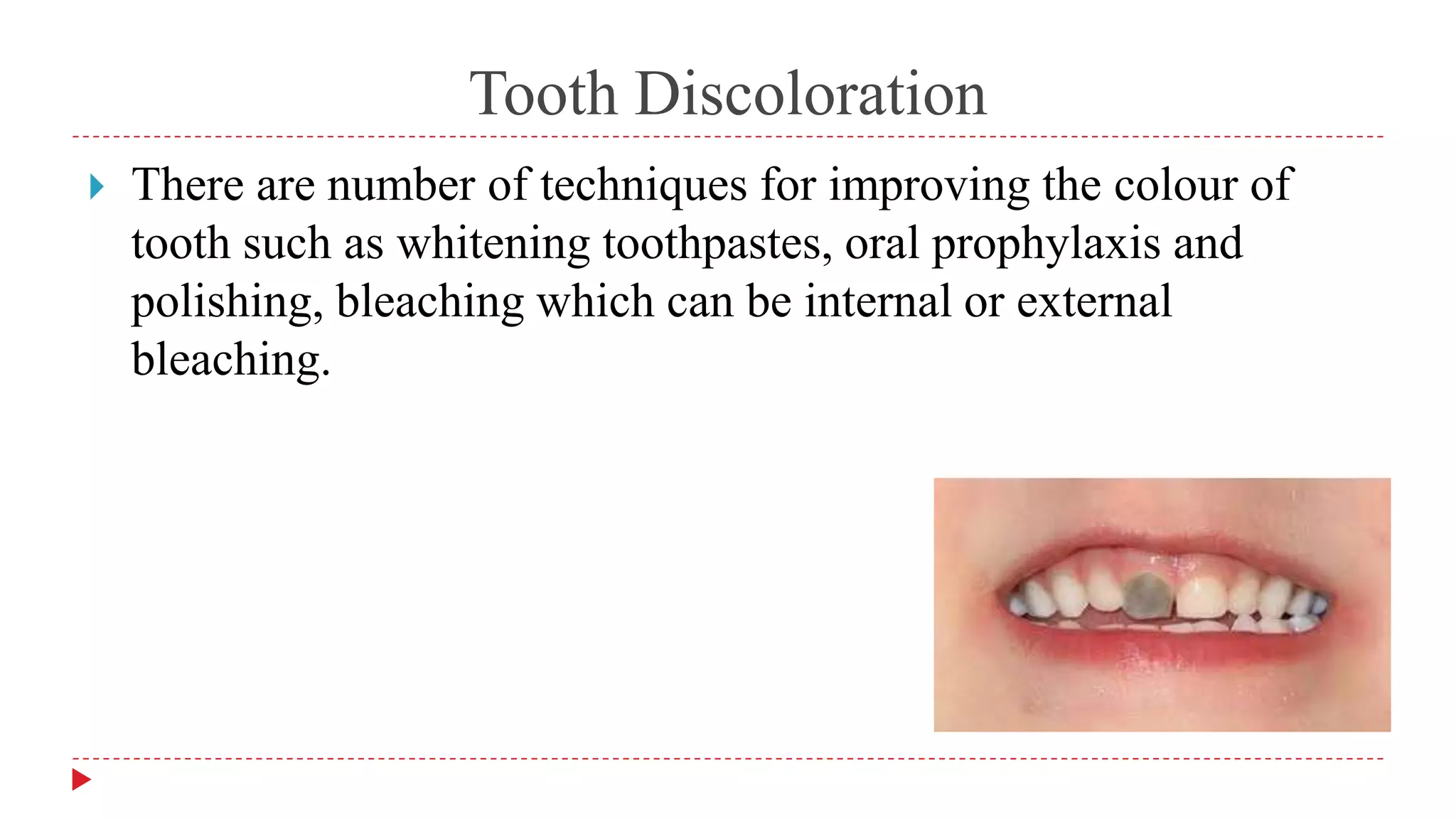
Tooth Discoloration
 There are number of techniques for improving the colour of
tooth such as whitening toothpastes, oral prophylaxis and
polishing, bleaching which can be internal or external
bleaching.
i) Bleaching:
 Non vital bleaching is indicated for endodontically treated non
vital teeth that are discoloured, provided that well condensed
root canal filling must be present, unsatisfactory filling should
be replaced.
 Vital bleaching can be chairside, office bleaching, power
bleaching and is best suited for stains seen in prolonged
tetracycline usage, fluorosis and sclerosis of pulp
chamber/ageing.
ii) Veneering:
 “A veneer is a layer of material placed over a tooth, to improve
the esthetics and/or protect the tooth's surface from damage.”
Porcelain veneers were introduced by Dr. Charles Pincus in
Hollywood in 1930s. The concept of laminate veneers although
existing long back, got surface in 1975 by Rochette.
 Veneers is of two types:
 Partial veneers- Partial veneers are preferable for intrinsic
stains and reconstruction of localized defects.
 Full veneers- Full veneers are indicated for the restoration of
generalized defect or areas of intrinsic staining involving the
majority of the facial surface of the tooth.
iii) Cosmetic Contouring:
 Cosmetic contouring is the reshaping of natural teeth for
esthetic purposes. It focuses on improvement dental aesthetics
in color, position, shape, size, alignment and overall smile
appearance.
Conclusion
In restorative dentistry, choosing the correct restorative material
is one of the primary variables that determine its success. Many
new developments have occurred in restorative dentistry for
children in recent years. Along with the development of newer
restorative material the Pedodontist has a wide array of esthetic
crowns available for restoring primary anterior teeth. Thus,
esthetics has become a respectable and mandatory concept in
dentistry today.
References
 Pinkham JR. Pediatric Dentistry: Infancy through adolescence,
5th ed.Saunders;2013.
 Ralph E Mc Donald & David R Avery. Dentistry for the child
& adolescent, 1st Southasia ed.Elsevier mosby; 2014.223-232.
 Shobha Tandon. Textbook of Pedodontics, 2nded.Paras
publication;2009,257-388.
 SG Damle. Textbook of Pediatric Dentistry, 3rd ed.2012.

Pediatric aesthetic dentistry

  • 1.
    Paediatric Aesthetic Dentistry Dr.Sudeep Madhusudan Chaudhari Dept. of Paediatric & Preventive Dentistry
  • 2.
    Contents  Introduction  Aestheticrestorations in primary dentition  Direct restorations  Full coronal restorations  Biologic restorations  Prosthetic rehabilitation of missing primary teeth  Tooth discoloration  Conclusion  References
  • 3.
    Introduction  In thelast decade or so dentistry has undergone a complete image makeover with dentists no longer being associated only with pain relief or disease management only. Today more and more patients seek dental treatment for restoring or even enhancing the smile. Paediatric dentistry with its unique challenge of managing little children has had overcome the traditional mind set of parents that deciduous teeth are temporary and they do not warrant treatment.
  • 4.
     Greater awarenesstowards oral health as wall as understanding by the parents that decay in their child’s front teeth may rob the child of his/her smile has ensured that paediatric dentistry too has jumped onto the “aesthetic bandwagon.”
  • 5.
    Aesthetic restorative materialsfor primary teeth Direct restorative materials • Composite resin • Glass ionomer cement Full coronal restoratives • Strip crowns • Open-faced stainless steel crowns • Preveneered stainless steel crowns
  • 6.
    A) Direct restorativematerials 1) Composite resins –  Are the most popular anterior restorative materials.  Provide excellent aesthetics, mechanical properties and help conserve tooth structure.  With the incorporation of nanotechnology and advances in bonding techniques reducing the steps in placement, they have become fairly easy to use in paediatric dentistry.
  • 7.
     Disadvantage – strict moisture control has to be maintained throughout the procedure, which is often difficult in younger children.  high coefficient of thermal expansion and greater occlusal wear in areas of high occusal stress.  To overcome these problems modifications were made in their composition and newer materials were introduced which are –
  • 8.
    a) Flowable compositeresins:  Flowable composite resins were introduced in 1996 by reducing the filler content.  The resin matrix in flowable composites is TEGDMA which has very low viscosity and thus contributes to the flow of the material.
  • 9.
    b) Packable compositeresins:  These are a special category of composite resins developed in the late 1990s for use in posterior teeth.  The fillers of packable composites is present as a continuous network of short fibers of silica and alumina.
  • 10.
    c) Ormocer:  isan acronym for organically modified ceramic.  It is synthesized through a solution and gelatin process from multifunctional urethane and thioether(meth)acrylate alkoxysilanes.
  • 11.
     Ormocers basicallyconsist of three components-organic and inorganic portions and the polysiloxanes.  It reduces shrinkage and shrinkage stress by up to 50% compared to conventional composites and leads to an outstanding shade stability.
  • 12.
    d) Ion- relesasingcomposite resin:  In 1998, a new approach was begun with the development of an ion-releasing composite resin called Ariston pH.  Composite resin has an alkaline glass filler which releases calcium, hydroxyl and fluoride ions at low pH .
  • 13.
    e) Nanofilled composites: These have nanofillers that are 0.005 to 0.04μm in size.  Nanofilled composites do not absorb visible light as they exhibit small filler size as compared to wavelength of visible light.
  • 14.
    f) Compomer:  area new variety of tooth-colored restorative materials introduced in the early 1990s.  They were developed to combine the durability of composite resin and fluoride-releasing capability of glass ionomer cements. Hence the name “compomers.”  These are commercially available as tooth-colored compomers named Dyract-Xtra, Compoglass-F, etc.  Recently colored compomers have also been made available with the name of MagicFil and Twinky Star.
  • 15.
    g) Fiber-reinforced composites(FRC):  In 1998, a novel approach was developed in composite resin technology.  This consisted of fibers of glass or polyethylene and resin matrix being coupled during the manufacture of the composite resin.  They are used in metal-free restorations, periodontal splinting and the restoration of endodontically treated teeth.
  • 16.
    h) Giomers:  Giomeris a resin-based dental adhesive material releases fluoride that comprises of pre-reacted glass ionomer (PRG) fillers.  The advantages are fluoride release, biocompactibility, excellent aesthetics.
  • 17.
    2) Glass ionomercement –  Developed by Wilson & Kent and have been in use in dentistry since 1969.  Less desirable alternatives for anterior restorations although they are now available in various shades.
  • 18.
     The chemicalbond with enamel and dentin and their fluoride uptake and release are advantageous.  Have good thermal stability and are less technique sensitive
  • 19.
    a) Metal ModifiedGlass Ionomer Cement:  The addition of metal powders or fibers to glass ionomer cements can improve strength; Sced & Wilson (1977) found that metal fibers were best for increasing flexural strength.  Simmons (1983) suggested mixing amalgam alloy powders into the cements and developed this system clinically under the name “miracle mix.”
  • 20.
    b) Cermet (glasssintered with silver):  In order to improve the strength which is both tensile and compressive of conventional glass ionomer cement, cermet has been introduced by McLean & Gasser (1985), by fusing glass powder with silver particles.  The abrasion resistance of cermet is greater than glass ionomer cement.
  • 21.
    c) Resin-Modified GlassIonomer Restorative Cements:  Resin-modified glass ionomers have the capability of “command cure” with a light-initiated curing of the resin composite component.
  • 22.
     advantages aresuch as greater working time, command set on application of visible light, good adaptation and adhesion, acceptable fluoride release, and superior strength characteristics.
  • 23.
    d) High strength,packable, or high viscosity glass ionomers :  These ionomers are particularly useful in atraumatic restorative treatment technique (ART).  Setting is rapid, early moisture sensitivity is considerably reduced and solubility in oral fluids is very low compared to conventional glass ionomers.
  • 24.
    B) Full coronalrestoration (Crowns)  A primary objective of placing crown is to achieve an esthetic improvement. A remarkable change is also seen in the patient’s self image after correction of the texture, shade and shape along with good physiological form and function which prevents further breakdown
  • 25.
    i) Polycarbonate Crowns: These are heat molded acrylic resin used to restore primary anterior teeth.
  • 26.
     It isesthetic than SSC, easy to trim and can be adjusted with pliers.  These crowns do not resist strong abrasive forces thus leading to occasional fracture, hence it is contraindicated in cases of Severe bruxism and deep bite.
  • 27.
    ii) Strip crowns:  Composite strip crowns are composite filled celluloid crowns forms.  Composite strip crowns rely on dentin and enamel adhesion for retention. Therefore the lack of tooth structure, the presence of moisture or hemorrhage contributes to compromised retention.
  • 28.
    Advantages -  Itprovides superior aesthetics. The cost of materials are reasonable.  The time for placement is reasonable.
  • 29.
     Ram Dand Fuks AB (2006) observed that the high success rate of resin-bonded composite strip crowns with a long-term follow-up time suggested that this treatment modality is an aesthetic and satisfactory means of restoring decayed primary incisors in young children.  The retention rate is lower in teeth with decay in three or more surfaces, particularly in children with a high caries risk. Ram D, Fuks AB. Clinical performance of resin‐bonded composite strip crowns in primary incisors: a retrospective study. International journal of paediatric dentistry. 2006 Jan;16(1):49-54.
  • 30.
    iii) Pedo jacket It is a tooth colored copolyester material which is filled with resin and left on tooth after polymerization instead of being removed.  It does not split, stain or crack. Crowns can be easily trimmed with scissors.  Disadvantage :  Only one size is available.  Cannot be trimmed with bur
  • 31.
    iv) New millenniumcrown -  This is similar in form to the strip crown, except that it is lab enhanced composite resin material.  Like others, this is also filled with resin material and bonded to the tooth.
  • 32.
    v) Glastech  Madeof Artglass, which is a polymer glass.  It gives a natural feel, bondability and kindness associated with composite but the esthetics and longevity of porcelain.  It is color stable, wear of polymer glass is similar to enamel, kind to opposing dentition and is plaque resistant.  The unique filler materials of microglass and silica are proposed to provide greater durability and esthetics than strip crowns.
  • 33.
    vi) Open FacedStainless Steel Crown:  Hartmann in 1983 introduced Stainless steel crowns which are most long-lasting, cost effective and reliable for restoration of rigorously carious primary incisors that are fractured.  These crowns have superior esthetics than conventional SSC.
  • 34.
    vii) Preveneered StainlessSteel Crowns:  Served to be esthetic solution to the complicated challenge of restoring severely carious primary incisors.  Crowns manufactured with composite resins and thermoplastics bonded to the metal are pre veneered stainless steel crowns.
  • 35.
    viii) Pedo CompuCrowns:  These are stainless steel anterior crowns with high quality composite facing and mesh based with a light cured composite crown, easily matches natural dentition and helps to reduce plaque accumulation.
  • 36.
    ix) Pedo Pearls: These crowns are made of aluminum instead of stainless steel because the epoxy coating adheres much better to the former. This was first introduced in 1980.  They are easy to cut and crimp without chipping and the composite can be added afterwards also.
  • 37.
    x) Zirconia crowns–  Zirconia crown was developed by John P Hansen & Jeffery P Fisher (2010).  Zirconia is a dioxide form of zirconium.  Possessing both esthetics and strength.  Zirconia crowns is the strongest material used in dentistry and can be used for both primary as well as for permanent dentition.
  • 38.
     EZ-Pedo, Loomis,CA, USA  NuSmile ZR Primary Crowns, Houston, TX, USA  Hu-Friedy Mfg. Co., LLC, Chicago, IL, USA  Kinder Krowns, St. Louis Park, MN, USA  Cheng Crown, Exton, PA, USA  Zirkiz-Hass Corp. Korea
  • 39.
    C) Biological Restorations Biological restoration can be defined as proper reconstruction of extensively damaged teeth through the fragment.  Biological restorations are not preserve the tooth structures but also provide natural colour and anatomic form.  The technique requires professional expertise to adequately prepare and adapt the natural crowns to the cavity.
  • 40.
    i) Fragment reattachment- Fragment reattachment is the most conservative option which establishes functional as well as esthetic harmony.
  • 41.
     Chosack &Eildeman published the first case report on reattachment of a fractured incisor fragment in 1964.  Tooth fragment reattachment is a conservative approach which allows the tooth restoration with minimal loss of remaining tooth structure
  • 42.
    ii) Natural ToothPontic-  Could be a alternative technique as it provides the benefits of being the right size, shape, colour and economically feasible.  It can be easily modified for a temporary fixed replacement which reduces the psychological impact on the patient .
  • 43.
    Selection of restorativematerial Primary factors Number of surfaces involved Secondary factors Caries risk Cooperation abality Age of exfoliation of the involved tooth
  • 44.
    1. One surfacerestoration –  Include – class V cavities, which are so common in early childhood caries and pit defects.  Composite resins are the material of choice.  Other material that may be used are – traditional GICs, RMGICs and compomers when cooperation potential of child is not very high or cavity extends subgingivally and isolation and hemostasis cannot be achieved.
  • 45.
    2) Two surfacerestorations –  Include class III cavities on the proximal surface involving either the labial or lingual surface.  The labial or lingual surface that is not involved acts as the base on which the restoration is placed.  The material of choice – composite, compomers or alternatively GICs.
  • 46.
    3) Three surfacerestorations –  Categorized as – a. Small 3 surface restoration b. Large 3 surface restoration
  • 47.
    a. Small 3surface restoration –  Caries involves the proximal, labial as well as lingual surfaces, but at the same time does not extend beyond one-third the clinical height of the crown.  May restored with direct composite after incorporating dovetail or extend bevel modification so as to improve the retention.
  • 48.
    b. Large 3surface restoration –  When the caries involves more than one third of the crown height or in severely decayed teeth, full crown restoration recommended
  • 49.
    Prosthetic rehabilitation ofmissing primary teeth  Prosthetic treatment can play an important role in cases where normal dentition fails to develop.  Indeed being edentulous has many consequences like, handicapped child, deforming lingual habits and a poor nutrition, due to the fact that mastication is difficult or impossible.
  • 50.
    i) Modified Hawley’sAppliance-  This appliance is most often used, constructed in 1920’s is an active removable appliance.  It incorporates clasps on molar teeth and a characteristic outer labial bow with adjustment loops, extend from canine to canine.  In case of intrusion, luxation or avulsion, extensively carious and fracture of teeth in children creates psychological impact on both the parents and the child especially tooth structure.
  • 51.
     These factorsnecessitate the replacement of the anterior teeth by an appliance that satisfies the aesthetics and functional needs.  Thus, a modification of the appliance is done wherein acrylic teeth are embedded onto acrylic and stabilized on the labial bow of Hawley’s appliance to restore anterior aesthetics and functions.
  • 52.
    ii) Modified NancePalatal Arch-  It was first described by Nance in 1947 and it is very popularly used in pediatric dentistry even today.  The palatal arch is attached to first molar bands, acrylic button is embedded in rugae area.  The modified Nance palatal arch appliance is simple to construct, easy to maintain and a cost-effective, intermediates tooth replacement option.
  • 53.
     In modifiedNance palatal arch, acrylic teeth were placed in anterior extension of acrylic button.  The fixed prosthesis is given because it does not need the patient to be compliant and hence cannot be lost or broken, as in the case of a removable partial denture.
  • 54.
    iii) Glass fiber-reinforcedcomposite resin space maintainer-  The fibers most commonly used in dental practice.  Composite resin space maintainers reinforced with are polyethylene fibers or glass, fibers and were fixed to the neighboring teeth via composite material.  These maintainers are clinically acceptable and convenient alternative to the conventional band and loop appliance.
  • 55.
    iv) Removable PartialDenture (RPD):  A RPD is defined as a dental prosthesis that restores one or more but not all of the natural teeth.  Many patients require replacement of missing teeth and associated structures to enhance appearance, improve masticatory efficiency and to improve the esthetics.
  • 56.
    v) Complete Denture: In the cases of edentulous young patients, who do not finish their craniofacial growth, treatment with conventional complete denture is a suitable alternative.  Ectodermal dysplasia is not a single disorder, but a group of syndromes all deriving from abnormalities of the ectodermal structures.  Typical features, such as frontal bossing, depressed nasal bridge, protuberant lips, scarce hair and brittle nails, are visualized during the extraoral examination.
  • 57.
     The intraoralinspection and radiographic analysis reveals oligodontia, dental malformation and prolonged retention of deciduous teeth at maxilla and total edentulism at mandible.  To treat such cases complete denture is a viable option and can be used effectively for recovery.
  • 58.
    Tooth Discoloration  Thereare number of techniques for improving the colour of tooth such as whitening toothpastes, oral prophylaxis and polishing, bleaching which can be internal or external bleaching.
  • 59.
    i) Bleaching:  Nonvital bleaching is indicated for endodontically treated non vital teeth that are discoloured, provided that well condensed root canal filling must be present, unsatisfactory filling should be replaced.  Vital bleaching can be chairside, office bleaching, power bleaching and is best suited for stains seen in prolonged tetracycline usage, fluorosis and sclerosis of pulp chamber/ageing.
  • 60.
    ii) Veneering:  “Aveneer is a layer of material placed over a tooth, to improve the esthetics and/or protect the tooth's surface from damage.” Porcelain veneers were introduced by Dr. Charles Pincus in Hollywood in 1930s. The concept of laminate veneers although existing long back, got surface in 1975 by Rochette.
  • 61.
     Veneers isof two types:  Partial veneers- Partial veneers are preferable for intrinsic stains and reconstruction of localized defects.  Full veneers- Full veneers are indicated for the restoration of generalized defect or areas of intrinsic staining involving the majority of the facial surface of the tooth.
  • 62.
    iii) Cosmetic Contouring: Cosmetic contouring is the reshaping of natural teeth for esthetic purposes. It focuses on improvement dental aesthetics in color, position, shape, size, alignment and overall smile appearance.
  • 63.
    Conclusion In restorative dentistry,choosing the correct restorative material is one of the primary variables that determine its success. Many new developments have occurred in restorative dentistry for children in recent years. Along with the development of newer restorative material the Pedodontist has a wide array of esthetic crowns available for restoring primary anterior teeth. Thus, esthetics has become a respectable and mandatory concept in dentistry today.
  • 64.
    References  Pinkham JR.Pediatric Dentistry: Infancy through adolescence, 5th ed.Saunders;2013.  Ralph E Mc Donald & David R Avery. Dentistry for the child & adolescent, 1st Southasia ed.Elsevier mosby; 2014.223-232.  Shobha Tandon. Textbook of Pedodontics, 2nded.Paras publication;2009,257-388.  SG Damle. Textbook of Pediatric Dentistry, 3rd ed.2012.