The Peculiar Institution
A powerpoint presentation originally
created by Bill Michalski
revised from the website
https://sites.google.com/a/whschoolapps.org/ap-u-s-history/chapter-
16
“In all social systems there must be a class to do the menial
duties, to perform the drudgery of life. Fortunately for the
South she found a race adapted to the purpose. The
difference between us is that our slaves are hired for life
and well compensated. Yours are hired by the day, not
cared for, and scantily compensated.”
Senator James Hammond of South Carolina
An exampleof a
hand tinted
daguerreotype, c.
1855, widely
distributed in the
South displaying
thehappinessof
slavelifeon the
plantation.
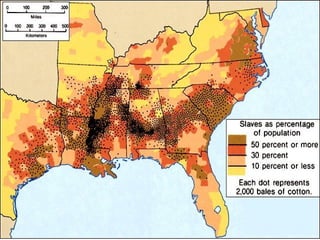
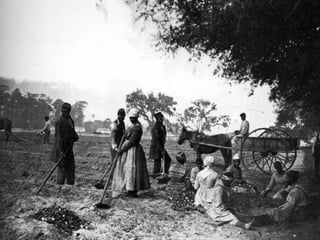
• Slavery wasprofitable, although alarge
part of theprofit wasin theincreased
valueof theslavesthemselves.
• With only 30%of thenation’s(free)
population, theSouth had 60%of the
“wealthiest men.”
• The1860 per capitaincomein the
South was$3,978; in theNorth it was
$2,040.
• By thelate1850s, thepriceof an
averageblack maleadult field hand is
over $1,000.
Am I not a Man?
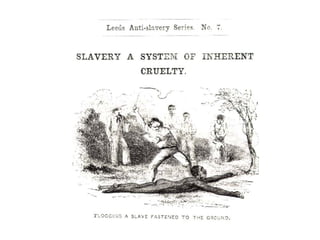
“No day ever dawns for the slave, nor is it looked for.
For the slave it is all night, all night forever.”
“We were no more than dogs. If they caught us with a
piece of paper in our pockets, they’d whip us. They
was afraid we’d learn how to read and write, but I
never got the chance.”
• Racism against African-Americanswasa
national problem, not aregional problem.
• ThewhiteSouth could never havegotten
away with asmuch asit did in termsof
whitesupremacy had therenot been alarge
number of whiteNorthernerswho
supported racist policies.
Thepreservation of slavery and whitesupremacy —
wereideasthat interested not only slaveholdersbut also
non-slaveholding whites.
Religion and Slavery
• From theearly decadesof thecolonial
period, slaveholdersassociated
Christianity with freedom.
• Masterswereso fearful that
Christianized slavescould no longer be
held in bondagethat beginning in the
1660'ssouthern legislatureshad to
settletheissue.
TheVirginialegislatureruled in 1667 that "it is
enacted that baptism doesnot alter thecondition of
theperson asto hisbondageor freedom; mastersfreed
from thisdoubt may morecarefully propagate
Christianity by permitting their slavesto beadmitted
to thesacrament."
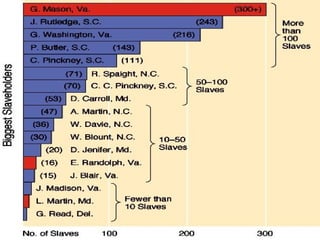
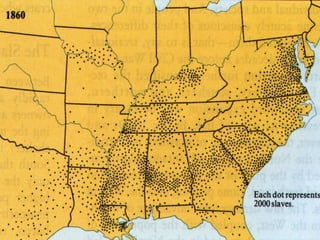
Not every Southerner owned slaves. In fact, only 1 in 11
did. But themajor moldersof public opinion did own
slaves. Thiswastrueof educators, doctors, politicians,
and preachers.
Richard Furman--theoriginator of theBiblical defense
of slavery wasonesuch pastor. In South Carolina, for
instance, 40%of Baptist preachersowned slaves.
Slavery could not beoverthrown becauseit had been
orchestrated by God who ordained it in scripture.
Slavery waspart of thedivineplan, they argued. Not
only did God'sWord makeit clear that slavery wasnot
evil, it was, in fact, apart of thedivinely established
social order.
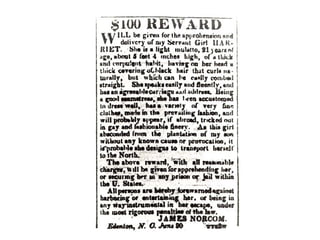
No Person held to Serviceor Labor in oneState, under
theLawsthereof, escaping into another, shall, in
Consequenceof any Law or Regulation therein, be
discharged from such Serviceor Labor, but shall be
delivered up on Claim of theParty to whom such
Serviceor Labor may bedue.
ArticleIV, Section 2, Clause3
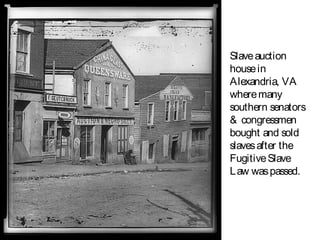
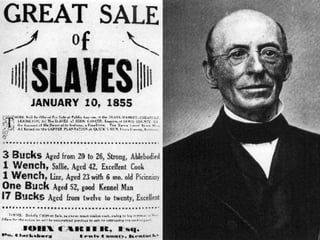
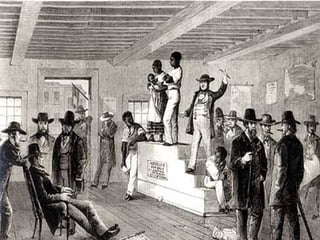
Slaveauction
housein
Alexandria, VA
wheremany
southern senators
& congressmen
bought and sold
slavesafter the
FugitiveSlave
Law waspassed.
Peculiar institution

Peculiar institution

  • 1.
    The Peculiar Institution Apowerpoint presentation originally created by Bill Michalski revised from the website https://sites.google.com/a/whschoolapps.org/ap-u-s-history/chapter- 16
  • 2.
    “In all socialsystems there must be a class to do the menial duties, to perform the drudgery of life. Fortunately for the South she found a race adapted to the purpose. The difference between us is that our slaves are hired for life and well compensated. Yours are hired by the day, not cared for, and scantily compensated.” Senator James Hammond of South Carolina
  • 4.
    An exampleof a handtinted daguerreotype, c. 1855, widely distributed in the South displaying thehappinessof slavelifeon the plantation.
  • 10.
    • Slavery wasprofitable,although alarge part of theprofit wasin theincreased valueof theslavesthemselves. • With only 30%of thenation’s(free) population, theSouth had 60%of the “wealthiest men.”
  • 11.
    • The1860 percapitaincomein the South was$3,978; in theNorth it was $2,040. • By thelate1850s, thepriceof an averageblack maleadult field hand is over $1,000.
  • 16.
    Am I nota Man?
  • 17.
    “No day everdawns for the slave, nor is it looked for. For the slave it is all night, all night forever.” “We were no more than dogs. If they caught us with a piece of paper in our pockets, they’d whip us. They was afraid we’d learn how to read and write, but I never got the chance.”
  • 25.
    • Racism againstAfrican-Americanswasa national problem, not aregional problem. • ThewhiteSouth could never havegotten away with asmuch asit did in termsof whitesupremacy had therenot been alarge number of whiteNorthernerswho supported racist policies.
  • 27.
    Thepreservation of slaveryand whitesupremacy — wereideasthat interested not only slaveholdersbut also non-slaveholding whites.
  • 31.
    Religion and Slavery •From theearly decadesof thecolonial period, slaveholdersassociated Christianity with freedom. • Masterswereso fearful that Christianized slavescould no longer be held in bondagethat beginning in the 1660'ssouthern legislatureshad to settletheissue.
  • 32.
    TheVirginialegislatureruled in 1667that "it is enacted that baptism doesnot alter thecondition of theperson asto hisbondageor freedom; mastersfreed from thisdoubt may morecarefully propagate Christianity by permitting their slavesto beadmitted to thesacrament."
  • 33.
    Not every Southernerowned slaves. In fact, only 1 in 11 did. But themajor moldersof public opinion did own slaves. Thiswastrueof educators, doctors, politicians, and preachers.
  • 34.
    Richard Furman--theoriginator oftheBiblical defense of slavery wasonesuch pastor. In South Carolina, for instance, 40%of Baptist preachersowned slaves.
  • 35.
    Slavery could notbeoverthrown becauseit had been orchestrated by God who ordained it in scripture. Slavery waspart of thedivineplan, they argued. Not only did God'sWord makeit clear that slavery wasnot evil, it was, in fact, apart of thedivinely established social order.
  • 40.
    No Person heldto Serviceor Labor in oneState, under theLawsthereof, escaping into another, shall, in Consequenceof any Law or Regulation therein, be discharged from such Serviceor Labor, but shall be delivered up on Claim of theParty to whom such Serviceor Labor may bedue. ArticleIV, Section 2, Clause3
  • 45.
    Slaveauction housein Alexandria, VA wheremany southern senators &congressmen bought and sold slavesafter the FugitiveSlave Law waspassed.