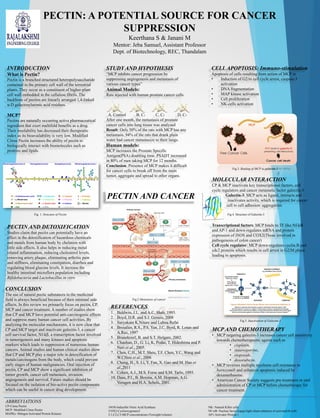
Modified citrus pectin (MCP) shows potential as a natural cancer suppressant. MCP inhibits cancer progression by suppressing angiogenesis and metastasis. Animal studies show MCP reduced metastasis of prostate cancer cells to the lungs in rats. Human studies found MCP increased prostate-specific antigen doubling time in 80% of men, indicating slower-growing tumors. MCP's proposed anti-cancer mechanisms include inducing cell cycle arrest and apoptosis, inactivating the metastasis-promoting factor galectin-3, and down-regulating transcriptional factors and cell cycle regulators involved in cancer pathogenesis. Future research aims to isolate bioactive pectin components for potential use in cancer drug development.