Bringing Peak Performance To
The Workplace
THE BODYSMITH
Objective
To help you gain a clear understanding of how
to manage work related stress with physical
activity and diet.
What Is Stress?
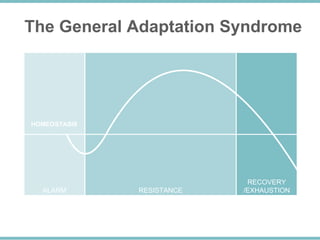
ALARM RESISTANCE
RECOVERY
/EXHAUSTION
HOMEOSTASIS
The General Adaptation Syndrome
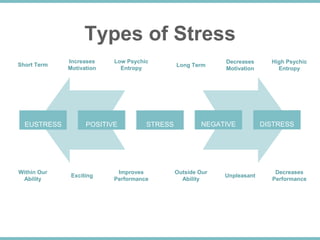
STRESS DISTRESSEUSTRESS POSITIVE NEGATIVE
Types of Stress
Long Term
Decreases
Motivation
High Psychic
Entropy
Outside Our
Ability
Unpleasant
Decreases
Performance
Short Term
Increases
Motivation
Low Psychic
Entropy
Within Our
Ability
Exciting
Improves
Performance
What Effect Does Stress
Have On Performance?
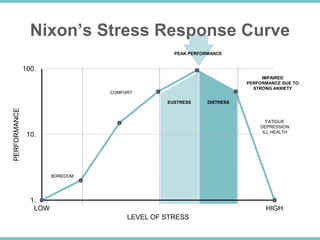
1.
10.
100.
LOW HIGH
PERFORMANCE
LEVEL OF STRESS
BOREDOM
COMFORT
EUSTRESS DISTRESS
IMPAIRED
PERFORMANCE DUE TO
STRONG ANXIETY
PEAK PERFORMANCE
Nixon’s Stress Response Curve
FATIGUE
DEPRESSION
ILL HEALTH
How Can We Manage Stress
& Improve Performance
Physical activity is defined as any bodily movement produced by
skeletal muscles that requires energy expenditure. It encompasses
all activities, at any intensity, performed during any time of day or
night.
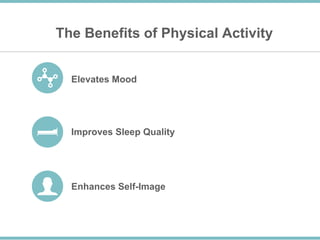
The Benefits of Physical Activity
Elevates Mood
Improves Sleep Quality
Enhances Self-Image
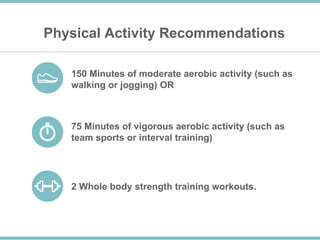
Physical Activity Recommendations
150 Minutes of moderate aerobic activity (such as
walking or jogging) OR
75 Minutes of vigorous aerobic activity (such as
team sports or interval training)
2 Whole body strength training workouts.
Diet is the sum of food consumed by a person and in order to
perform out our best, our bodies needs three things from our diet;
Water, energy and nutrients.
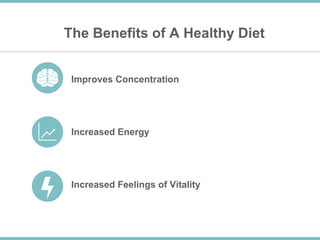
The Benefits of A Healthy Diet
Improves Concentration
Increased Energy
Increased Feelings of Vitality
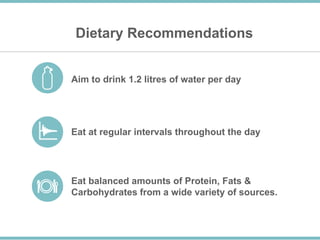
Dietary Recommendations
Aim to drink 1.2 litres of water per day
Eat at regular intervals throughout the day
Eat balanced amounts of Protein, Fats &
Carbohydrates from a wide variety of sources.
Putting It All Together
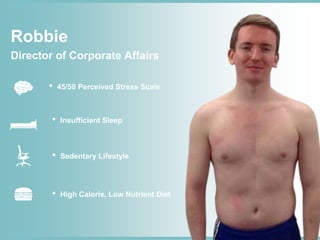
Robbie
Director of Corporate Affairs
• 45/50 Perceived Stress Scale
• Insufficient Sleep
• Sedentary Lifestyle
• High Calorie, Low Nutrient Diet
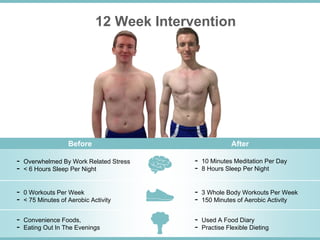
12 Week Intervention
- 3 Whole Body Workouts Per Week
- 150 Minutes of Aerobic Activity
- Used A Food Diary
- Practise Flexible Dieting
- 10 Minutes Meditation Per Day
- 8 Hours Sleep Per Night
- Overwhelmed By Work Related Stress
- < 6 Hours Sleep Per Night
- 0 Workouts Per Week
- < 75 Minutes of Aerobic Activity
- Convenience Foods,
- Eating Out In The Evenings
Before After
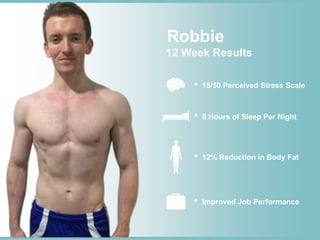
12 Week Results
• 15/50 Perceived Stress Scale
• 8 Hours of Sleep Per Night
• 12% Reduction in Body Fat
• Improved Job Performance
Robbie
Final Summary
• Stress is our bodies response to a stressor. If a
stressor has a negative effect on us, it is referred to
as Distress. If it has a positive effect on us, it is
referred to as Eustress.
• There is a dose response relationship between stress
and performance and peak performance occurs right
on the precipice between Eustress and Distress.
• Using stress management techniques, such as
physical activity and diet, can help us increase our
capacity to cope with stress and improve
performance.
Final Summary
• Performing 150 minutes of moderate aerobic activity (or 75
minutes of vigorous aerobic activity) alongside 2 whole
body strength training workouts per week will elevate your
mood, improve your sleep quality and enhance your self-
image.
• Drinking 1.5 litres of water a day and eating nutrient rich,
high fibre meals at regular intervals throughout the day can
help stabilise blood sugar levels, improve your
concentration and increase feelings of vitality.
THE BODYSMITH
Thank you!
www.linkedIn.com/TheBodySmithUK
Change Your Life Today
Book A FREE Consultation worth £150.00

Peak performance

  • 1.
    Bringing Peak PerformanceTo The Workplace THE BODYSMITH
  • 2.
    Objective To help yougain a clear understanding of how to manage work related stress with physical activity and diet.
  • 3.
  • 4.
  • 5.
    STRESS DISTRESSEUSTRESS POSITIVENEGATIVE Types of Stress Long Term Decreases Motivation High Psychic Entropy Outside Our Ability Unpleasant Decreases Performance Short Term Increases Motivation Low Psychic Entropy Within Our Ability Exciting Improves Performance
  • 6.
    What Effect DoesStress Have On Performance?
  • 7.
    1. 10. 100. LOW HIGH PERFORMANCE LEVEL OFSTRESS BOREDOM COMFORT EUSTRESS DISTRESS IMPAIRED PERFORMANCE DUE TO STRONG ANXIETY PEAK PERFORMANCE Nixon’s Stress Response Curve FATIGUE DEPRESSION ILL HEALTH
  • 8.
    How Can WeManage Stress & Improve Performance
  • 9.
    Physical activity isdefined as any bodily movement produced by skeletal muscles that requires energy expenditure. It encompasses all activities, at any intensity, performed during any time of day or night.
  • 10.
    The Benefits ofPhysical Activity Elevates Mood Improves Sleep Quality Enhances Self-Image
  • 11.
    Physical Activity Recommendations 150Minutes of moderate aerobic activity (such as walking or jogging) OR 75 Minutes of vigorous aerobic activity (such as team sports or interval training) 2 Whole body strength training workouts.
  • 12.
    Diet is thesum of food consumed by a person and in order to perform out our best, our bodies needs three things from our diet; Water, energy and nutrients.
  • 13.
    The Benefits ofA Healthy Diet Improves Concentration Increased Energy Increased Feelings of Vitality
  • 14.
    Dietary Recommendations Aim todrink 1.2 litres of water per day Eat at regular intervals throughout the day Eat balanced amounts of Protein, Fats & Carbohydrates from a wide variety of sources.
  • 15.
  • 16.
    Robbie Director of CorporateAffairs • 45/50 Perceived Stress Scale • Insufficient Sleep • Sedentary Lifestyle • High Calorie, Low Nutrient Diet
  • 17.
    12 Week Intervention -3 Whole Body Workouts Per Week - 150 Minutes of Aerobic Activity - Used A Food Diary - Practise Flexible Dieting - 10 Minutes Meditation Per Day - 8 Hours Sleep Per Night - Overwhelmed By Work Related Stress - < 6 Hours Sleep Per Night - 0 Workouts Per Week - < 75 Minutes of Aerobic Activity - Convenience Foods, - Eating Out In The Evenings Before After
  • 18.
    12 Week Results •15/50 Perceived Stress Scale • 8 Hours of Sleep Per Night • 12% Reduction in Body Fat • Improved Job Performance Robbie
  • 19.
    Final Summary • Stressis our bodies response to a stressor. If a stressor has a negative effect on us, it is referred to as Distress. If it has a positive effect on us, it is referred to as Eustress. • There is a dose response relationship between stress and performance and peak performance occurs right on the precipice between Eustress and Distress. • Using stress management techniques, such as physical activity and diet, can help us increase our capacity to cope with stress and improve performance.
  • 20.
    Final Summary • Performing150 minutes of moderate aerobic activity (or 75 minutes of vigorous aerobic activity) alongside 2 whole body strength training workouts per week will elevate your mood, improve your sleep quality and enhance your self- image. • Drinking 1.5 litres of water a day and eating nutrient rich, high fibre meals at regular intervals throughout the day can help stabilise blood sugar levels, improve your concentration and increase feelings of vitality.
  • 21.
  • 22.
    Change Your LifeToday Book A FREE Consultation worth £150.00