SOURCES OF RETURNS FROM
EQUITY
Two Sources of Equity Returns:
 Fundamental
 Speculative
Fundamental:
The Fundamental element concerns the
earnings behind the enterprise along with the
dividend paid out during the holding period.
Speculative
The Fundamental element concerns the
changes in the appraisal of the current
performance and prospective profitability by
the market participants.
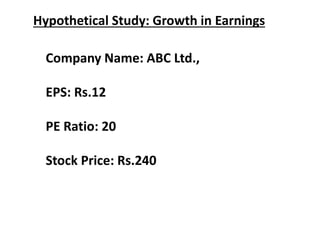
Hypothetical Study: Growth in Earnings
Company Name: ABC Ltd.,
EPS: Rs.12
PE Ratio: 20
Stock Price: Rs.240
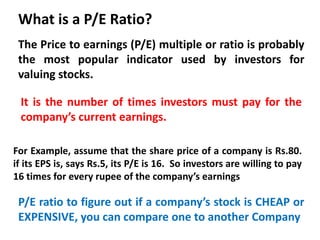
What is a P/E Ratio?
The Price to earnings (P/E) multiple or ratio is probably
the most popular indicator used by investors for
valuing stocks.
It is the number of times investors must pay for the
company’s current earnings.
For Example, assume that the share price of a company is Rs.80.
if its EPS is, says Rs.5, its P/E is 16. So investors are willing to pay
16 times for every rupee of the company’s earnings
P/E ratio to figure out if a company’s stock is CHEAP or
EXPENSIVE, you can compare one to another Company
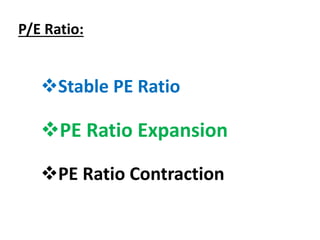
P/E Ratio:
Stable PE Ratio
PE Ratio Expansion
PE Ratio Contraction
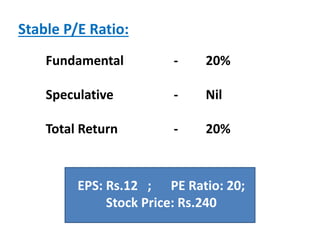
Stable P/E Ratio:
Fundamental - 20%
Speculative - Nil
Total Return - 20%
EPS: Rs.12 ; PE Ratio: 20;
Stock Price: Rs.240
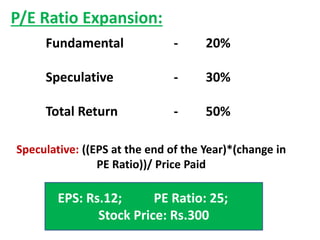
P/E Ratio Expansion:
Fundamental - 20%
Speculative - 30%
Total Return - 50%
Speculative: ((EPS at the end of the Year)*(change in
PE Ratio))/ Price Paid
EPS: Rs.12; PE Ratio: 25;
Stock Price: Rs.300
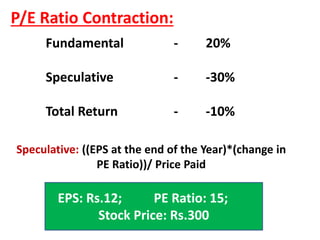
P/E Ratio Contraction:
Fundamental - 20%
Speculative - -30%
Total Return - -10%
Speculative: ((EPS at the end of the Year)*(change in
PE Ratio))/ Price Paid
EPS: Rs.12; PE Ratio: 15;
Stock Price: Rs.300

Pe ratio

  • 1.
    SOURCES OF RETURNSFROM EQUITY
  • 2.
    Two Sources ofEquity Returns:  Fundamental  Speculative
  • 3.
    Fundamental: The Fundamental elementconcerns the earnings behind the enterprise along with the dividend paid out during the holding period.
  • 4.
    Speculative The Fundamental elementconcerns the changes in the appraisal of the current performance and prospective profitability by the market participants.
  • 5.
    Hypothetical Study: Growthin Earnings Company Name: ABC Ltd., EPS: Rs.12 PE Ratio: 20 Stock Price: Rs.240
  • 6.
    What is aP/E Ratio? The Price to earnings (P/E) multiple or ratio is probably the most popular indicator used by investors for valuing stocks. It is the number of times investors must pay for the company’s current earnings. For Example, assume that the share price of a company is Rs.80. if its EPS is, says Rs.5, its P/E is 16. So investors are willing to pay 16 times for every rupee of the company’s earnings P/E ratio to figure out if a company’s stock is CHEAP or EXPENSIVE, you can compare one to another Company
  • 7.
    P/E Ratio: Stable PERatio PE Ratio Expansion PE Ratio Contraction
  • 8.
    Stable P/E Ratio: Fundamental- 20% Speculative - Nil Total Return - 20% EPS: Rs.12 ; PE Ratio: 20; Stock Price: Rs.240
  • 9.
    P/E Ratio Expansion: Fundamental- 20% Speculative - 30% Total Return - 50% Speculative: ((EPS at the end of the Year)*(change in PE Ratio))/ Price Paid EPS: Rs.12; PE Ratio: 25; Stock Price: Rs.300
  • 10.
    P/E Ratio Contraction: Fundamental- 20% Speculative - -30% Total Return - -10% Speculative: ((EPS at the end of the Year)*(change in PE Ratio))/ Price Paid EPS: Rs.12; PE Ratio: 15; Stock Price: Rs.300