Santanu Samanta (B20081)
SK Sohaillur Islam (B20082)
Arjun Sadhukhan (B20083)
Shubhadip Jana (B20084)
US MA’AM
CONTENTS
ETIOLOGY
TYPES OF PCOS
HISTORY
DEFINITION
TREATMENT
DIAGNOSIS
COMPLICATIONS
SYMPTOMS
PATHOPHYSIOLOGY
THE END
DEFINITION
The full name of PCOS is –Polycystic ovary
syndrome.
Polycystic ovary syndrome (PCOS) is a disorder
of chronically abnormal ovarian function and
hyperandrogenism (abnormally elevated
androgen IQ levels). It affects 5-10% of women
of reproductive age. The ovaries may develop
numerous small collection of fluid (follicles)
and fail to regularly release eggs.
PCOS is also called the Stein-Leventhal
syndrome.
HISTORY OF PCOS
From the history of PCOS we get some
information that
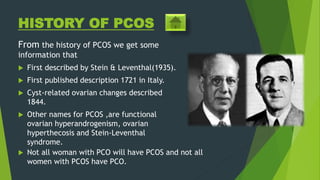
 First described by Stein & Leventhal(1935).
 First published description 1721 in Italy.
 Cyst-related ovarian changes described
1844.
 Other names for PCOS ,are functional
ovarian hyperandrogenism, ovarian
hyperthecosis and Stein-Leventhal
syndrome.
 Not all woman with PCO will have PCOS and not all
women with PCOS have PCO.
TYPES OF PCOS
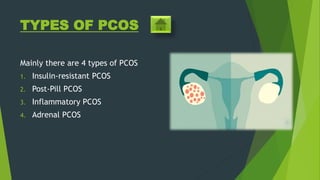
Mainly there are 4 types of PCOS
1. Insulin-resistant PCOS
2. Post-Pill PCOS
3. Inflammatory PCOS
4. Adrenal PCOS
ETIOLOGY
Causes:-
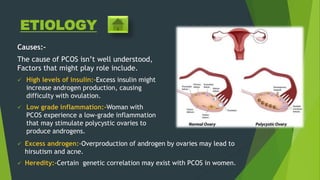
The cause of PCOS isn’t well understood,
Factors that might play role include.
 High levels of insulin:-Excess insulin might
increase androgen production, causing
difficulty with ovulation.
 Low grade inflammation:-Woman with
PCOS experience a low-grade inflammation
that may stimulate polycystic ovaries to
produce androgens.
 Excess androgen:-Overproduction of androgen by ovaries may lead to
hirsutism and acne.
 Heredity:-Certain genetic correlation may exist with PCOS in women.
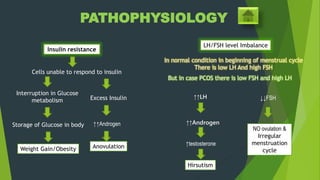
PATHOPHYSIOLOGY
Insulin resistance
Cells unable to respond to insulin
Interruption in Glucose
metabolism
Storage of Glucose in body
Weight Gain/Obesity
Excess Insulin
↑↑Androgen
Anovulation
LH/FSH level Imbalance
In normal condition in beginning of menstrual cycle
There is low LH And high FSH
But in case PCOS there is low FSH and high LH
↑↑LH
↑↑Androgen
↑testosterone
Hirsutism
↓↓FSH
NO ovulation &
Irregular
menstruation
cycle
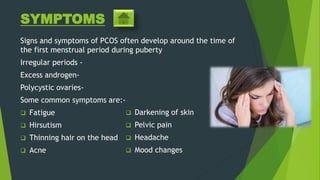
SYMPTOMS
Signs and symptoms of PCOS often develop around the time of
the first menstrual period during puberty
Irregular periods -
Excess androgen-
Polycystic ovaries-
Some common symptoms are:-
 Fatigue
 Hirsutism
 Thinning hair on the head
 Acne
 Darkening of skin
 Pelvic pain
 Headache
 Mood changes
COMPLICATIONS
Complications of PCOS can include:-
 Infertility
 Miscarriage or premature birth
 Inflammation of liver
 Metabolic syndrome like high blood pressure, high blood sugar, and abnormal
cholesterol levels that increase your risk of cardiovascular disease.
Others common complication of PCOS:-
 Sleep problem
 Depression, anxiety and eating disorders
 Abnormal uterine Bleeding.
 Cancer of the uterine lining (Endometrial cancer)
 Obesity is associated with PCOS and can worsen complication of the disorder
DIAGNOSIS
There's no test to definitively diagnose
PCOS.A physical exam will include checking
for signs of excess hair growth ,insulin
resistance and acne.
Doctor might then recommended:
 Pelvic exam, the doctors visually and manually
inspects your reproductive organs for masses,
growth or other abnormalities.
 Blood tests: blood tests check for higher-than
normal levels of male hormones, and you check
to your cholesterol,insulin,and triglyceride
levels.
 An ultrasound: it uses sound waves to look for abnormal follicles and
other problems with your ovaries and uterus.
TREATMENT
PCOS treatment focuses on managing our individual corners, such as
infertility,hirsutism,acne, obesity. Specific treatment might involve
lifestyle changes or medication.
 Obesity:-Changes to diet,exercise,medications
 Used medications and cosmetic treatments like waxing,laser,electrolysis for
stopped hirsutism (hairiness)
 Acne: used topical creams ,medications, i.e., oral contraceptive pill,anti-
androgens, over water consuming, retinoids.
 Diabetes: weight loss, exercise must ,and medications
 To regulate our menstrual cycle, our doctor might recommended:-
1.Combination of birth control pills
2.Progesteron containing drugs
3. In vitro fertilization (IVF)
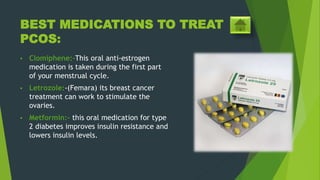
BEST MEDICATIONS TO TREAT
PCOS:
• Clomiphene:-This oral anti-estrogen
medication is taken during the first part
of your menstrual cycle.
• Letrozole:-(Femara) its breast cancer
treatment can work to stimulate the
ovaries.
• Metformin:- this oral medication for type
2 diabetes improves insulin resistance and
lowers insulin levels.
Pcos disease presentation

Pcos disease presentation

  • 1.
    Santanu Samanta (B20081) SKSohaillur Islam (B20082) Arjun Sadhukhan (B20083) Shubhadip Jana (B20084) US MA’AM
  • 2.
  • 3.
    DEFINITION The full nameof PCOS is –Polycystic ovary syndrome. Polycystic ovary syndrome (PCOS) is a disorder of chronically abnormal ovarian function and hyperandrogenism (abnormally elevated androgen IQ levels). It affects 5-10% of women of reproductive age. The ovaries may develop numerous small collection of fluid (follicles) and fail to regularly release eggs. PCOS is also called the Stein-Leventhal syndrome.
  • 4.
    HISTORY OF PCOS Fromthe history of PCOS we get some information that  First described by Stein & Leventhal(1935).  First published description 1721 in Italy.  Cyst-related ovarian changes described 1844.  Other names for PCOS ,are functional ovarian hyperandrogenism, ovarian hyperthecosis and Stein-Leventhal syndrome.  Not all woman with PCO will have PCOS and not all women with PCOS have PCO.
  • 5.
    TYPES OF PCOS Mainlythere are 4 types of PCOS 1. Insulin-resistant PCOS 2. Post-Pill PCOS 3. Inflammatory PCOS 4. Adrenal PCOS
  • 6.
    ETIOLOGY Causes:- The cause ofPCOS isn’t well understood, Factors that might play role include.  High levels of insulin:-Excess insulin might increase androgen production, causing difficulty with ovulation.  Low grade inflammation:-Woman with PCOS experience a low-grade inflammation that may stimulate polycystic ovaries to produce androgens.  Excess androgen:-Overproduction of androgen by ovaries may lead to hirsutism and acne.  Heredity:-Certain genetic correlation may exist with PCOS in women.
  • 7.
    PATHOPHYSIOLOGY Insulin resistance Cells unableto respond to insulin Interruption in Glucose metabolism Storage of Glucose in body Weight Gain/Obesity Excess Insulin ↑↑Androgen Anovulation LH/FSH level Imbalance In normal condition in beginning of menstrual cycle There is low LH And high FSH But in case PCOS there is low FSH and high LH ↑↑LH ↑↑Androgen ↑testosterone Hirsutism ↓↓FSH NO ovulation & Irregular menstruation cycle
  • 8.
    SYMPTOMS Signs and symptomsof PCOS often develop around the time of the first menstrual period during puberty Irregular periods - Excess androgen- Polycystic ovaries- Some common symptoms are:-  Fatigue  Hirsutism  Thinning hair on the head  Acne  Darkening of skin  Pelvic pain  Headache  Mood changes
  • 9.
    COMPLICATIONS Complications of PCOScan include:-  Infertility  Miscarriage or premature birth  Inflammation of liver  Metabolic syndrome like high blood pressure, high blood sugar, and abnormal cholesterol levels that increase your risk of cardiovascular disease. Others common complication of PCOS:-  Sleep problem  Depression, anxiety and eating disorders  Abnormal uterine Bleeding.  Cancer of the uterine lining (Endometrial cancer)  Obesity is associated with PCOS and can worsen complication of the disorder
  • 10.
    DIAGNOSIS There's no testto definitively diagnose PCOS.A physical exam will include checking for signs of excess hair growth ,insulin resistance and acne. Doctor might then recommended:  Pelvic exam, the doctors visually and manually inspects your reproductive organs for masses, growth or other abnormalities.  Blood tests: blood tests check for higher-than normal levels of male hormones, and you check to your cholesterol,insulin,and triglyceride levels.  An ultrasound: it uses sound waves to look for abnormal follicles and other problems with your ovaries and uterus.
  • 11.
    TREATMENT PCOS treatment focuseson managing our individual corners, such as infertility,hirsutism,acne, obesity. Specific treatment might involve lifestyle changes or medication.  Obesity:-Changes to diet,exercise,medications  Used medications and cosmetic treatments like waxing,laser,electrolysis for stopped hirsutism (hairiness)  Acne: used topical creams ,medications, i.e., oral contraceptive pill,anti- androgens, over water consuming, retinoids.  Diabetes: weight loss, exercise must ,and medications  To regulate our menstrual cycle, our doctor might recommended:- 1.Combination of birth control pills 2.Progesteron containing drugs 3. In vitro fertilization (IVF)
  • 12.
    BEST MEDICATIONS TOTREAT PCOS: • Clomiphene:-This oral anti-estrogen medication is taken during the first part of your menstrual cycle. • Letrozole:-(Femara) its breast cancer treatment can work to stimulate the ovaries. • Metformin:- this oral medication for type 2 diabetes improves insulin resistance and lowers insulin levels.