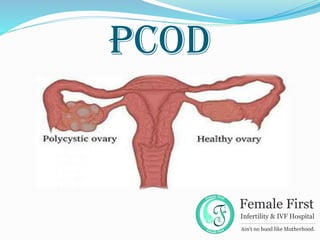
PCOD
INTRODUCTION :----
Polycystic ovary syndrome (PCOS) is a condition that affects a woman’s
hormone levels.
Women with PCOS produce higher-than-normal amounts of male
hormones. This hormone imbalance causes them to skip menstrual periods
and makes it harder for them to get pregnant.
PCOS also causes hair growth on the face and body, and baldness. And it
can contribute to long-term health problems like diabetes and heart
disease.
Birth control pills and diabetes drugs can help fix the hormone imbalance
and improve symptoms.
What is PCOD????
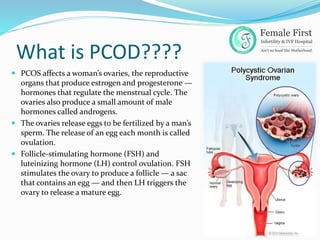
 PCOS affects a woman’s ovaries, the reproductive
organs that produce estrogen and progesterone —
hormones that regulate the menstrual cycle. The
ovaries also produce a small amount of male
hormones called androgens.
 The ovaries release eggs to be fertilized by a man’s
sperm. The release of an egg each month is called
ovulation.
 Follicle-stimulating hormone (FSH) and
luteinizing hormone (LH) control ovulation. FSH
stimulates the ovary to produce a follicle — a sac
that contains an egg — and then LH triggers the
ovary to release a mature egg.
Causes of PCOD---
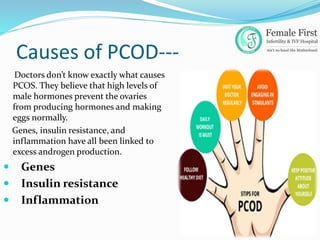
Doctors don’t know exactly what causes
PCOS. They believe that high levels of
male hormones prevent the ovaries
from producing hormones and making
eggs normally.
Genes, insulin resistance, and
inflammation have all been linked to
excess androgen production.
 Genes
 Insulin resistance
 Inflammation
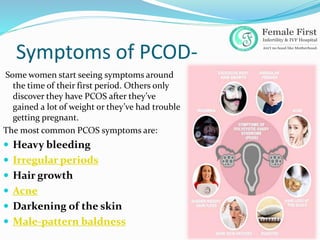
Symptoms of PCOD-
Some women start seeing symptoms around
the time of their first period. Others only
discover they have PCOS after they’ve
gained a lot of weight or they’ve had trouble
getting pregnant.
The most common PCOS symptoms are:
 Heavy bleeding
 Irregular periods
 Hair growth
 Acne
 Darkening of the skin
 Male-pattern baldness
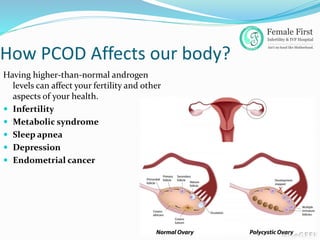
How PCOD Affects our body?
Having higher-than-normal androgen
levels can affect your fertility and other
aspects of your health.
 Infertility
 Metabolic syndrome
 Sleep apnea
 Depression
 Endometrial cancer
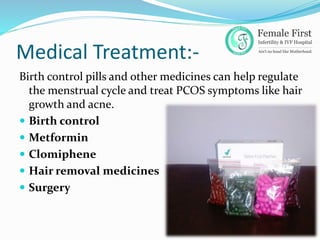
Medical Treatment:-
Birth control pills and other medicines can help regulate
the menstrual cycle and treat PCOS symptoms like hair
growth and acne.
 Birth control
 Metformin
 Clomiphene
 Hair removal medicines
 Surgery
Home Remedies for PCOD-
As with any chronic condition, maintenance of a healthy lifestyle can help
maximize quality of life and minimize symptoms. Proper nutrition and
regular exercise can help manage the weight gain and elevated blood
pressure that may accompany PCOS. Weight loss has also been shown in
many studies to reduce some of the effects of excess testosterone in women
with PCOD.
1. Exercise -First and foremost, make exercise or yoga part of your daily life and lose weight
if you are obese or overweight.
2. Anti-Inflammatory Foods -Include anti-inflammatory foods such as turmeric,
ginger,onion, green leafy vegetables, and pomegranate in your daily diet.
3. Coconut Oil -A great remedy for treating PCOS at home is coconut oil. Consume 1
tablespoon of coconut oil everyday. It will regulate blood sugar levels and insulin secretion.
4. Fenugreek Seeds -Fenugreek, more commonly known as methi is one of the most
helpful remedy for PCOS. Soak 3 tablespoons of fenugreek seeds overnight in water
and have it thrice a day on empty stomach.
Home Remedies
To get best PCOD treatment
visit us…..
Dr . Sweta Patel
Address- Surat ,
Gujarat
http://www.femalefirsthospital.com
Contact us : +91 9262343434
PCOD Presentaion

PCOD Presentaion

  • 1.
  • 2.
    INTRODUCTION :---- Polycystic ovarysyndrome (PCOS) is a condition that affects a woman’s hormone levels. Women with PCOS produce higher-than-normal amounts of male hormones. This hormone imbalance causes them to skip menstrual periods and makes it harder for them to get pregnant. PCOS also causes hair growth on the face and body, and baldness. And it can contribute to long-term health problems like diabetes and heart disease. Birth control pills and diabetes drugs can help fix the hormone imbalance and improve symptoms.
  • 3.
    What is PCOD???? PCOS affects a woman’s ovaries, the reproductive organs that produce estrogen and progesterone — hormones that regulate the menstrual cycle. The ovaries also produce a small amount of male hormones called androgens.  The ovaries release eggs to be fertilized by a man’s sperm. The release of an egg each month is called ovulation.  Follicle-stimulating hormone (FSH) and luteinizing hormone (LH) control ovulation. FSH stimulates the ovary to produce a follicle — a sac that contains an egg — and then LH triggers the ovary to release a mature egg.
  • 4.
    Causes of PCOD--- Doctorsdon’t know exactly what causes PCOS. They believe that high levels of male hormones prevent the ovaries from producing hormones and making eggs normally. Genes, insulin resistance, and inflammation have all been linked to excess androgen production.  Genes  Insulin resistance  Inflammation
  • 5.
    Symptoms of PCOD- Somewomen start seeing symptoms around the time of their first period. Others only discover they have PCOS after they’ve gained a lot of weight or they’ve had trouble getting pregnant. The most common PCOS symptoms are:  Heavy bleeding  Irregular periods  Hair growth  Acne  Darkening of the skin  Male-pattern baldness
  • 6.
    How PCOD Affectsour body? Having higher-than-normal androgen levels can affect your fertility and other aspects of your health.  Infertility  Metabolic syndrome  Sleep apnea  Depression  Endometrial cancer
  • 7.
    Medical Treatment:- Birth controlpills and other medicines can help regulate the menstrual cycle and treat PCOS symptoms like hair growth and acne.  Birth control  Metformin  Clomiphene  Hair removal medicines  Surgery
  • 8.
    Home Remedies forPCOD- As with any chronic condition, maintenance of a healthy lifestyle can help maximize quality of life and minimize symptoms. Proper nutrition and regular exercise can help manage the weight gain and elevated blood pressure that may accompany PCOS. Weight loss has also been shown in many studies to reduce some of the effects of excess testosterone in women with PCOD. 1. Exercise -First and foremost, make exercise or yoga part of your daily life and lose weight if you are obese or overweight. 2. Anti-Inflammatory Foods -Include anti-inflammatory foods such as turmeric, ginger,onion, green leafy vegetables, and pomegranate in your daily diet. 3. Coconut Oil -A great remedy for treating PCOS at home is coconut oil. Consume 1 tablespoon of coconut oil everyday. It will regulate blood sugar levels and insulin secretion. 4. Fenugreek Seeds -Fenugreek, more commonly known as methi is one of the most helpful remedy for PCOS. Soak 3 tablespoons of fenugreek seeds overnight in water and have it thrice a day on empty stomach.
  • 9.
  • 10.
    To get bestPCOD treatment visit us….. Dr . Sweta Patel Address- Surat , Gujarat http://www.femalefirsthospital.com Contact us : +91 9262343434