SME Rating Agency of India Ltd
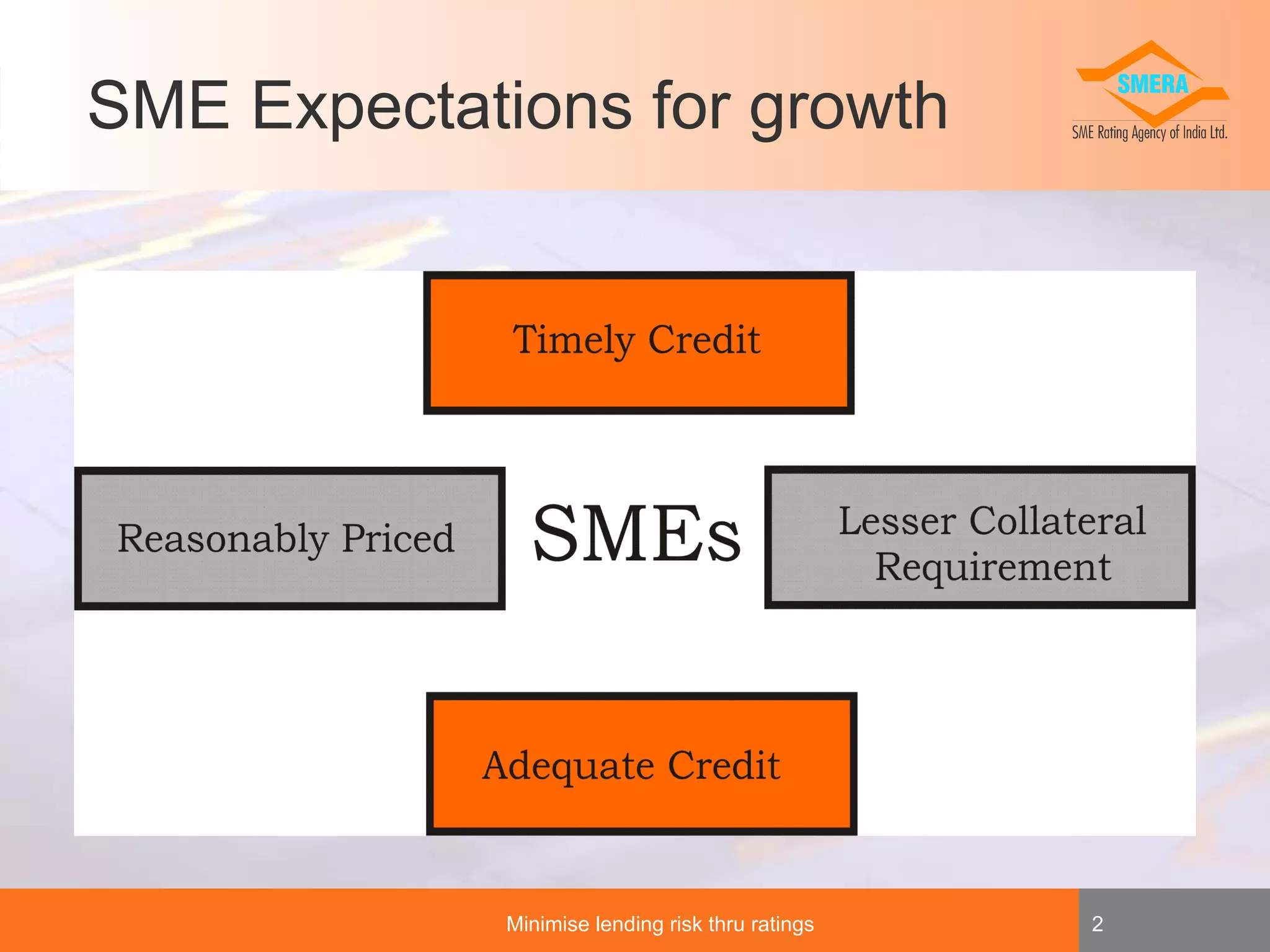
SME Expectations for growth

Minimise lending risk thru ratings

2
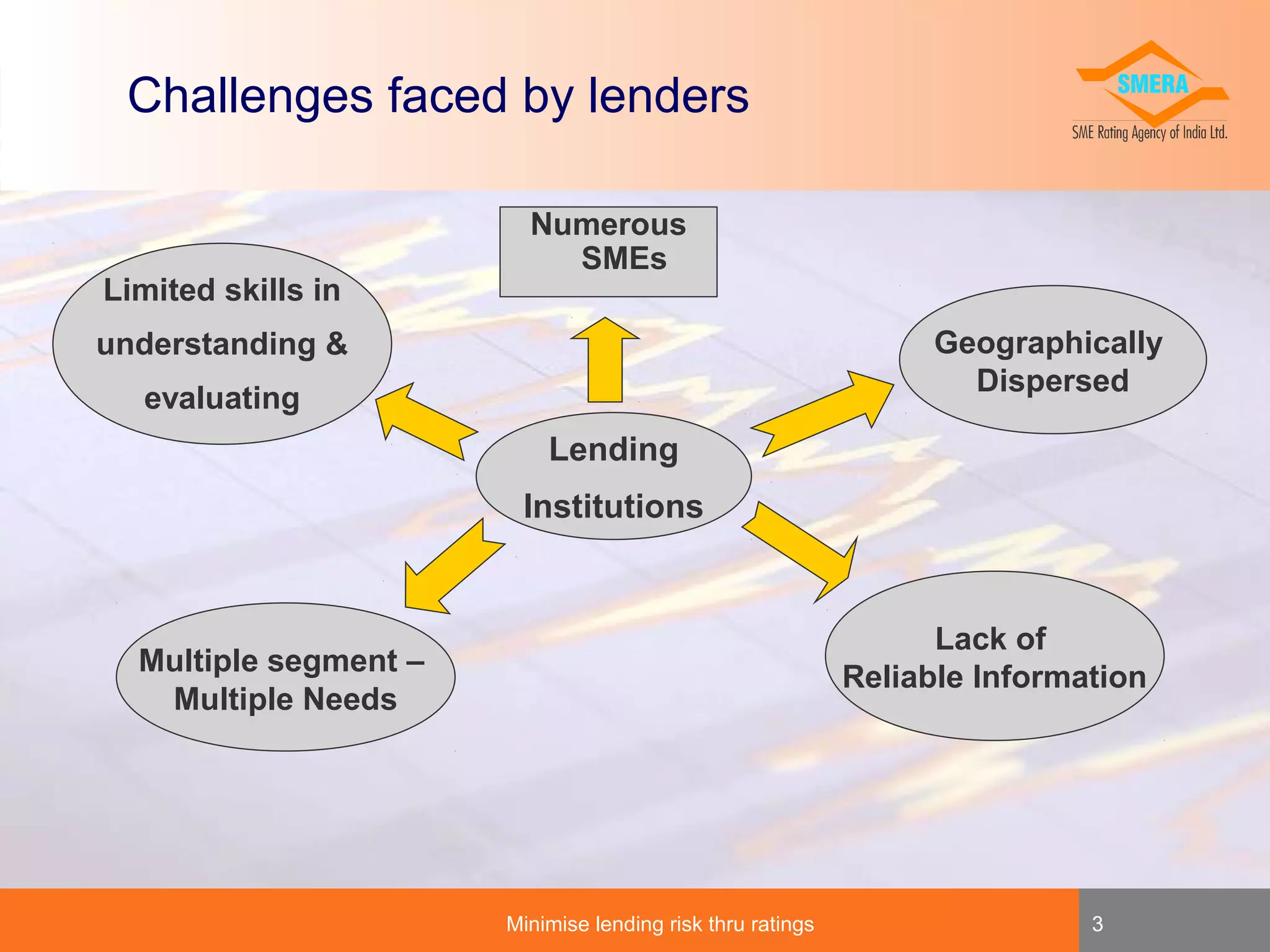
Challenges faced by lenders

Limited skills in

Numerous
SMEs
Geographically
Dispersed

understanding &
evaluating

Lending
Institutions

Lack of
Reliable Information

Multiple segment –
Multiple Needs

Minimise lending risk thru ratings

3
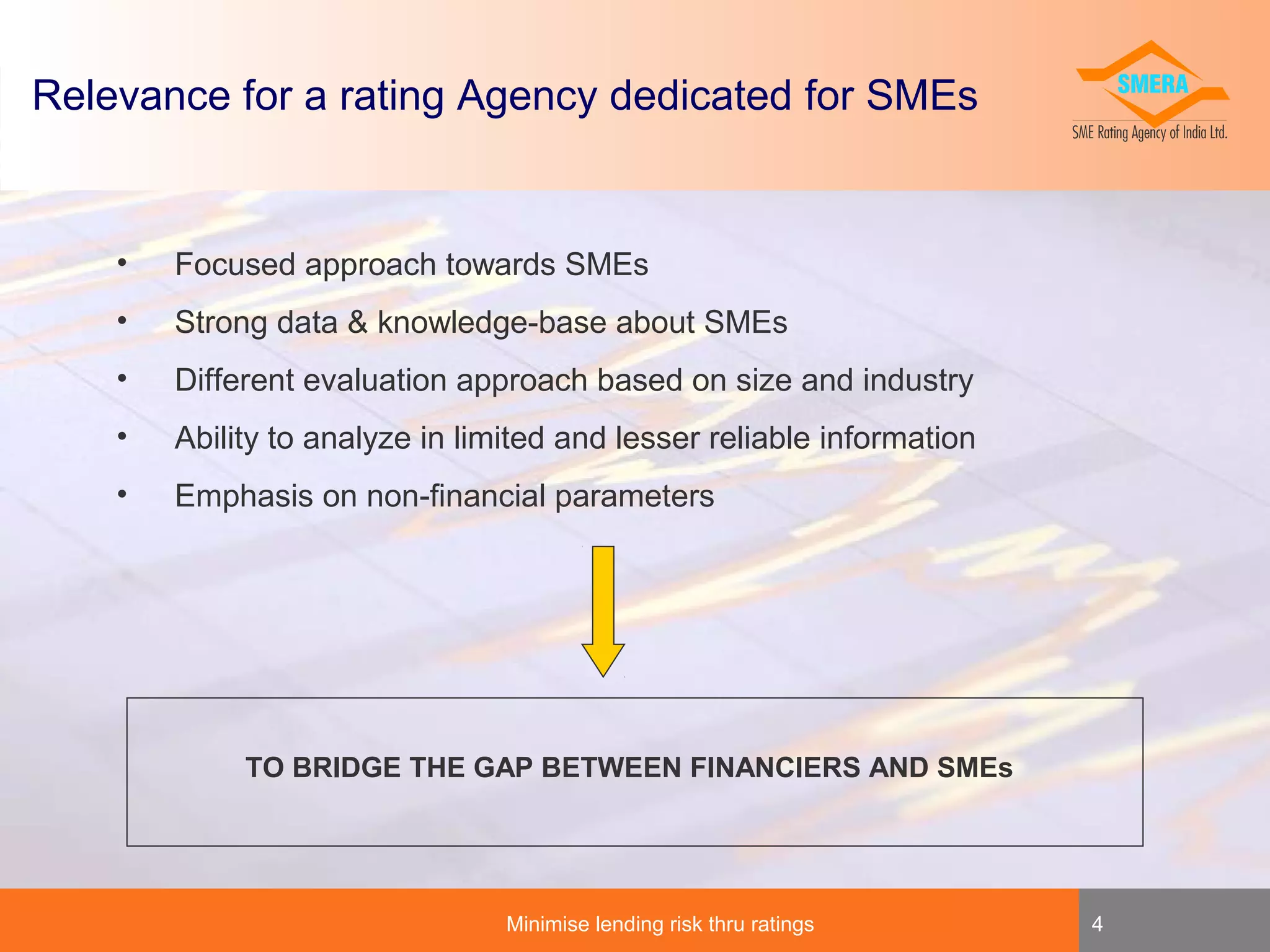
Relevance for a rating Agency dedicated for SMEs

•

Focused approach towards SMEs

•

Strong data & knowledge-base about SMEs

•

Different evaluation approach based on size and industry

•

Ability to analyze in limited and lesser reliable information

•

Emphasis on non-financial parameters

TO BRIDGE THE GAP BETWEEN FINANCIERS AND SMEs

Minimise lending risk thru ratings

4
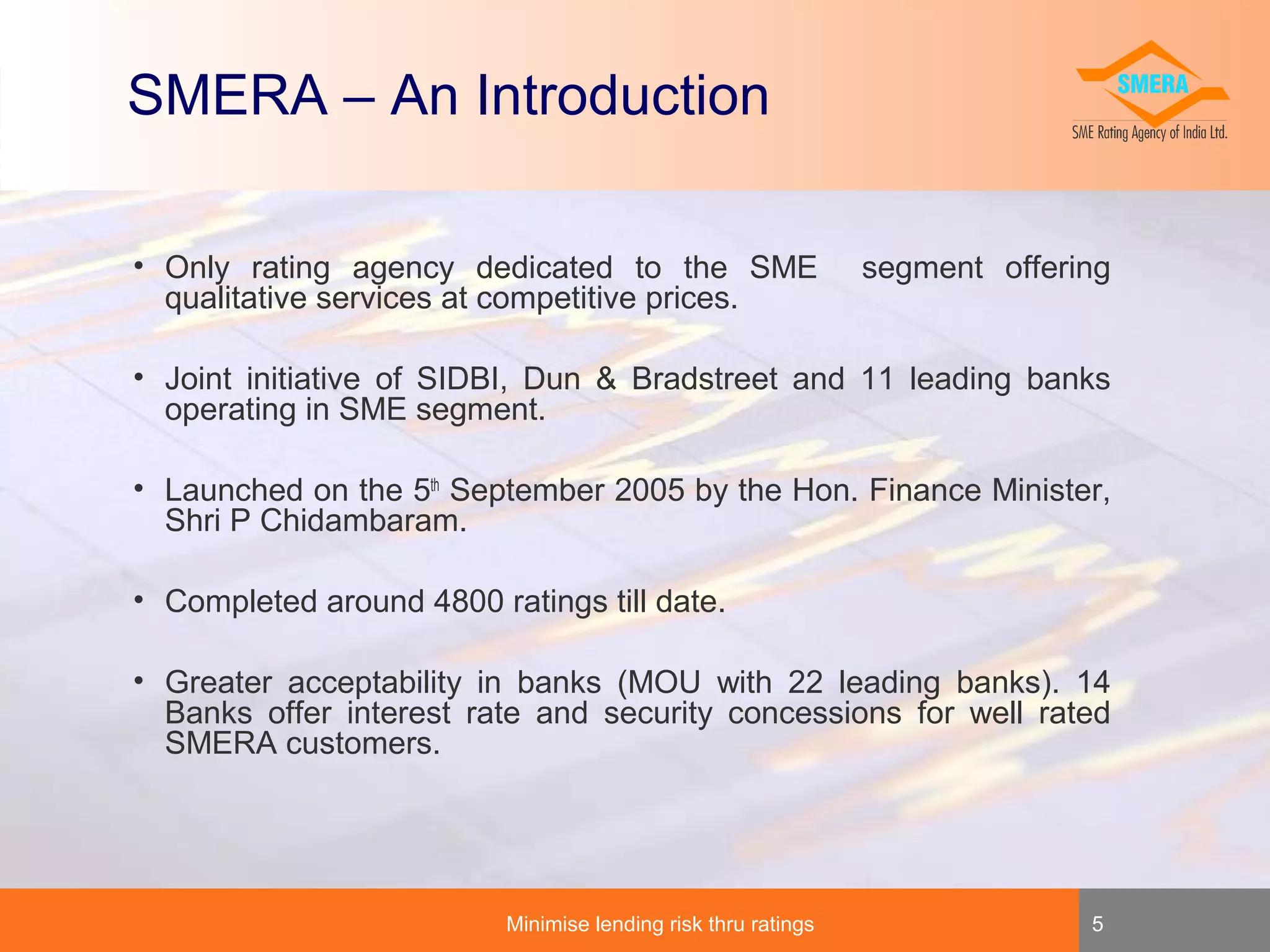
SMERA – An Introduction
• Only rating agency dedicated to the SME
qualitative services at competitive prices.

segment offering

• Joint initiative of SIDBI, Dun & Bradstreet and 11 leading banks
operating in SME segment.
• Launched on the 5th September 2005 by the Hon. Finance Minister,
Shri P Chidambaram.
• Completed around 4800 ratings till date.
• Greater acceptability in banks (MOU with 22 leading banks). 14
Banks offer interest rate and security concessions for well rated
SMERA customers.

Minimise lending risk thru ratings

5
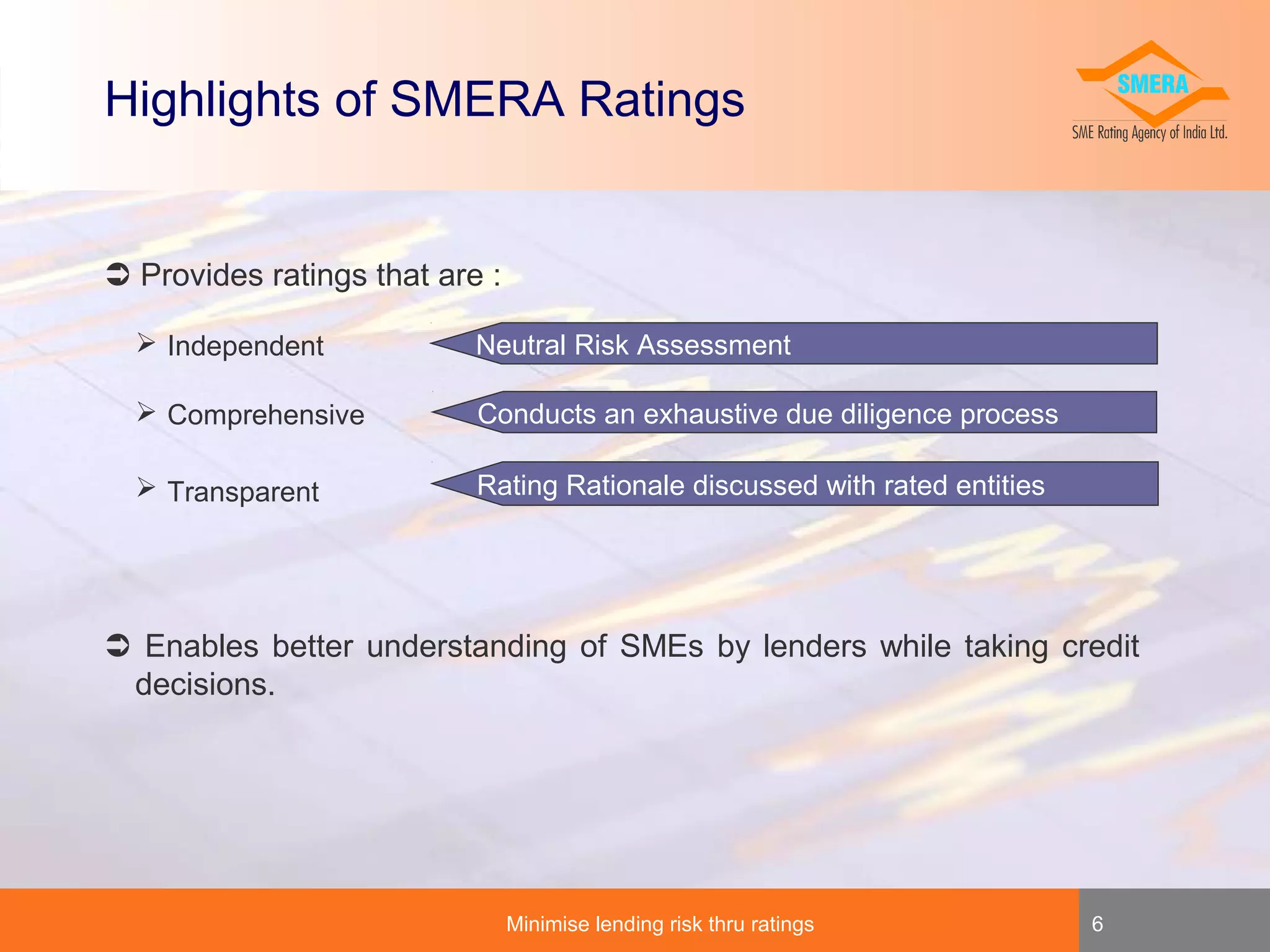
Highlights of SMERA Ratings

 Provides ratings that are :
 Independent

Neutral Risk Assessment

 Comprehensive

Conducts an exhaustive due diligence process

 Transparent

Rating Rationale discussed with rated entities

 Enables better understanding of SMEs by lenders while taking credit
decisions.

Minimise lending risk thru ratings

6
Rating Scales

• NSIC
• SMERA
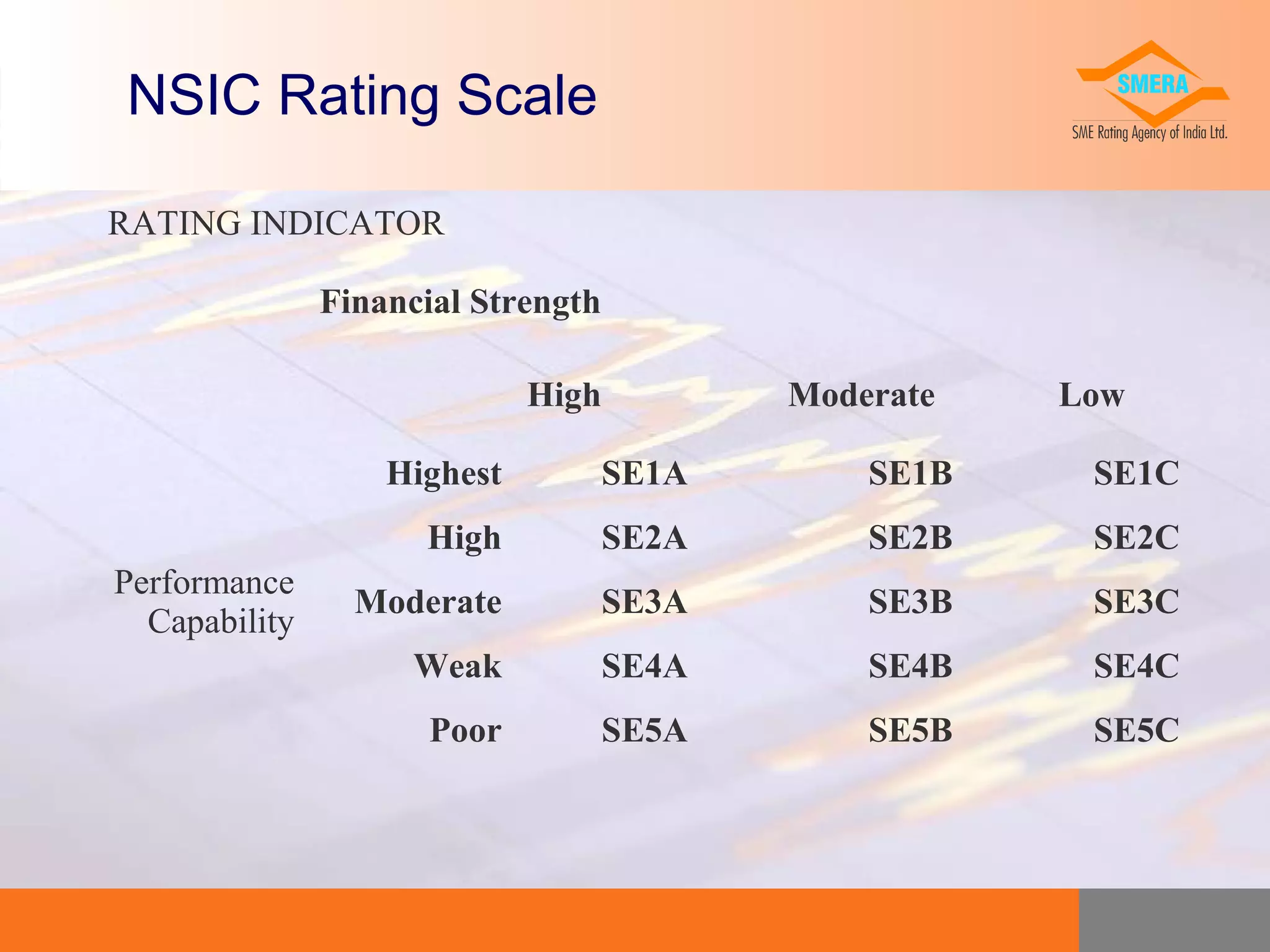
NSIC Rating Scale
RATING INDICATOR
Financial Strength
High

Moderate

Low

Highest

SE1B

SE1C

High
Performance
Capability

SE1A
SE2A

SE2B

SE2C

Moderate

SE3A

SE3B

SE3C

Weak

SE4A

SE4B

SE4C

Poor

SE5A

SE5B

SE5C
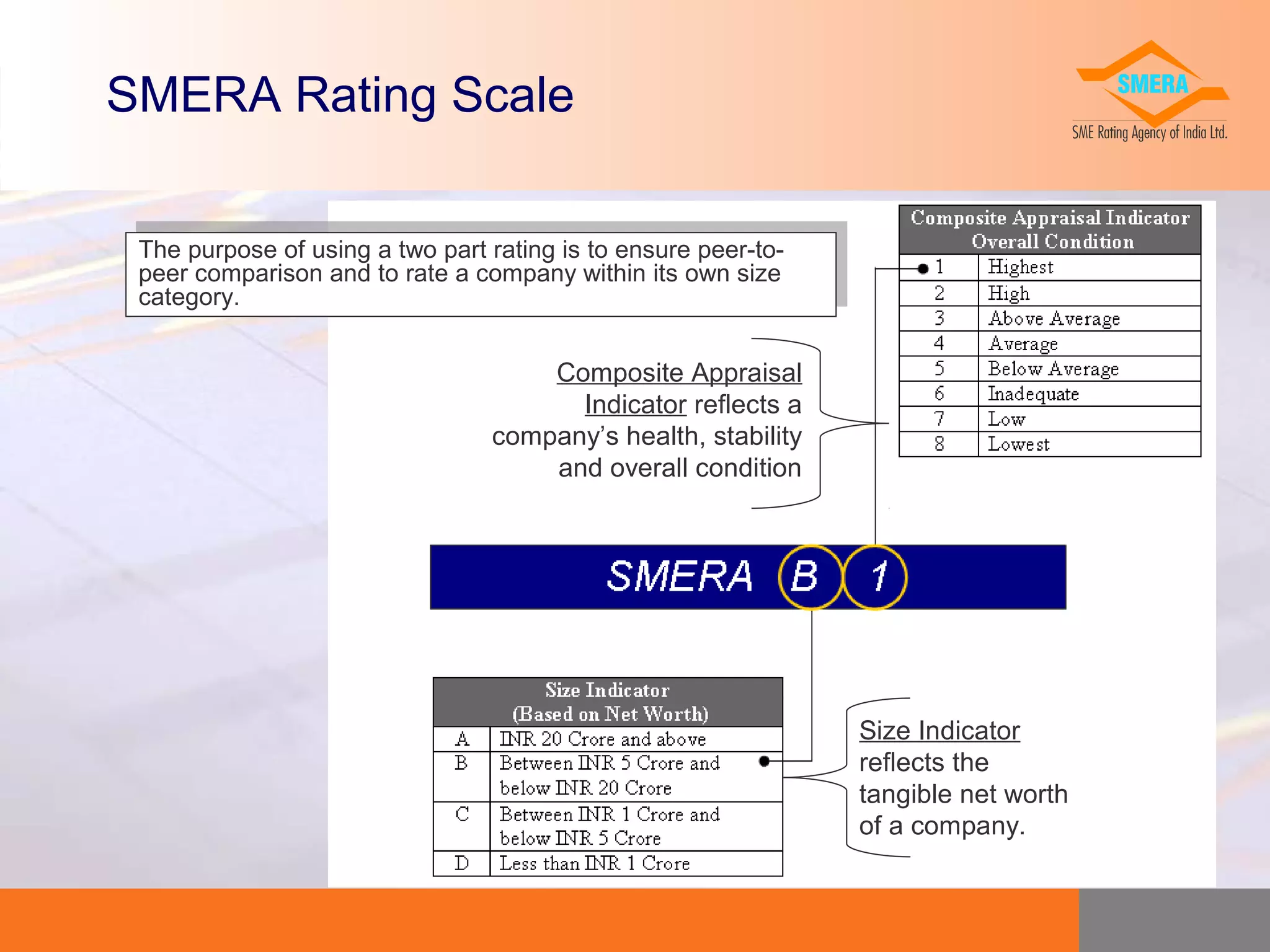
SMERA Rating Scale
The purpose of using two part rating is to ensure peer-toThe purpose of using aatwo part rating is to ensure peer-topeer comparison and to rate company within its own size
peer comparison and to rate aacompany within its own size
category.
category.

Composite Appraisal
Indicator reflects a
company’s health, stability
and overall condition

Size Indicator
reflects the
tangible net worth
of a company.
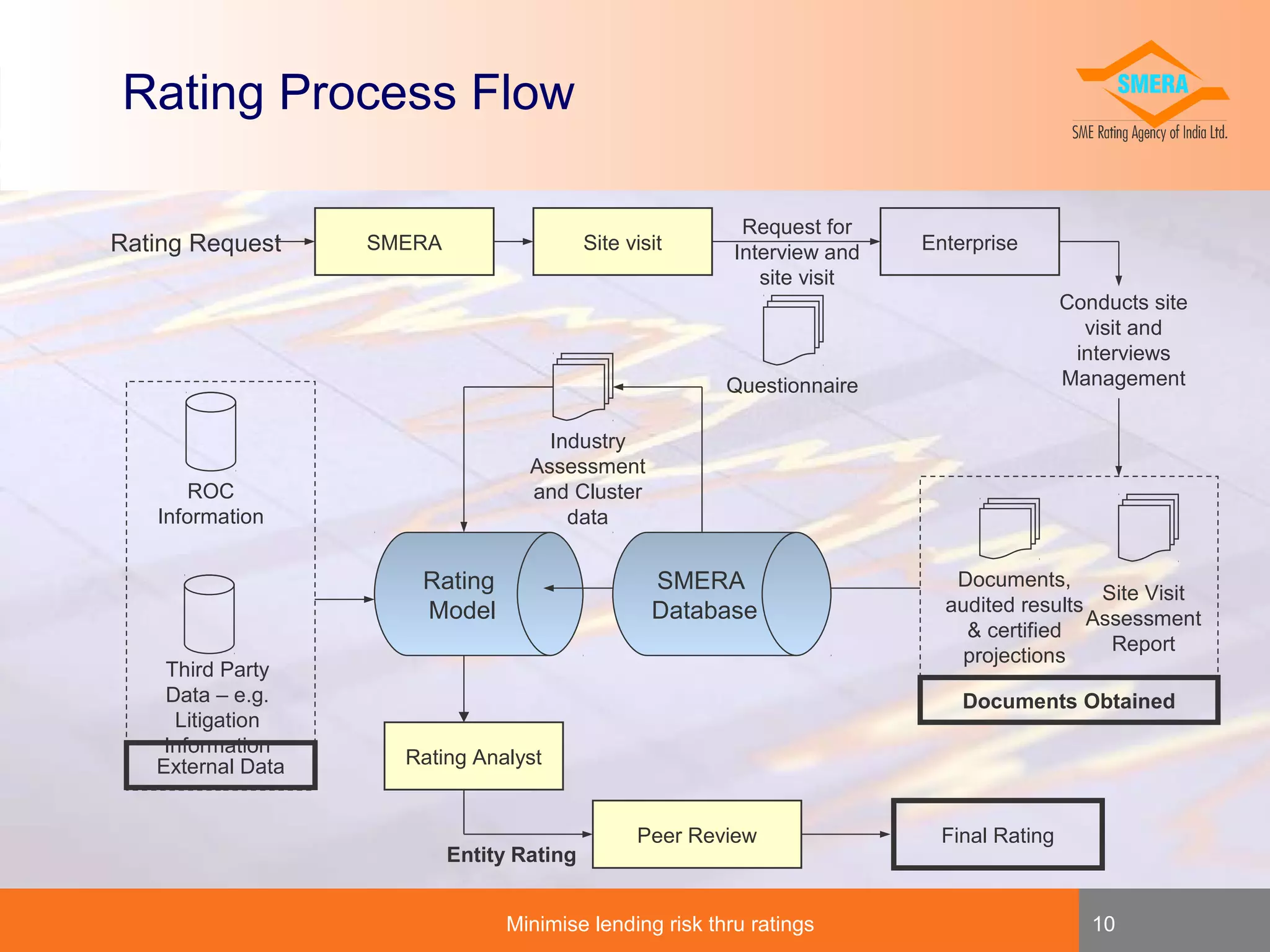
Rating Process Flow
Rating Request

SMERA

Site visit

Request for
Interview and
site visit

Enterprise
Conducts site
visit and
interviews
Management

Questionnaire
Industry
Assessment
and Cluster
data

ROC
Information

Rating
Model
Third Party
Data – e.g.
Litigation
Information
External Data

SMERA
Database

Documents,
Site Visit
audited results
Assessment
& certified
Report
projections
Documents Obtained

Rating Analyst

Entity Rating

Peer Review

Minimise lending risk thru ratings

Final Rating

10
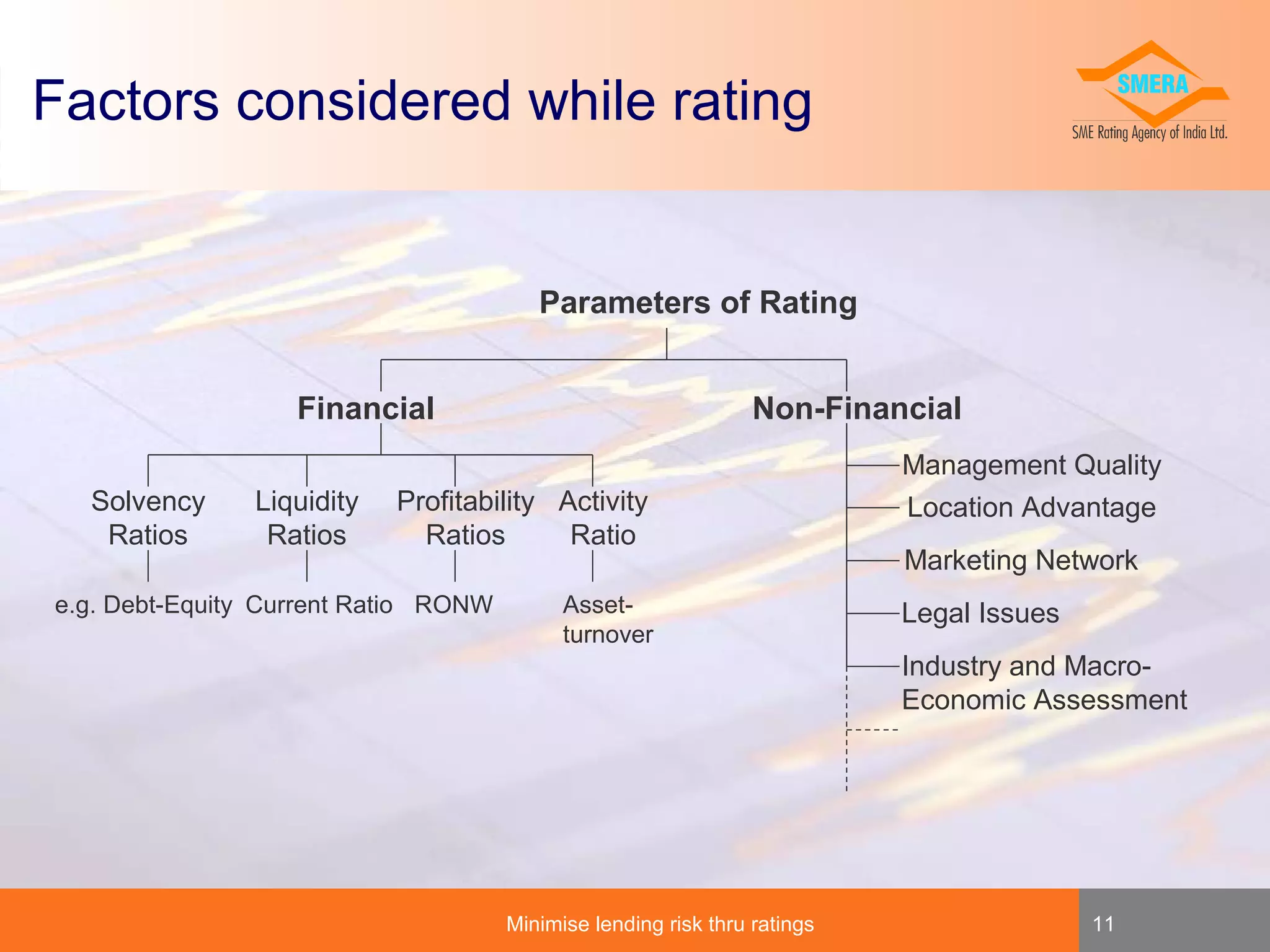
Factors considered while rating

Parameters of Rating
Financial
Solvency
Ratios

Liquidity
Ratios

Non-Financial

Profitability Activity
Ratios
Ratio

e.g. Debt-Equity Current Ratio RONW

Assetturnover

Management Quality
Location Advantage
Marketing Network
Legal Issues
Industry and MacroEconomic Assessment

Minimise lending risk thru ratings

11
Non-Financial Parameters
Employee Count & quality
Years in Existence
Legal Status
Main Premise Ownership
Management Qualification
Management Experience
Statutory Compliance
Raw Material
Buyer/Supplier Base
Energy Plan
Capacity Utilization %
Sales - DOM & Exports
Nature of Industry
Product Line
Sales/Purchases from Sister Concerns
Marketing Network
Research & Dev
elopment
Insurance Cov
erage
Litigation
Accounts audited/certified
Awards & Qualitativ
e Certification
Locational adv
antage
Site Visit Observ
ation
Banking Facilities
Achiev
ability of Financials
Analyst Ev
aluation

Minimise lending risk thru ratings

12
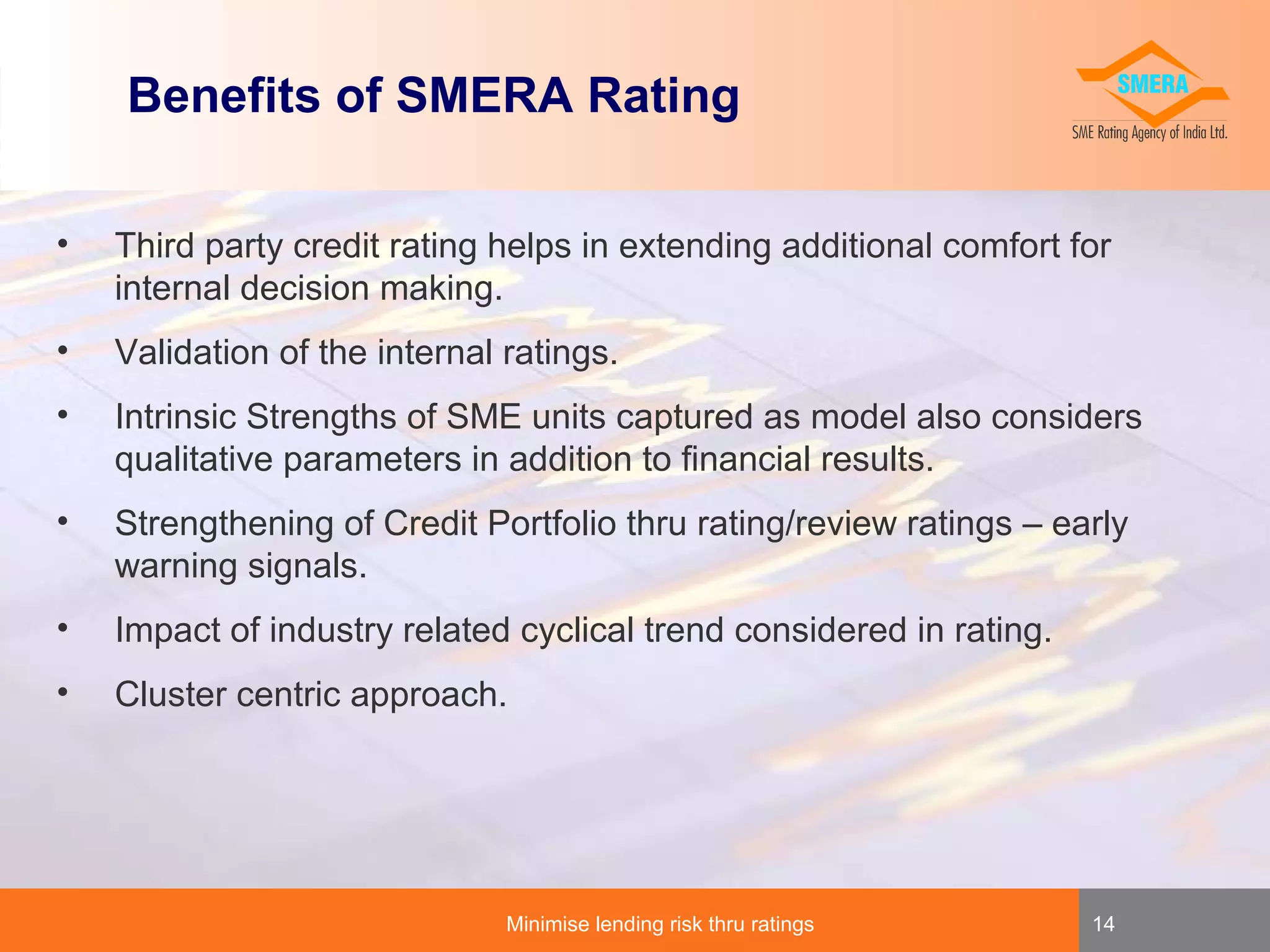
Benefits of SMERA Rating
•

Third party credit rating helps in extending additional comfort for
internal decision making.

•

Validation of the internal ratings.

•

Intrinsic Strengths of SME units captured as model also considers
qualitative parameters in addition to financial results.

•

Strengthening of Credit Portfolio thru rating/review ratings – early
warning signals.

•

Impact of industry related cyclical trend considered in rating.

•

Cluster centric approach.

Minimise lending risk thru ratings

14
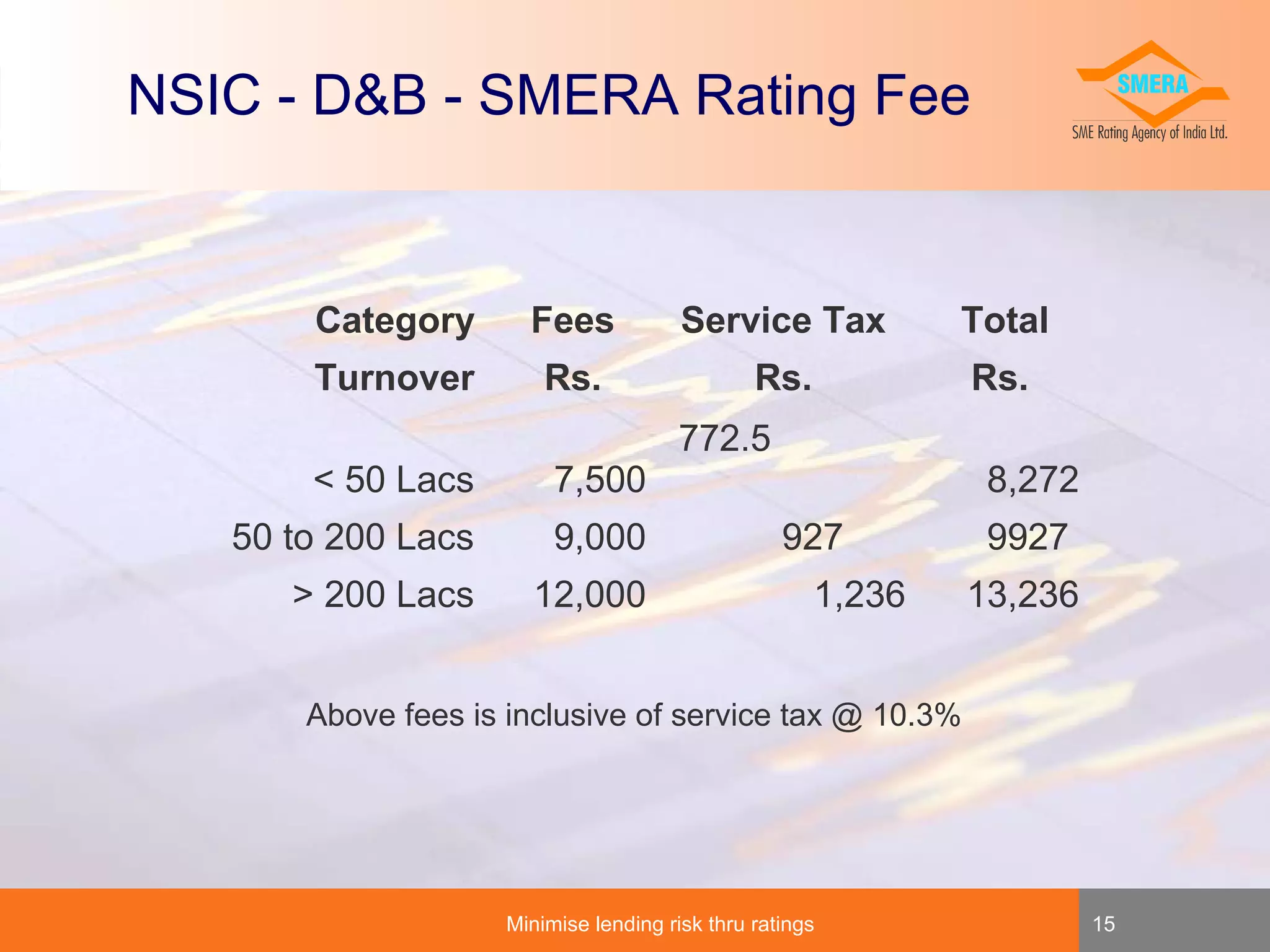
NSIC - D&B - SMERA Rating Fee

Category

Fees

Service Tax

Total

Turnover

Rs.

Rs.

Rs.

< 50 Lacs

7,500

50 to 200 Lacs

9,000

> 200 Lacs

12,000

772.5

8,272
927
1,236

9927
13,236

Above fees is inclusive of service tax @ 10.3%

Minimise lending risk thru ratings

15
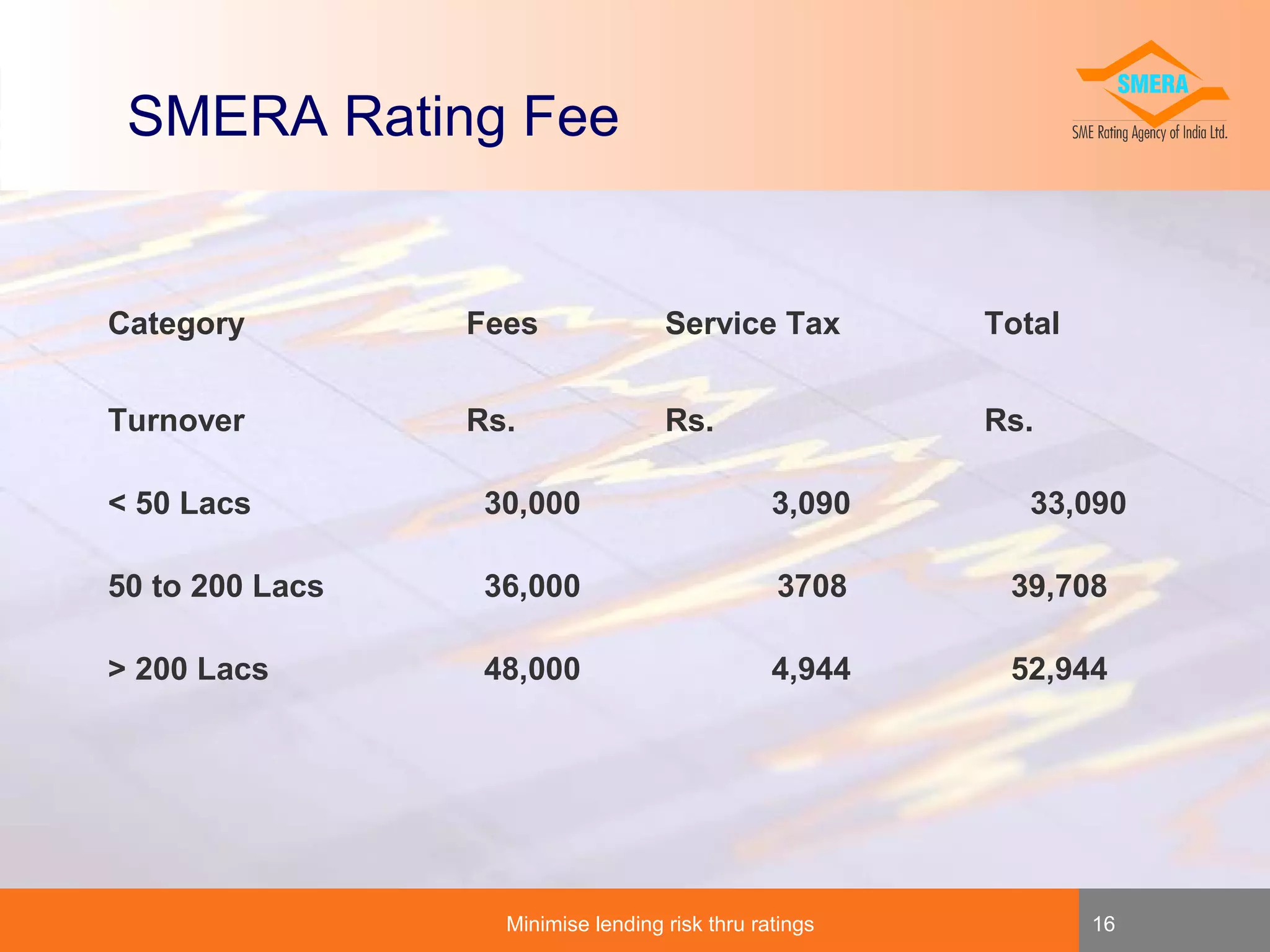
SMERA Rating Fee

Category

Fees

Service Tax

Total

Turnover

Rs.

Rs.

Rs.

< 50 Lacs

30,000

3,090

50 to 200 Lacs

36,000

3708

39,708

> 200 Lacs

48,000

4,944

52,944

Minimise lending risk thru ratings

33,090

16
Thank You
Contact Details
Virendra Goyal-National Sales Manager
Cell-99300-74009.Email-virendra.goyal@smera.in

Pce

  • 1.
    SME Rating Agencyof India Ltd
  • 2.
    SME Expectations forgrowth Minimise lending risk thru ratings 2
  • 3.
    Challenges faced bylenders Limited skills in Numerous SMEs Geographically Dispersed understanding & evaluating Lending Institutions Lack of Reliable Information Multiple segment – Multiple Needs Minimise lending risk thru ratings 3
  • 4.
    Relevance for arating Agency dedicated for SMEs • Focused approach towards SMEs • Strong data & knowledge-base about SMEs • Different evaluation approach based on size and industry • Ability to analyze in limited and lesser reliable information • Emphasis on non-financial parameters TO BRIDGE THE GAP BETWEEN FINANCIERS AND SMEs Minimise lending risk thru ratings 4
  • 5.
    SMERA – AnIntroduction • Only rating agency dedicated to the SME qualitative services at competitive prices. segment offering • Joint initiative of SIDBI, Dun & Bradstreet and 11 leading banks operating in SME segment. • Launched on the 5th September 2005 by the Hon. Finance Minister, Shri P Chidambaram. • Completed around 4800 ratings till date. • Greater acceptability in banks (MOU with 22 leading banks). 14 Banks offer interest rate and security concessions for well rated SMERA customers. Minimise lending risk thru ratings 5
  • 6.
    Highlights of SMERARatings  Provides ratings that are :  Independent Neutral Risk Assessment  Comprehensive Conducts an exhaustive due diligence process  Transparent Rating Rationale discussed with rated entities  Enables better understanding of SMEs by lenders while taking credit decisions. Minimise lending risk thru ratings 6
  • 7.
  • 8.
    NSIC Rating Scale RATINGINDICATOR Financial Strength High Moderate Low Highest SE1B SE1C High Performance Capability SE1A SE2A SE2B SE2C Moderate SE3A SE3B SE3C Weak SE4A SE4B SE4C Poor SE5A SE5B SE5C
  • 9.
    SMERA Rating Scale Thepurpose of using two part rating is to ensure peer-toThe purpose of using aatwo part rating is to ensure peer-topeer comparison and to rate company within its own size peer comparison and to rate aacompany within its own size category. category. Composite Appraisal Indicator reflects a company’s health, stability and overall condition Size Indicator reflects the tangible net worth of a company.
  • 10.
    Rating Process Flow RatingRequest SMERA Site visit Request for Interview and site visit Enterprise Conducts site visit and interviews Management Questionnaire Industry Assessment and Cluster data ROC Information Rating Model Third Party Data – e.g. Litigation Information External Data SMERA Database Documents, Site Visit audited results Assessment & certified Report projections Documents Obtained Rating Analyst Entity Rating Peer Review Minimise lending risk thru ratings Final Rating 10
  • 11.
    Factors considered whilerating Parameters of Rating Financial Solvency Ratios Liquidity Ratios Non-Financial Profitability Activity Ratios Ratio e.g. Debt-Equity Current Ratio RONW Assetturnover Management Quality Location Advantage Marketing Network Legal Issues Industry and MacroEconomic Assessment Minimise lending risk thru ratings 11
  • 12.
    Non-Financial Parameters Employee Count& quality Years in Existence Legal Status Main Premise Ownership Management Qualification Management Experience Statutory Compliance Raw Material Buyer/Supplier Base Energy Plan Capacity Utilization % Sales - DOM & Exports Nature of Industry Product Line Sales/Purchases from Sister Concerns Marketing Network Research & Dev elopment Insurance Cov erage Litigation Accounts audited/certified Awards & Qualitativ e Certification Locational adv antage Site Visit Observ ation Banking Facilities Achiev ability of Financials Analyst Ev aluation Minimise lending risk thru ratings 12
  • 13.
    Benefits of SMERARating • Third party credit rating helps in extending additional comfort for internal decision making. • Validation of the internal ratings. • Intrinsic Strengths of SME units captured as model also considers qualitative parameters in addition to financial results. • Strengthening of Credit Portfolio thru rating/review ratings – early warning signals. • Impact of industry related cyclical trend considered in rating. • Cluster centric approach. Minimise lending risk thru ratings 14
  • 14.
    NSIC - D&B- SMERA Rating Fee Category Fees Service Tax Total Turnover Rs. Rs. Rs. < 50 Lacs 7,500 50 to 200 Lacs 9,000 > 200 Lacs 12,000 772.5 8,272 927 1,236 9927 13,236 Above fees is inclusive of service tax @ 10.3% Minimise lending risk thru ratings 15
  • 15.
    SMERA Rating Fee Category Fees ServiceTax Total Turnover Rs. Rs. Rs. < 50 Lacs 30,000 3,090 50 to 200 Lacs 36,000 3708 39,708 > 200 Lacs 48,000 4,944 52,944 Minimise lending risk thru ratings 33,090 16
  • 16.
    Thank You Contact Details VirendraGoyal-National Sales Manager Cell-99300-74009.Email-virendra.goyal@smera.in

Editor's Notes

  • #7 Allahabad Bank Andhra Bank Bank of Baroda Bank of India Canara Bank Central Bank Of India Dena Bank Indian Bank Oriental Bank of Commerce Syndicate Bank UCO Bank Union Bank Of India