


CCRREEDDIITT RRAATTIINNGG
MMEEAANNIINNGG 
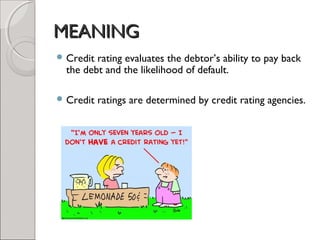
Credit rating evaluates the debtor’s ability to pay back 
the debt and the likelihood of default. 
Credit ratings are determined by credit rating agencies.
DDEEFFIINNIITTIIOONN 
According to CRISIL : 
“Credit rating is an unbiased, objective 
and independent opinion as to an issuer’s 
capacity to meet financial obligation.”
OORRIIGGIINN 
 The first mercantile credit agency was set up in newyork in 
1841 to rate the ability of merchants to pay their financial 
obligations. 
 Later on, it was taken over by Robert Dun. This agency 
published its first rating guide in 1859. 
 The second agency was established by John Bradstreet in 
1849 which was later merged with first agency to form Dun & 
Bradstreet in 1933, which became the owner of Mood’s 
investor’s service in 1962.
OORRGGIINN OOFF CCRREEDDIITT RRAATTIINNGG IINN 
IINNDDIIAA 
India’s first credit rating agency CRISIL was set up in 29 
January 1987. 
It is incorporated, promoted by the erstwhile ICICI Ltd 
along with UTI and other financial institutions. 
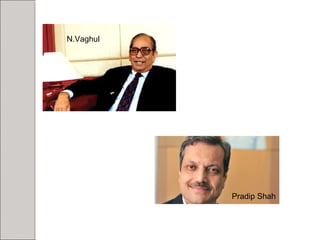
Mr. N Vaghul and Mr. Pradip Shah are CRISIL’S first 
Chairman and Managing Director respectively. 
The first private sector credit rating institution in India 
was DUFFS & PHELPS CREDIT RATING INDIA 
PVT.LTD formed in 1995.
N.Vaghul 
Pradip Shah
NNEEEEDD FFOORR CCRREEDDIITT RRAATTIINNGG 
 It is necessary in view of the growing number of cases of defaults in 
payment of interest and repayment of principle sum borrowed by way of 
fixed deposits, issue of debentures or preference shares or commercial 
papers. 
 Maintenance of investor’s confidence, since default shatter the confidence 
of investors in corporate instruments. 
 Protect the interest of investors who can not investigate much into the 
merits of the debt instruments of a company. 
 Motivate savers to invest in industry and trade.
OOBBJJEECCTTIIVVEESS OOFF CCRREEDDIITT 
RRAATTIINNGG 
Improves a healthy discipline on borrowers. 
Lends greater credence to financial and other 
representations. 
Facilitates formulation of public guidelines on institutional 
investments. 
Helps merchant bankers, brokers, regulatory authorities, etc., 
in discharging their functions related to debt issues. 
Encourages greater information disclosure, better accounting 
standards and improved financial information 
Act as a marketing tool.
IIMMPPOORRTTAANNCCEE OOFF CCRREEDDIITT RRAATTIINNGG 
Credit ratings establish a link between risk and return. 
They provide a yardstick against which to measure the risk 
inherent in any instrument. 
An investors uses the ratings to assess the risk level and 
compares the offered rate of return with his expected rate of 
return. 
It is very uncommon for different classes of investors to 
arrive at some uniform conclusion as to the relative quality of 
the instrument.
BBEENNEEFFIITTSS 
Benefits to Company 
Improved Corporate Image 
Good For Non Popular Companies 
Act as a Marketing Tool 
Reduced Cost of Borrowings 
Easy To Raise Resource 
Helps In Growth and Expansion
CCoonntt…… 
Benefits to Investors 
Helps in investment decision. 
Choice of instruments. 
Easy understandability of investment proposal. 
Dependable credibility of issuer. 
Advantages of continuous monitoring.
CCrreeddiitt RRaattiinngg MMeetthhooddoollooggyy 
 Business Analysis. 
 Financial Analysis. 
 Management Evaluation. 
 Geographical Analysis. 
 Regulatory & Competitive 
Environment. 
 Fundamental Analysis.
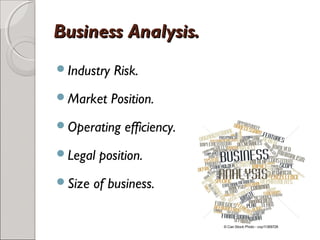
BBuussiinneessss AAnnaallyyssiiss.. 
Industry Risk. 
Market Position. 
Operating efficiency. 
Legal position. 
Size of business.
FFiinnaanncciiaall aannaallyyssiiss .. 
Accounting quality. 
Earning profitability. 
Cash flow analysis. 
Financial Flexibility.
MMaannaaggeemmeenntt EEvvaalluuaattiioonn.. 
The effects on company’s performance by: 
Management goals 
Plans and strategies. 
Capacity to overcome unfavorable conditions. 
Planning and controlling system.
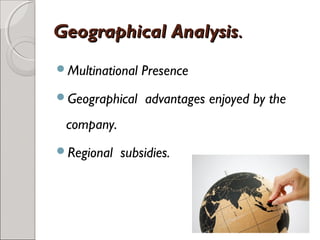
GGeeooggrraapphhiiccaall AAnnaallyyssiiss.. 
Multinational Presence 
Geographical advantages enjoyed by the 
company. 
Regional subsidies.
FFuunnddaammeennttaall AAnnaallyyssiiss.. 
Liquidity management 
Asset quality 
Profitability and financial position. 
Interest and tax sensitivity.
RReegguullaattoorryy && CCoommppeettiittiivvee 
EEnnvviirroonnmmeenntt 
Structure of the Financial System. 
Regulatory framework of the financial 
system.
CCrreeddiitt RRaattiinngg aaggeenncciieess iinn IInnddiiaa 
CRISIL Limited. 
ICRA Limited. 
Credit Analysis & Research Ltd. (CARE). 
SME Rating Agency of India Ltd. (SMERA). 
Fitch Rating India Ltd.
CCRRIISSIILL 
Global analytical company providing ratings, 
research, and risk and policy advisory services. 
India’s leading ratings agency. 
Provides high-end research to the world’s largest 
banks and leading corporations. 
Majority shareholder - Standard and Poor’s (S&P). 
Caters to over 1,200 domestic and global clients, 
through a range of research reports, analytical tools, 
subscription products and customized solutions.
IICCRRAA 
 ICRA Limited (formerly Investment Information and Credit Rating Agency 
of India Limited) was set up in 1991 by leading financial/investment 
institutions, commercial banks and financial services companies as an 
independent and professional Investment Information and Credit Rating 
Agency. 
 Today, ICRA and its subsidiaries together form the ICRA Group of 
Companies (Group ICRA). ICRA is a Public Limited Company, with its 
shares listed on the Bombay Stock Exchange and the National Stock 
Exchange. 
 ICRA’s major shareholders IFCI (26%), and the balance by UTI, LIC, GIC, 
PNB, Central Bank of India, Bank of Baroda, UCO Bank and banks (SBI) 
. 
 Alliance with Moody’s Investors Service.
CCAARREE 
CARE is promoted by IDBI jointly with Financial Institutions, 
Public/Private Sector Banks and Private Finance Companies 
 It commenced its credit rating operations in October, 1993 
and offers a wide range of products and Services in the field 
of Credit Information and Equity Research. 
It offers services like : 
 Credit rating of debt instruments 
 Advisory services like securitization of transactions,. 
 Information services like providing information to 
companies, industry and businesses. 
 Equity research
FFiittcchh RRaattiinngg IInnddiiaa LLttdd.. 
 It is the latest entrant in the credit rating 
business in the country as a joint venture 
between the international credit Rating 
agency Duff and Phelps and JM Financial 
and Alliance Group. 
In addition to debt instruments, it also 
rates companies and countries on 
request.
SSMMEERRAA RRaattiinnggss LLttdd.. 
Only rating agency dedicated to the SME segment offerin 
g qualitative services at competitive prices. 
Joint initiative of SIDBI, Dun & Bradstreet and 11 leading 
banks operating in SME segment. 
Launched on the 25th September 2005 by the Hon. 
Finance Minister, Shri P Chidambaram. 
Greater acceptability in banks (MOU with 22 leading 
banks). 14 Banks offer interest rate and security 
concessions for well rated SMERA customers.
DDeemmeerriittss ooff ccrreeddiitt rraattiinngg..
Credit rating

Credit rating

  • 1.
  • 2.
    MMEEAANNIINNGG Credit ratingevaluates the debtor’s ability to pay back the debt and the likelihood of default. Credit ratings are determined by credit rating agencies.
  • 3.
    DDEEFFIINNIITTIIOONN According toCRISIL : “Credit rating is an unbiased, objective and independent opinion as to an issuer’s capacity to meet financial obligation.”
  • 4.
    OORRIIGGIINN  Thefirst mercantile credit agency was set up in newyork in 1841 to rate the ability of merchants to pay their financial obligations.  Later on, it was taken over by Robert Dun. This agency published its first rating guide in 1859.  The second agency was established by John Bradstreet in 1849 which was later merged with first agency to form Dun & Bradstreet in 1933, which became the owner of Mood’s investor’s service in 1962.
  • 5.
    OORRGGIINN OOFF CCRREEDDIITTRRAATTIINNGG IINN IINNDDIIAA India’s first credit rating agency CRISIL was set up in 29 January 1987. It is incorporated, promoted by the erstwhile ICICI Ltd along with UTI and other financial institutions. Mr. N Vaghul and Mr. Pradip Shah are CRISIL’S first Chairman and Managing Director respectively. The first private sector credit rating institution in India was DUFFS & PHELPS CREDIT RATING INDIA PVT.LTD formed in 1995.
  • 6.
  • 7.
    NNEEEEDD FFOORR CCRREEDDIITTRRAATTIINNGG  It is necessary in view of the growing number of cases of defaults in payment of interest and repayment of principle sum borrowed by way of fixed deposits, issue of debentures or preference shares or commercial papers.  Maintenance of investor’s confidence, since default shatter the confidence of investors in corporate instruments.  Protect the interest of investors who can not investigate much into the merits of the debt instruments of a company.  Motivate savers to invest in industry and trade.
  • 8.
    OOBBJJEECCTTIIVVEESS OOFF CCRREEDDIITT RRAATTIINNGG Improves a healthy discipline on borrowers. Lends greater credence to financial and other representations. Facilitates formulation of public guidelines on institutional investments. Helps merchant bankers, brokers, regulatory authorities, etc., in discharging their functions related to debt issues. Encourages greater information disclosure, better accounting standards and improved financial information Act as a marketing tool.
  • 9.
    IIMMPPOORRTTAANNCCEE OOFF CCRREEDDIITTRRAATTIINNGG Credit ratings establish a link between risk and return. They provide a yardstick against which to measure the risk inherent in any instrument. An investors uses the ratings to assess the risk level and compares the offered rate of return with his expected rate of return. It is very uncommon for different classes of investors to arrive at some uniform conclusion as to the relative quality of the instrument.
  • 10.
    BBEENNEEFFIITTSS Benefits toCompany Improved Corporate Image Good For Non Popular Companies Act as a Marketing Tool Reduced Cost of Borrowings Easy To Raise Resource Helps In Growth and Expansion
  • 11.
    CCoonntt…… Benefits toInvestors Helps in investment decision. Choice of instruments. Easy understandability of investment proposal. Dependable credibility of issuer. Advantages of continuous monitoring.
  • 12.
    CCrreeddiitt RRaattiinngg MMeetthhooddoollooggyy  Business Analysis.  Financial Analysis.  Management Evaluation.  Geographical Analysis.  Regulatory & Competitive Environment.  Fundamental Analysis.
  • 13.
    BBuussiinneessss AAnnaallyyssiiss.. IndustryRisk. Market Position. Operating efficiency. Legal position. Size of business.
  • 14.
    FFiinnaanncciiaall aannaallyyssiiss .. Accounting quality. Earning profitability. Cash flow analysis. Financial Flexibility.
  • 15.
    MMaannaaggeemmeenntt EEvvaalluuaattiioonn.. Theeffects on company’s performance by: Management goals Plans and strategies. Capacity to overcome unfavorable conditions. Planning and controlling system.
  • 16.
    GGeeooggrraapphhiiccaall AAnnaallyyssiiss.. MultinationalPresence Geographical advantages enjoyed by the company. Regional subsidies.
  • 17.
    FFuunnddaammeennttaall AAnnaallyyssiiss.. Liquiditymanagement Asset quality Profitability and financial position. Interest and tax sensitivity.
  • 18.
    RReegguullaattoorryy && CCoommppeettiittiivvee EEnnvviirroonnmmeenntt Structure of the Financial System. Regulatory framework of the financial system.
  • 19.
    CCrreeddiitt RRaattiinngg aaggeenncciieessiinn IInnddiiaa CRISIL Limited. ICRA Limited. Credit Analysis & Research Ltd. (CARE). SME Rating Agency of India Ltd. (SMERA). Fitch Rating India Ltd.
  • 20.
    CCRRIISSIILL Global analyticalcompany providing ratings, research, and risk and policy advisory services. India’s leading ratings agency. Provides high-end research to the world’s largest banks and leading corporations. Majority shareholder - Standard and Poor’s (S&P). Caters to over 1,200 domestic and global clients, through a range of research reports, analytical tools, subscription products and customized solutions.
  • 21.
    IICCRRAA  ICRALimited (formerly Investment Information and Credit Rating Agency of India Limited) was set up in 1991 by leading financial/investment institutions, commercial banks and financial services companies as an independent and professional Investment Information and Credit Rating Agency.  Today, ICRA and its subsidiaries together form the ICRA Group of Companies (Group ICRA). ICRA is a Public Limited Company, with its shares listed on the Bombay Stock Exchange and the National Stock Exchange.  ICRA’s major shareholders IFCI (26%), and the balance by UTI, LIC, GIC, PNB, Central Bank of India, Bank of Baroda, UCO Bank and banks (SBI) .  Alliance with Moody’s Investors Service.
  • 22.
    CCAARREE CARE ispromoted by IDBI jointly with Financial Institutions, Public/Private Sector Banks and Private Finance Companies  It commenced its credit rating operations in October, 1993 and offers a wide range of products and Services in the field of Credit Information and Equity Research. It offers services like :  Credit rating of debt instruments  Advisory services like securitization of transactions,.  Information services like providing information to companies, industry and businesses.  Equity research
  • 23.
    FFiittcchh RRaattiinngg IInnddiiaaLLttdd..  It is the latest entrant in the credit rating business in the country as a joint venture between the international credit Rating agency Duff and Phelps and JM Financial and Alliance Group. In addition to debt instruments, it also rates companies and countries on request.
  • 24.
    SSMMEERRAA RRaattiinnggss LLttdd.. Only rating agency dedicated to the SME segment offerin g qualitative services at competitive prices. Joint initiative of SIDBI, Dun & Bradstreet and 11 leading banks operating in SME segment. Launched on the 25th September 2005 by the Hon. Finance Minister, Shri P Chidambaram. Greater acceptability in banks (MOU with 22 leading banks). 14 Banks offer interest rate and security concessions for well rated SMERA customers.
  • 25.