CREDIT RATING
METHODOLOGY
By: PREETHAM.K
VCET DEPT OF MBA
MEANING
• A credit rating evaluates the credit worthiness of a debtor,
especially a business (company) or a government. It is an evaluation
made by a credit rating agency of the debtor's ability to pay back the
debt and the likelihood of default.
• Credit ratings are determined by credit ratings agencies. The
credit rating represents the credit rating agency’s evaluation of
qualitative and quantitative information for a company or
government; including non-public information obtained by the
credit rating agencies analysts
TOP CREDIT RATING AGENCIES
TOPAGENCIES :
• Dun & Bradstreet
• Moody's
• Standard & Poor's
• Fitch Ratings
CREDIT RATING METHODOLOGY
Consist of 4 areas:
 Business analysis-
covers an analysis of industry risk, market position
in the country, operating efficiency of the company and legal
position.
Business
Risk
Country
Risk
Company
Position
Industry
Factors
Profitability
/ Peer Group
Comparisons
Political•
• Economic
Industry – Specific factors•
• Foreign exchange
• Industry Trends
Industry Structure
Market Size
Growth Potential
Cyclicality
Bases of Competition
Changing Technology
Operating Risk
•
•
•
•
•
•
•
• Regulatory Environment
• Competitive Factors
Market position•
• Keys to Success
Size
Diversification
•
•
• Management
• Validation of “Company
Position”
• Trends
• Quality of Earnings
& Analytical adjustments
• Peer Group Comparisons
Financial Analysis- analysis of accounting
quality, earnings protection, cash flow adequacy and
financial flexibility.
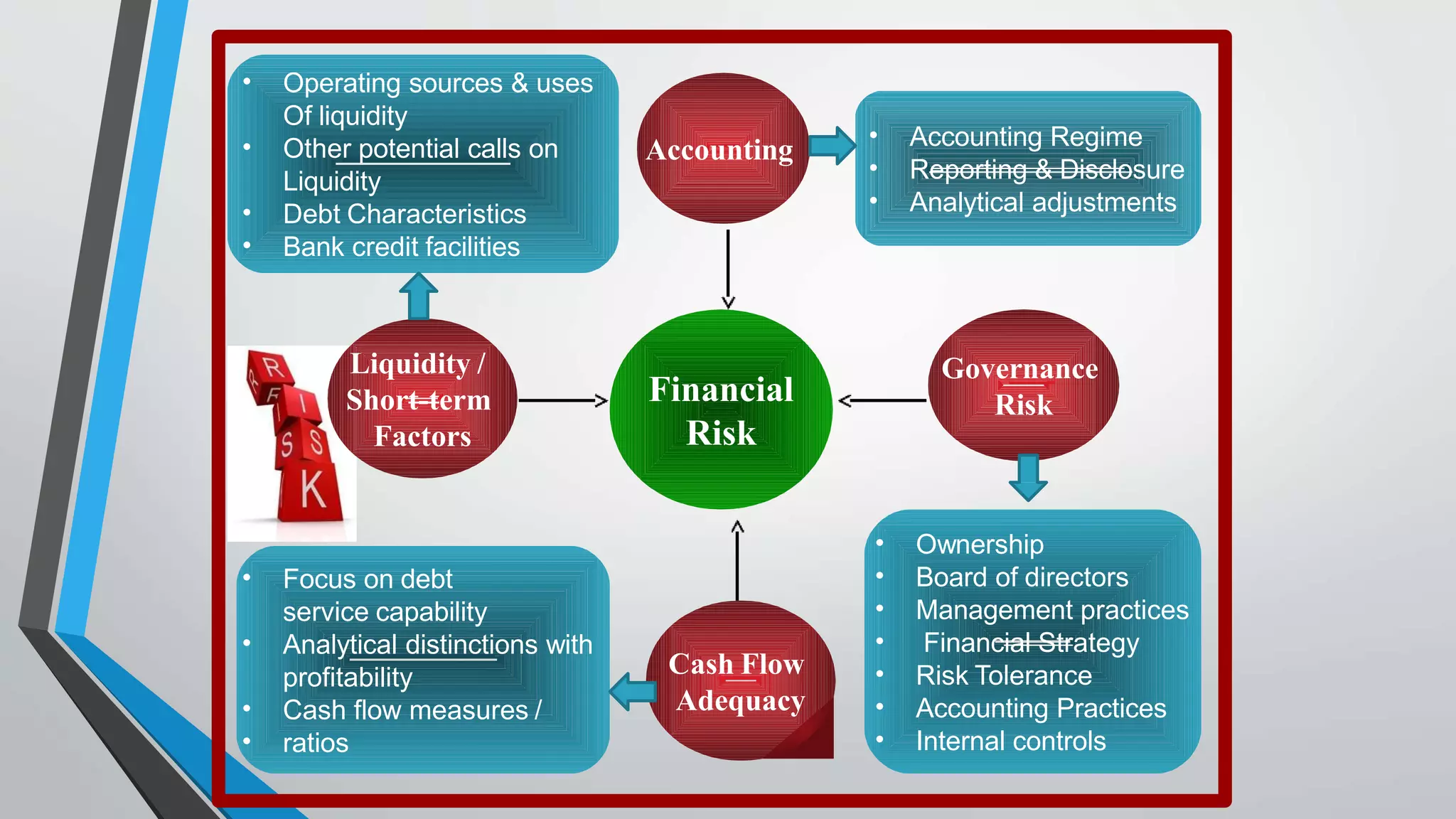
Financial
Risk
Accounting
Cash Flow
Adequacy
Governance
Risk
Liquidity /
Short-term
Factors
Accounting Regime•
• Reporting & Disclosure
• Analytical adjustments
• Ownership
Board of directors
Management practices
Financial Strategy
Risk Tolerance
Accounting Practices
•
•
•
•
•
• Internal controls
• Focus on debt
service capability
• Analytical distinctions with
profitability
• Cash flow measures /
• ratios
• Operating sources & uses
Of liquidity
• Other potential calls on
Liquidity
Debt Characteristics•
• Bank credit facilities
 Management Evaluation- study of track record of the
management’s capacity to overcome adverse situations, goals,
philosophy and strategies.
 Fundamental analysis- analysis of liquidity management,
asset quality, profitability and interest and tax sensitivity.
Steps:-
• information is collected and then analyzed by a team of professionals agency.
• If necessary, meetings with top management suppliers and dealers and a visit
to the plant of proposed sites are arranged to collect additional data. This
team of professionals submit their recommendations to the rating committee.
• Committee discusses this report and then assigns rating.
• Rating assigned is then notified to the issuer and only on his acceptance,
rating is published.
• Once the issuer decides to use and publish the rating, agency has to
continuously monitor it over the entire life of instrument.
CREDIT RATING METHODOLOGY

CREDIT RATING METHODOLOGY

  • 1.
  • 2.
    MEANING • A creditrating evaluates the credit worthiness of a debtor, especially a business (company) or a government. It is an evaluation made by a credit rating agency of the debtor's ability to pay back the debt and the likelihood of default. • Credit ratings are determined by credit ratings agencies. The credit rating represents the credit rating agency’s evaluation of qualitative and quantitative information for a company or government; including non-public information obtained by the credit rating agencies analysts
  • 3.
    TOP CREDIT RATINGAGENCIES TOPAGENCIES : • Dun & Bradstreet • Moody's • Standard & Poor's • Fitch Ratings
  • 4.
    CREDIT RATING METHODOLOGY Consistof 4 areas:  Business analysis- covers an analysis of industry risk, market position in the country, operating efficiency of the company and legal position.
  • 5.
    Business Risk Country Risk Company Position Industry Factors Profitability / Peer Group Comparisons Political• •Economic Industry – Specific factors• • Foreign exchange • Industry Trends Industry Structure Market Size Growth Potential Cyclicality Bases of Competition Changing Technology Operating Risk • • • • • • • • Regulatory Environment • Competitive Factors Market position• • Keys to Success Size Diversification • • • Management • Validation of “Company Position” • Trends • Quality of Earnings & Analytical adjustments • Peer Group Comparisons
  • 6.
    Financial Analysis- analysisof accounting quality, earnings protection, cash flow adequacy and financial flexibility.
  • 7.
    Financial Risk Accounting Cash Flow Adequacy Governance Risk Liquidity / Short-term Factors AccountingRegime• • Reporting & Disclosure • Analytical adjustments • Ownership Board of directors Management practices Financial Strategy Risk Tolerance Accounting Practices • • • • • • Internal controls • Focus on debt service capability • Analytical distinctions with profitability • Cash flow measures / • ratios • Operating sources & uses Of liquidity • Other potential calls on Liquidity Debt Characteristics• • Bank credit facilities
  • 8.
     Management Evaluation-study of track record of the management’s capacity to overcome adverse situations, goals, philosophy and strategies.  Fundamental analysis- analysis of liquidity management, asset quality, profitability and interest and tax sensitivity.
  • 9.
    Steps:- • information iscollected and then analyzed by a team of professionals agency. • If necessary, meetings with top management suppliers and dealers and a visit to the plant of proposed sites are arranged to collect additional data. This team of professionals submit their recommendations to the rating committee. • Committee discusses this report and then assigns rating. • Rating assigned is then notified to the issuer and only on his acceptance, rating is published. • Once the issuer decides to use and publish the rating, agency has to continuously monitor it over the entire life of instrument.