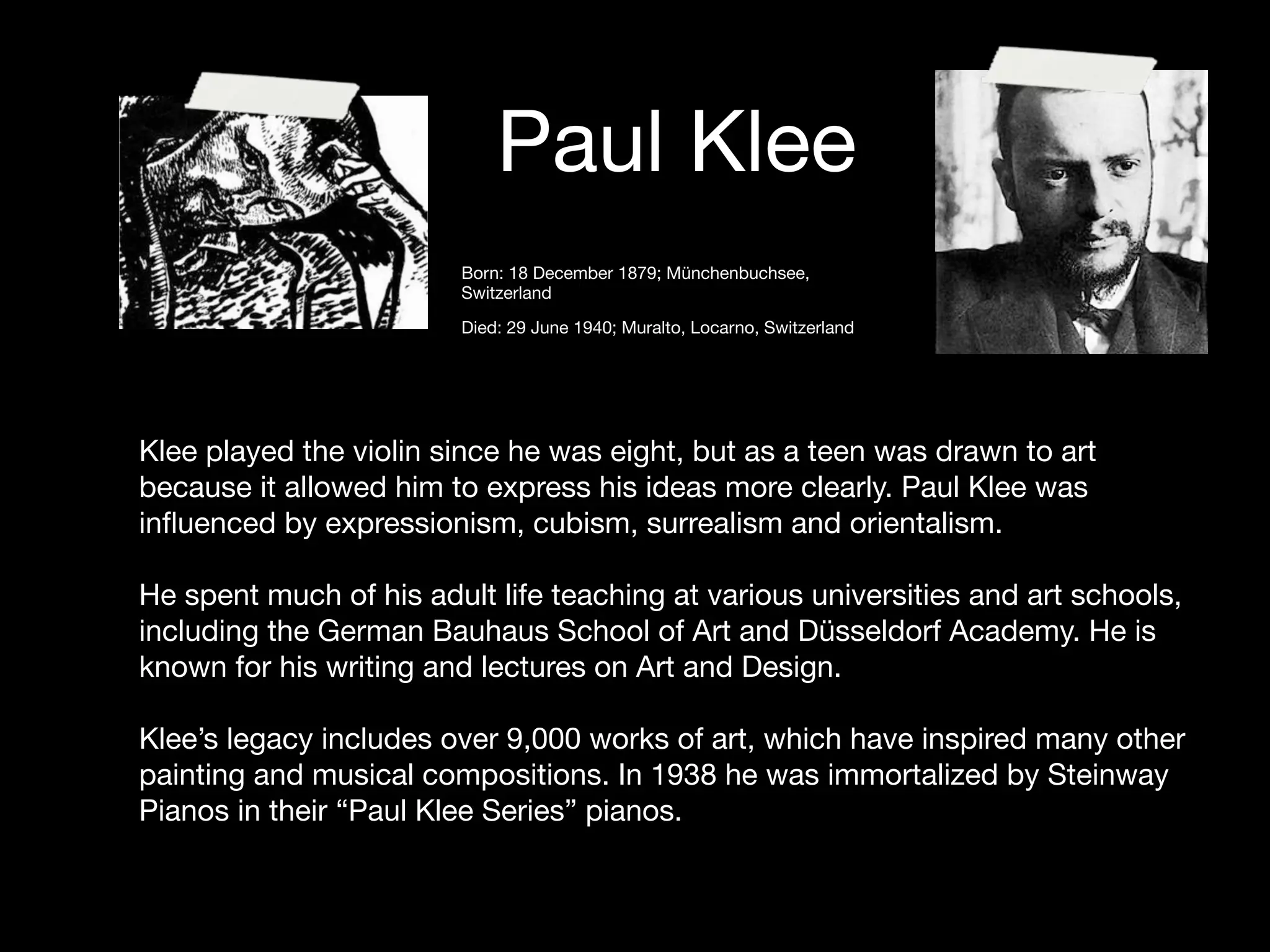
Paul Klee
                         Born: 18 December 1879; Münchenbuchsee,
                         Switzerland

                         Died: 29 June 1940; Muralto, Locarno, Switzerland


Klee played the violin since he was eight, but as a teen was drawn to art
because it allowed him to express his ideas more clearly. Paul Klee was
influenced by expressionism, cubism, surrealism and orientalism.

He spent much of his adult life teaching at various universities and art schools,
including the German Bauhaus School of Art and Düsseldorf Academy. He is
known for his writing and lectures on Art and Design.

Klee’s legacy includes over 9,000 works of art, which have inspired many other
painting and musical compositions. In 1938 he was immortalized by Steinway
Pianos in their “Paul Klee Series” pianos.
From black and white to color


          In the Box , 1908

                                                                                    Park Bei Lu , 1938

At first, Klee drew in black and white, saying he would never be a painter. But after a visit to Tunisia, in which
he was impressed by the quality of light, he had found his sense of color and began experimenting with a
new style of painting.
Tunisia
Rising Sun, 1907
Apparatus for the Magnetic Treatment of Plants, 1908
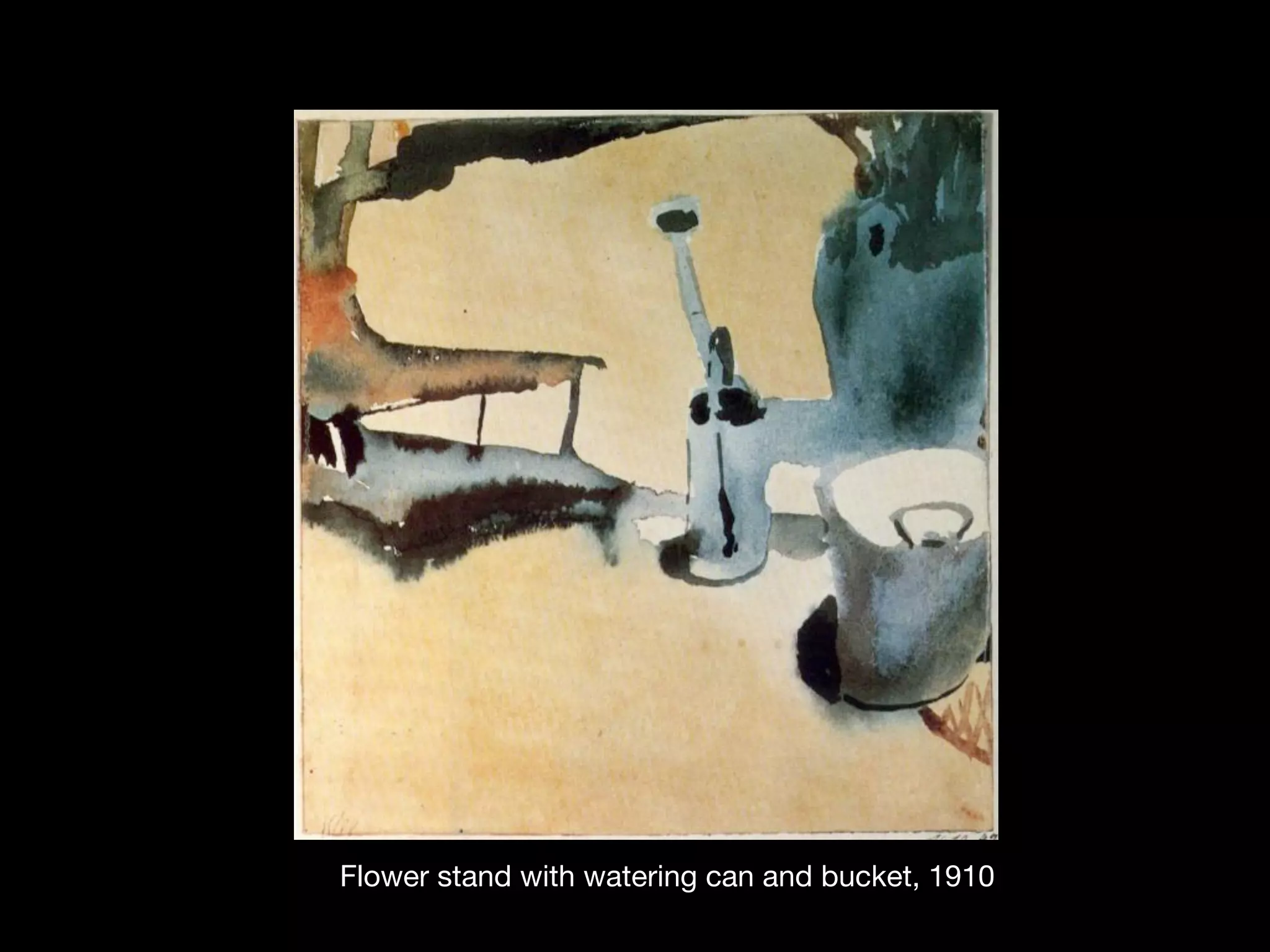
Flower stand with watering can and bucket, 1910
The Signatories at the Window (The artist at the window), 1909
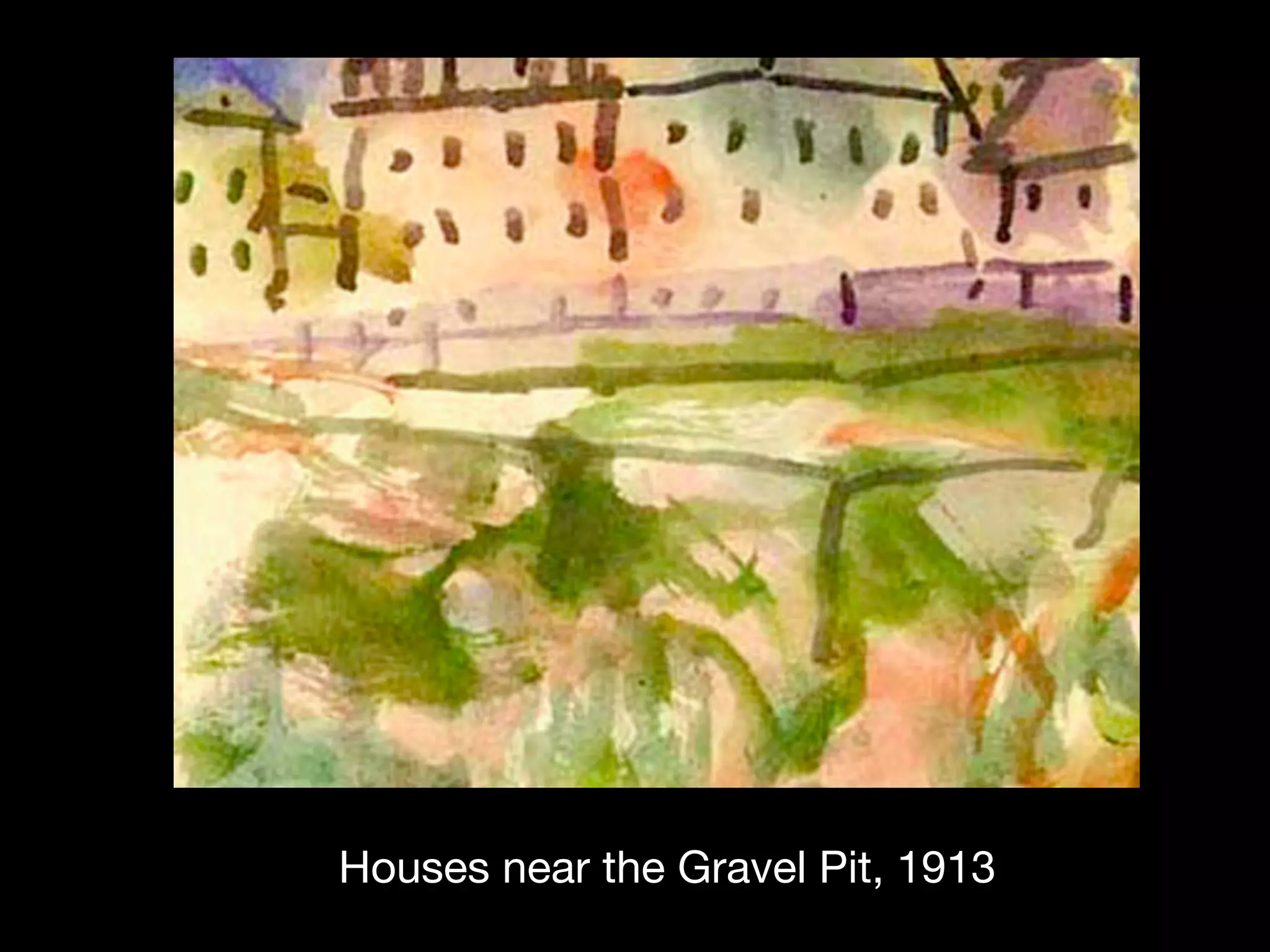
Houses near the Gravel Pit, 1913
Color Shapes, 1914
Hamamet, 1914
Hamamet with Mosque, 1914
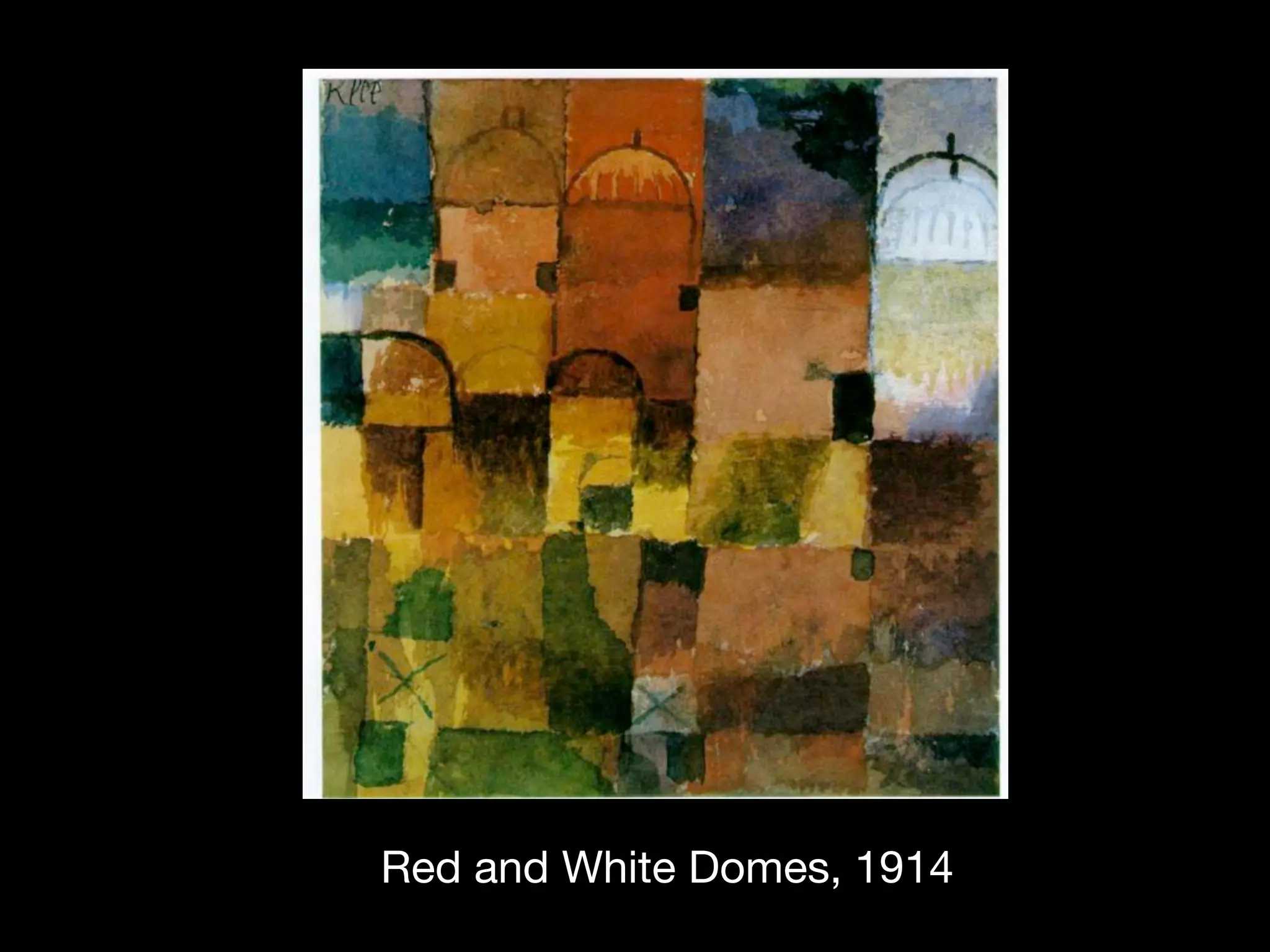
Red and White Domes, 1914
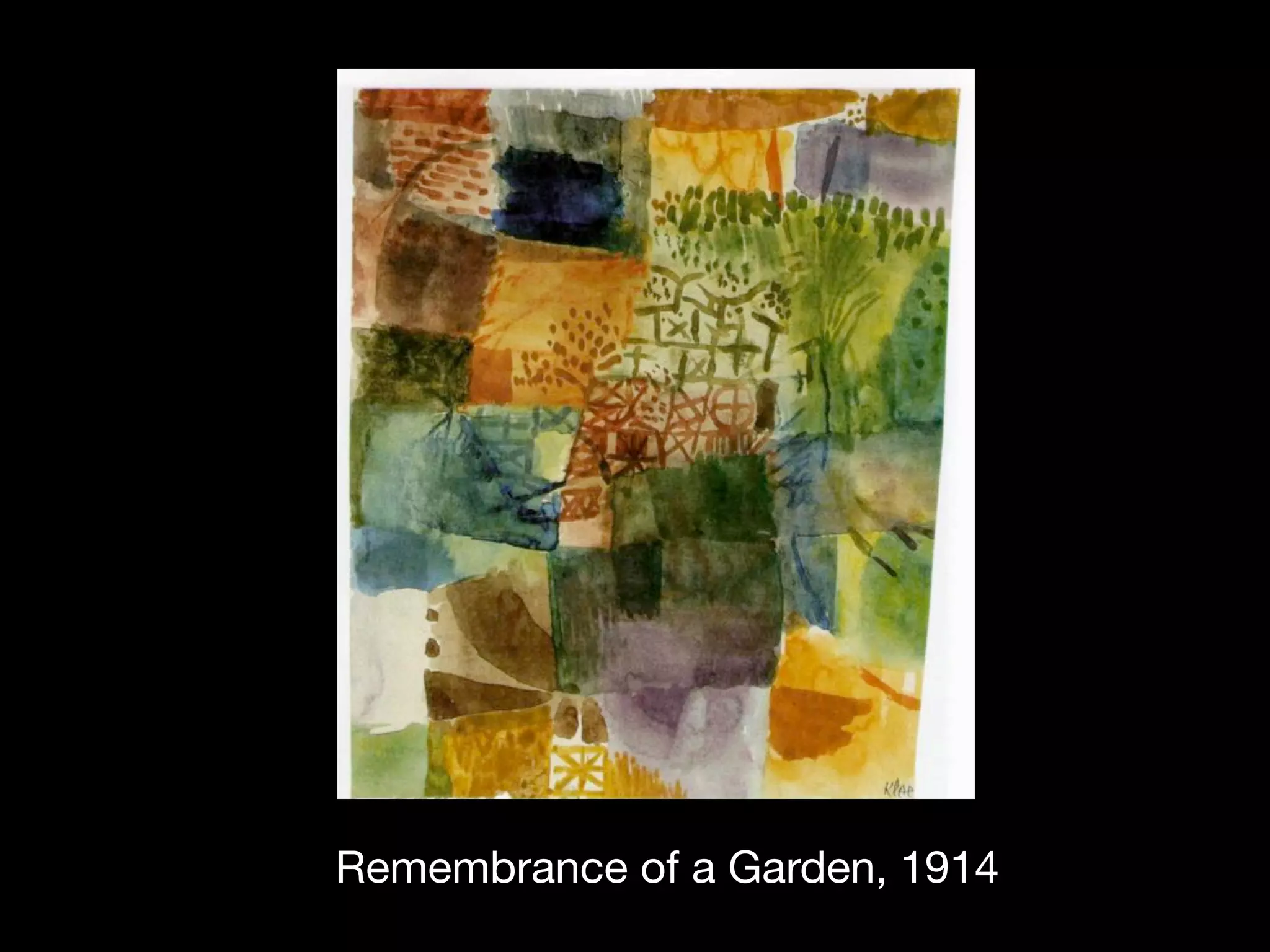
Remembrance of a Garden, 1914
In the Style of Kairouan, 1914
Pious Northern Landscape, 1917
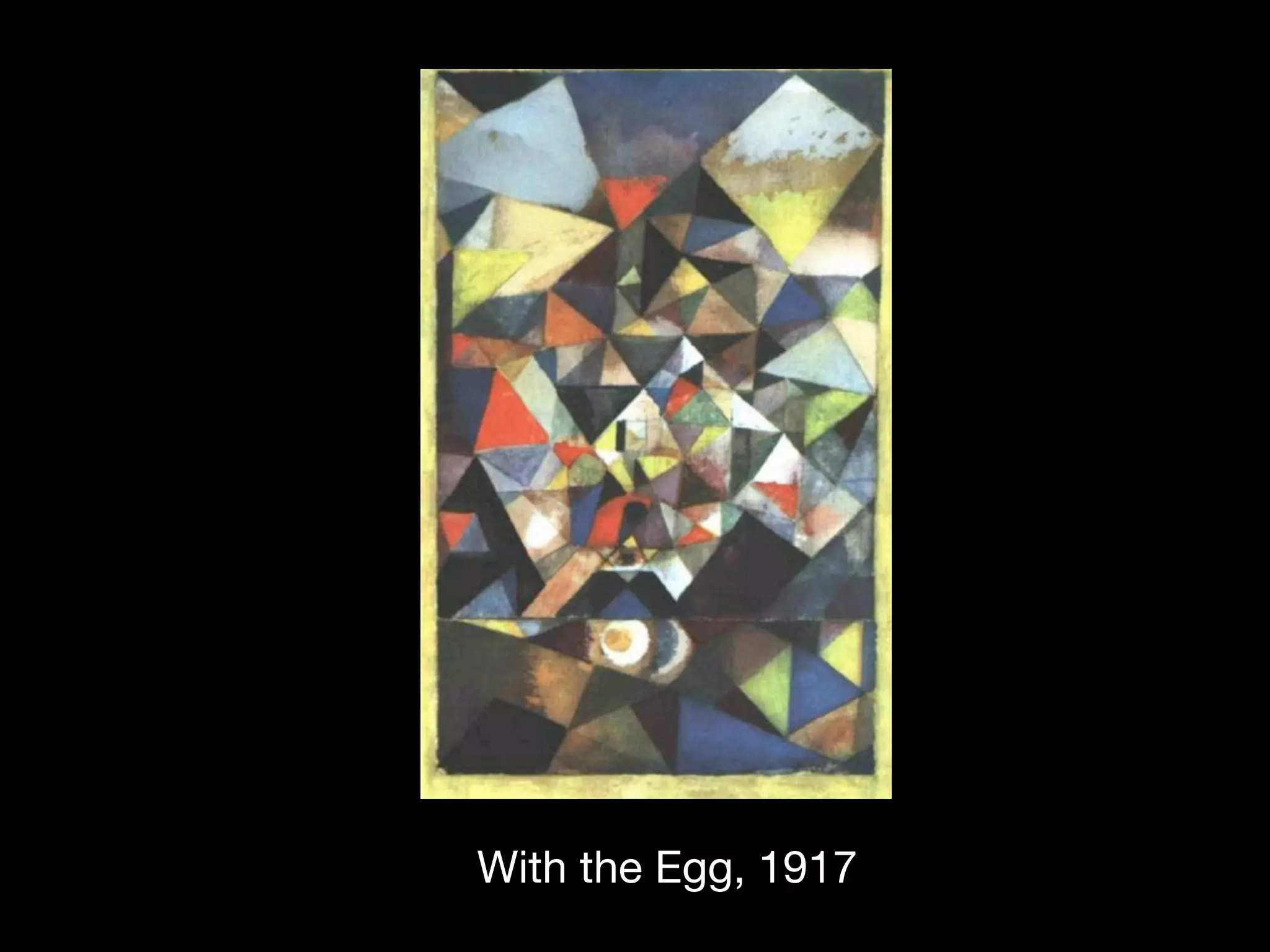
With the Egg, 1917
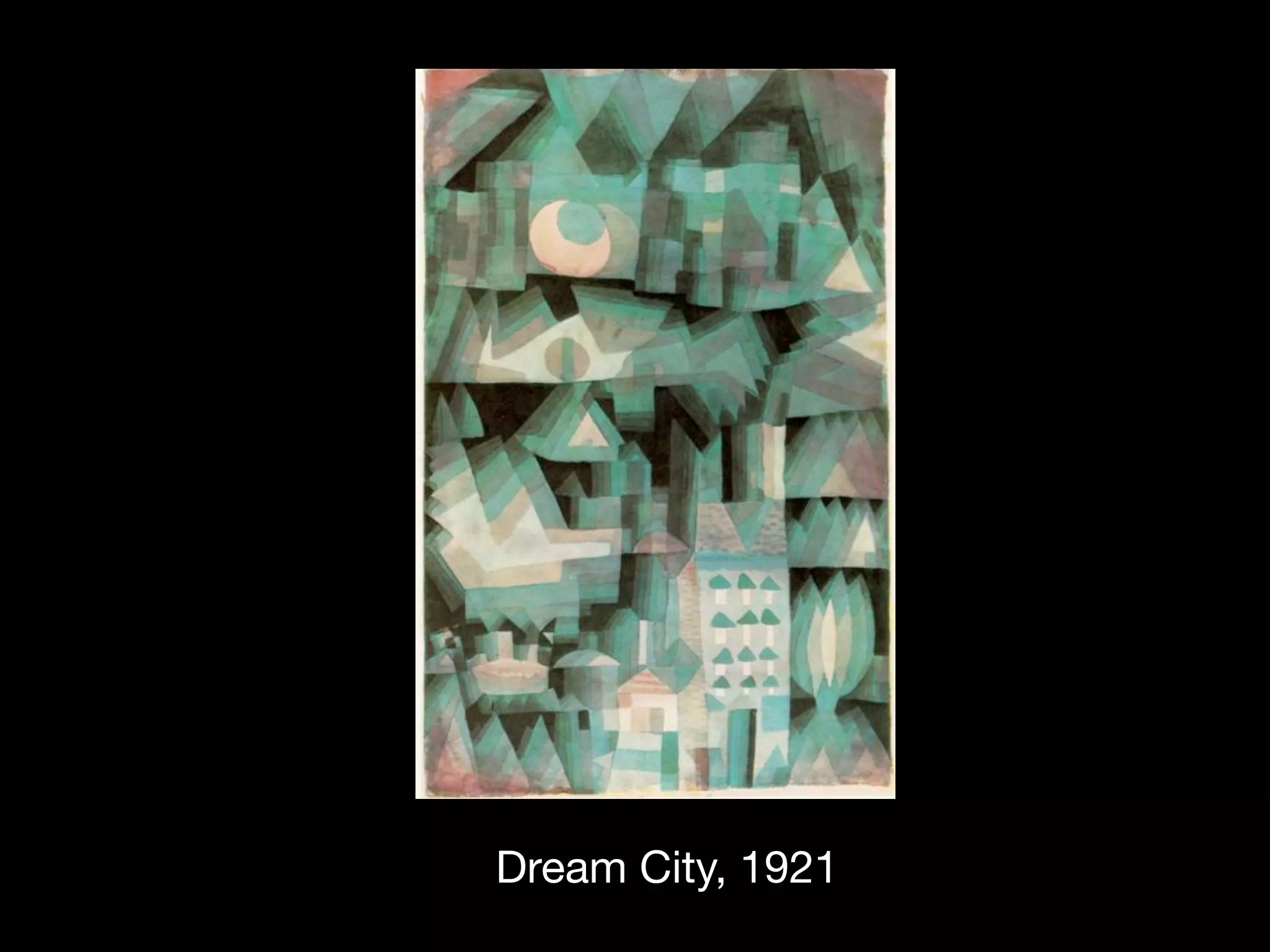
Dream City, 1921
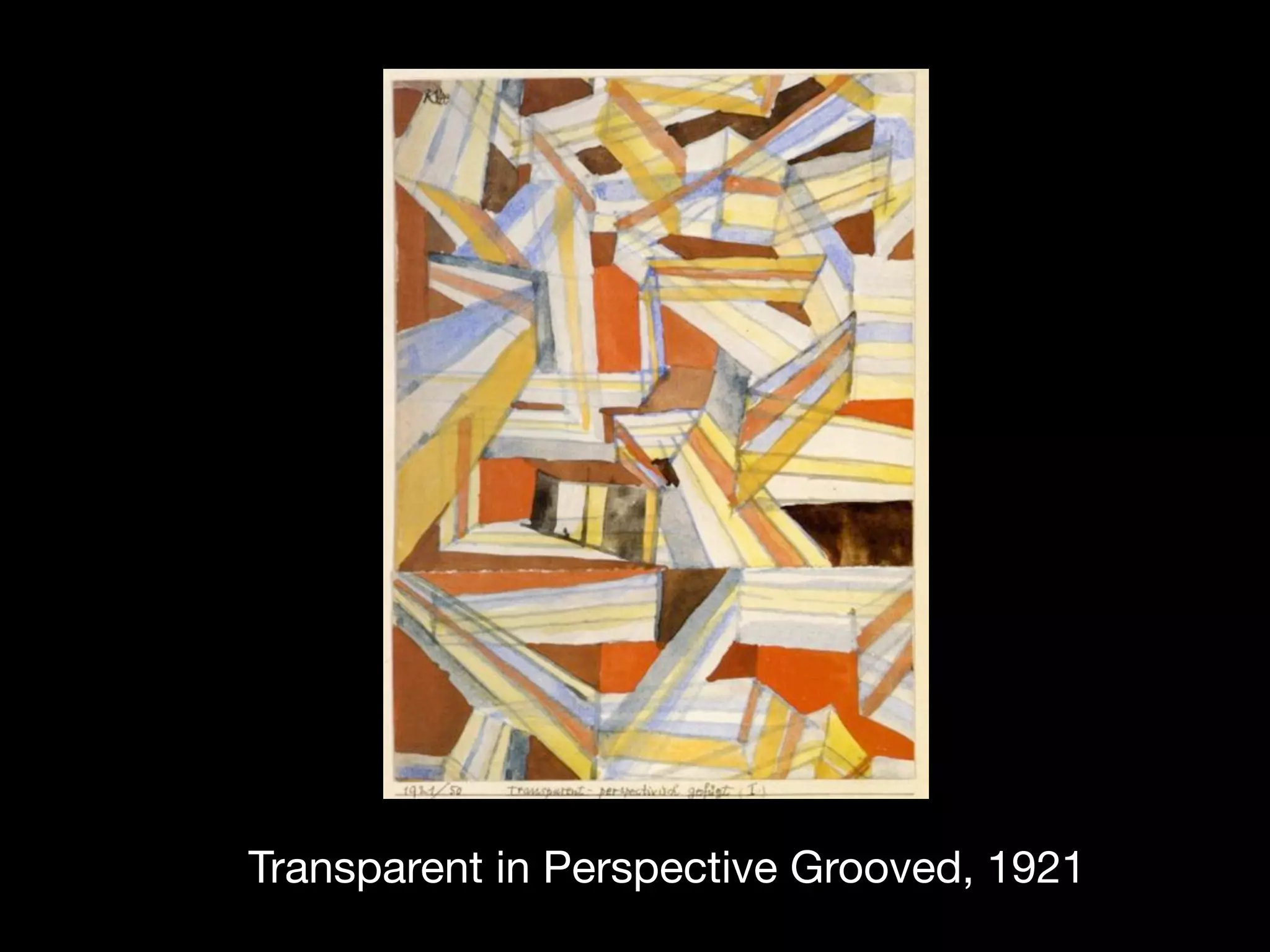
Transparent in Perspective Grooved, 1921
Growth of the Night Plants, 1921
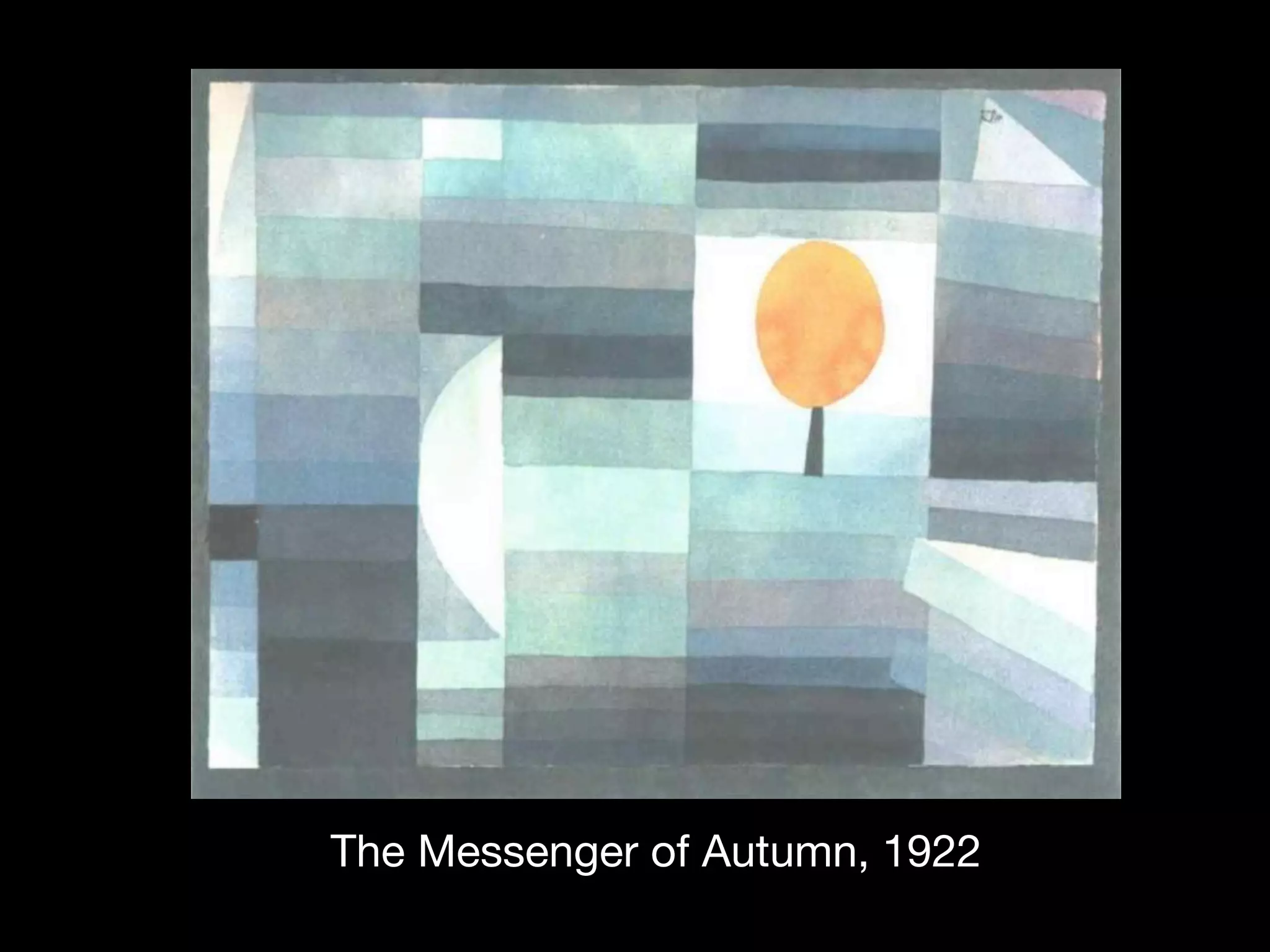
The Messenger of Autumn, 1922
Monument, 1929

Paul Klee