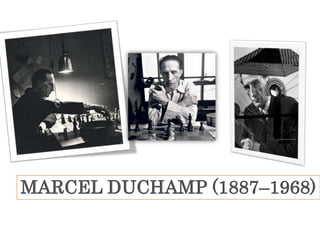
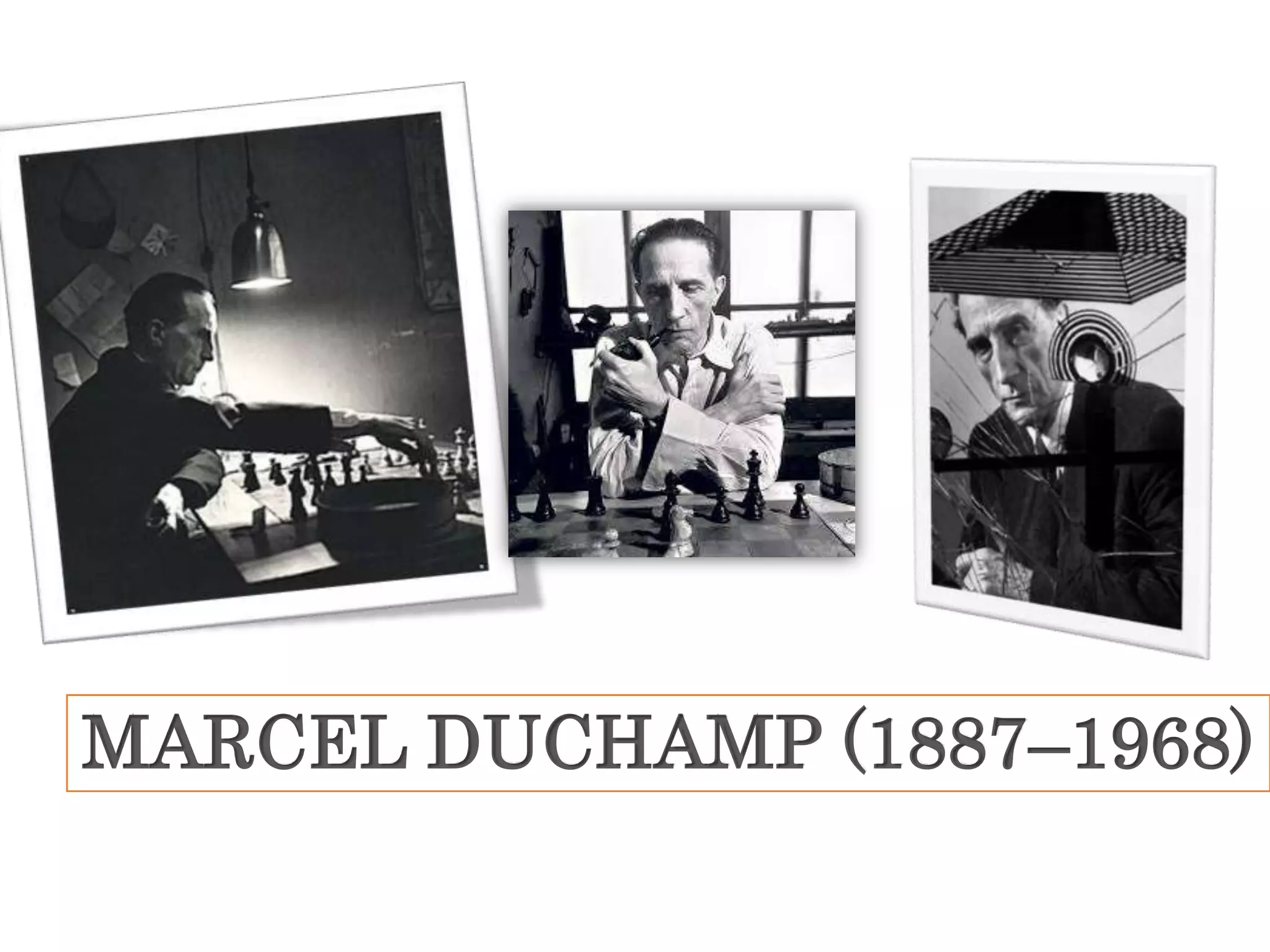
MARCEL DUCHAMP (1887–1968)
 BORN IN A TOWN IN NORTHWESERN FRANCE.
 FAMIY WAS SUCCESSFUL IN BUSINESS AND ARTS.
 CHESS WAS HIS FAVOURITE GAME; EXPLORE POSSIBILITES IN CUBISM.
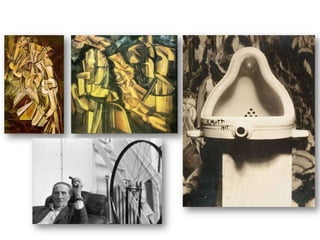
 IN 1912, INSPIRED TECHNIQUE OF DEPICTING MOTION-ABSTRACT PAINTING. EXAMPLE :
NUDE DECENDING A STAIRCASE.
 MEMBERS OF JURY FELT THAT DUCHAMP WAS POKING FUN AT CUBIST ART.
 Not and architect, but many architects influenced by his work and
incorporated his ideas in their practice.
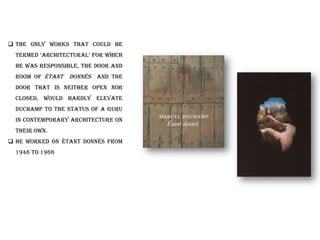
 The only works that could be
termed „architectural‟ for which
he was responsible, the door and
room of Étant Donnés and the
door that is neither open nor
closed, would hardly elevate
Duchamp to the status of a guru
in contemporary architecture on
their own.
 he worked on Étant donnés from
1946 to 1966
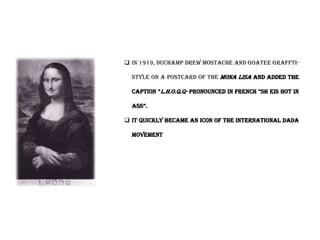
 In 1919, Duchamp drew mostache and goatee graffti-
style on a postcard of the mona lisa and added the
caption “l.h.o.q.q- pronounced in French “sh eis hot in
ass”.
 It quickly became an icon of the international dada
movement
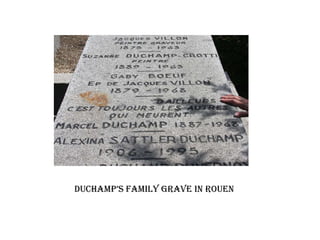
Duchamp‟s family grave in rouen
Presentation by-
Tausif khan
Dilshaz mehtar

marcel duchamp

  • 1.
  • 2.
     BORN INA TOWN IN NORTHWESERN FRANCE.  FAMIY WAS SUCCESSFUL IN BUSINESS AND ARTS.  CHESS WAS HIS FAVOURITE GAME; EXPLORE POSSIBILITES IN CUBISM.  IN 1912, INSPIRED TECHNIQUE OF DEPICTING MOTION-ABSTRACT PAINTING. EXAMPLE : NUDE DECENDING A STAIRCASE.  MEMBERS OF JURY FELT THAT DUCHAMP WAS POKING FUN AT CUBIST ART.  Not and architect, but many architects influenced by his work and incorporated his ideas in their practice.
  • 4.
     The onlyworks that could be termed „architectural‟ for which he was responsible, the door and room of Étant Donnés and the door that is neither open nor closed, would hardly elevate Duchamp to the status of a guru in contemporary architecture on their own.  he worked on Étant donnés from 1946 to 1966
  • 5.
     In 1919,Duchamp drew mostache and goatee graffti- style on a postcard of the mona lisa and added the caption “l.h.o.q.q- pronounced in French “sh eis hot in ass”.  It quickly became an icon of the international dada movement
  • 6.
  • 7.