W E L L - K N O W N WAT E R C O L O R A RT I S T S
C R E A T E D B Y D E B O R A H Y. S T R A U S S , D . V. M .
• Watercolor is one of the most simple forms of fine art
when it comes to supplies, but one of the most
difficult forms to master.
• Watercolor painters are most known for their abilities to see detail in
the ordinary and for their understanding of how color works
individually and in collaboration with one another.
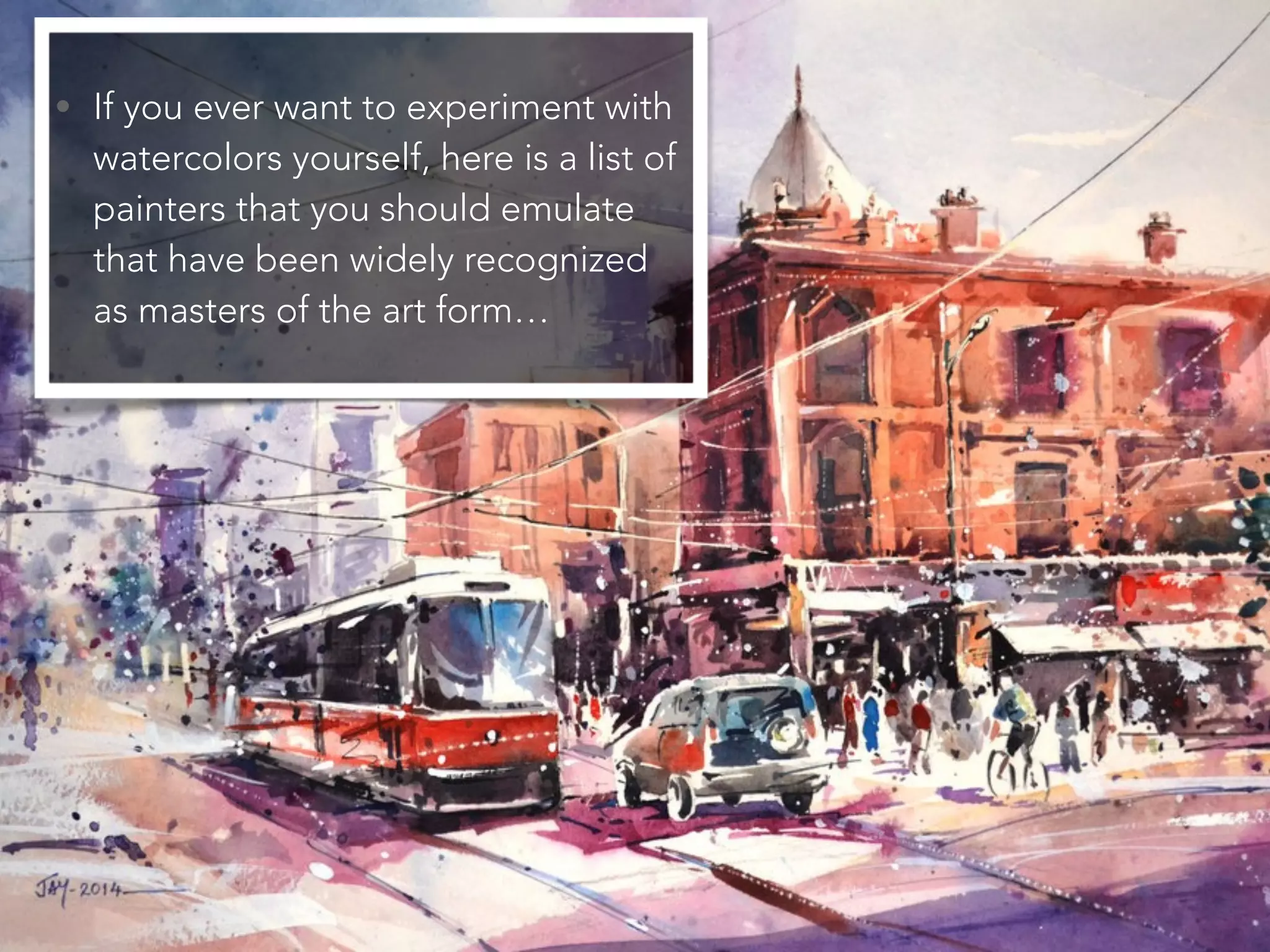
• If you ever want to experiment with
watercolors yourself, here is a list of
painters that you should emulate
that have been widely recognized
as masters of the art form…
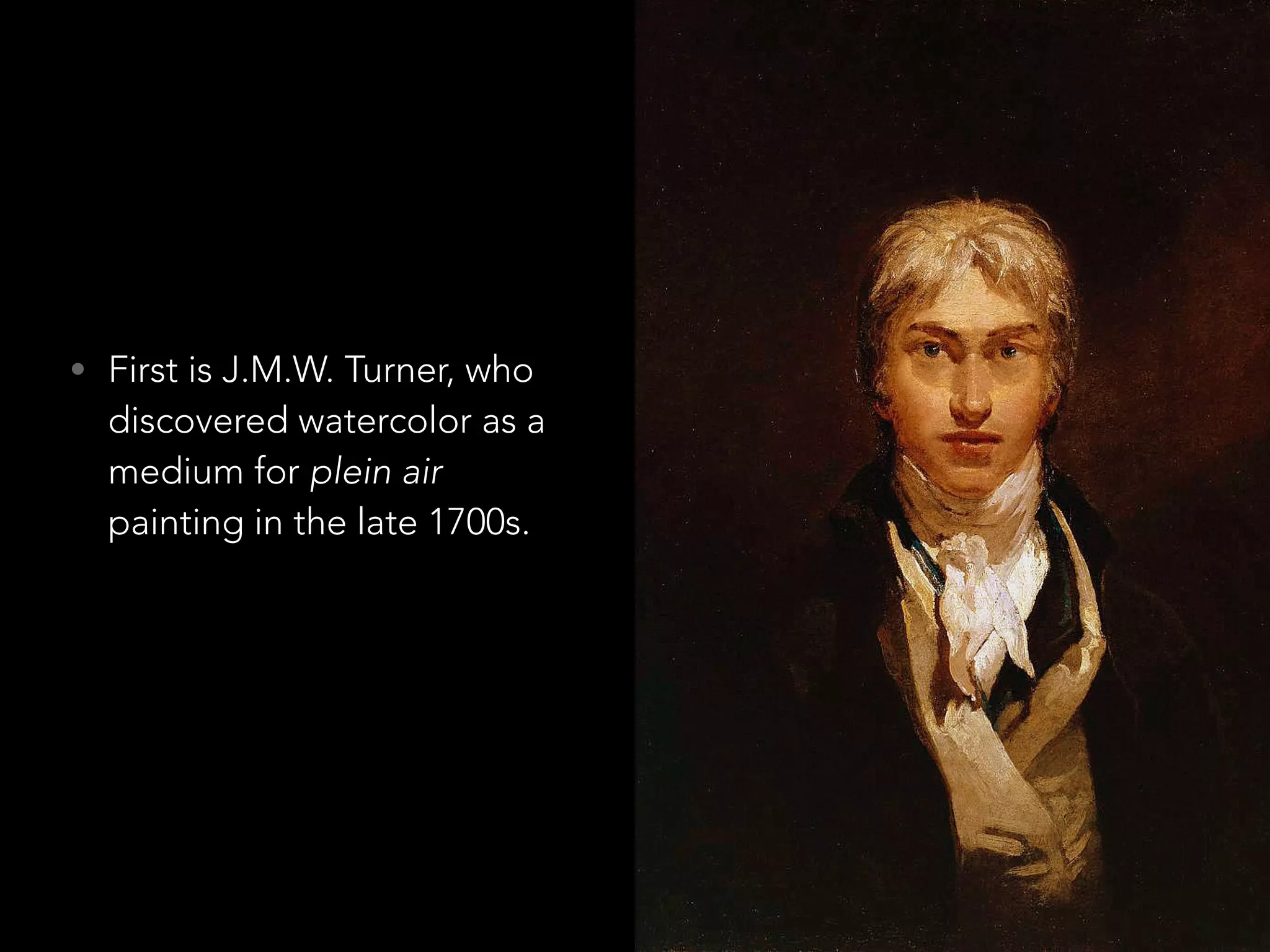
• First is J.M.W. Turner, who
discovered watercolor as a
medium for plein air
painting in the late 1700s.
• Turner painted mostly expressive
paintings of the European countryside
and ocean, which “anticipated the
Impressionist movement by over 50
years and turned landscape painting
into a vital discipline where it had
previously been the domain of
amateur naturalists and
hobbyists,” (Heaston, Discover the
Great Watercolor Artists).
• Another well-known British
watercolor expert is James
McNeill Whistler, recognized
for his use of short brush
stroked and small dabs of
color - the antithesis of his
oil paintings, many of which
you probably know.
• Whistler could always be
found sketching images of
everyday life wherever he
was, and used those
sketches as the basis for his
beautiful paintings.
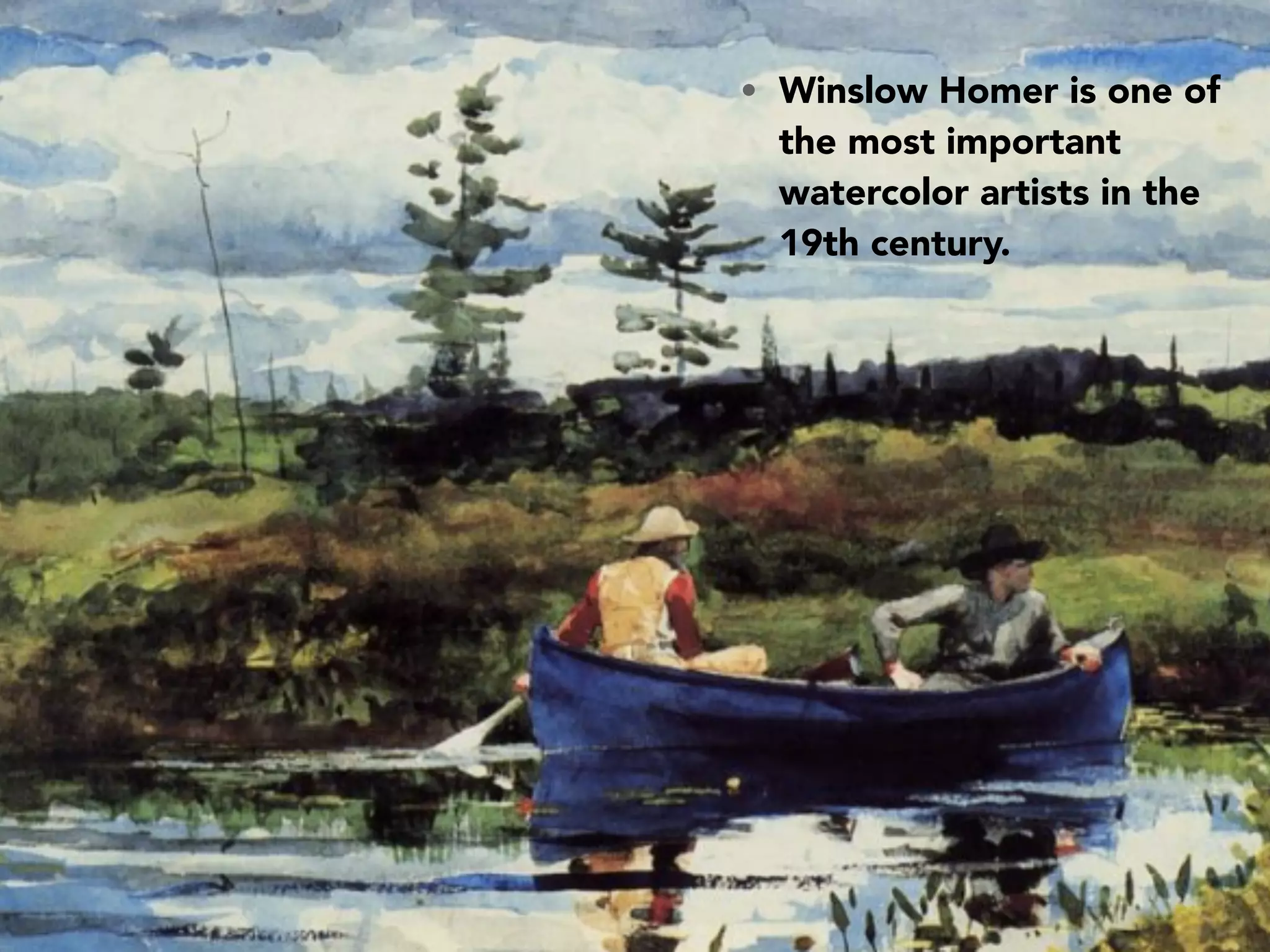
• Winslow Homer is one of
the most important
watercolor artists in the
19th century.
• He was “a largely self-taught
painter who embraced
watercolor so thoroughly for
his many landscapes,
seascapes and scenes of
everyday life in 19th century
America,” (Heaston, Discover
the Great Watercolor Artists).
• Many contemporary artists
interested in watercolor often
look at Homer’s works for
inspiration.
• Another great artist, especially known for her creativity and attentiveness with
watercolors, is Georgia O’Keeffe.
• After moving to a the rural environment of New Mexico, O’Keeffe often used vibrant
colors and light in her paintings as a reflection of the atmosphere she was
surrounded by.
• Last on this list is Jamie
Wyeth, an American
painter who often used
drypoint watercolors in
her work.
• Drypoint watercolors
means that very little
water is used throughout
the painting process.
• Wyeth’s parents were both widely recognized painters in
America, and many of his paintings reflect scenes of New
England that you can be witness to today.
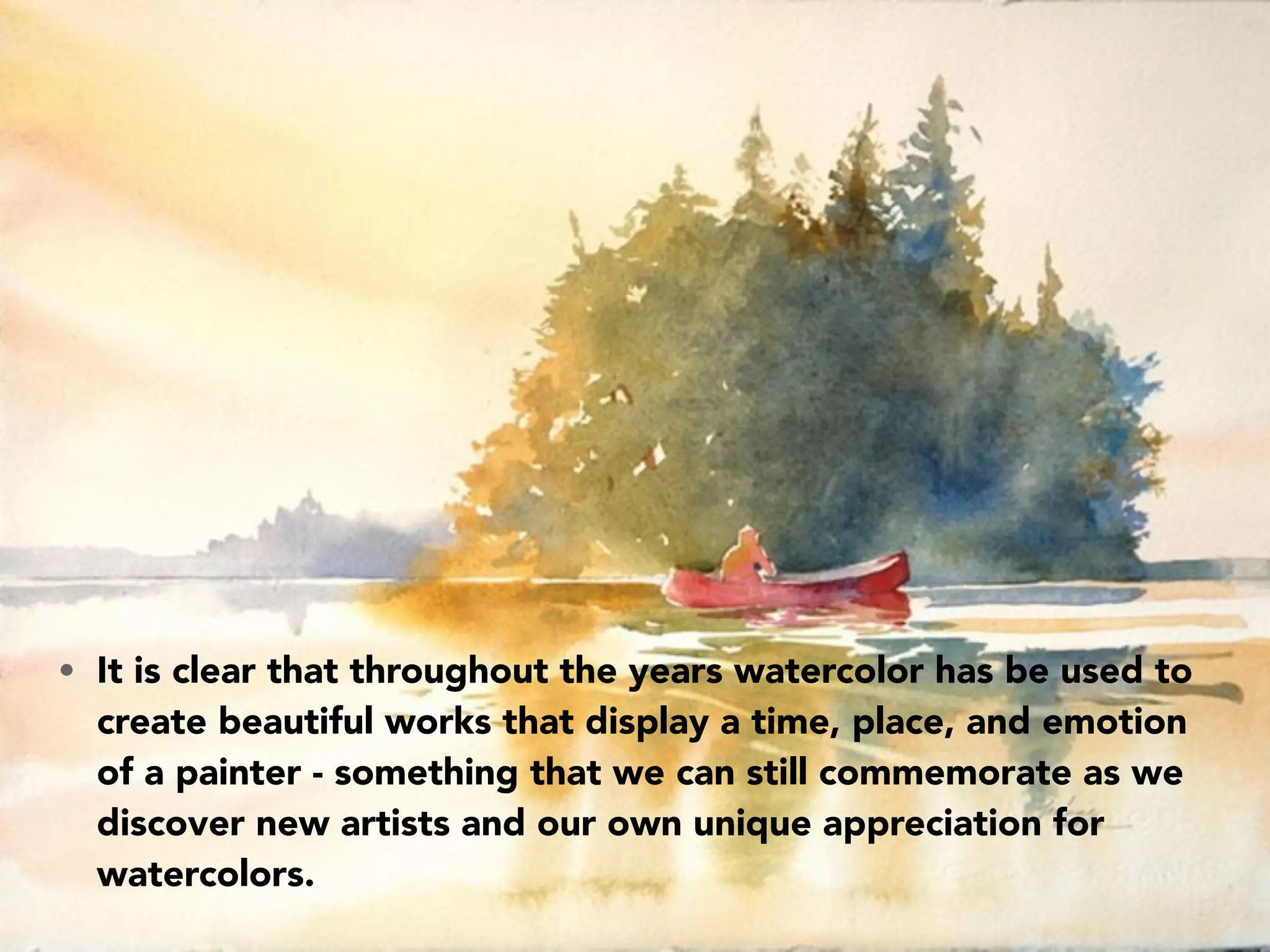
• It is clear that throughout the years watercolor has be used to
create beautiful works that display a time, place, and emotion
of a painter - something that we can still commemorate as we
discover new artists and our own unique appreciation for
watercolors.

Deborah Y. Strauss: Well-Known Watercolor Artists

  • 1.
    W E LL - K N O W N WAT E R C O L O R A RT I S T S C R E A T E D B Y D E B O R A H Y. S T R A U S S , D . V. M .
  • 2.
    • Watercolor isone of the most simple forms of fine art when it comes to supplies, but one of the most difficult forms to master.
  • 3.
    • Watercolor paintersare most known for their abilities to see detail in the ordinary and for their understanding of how color works individually and in collaboration with one another.
  • 4.
    • If youever want to experiment with watercolors yourself, here is a list of painters that you should emulate that have been widely recognized as masters of the art form…
  • 5.
    • First isJ.M.W. Turner, who discovered watercolor as a medium for plein air painting in the late 1700s.
  • 6.
    • Turner paintedmostly expressive paintings of the European countryside and ocean, which “anticipated the Impressionist movement by over 50 years and turned landscape painting into a vital discipline where it had previously been the domain of amateur naturalists and hobbyists,” (Heaston, Discover the Great Watercolor Artists).
  • 7.
    • Another well-knownBritish watercolor expert is James McNeill Whistler, recognized for his use of short brush stroked and small dabs of color - the antithesis of his oil paintings, many of which you probably know. • Whistler could always be found sketching images of everyday life wherever he was, and used those sketches as the basis for his beautiful paintings.
  • 8.
    • Winslow Homeris one of the most important watercolor artists in the 19th century.
  • 9.
    • He was“a largely self-taught painter who embraced watercolor so thoroughly for his many landscapes, seascapes and scenes of everyday life in 19th century America,” (Heaston, Discover the Great Watercolor Artists). • Many contemporary artists interested in watercolor often look at Homer’s works for inspiration.
  • 10.
    • Another greatartist, especially known for her creativity and attentiveness with watercolors, is Georgia O’Keeffe. • After moving to a the rural environment of New Mexico, O’Keeffe often used vibrant colors and light in her paintings as a reflection of the atmosphere she was surrounded by.
  • 11.
    • Last onthis list is Jamie Wyeth, an American painter who often used drypoint watercolors in her work. • Drypoint watercolors means that very little water is used throughout the painting process.
  • 12.
    • Wyeth’s parentswere both widely recognized painters in America, and many of his paintings reflect scenes of New England that you can be witness to today.
  • 13.
    • It isclear that throughout the years watercolor has be used to create beautiful works that display a time, place, and emotion of a painter - something that we can still commemorate as we discover new artists and our own unique appreciation for watercolors.