WELCOME
PATHOGENESIS
TO
ALL SLIDES ARE CREDITED TO G. N. AGRIOS
Necrotroph : an organism (parasite) that causes the death of host
tissues as it grows through them, obtaining its energy from the
dead cells.
Saprophyte : an organism that obtains nourishment from non-
living organic matter (usually dead and decaying plant or animal
matter) by absorbing soluble organic compounds.
Pathogenicity: The capacity of a pathogen to cause disease.
Pathogenesis : is the chain of events that lead to development
of disease in the host (or) sequence of progress in disease
development from the initial contact between the pathogen and
its host to the completion of the syndrome.
TERMINOLOGY
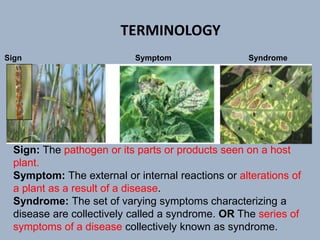
Sign Symptom Syndrome
Sign: The pathogen or its parts or products seen on a host
plant.
Symptom: The external or internal reactions or alterations of
a plant as a result of a disease.
Syndrome: The set of varying symptoms characterizing a
disease are collectively called a syndrome. OR The series of
symptoms of a disease collectively known as syndrome.
TERMINOLOGY
Virulence: The degree of pathogenicity of a given pathogen.
Virulent: Capable of causing a severe disease; strongly
pathogenic.
Avirulent (non-virulent): Non-pathogenic or lacking
virulence.
Infection: The establishment of a parasite within a host plant.
Latent Infection : where the host is infected with a pathogen
but does not show any symptoms.
Infectious disease: A disease that is caused by a pathogen
which can spread or transfer from a diseased to a healthy
plant.
Non-infectious disease: A disease that is caused by an abiotic
agent, that is, by an environmental factor, not by a pathogen.
TERMINOLOGY
Inoculum: The pathogen or its parts that can cause infection.
That portion of individual pathogens that are brought into
contact with the host.
Inoculum potential: Which consists of the number of propagules
and their capacity to cause infection.
Inoculate: To bring a pathogen into contact with a host plant or
plant organ.
Inoculation: The arrival or transfer of a pathogen onto a host.
Isolation: The separation of a pathogen from its host and its
culture on a nutrient medium.
Isolate: A single spore or culture and the subcultures derived
from it.
Microscopic: Very small; can be seen only with the aid/use of a
microscope.
TERMINOLOGY
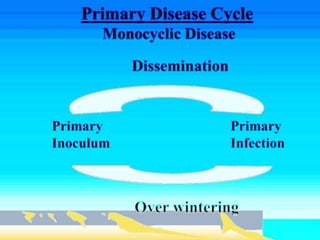
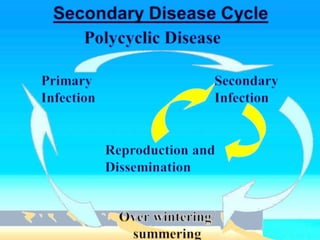
Primary infection: The first infection of a plant by the
overwintering or oversummering pathogen.
Primary inoculum: The overwintering or oversummering
pathogen, or its spores that cause primary infection. Virulence:
The degree of pathogenicity of a given pathogen.
Virulent: Capable of causing a severe disease; strongly
pathogenic.
Avirulent (non-virulent): Non-pathogenic or lacking virulence.
Infection: The establishment of a parasite within a host plant.
Latent Infection : where the host is infected with a pathogen
but does not show any symptoms.
Infectious disease: A disease that is caused by a pathogen which can
spread or transfer from a diseased to a healthy plant.
Non-infectious disease: A disease that is caused by an abiotic agent, that is,
by an environmental factor, not by a pathogen.
TERMINOLOGY
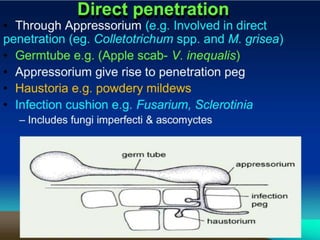
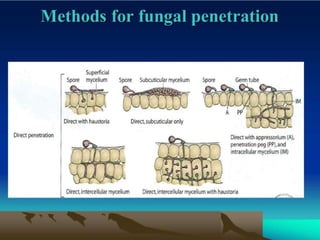
Penetration: The initial invasion of a host by a pathogen.
Primary infection: The first infection of a plant by the
overwintering or oversummering pathogen.
Primary inoculum: The overwintering or oversummering
pathogen, or its spores that cause primary infection.
Virulence: The degree of pathogenicity of a given
pathogen.
Transmission: The transfer or spread of a pathogen from
one plant to another
TERMINOLOGY
Parasitism
The removal of food by a parasite from its host.
In some cases, both the plant & the
microbe benefit from the association
called symbiosis.
Pathogenicity
The ability of the parasite to interfere with one
or more of the essential functions of the host,
causing disease.
 Parasitism plays an important role, but not the
most important role in pathogenicity.
Pathogenicity
Ability of the parasite or pathogen to
interfere with one or more of the essential
functions of the plant.
Pathogenesis
Host range of the pathogen
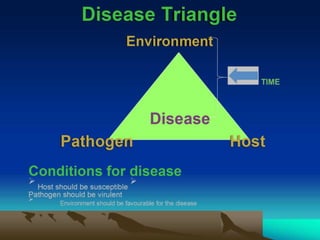
Disease development
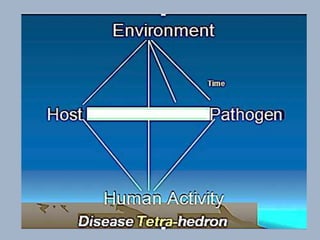
–Disease triangle
–Disease tetrahedron
Disease Cycle
Pathogenesis/ Disease Cycle – a series of events
that occur in succession during a pathogenic
relationship of a pathogen and host that leads
to disease
The study of disease cycle generate information
about
– Source of perpetuation of pathogen
– Mode of spread
– Help in formulation of control measures
A pathogen’s life cycle may follow events similar
to the disease cycle.
–
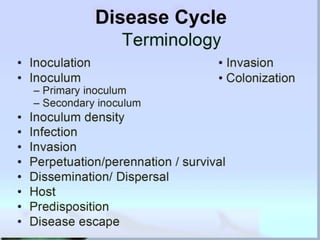
Disease Cycle
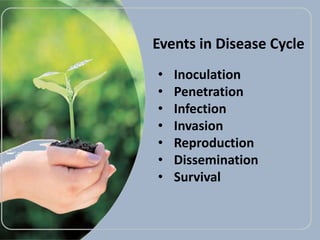
• Inoculation
• Penetration
• Infection
• Invasion
• Reproduction
• Dissemination
• Survival
Events in Disease Cycle
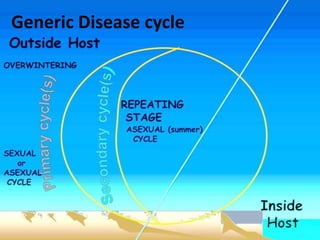
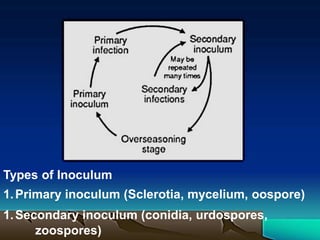
Generic Disease cycle
Types of Inoculum
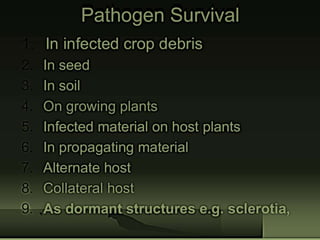
1.Primary inoculum (Sclerotia, mycelium, oospore)
1.Secondary inoculum (conidia, urdospores,
zoospores)
• Sources of inoculum:
– Soil: Bacteria, Rhizoctonia, Sclerotinia,
– infected plant parts: Seed, cuttings, bulbs,
corms, tubers etc.
– Diseased debris: Alternaria, Phytophthora
– Alternate hosts: Rusts- wheat rust:
Barberis vulgaris
– collateral hosts: Viruses: BCMV, PVY,
Powdery mildews etc.
Pathogenesis
Pathogenesis
Pathogenesis
Pathogenesis
Pathogenesis
Pathogenesis
Pathogenesis
Pathogenesis
Pathogenesis
Pathogenesis
Pathogenesis
Pathogenesis
Pathogenesis
Pathogenesis
Pathogenesis
Pathogenesis
Pathogenesis
Pathogenesis
Pathogenesis
Pathogenesis
Pathogenesis
Pathogenesis
Pathogenesis
Pathogenesis
Pathogenesis
Pathogenesis
Pathogenesis
Pathogenesis
Pathogenesis
Pathogenesis
Pathogenesis
Pathogenesis
Pathogenesis
Pathogenesis
Pathogenesis
Pathogenesis
Pathogenesis
Pathogenesis
Pathogenesis
Pathogenesis
Pathogenesis
Pathogenesis
Pathogenesis
Pathogenesis
Pathogenesis
Pathogenesis
Pathogenesis
Pathogenesis
Pathogenesis
Pathogenesis
Pathogenesis
Pathogenesis
Pathogenesis
Pathogenesis
Pathogenesis
Pathogenesis
Pathogenesis
Pathogenesis
Pathogenesis

Pathogenesis

  • 1.
  • 2.
    Necrotroph : anorganism (parasite) that causes the death of host tissues as it grows through them, obtaining its energy from the dead cells. Saprophyte : an organism that obtains nourishment from non- living organic matter (usually dead and decaying plant or animal matter) by absorbing soluble organic compounds. Pathogenicity: The capacity of a pathogen to cause disease. Pathogenesis : is the chain of events that lead to development of disease in the host (or) sequence of progress in disease development from the initial contact between the pathogen and its host to the completion of the syndrome. TERMINOLOGY
  • 3.
    Sign Symptom Syndrome Sign:The pathogen or its parts or products seen on a host plant. Symptom: The external or internal reactions or alterations of a plant as a result of a disease. Syndrome: The set of varying symptoms characterizing a disease are collectively called a syndrome. OR The series of symptoms of a disease collectively known as syndrome. TERMINOLOGY
  • 4.
    Virulence: The degreeof pathogenicity of a given pathogen. Virulent: Capable of causing a severe disease; strongly pathogenic. Avirulent (non-virulent): Non-pathogenic or lacking virulence. Infection: The establishment of a parasite within a host plant. Latent Infection : where the host is infected with a pathogen but does not show any symptoms. Infectious disease: A disease that is caused by a pathogen which can spread or transfer from a diseased to a healthy plant. Non-infectious disease: A disease that is caused by an abiotic agent, that is, by an environmental factor, not by a pathogen. TERMINOLOGY
  • 5.
    Inoculum: The pathogenor its parts that can cause infection. That portion of individual pathogens that are brought into contact with the host. Inoculum potential: Which consists of the number of propagules and their capacity to cause infection. Inoculate: To bring a pathogen into contact with a host plant or plant organ. Inoculation: The arrival or transfer of a pathogen onto a host. Isolation: The separation of a pathogen from its host and its culture on a nutrient medium. Isolate: A single spore or culture and the subcultures derived from it. Microscopic: Very small; can be seen only with the aid/use of a microscope. TERMINOLOGY
  • 6.
    Primary infection: Thefirst infection of a plant by the overwintering or oversummering pathogen. Primary inoculum: The overwintering or oversummering pathogen, or its spores that cause primary infection. Virulence: The degree of pathogenicity of a given pathogen. Virulent: Capable of causing a severe disease; strongly pathogenic. Avirulent (non-virulent): Non-pathogenic or lacking virulence. Infection: The establishment of a parasite within a host plant. Latent Infection : where the host is infected with a pathogen but does not show any symptoms. Infectious disease: A disease that is caused by a pathogen which can spread or transfer from a diseased to a healthy plant. Non-infectious disease: A disease that is caused by an abiotic agent, that is, by an environmental factor, not by a pathogen. TERMINOLOGY
  • 7.
    Penetration: The initialinvasion of a host by a pathogen. Primary infection: The first infection of a plant by the overwintering or oversummering pathogen. Primary inoculum: The overwintering or oversummering pathogen, or its spores that cause primary infection. Virulence: The degree of pathogenicity of a given pathogen. Transmission: The transfer or spread of a pathogen from one plant to another TERMINOLOGY
  • 8.
    Parasitism The removal offood by a parasite from its host. In some cases, both the plant & the microbe benefit from the association called symbiosis. Pathogenicity The ability of the parasite to interfere with one or more of the essential functions of the host, causing disease.  Parasitism plays an important role, but not the most important role in pathogenicity.
  • 9.
    Pathogenicity Ability of theparasite or pathogen to interfere with one or more of the essential functions of the plant. Pathogenesis
  • 10.
    Host range ofthe pathogen Disease development –Disease triangle –Disease tetrahedron
  • 13.
    Disease Cycle Pathogenesis/ DiseaseCycle – a series of events that occur in succession during a pathogenic relationship of a pathogen and host that leads to disease The study of disease cycle generate information about – Source of perpetuation of pathogen – Mode of spread – Help in formulation of control measures A pathogen’s life cycle may follow events similar to the disease cycle.
  • 14.
  • 15.
    • Inoculation • Penetration •Infection • Invasion • Reproduction • Dissemination • Survival Events in Disease Cycle
  • 18.
  • 20.
    Types of Inoculum 1.Primaryinoculum (Sclerotia, mycelium, oospore) 1.Secondary inoculum (conidia, urdospores, zoospores)
  • 21.
    • Sources ofinoculum: – Soil: Bacteria, Rhizoctonia, Sclerotinia, – infected plant parts: Seed, cuttings, bulbs, corms, tubers etc. – Diseased debris: Alternaria, Phytophthora – Alternate hosts: Rusts- wheat rust: Barberis vulgaris – collateral hosts: Viruses: BCMV, PVY, Powdery mildews etc.