POL 240-01
Fall 2015
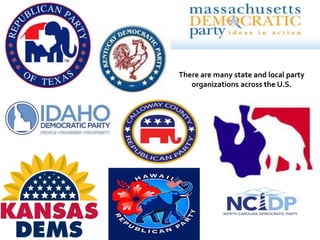
There are many state and local party
organizations across the U.S.
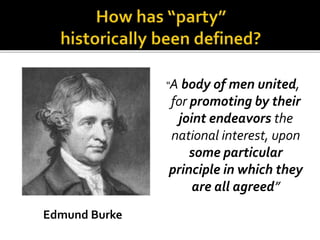
“A body of men united,
for promoting by their
joint endeavors the
national interest, upon
some particular
principle in which they
are all agreed”
Edmund Burke
 Inter and Intra-PartyVariation
 Political Party vs. Political Ideology
 Conservative Democrats, Liberal Republicans
 Politicians’ Choices
▪ Vote or caucus with another party
▪ Defect party and join another
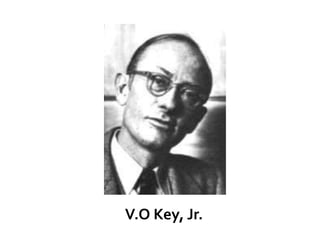
 A broad coalition of individuals who:
 (1) Recruit, nominate, and elect candidates for office
 (2) Under a given label
 (3)To control the government
 (4) In accordance with their ideas and policies.
V.O Key, Jr.
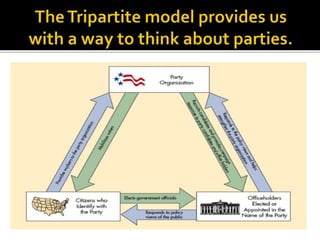
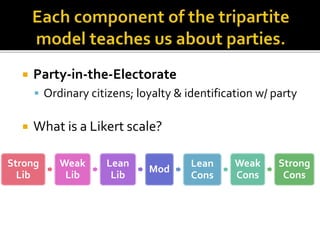
 Party-in-the-Electorate
 Ordinary citizens; loyalty & identification w/ party
 What is a Likert scale?
Strong
Lib
Weak
Lib
Lean
Lib
Mod
Lean
Cons
Weak
Cons
Strong
Cons
 Party Organization
 Party Officials, Committees,Volunteers, Staff
 Party-in-Government
 Officeholders and Candidates
 Local, State, National Levels
 Examples: Governor, State Legislators, Mayors
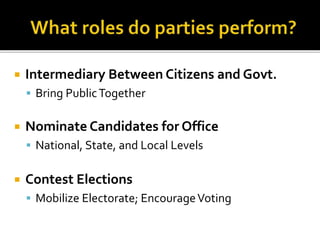
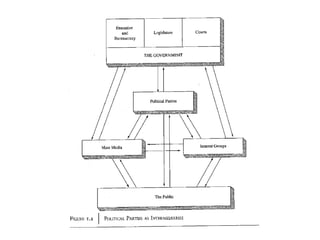
 Intermediary Between Citizens and Govt.
 Bring PublicTogether
 Nominate Candidates for Office
 National, State, and Local Levels
 Contest Elections
 Mobilize Electorate; EncourageVoting
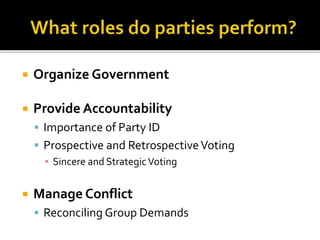
 Organize Government
 Provide Accountability
 Importance of Party ID
 Prospective and RetrospectiveVoting
▪ Sincere and StrategicVoting
 Manage Conflict
 Reconciling Group Demands
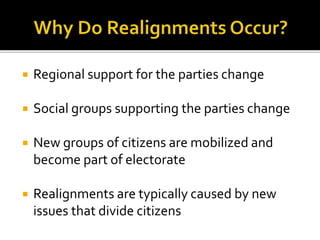
 Regional support for the parties change
 Social groups supporting the parties change
 New groups of citizens are mobilized and
become part of electorate
 Realignments are typically caused by new
issues that divide citizens
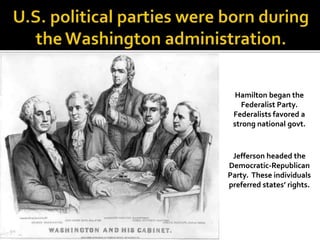
Hamilton began the
Federalist Party.
Federalists favored a
strong national govt.
Jefferson headed the
Democratic-Republican
Party. These individuals
preferred states’ rights.
 Presidential electors now popularly elected
 Property qualifications for voting dropped
 Voter turnout increased dramatically
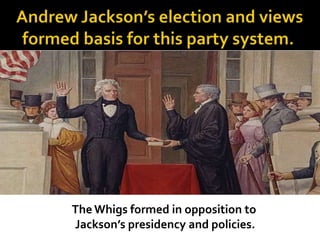
The Whigs formed in opposition to
Jackson’s presidency and policies.
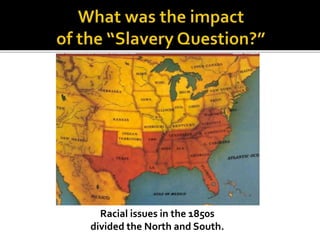
Racial issues in the 1850s
divided the North and South.
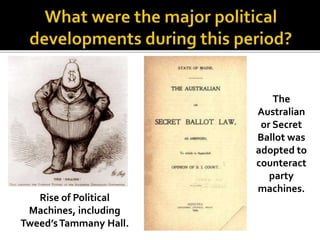
Rise of Political
Machines, including
Tweed’sTammany Hall.
The
Australian
or Secret
Ballot was
adopted to
counteract
party
machines.
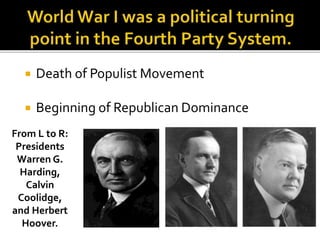
 Death of Populist Movement
 Beginning of Republican Dominance
From L to R:
Presidents
Warren G.
Harding,
Calvin
Coolidge,
and Herbert
Hoover.
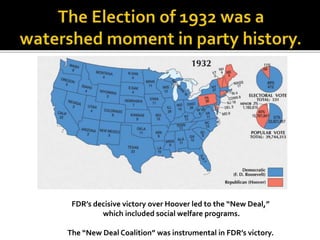
FDR’s decisive victory over Hoover led to the “New Deal,”
which included social welfare programs.
The “New Deal Coalition” was instrumental in FDR’s victory.
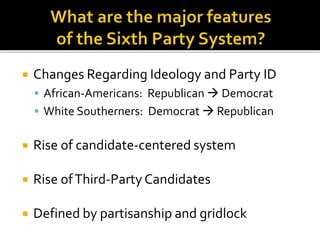
 Changes Regarding Ideology and Party ID
 African-Americans: Republican  Democrat
 White Southerners: Democrat  Republican
 Rise of candidate-centered system
 Rise ofThird-Party Candidates
 Defined by partisanship and gridlock
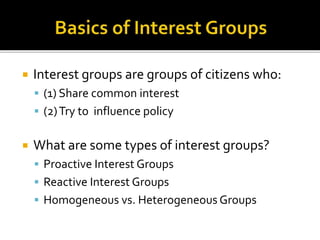
 Interest groups are groups of citizens who:
 (1) Share common interest
 (2)Try to influence policy
 What are some types of interest groups?
 Proactive Interest Groups
 Reactive Interest Groups
 Homogeneous vs. Heterogeneous Groups
 Representation
 Participation
 Education
 Agenda Building
 Provision of Program Alternatives
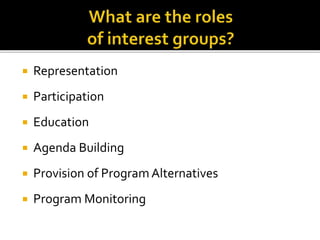
 Program Monitoring
 Common Problem orThreat
 Resource Advantage
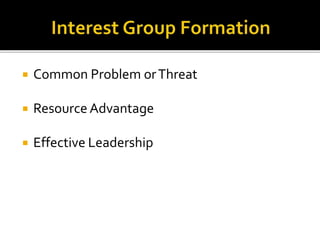
 Effective Leadership
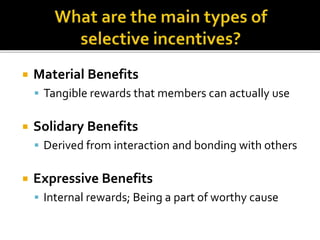
 Material Benefits
 Tangible rewards that members can actually use
 Solidary Benefits
 Derived from interaction and bonding with others
 Expressive Benefits
 Internal rewards; Being a part of worthy cause
AGE RACE AND ETHNICITY
GENDER SEXUAL ORIENTATION
ENVIRONMENTAL CONSUMER
RELIGIOUS SECOND AMENDMENT
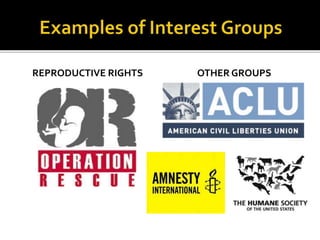
REPRODUCTIVE RIGHTS OTHER GROUPS
DIRECT LOBBYING
 “Inside Lobbying”
 Interaction with
decision makers in
government
INDIRECT LOBBYING
 “Outside Lobbying”
 Mobilizes general
public to contact govt.
officials on given issue

Parties and interest groups

  • 1.
  • 4.
    There are manystate and local party organizations across the U.S.
  • 6.
    “A body ofmen united, for promoting by their joint endeavors the national interest, upon some particular principle in which they are all agreed” Edmund Burke
  • 7.
     Inter andIntra-PartyVariation  Political Party vs. Political Ideology  Conservative Democrats, Liberal Republicans  Politicians’ Choices ▪ Vote or caucus with another party ▪ Defect party and join another
  • 8.
     A broadcoalition of individuals who:  (1) Recruit, nominate, and elect candidates for office  (2) Under a given label  (3)To control the government  (4) In accordance with their ideas and policies.
  • 10.
  • 12.
     Party-in-the-Electorate  Ordinarycitizens; loyalty & identification w/ party  What is a Likert scale? Strong Lib Weak Lib Lean Lib Mod Lean Cons Weak Cons Strong Cons
  • 13.
     Party Organization Party Officials, Committees,Volunteers, Staff  Party-in-Government  Officeholders and Candidates  Local, State, National Levels  Examples: Governor, State Legislators, Mayors
  • 15.
     Intermediary BetweenCitizens and Govt.  Bring PublicTogether  Nominate Candidates for Office  National, State, and Local Levels  Contest Elections  Mobilize Electorate; EncourageVoting
  • 17.
     Organize Government Provide Accountability  Importance of Party ID  Prospective and RetrospectiveVoting ▪ Sincere and StrategicVoting  Manage Conflict  Reconciling Group Demands
  • 19.
     Regional supportfor the parties change  Social groups supporting the parties change  New groups of citizens are mobilized and become part of electorate  Realignments are typically caused by new issues that divide citizens
  • 22.
    Hamilton began the FederalistParty. Federalists favored a strong national govt. Jefferson headed the Democratic-Republican Party. These individuals preferred states’ rights.
  • 24.
     Presidential electorsnow popularly elected  Property qualifications for voting dropped  Voter turnout increased dramatically
  • 25.
    The Whigs formedin opposition to Jackson’s presidency and policies.
  • 26.

    Racial issues inthe 1850s divided the North and South.
  • 29.
    Rise of Political Machines,including Tweed’sTammany Hall. The Australian or Secret Ballot was adopted to counteract party machines.
  • 31.
     Death ofPopulist Movement  Beginning of Republican Dominance From L to R: Presidents Warren G. Harding, Calvin Coolidge, and Herbert Hoover.
  • 33.
    FDR’s decisive victoryover Hoover led to the “New Deal,” which included social welfare programs. The “New Deal Coalition” was instrumental in FDR’s victory.
  • 35.
     Changes RegardingIdeology and Party ID  African-Americans: Republican  Democrat  White Southerners: Democrat  Republican  Rise of candidate-centered system  Rise ofThird-Party Candidates  Defined by partisanship and gridlock
  • 47.
     Interest groupsare groups of citizens who:  (1) Share common interest  (2)Try to influence policy  What are some types of interest groups?  Proactive Interest Groups  Reactive Interest Groups  Homogeneous vs. Heterogeneous Groups
  • 49.
     Representation  Participation Education  Agenda Building  Provision of Program Alternatives  Program Monitoring
  • 51.
     Common ProblemorThreat  Resource Advantage  Effective Leadership
  • 53.
     Material Benefits Tangible rewards that members can actually use  Solidary Benefits  Derived from interaction and bonding with others  Expressive Benefits  Internal rewards; Being a part of worthy cause
  • 56.
    AGE RACE ANDETHNICITY
  • 57.
  • 59.
  • 60.
  • 61.
  • 62.
    DIRECT LOBBYING  “InsideLobbying”  Interaction with decision makers in government INDIRECT LOBBYING  “Outside Lobbying”  Mobilizes general public to contact govt. officials on given issue