Name: Tahmid Ahmed
ID: 2016-1-68-007
Name: Antar Karmakar
ID : 2016-2-60-113
Name: Asif Mahmud
ID: 2016-2-60-116
Name: Md. Niaz Mahmud
ID: 2013-3-50-012
•What is Particulate Matter?
•Facts About PM Pollution
•Where Does The PM Originate?
•Types of Particulate Matter
•Sources of Particulate Matter
•Determinants of PM Concentration
•Affects of PM in Bangladesh
•How Can We Prevent Particulate Matter?
Particulate Matter (PM)
Particulate matter (PM): PM is a complex mixture of air borne
particles that differ in size, origin and chemical composition, all of
which are <10 µm in size.
Example : Dust, pollen, soot, smoke
These particles can affect the heart and lungs and
cause serious health effects PM is 1000x smaller then
human hairs.
FACTS ABOUT PM POLLUTION
•PM is one of the six EPA ‘criteria pollutants’.
•PM has no fixed composition. The particles may consist
either of only one chemical (e.g. sulphate, sulphuric
acid, or lead oxide ) OR a number of pollutants ( organic
chemicals, metals, dust ).
•US EPA described PM pollution as ‘mixture of mixtures’.
•PM is among the most harmful of all air pollutants.
Sources may emit PM directly into the
environment or emit precursors such as
sulfur dioxide (SO2), nitrogen dioxide (NO2),
and volatile organic compounds (VOCs),
which are transformed through atmospheric
chemistry to form PM.
TYPES OF PARTICULATE MATTER
According to size there are two types of PM.
PM10: Diameter 2.5-10 μm (It is created from
road dust and particles from worn out engines
and breaks) .
PM2.5: Diameter <2.5 μm (It is created from
diesel engine exhausts)
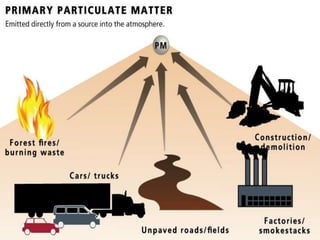
PM can be caused by both natural sources and human
made sources.
Volcanic eruptions, sea salt, or soils are the main
natural sources. Human made sources are car exhausts,
industry, shipping and coal and ore fabrications, this
increase airborne particulate matter concentrations on
many locations.
Emissions from traffic, particularly from diesel engines,
are most damaging to human health.
Determinants of PM Concentration
•Weather patterns
•Wind
•Stability (vertical movement of air)
Turbulence
•Precipitation
•Topography
•Smokestack height and temperature of gases
• Making lakes and streams acidic.
•Changing the nutrient balance in coastal
waters and large river basins.
•Depleting the nutrients in soil.
•Damaging sensitive forests and farm crops.
Affecting the diversity of ecosystems
•According to the World Health Organisation, over
37,000 Bangladeshis die annually from diseases
related to air pollution.
• Dhaka is the third largest particulate matter city in
Asia.
What Are The Affects Particular Matter Has On
Our Health?
1. PM pollution can cause lung irritation, which leads to
increased permeability in lung tissue.
2. PM aggravates the severity of chronic lung diseases,
causing rapid loss of airway function.
3. PM causes changes in blood chemistry that can result in
clots that may lead to heart attacks.
4. PM causes inflammation of lung tissue, resulting in the
release of chemicals that can impact heart function.
1. Children under 18 age.
2. Adults 65 and older.
3. Anyone with chronic lung diseases such as
asthma, chronic bronchitis or emphysema.
4. Anyone with a cardiovascular disease.
5. Anyone with diabetes.
People at risk (sensitive
human population )
Reduce diesel emissions by replacing older engines with
newer and cleaner engines.
Mulch garden refuse instead of burning it.
Take action to reduce wildfires.
Pay attention to recommended maintenance schedules
for your vehicle.
Finally, Stop smoking; if you do smoke, do not smoke
indoors.
Particulate matter
Particulate matter

Particulate matter

  • 1.
    Name: Tahmid Ahmed ID:2016-1-68-007 Name: Antar Karmakar ID : 2016-2-60-113 Name: Asif Mahmud ID: 2016-2-60-116 Name: Md. Niaz Mahmud ID: 2013-3-50-012
  • 2.
    •What is ParticulateMatter? •Facts About PM Pollution •Where Does The PM Originate? •Types of Particulate Matter •Sources of Particulate Matter •Determinants of PM Concentration •Affects of PM in Bangladesh •How Can We Prevent Particulate Matter?
  • 3.
    Particulate Matter (PM) Particulatematter (PM): PM is a complex mixture of air borne particles that differ in size, origin and chemical composition, all of which are <10 µm in size. Example : Dust, pollen, soot, smoke These particles can affect the heart and lungs and cause serious health effects PM is 1000x smaller then human hairs.
  • 4.
    FACTS ABOUT PMPOLLUTION •PM is one of the six EPA ‘criteria pollutants’. •PM has no fixed composition. The particles may consist either of only one chemical (e.g. sulphate, sulphuric acid, or lead oxide ) OR a number of pollutants ( organic chemicals, metals, dust ). •US EPA described PM pollution as ‘mixture of mixtures’. •PM is among the most harmful of all air pollutants.
  • 5.
    Sources may emitPM directly into the environment or emit precursors such as sulfur dioxide (SO2), nitrogen dioxide (NO2), and volatile organic compounds (VOCs), which are transformed through atmospheric chemistry to form PM.
  • 6.
    TYPES OF PARTICULATEMATTER According to size there are two types of PM. PM10: Diameter 2.5-10 μm (It is created from road dust and particles from worn out engines and breaks) . PM2.5: Diameter <2.5 μm (It is created from diesel engine exhausts)
  • 8.
    PM can becaused by both natural sources and human made sources. Volcanic eruptions, sea salt, or soils are the main natural sources. Human made sources are car exhausts, industry, shipping and coal and ore fabrications, this increase airborne particulate matter concentrations on many locations. Emissions from traffic, particularly from diesel engines, are most damaging to human health.
  • 10.
    Determinants of PMConcentration •Weather patterns •Wind •Stability (vertical movement of air) Turbulence •Precipitation •Topography •Smokestack height and temperature of gases
  • 11.
    • Making lakesand streams acidic. •Changing the nutrient balance in coastal waters and large river basins. •Depleting the nutrients in soil. •Damaging sensitive forests and farm crops. Affecting the diversity of ecosystems
  • 12.
    •According to theWorld Health Organisation, over 37,000 Bangladeshis die annually from diseases related to air pollution. • Dhaka is the third largest particulate matter city in Asia.
  • 14.
    What Are TheAffects Particular Matter Has On Our Health? 1. PM pollution can cause lung irritation, which leads to increased permeability in lung tissue. 2. PM aggravates the severity of chronic lung diseases, causing rapid loss of airway function. 3. PM causes changes in blood chemistry that can result in clots that may lead to heart attacks. 4. PM causes inflammation of lung tissue, resulting in the release of chemicals that can impact heart function.
  • 16.
    1. Children under18 age. 2. Adults 65 and older. 3. Anyone with chronic lung diseases such as asthma, chronic bronchitis or emphysema. 4. Anyone with a cardiovascular disease. 5. Anyone with diabetes. People at risk (sensitive human population )
  • 17.
    Reduce diesel emissionsby replacing older engines with newer and cleaner engines. Mulch garden refuse instead of burning it. Take action to reduce wildfires. Pay attention to recommended maintenance schedules for your vehicle. Finally, Stop smoking; if you do smoke, do not smoke indoors.