https://iaeme.com/Home/journal/IJEET 48 editor@iaeme.com
International Journal of Electrical Engineering and Technology (IJEET)
Volume 12, Issue 11, November 2021, pp. 48-59, Article ID: IJEET_12_11_005
Available online at https://iaeme.com/Home/issue/IJEET?Volume=12&Issue=11
ISSN Print: 0976-6545 and ISSN Online: 0976-6553
DOI: https://doi.org/10.34218/IJEET.12.11.2021.005
© IAEME Publication Scopus Indexed
PARTICLE INITIATED FOV OF HYBRID
CYLINDRICAL INSULATING SPACERS UNDER
AC AND DC VOLTAGES IN AIR FOR
DIFFERENT ELECTRIC FIELD
CONFIGURATION - AN EXPERIMENTAL
APPROACH
Amanulla1, Dr. Mohd. Z.A. Ansari1, Aejaz Ahmed. K.R1
1
Department of Electrical and Electronics Engineering,
Ghousia College of Engineering, Ramanagara, Karnataka, India.
ABSTRACT
The ever – increasing voltage levels in electrical power systems need to enhance the
power distribution and transmission system. The insulation failure is mainly due to the
high voltage stress. The dielectric strength of air is greatly influenced by the presence
of insulating surfaces. In the present research work the new hybrid cylindrical
insulating spacers such as PMMA – PP, PP – NYLON and NYLON – PMMA and the
orientation of hybrid cylindrical insulating spacers has been studied. The flashover
performances are carried out experimentally in air as insulating media for different
electrode configuration such as uniform electric field (Plane – Plane), non-uniform
electric field (Needle – Plane) and moderately non-uniform electric field (Hemisphere
rod – Plane) under AC and DC voltages. The effect of conducting floating particles is
also carried out for different electrode configuration under AC and DC voltages. The
experimental investigations shows that NYLON – PP and NYLON – PMMA hybrid
spacers has highest flashover voltage (FOV) under AC voltages, in case of DC voltages
PP – NYLON hybrid spacer gives highest FOV. The hybrid spacer PP – NYLON has
more effective under AC voltage, whereas in case of DC voltage PMMA – NYLON has
more effective with conducting floating particles.
Key words: PMMA (Polymethyl Methacrylic), PP (Poly Propylene), NYLON, FOV
(Flashover Voltage), HV (High Voltage), LV (Low Voltage), T (Top), B (Bottom).
Cite this Article: Amanulla, Mohd. Z.A. Ansari and Aejaz Ahmed. K.R, Particle
Initiated FOV of Hybrid Cylindrical Insulating Spacers under AC and DC Voltages in
Air for Different Electric Field Configuration - An Experimental Approach,
International Journal of Electrical Engineering and Technology (IJEET). 12(11), 2021,
pp. 48-59.
https://iaeme.com/Home/issue/IJEET?Volume=12&Issue=11
Particle Initiated FOV of Hybrid Cylindrical Insulating Spacers under AC and DC Voltages in Air for
Different Electric Field Configuration - An Experimental Approach
https://iaeme.com/Home/journal/IJEET 49 editor@iaeme.com
1. INTRODUCTION
The performance of high voltage equipment mainly depends on the withstand voltage of
insulating materials. The insulating materials have to work in extreme conditions, which
demand high quality insulating materials with good electrical properties [1]. The steadily
increasing demand for electric power, which leading to rapid increase in the area of electrical
instruments and insulating materials [2]. The future development of power systems depends on
the progress in insulating materials. Hence, a new generation of power system requires novel
growth in the field of insulating materials [3]. The dielectric strength of air is greatly influenced
by the presence of insulating materials in conventional air insulated systems. Surface discharge
appear from the contact point between insulators and components under high voltage stress,
constitute possible cause for insulation failure. Therefore, the flashover mechanism has been
subject of numerous research work [4]. The electric field distribution with different electrodes
such as pointed electrode, plane electrode, sphere electrode, rod electrode and rogouski
electrode with common plate electrode as the bottom electrode are used for the breakdown
voltages [5]. The conductors are to be essentially supported by solid insulators called ‘Spacers’
in high voltage equipment. Hence, it needs to search for the new hybrid cylindrical insulating
spacers such as PMMA – PP, PP – NYLON and NYLON – PMMA as shown in Figure 1.
Figure 1. Hybrid Cylindrical Insulating Spacers
In this paper, the surface flashover performance of hybrid cylindrical insulating spacers for
different electrode configuration such as uniform (plane - Plane), moderately non-uniform
(hemisphere - plane) and non-uniform (needle - plane) fields in air under AC and DC voltages
have been studied. The work is also carried out to study the effect of floating particles.
2. EXPERIMENTAL SETUP
The experimental setup to carry the flashover characteristics is as shown in Figure 2. The
insulating spacer is placed tightly between the HV and LV electrode. The high voltage is applied
by varying the auto-transformer, the voltage is gradually increased at an approximate rate of
1kV/sec till the flashover occurs along the surface of the spacer and voltage applied is recorded.
The experiment is carried out for 5 trials and average value is calculated.
Figure 2. Experimental Setup for Measurement of FOV
Amanulla, Mohd. Z.A. Ansari and Aejaz Ahmed. K.R
https://iaeme.com/Home/journal/IJEET 50 editor@iaeme.com
This procedure is repeated for different hybrid insulating spacers for different electrode
configuration under AC and DC voltages without and with conducting floating particles.
3. EXPERIMENTAL RESULTS AND DISCUSSIONS
3.1. Without Conducting Particles
To study the flashover performance of combination of insulating spacers which have different
dielectric properties, different resistivity and different dielectric constant are carried out under
AC and DC voltages for different electrode configuration. The effect of orientation of the hybrid
cylindrical spacers are also studied.
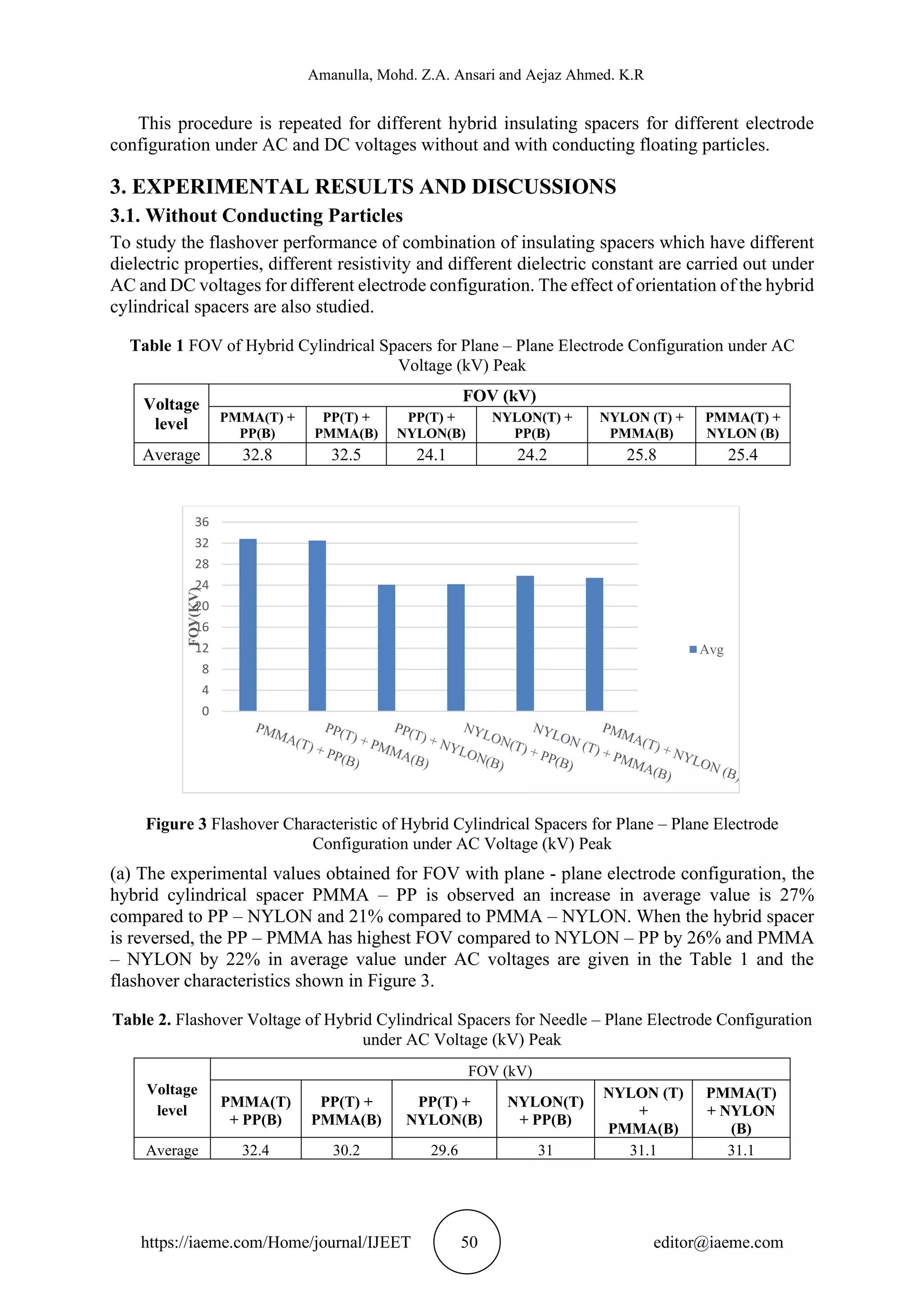
Table 1 FOV of Hybrid Cylindrical Spacers for Plane – Plane Electrode Configuration under AC
Voltage (kV) Peak
Voltage
level
FOV (kV)
PMMA(T) +
PP(B)
PP(T) +
PMMA(B)
PP(T) +
NYLON(B)
NYLON(T) +
PP(B)
NYLON (T) +
PMMA(B)
PMMA(T) +
NYLON (B)
Average 32.8 32.5 24.1 24.2 25.8 25.4
Figure 3 Flashover Characteristic of Hybrid Cylindrical Spacers for Plane – Plane Electrode
Configuration under AC Voltage (kV) Peak
(a) The experimental values obtained for FOV with plane - plane electrode configuration, the
hybrid cylindrical spacer PMMA – PP is observed an increase in average value is 27%
compared to PP – NYLON and 21% compared to PMMA – NYLON. When the hybrid spacer
is reversed, the PP – PMMA has highest FOV compared to NYLON – PP by 26% and PMMA
– NYLON by 22% in average value under AC voltages are given in the Table 1 and the
flashover characteristics shown in Figure 3.
Table 2. Flashover Voltage of Hybrid Cylindrical Spacers for Needle – Plane Electrode Configuration
under AC Voltage (kV) Peak
Voltage
level
FOV (kV)
PMMA(T)
+ PP(B)
PP(T) +
PMMA(B)
PP(T) +
NYLON(B)
NYLON(T)
+ PP(B)
NYLON (T)
+
PMMA(B)
PMMA(T)
+ NYLON
(B)
Average 32.4 30.2 29.6 31 31.1 31.1
0
4
8
12
16
20
24
28
32
36
FOV(KV)
Avg
Particle Initiated FOV of Hybrid Cylindrical Insulating Spacers under AC and DC Voltages in Air for
Different Electric Field Configuration - An Experimental Approach
https://iaeme.com/Home/journal/IJEET 51 editor@iaeme.com
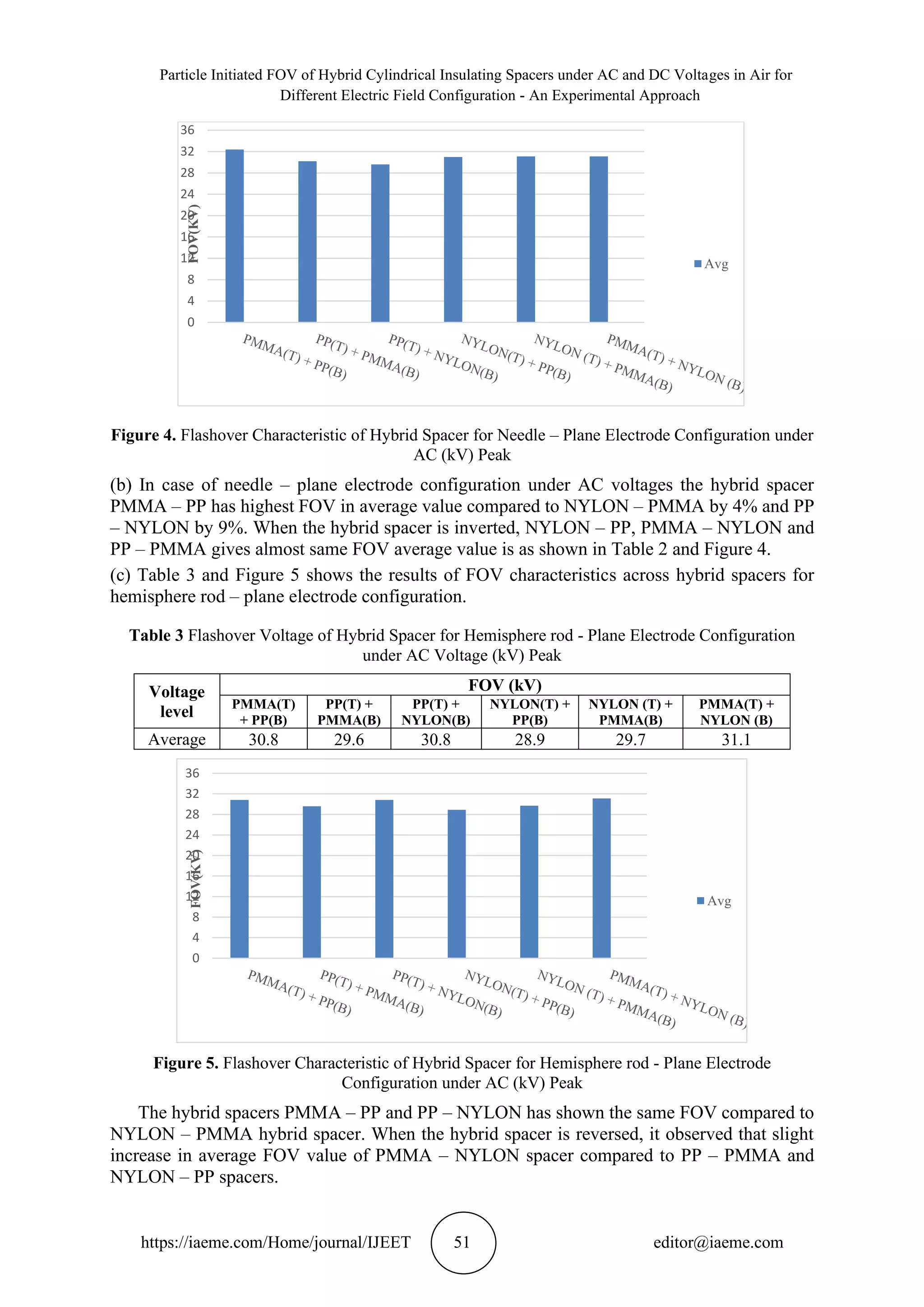
Figure 4. Flashover Characteristic of Hybrid Spacer for Needle – Plane Electrode Configuration under
AC (kV) Peak
(b) In case of needle – plane electrode configuration under AC voltages the hybrid spacer
PMMA – PP has highest FOV in average value compared to NYLON – PMMA by 4% and PP
– NYLON by 9%. When the hybrid spacer is inverted, NYLON – PP, PMMA – NYLON and
PP – PMMA gives almost same FOV average value is as shown in Table 2 and Figure 4.
(c) Table 3 and Figure 5 shows the results of FOV characteristics across hybrid spacers for
hemisphere rod – plane electrode configuration.
Table 3 Flashover Voltage of Hybrid Spacer for Hemisphere rod - Plane Electrode Configuration
under AC Voltage (kV) Peak
Voltage
level
FOV (kV)
PMMA(T)
+ PP(B)
PP(T) +
PMMA(B)
PP(T) +
NYLON(B)
NYLON(T) +
PP(B)
NYLON (T) +
PMMA(B)
PMMA(T) +
NYLON (B)
Average 30.8 29.6 30.8 28.9 29.7 31.1
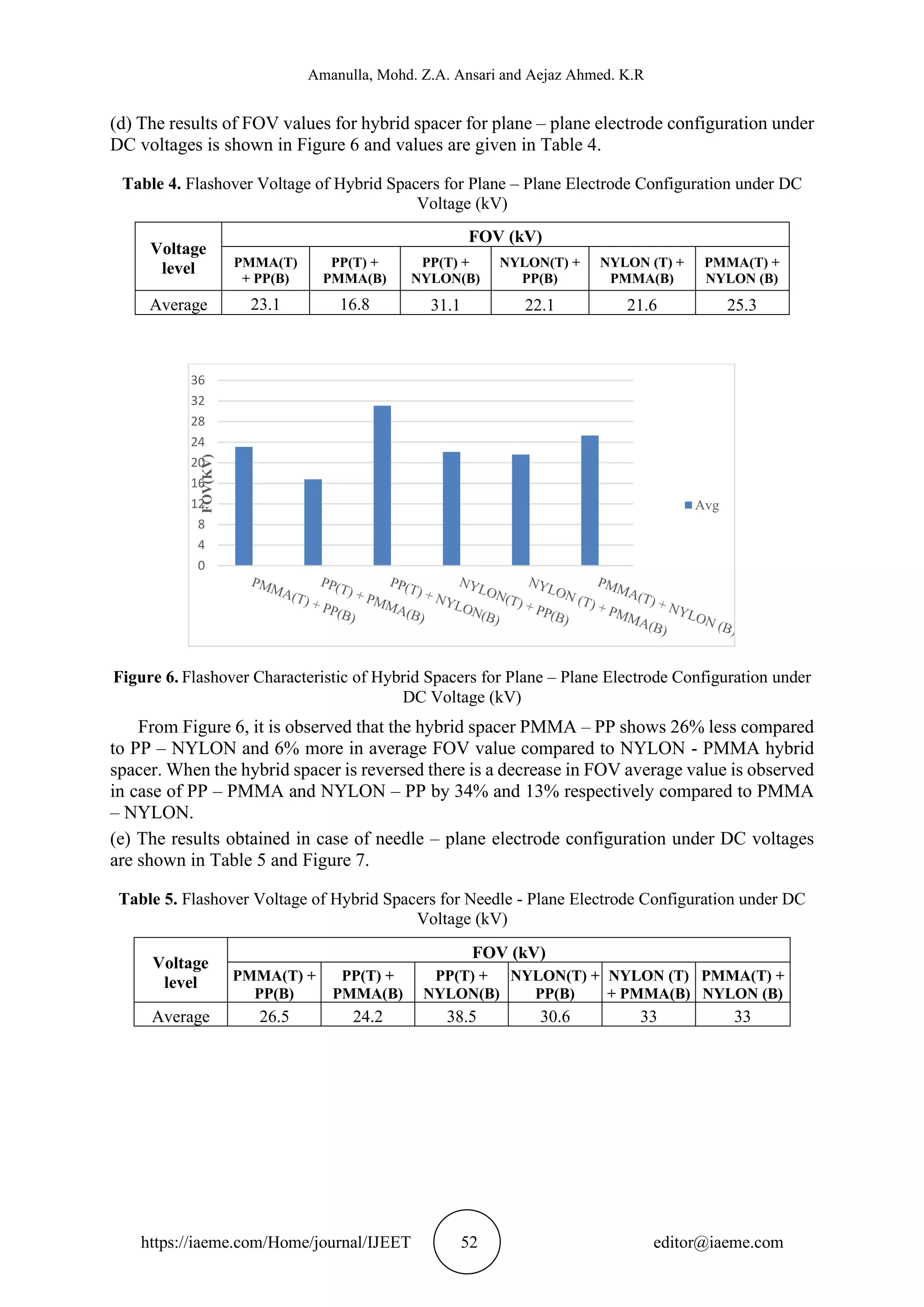
Figure 5. Flashover Characteristic of Hybrid Spacer for Hemisphere rod - Plane Electrode
Configuration under AC (kV) Peak
The hybrid spacers PMMA – PP and PP – NYLON has shown the same FOV compared to
NYLON – PMMA hybrid spacer. When the hybrid spacer is reversed, it observed that slight
increase in average FOV value of PMMA – NYLON spacer compared to PP – PMMA and
NYLON – PP spacers.
0
4
8
12
16
20
24
28
32
36
FOV(KV)
Avg
0
4
8
12
16
20
24
28
32
36
FOV(KV)
Avg
Amanulla, Mohd. Z.A. Ansari and Aejaz Ahmed. K.R
https://iaeme.com/Home/journal/IJEET 52 editor@iaeme.com
(d) The results of FOV values for hybrid spacer for plane – plane electrode configuration under
DC voltages is shown in Figure 6 and values are given in Table 4.
Table 4. Flashover Voltage of Hybrid Spacers for Plane – Plane Electrode Configuration under DC
Voltage (kV)
Voltage
level
FOV (kV)
PMMA(T)
+ PP(B)
PP(T) +
PMMA(B)
PP(T) +
NYLON(B)
NYLON(T) +
PP(B)
NYLON (T) +
PMMA(B)
PMMA(T) +
NYLON (B)
Average 23.1 16.8 31.1 22.1 21.6 25.3
Figure 6. Flashover Characteristic of Hybrid Spacers for Plane – Plane Electrode Configuration under
DC Voltage (kV)
From Figure 6, it is observed that the hybrid spacer PMMA – PP shows 26% less compared
to PP – NYLON and 6% more in average FOV value compared to NYLON - PMMA hybrid
spacer. When the hybrid spacer is reversed there is a decrease in FOV average value is observed
in case of PP – PMMA and NYLON – PP by 34% and 13% respectively compared to PMMA
– NYLON.
(e) The results obtained in case of needle – plane electrode configuration under DC voltages
are shown in Table 5 and Figure 7.
Table 5. Flashover Voltage of Hybrid Spacers for Needle - Plane Electrode Configuration under DC
Voltage (kV)
Voltage
level
FOV (kV)
PMMA(T) +
PP(B)
PP(T) +
PMMA(B)
PP(T) +
NYLON(B)
NYLON(T) +
PP(B)
NYLON (T)
+ PMMA(B)
PMMA(T) +
NYLON (B)
Average 26.5 24.2 38.5 30.6 33 33
0
4
8
12
16
20
24
28
32
36
FOV(KV)
Avg
Particle Initiated FOV of Hybrid Cylindrical Insulating Spacers under AC and DC Voltages in Air for
Different Electric Field Configuration - An Experimental Approach
https://iaeme.com/Home/journal/IJEET 53 editor@iaeme.com
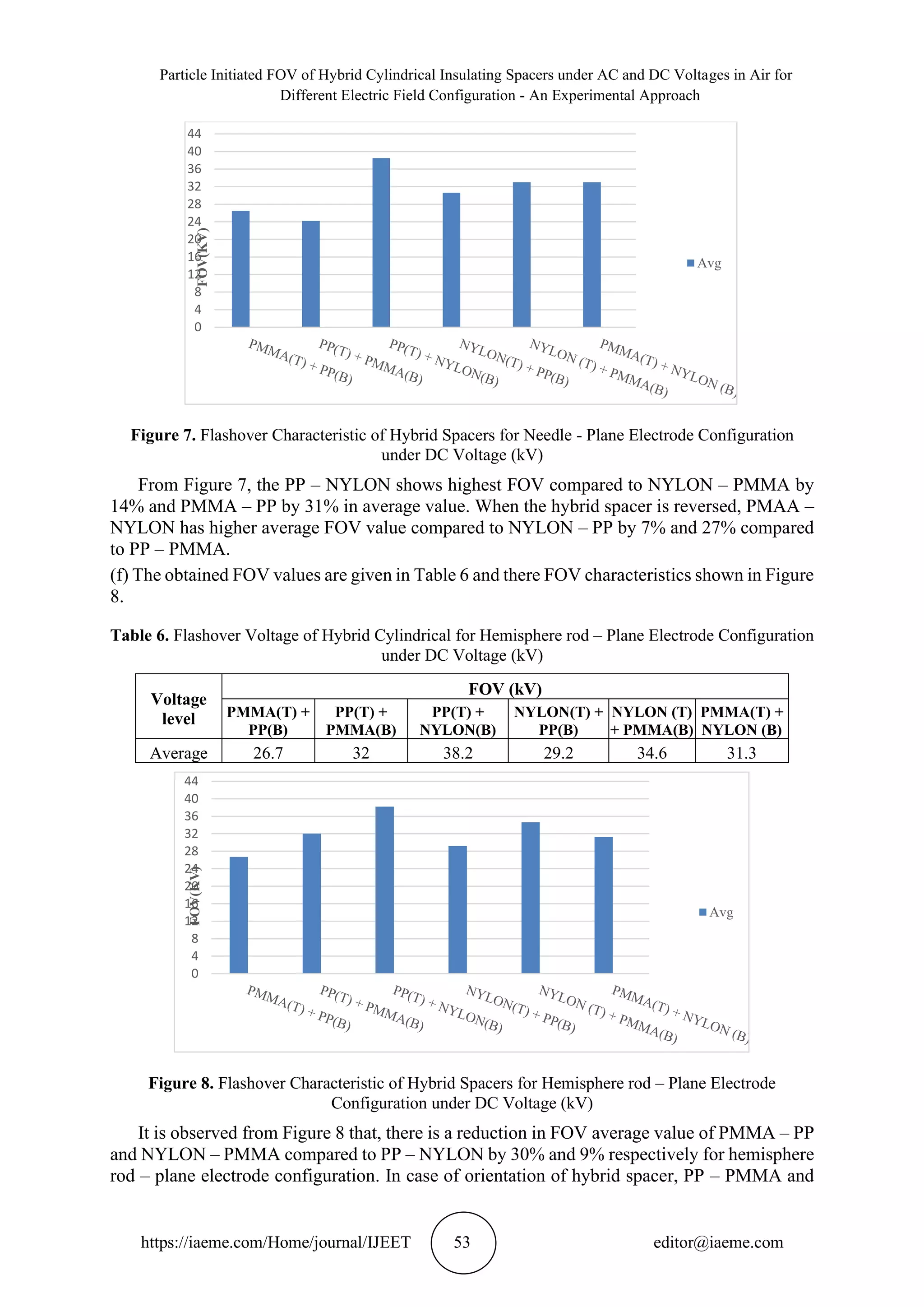
Figure 7. Flashover Characteristic of Hybrid Spacers for Needle - Plane Electrode Configuration
under DC Voltage (kV)
From Figure 7, the PP – NYLON shows highest FOV compared to NYLON – PMMA by
14% and PMMA – PP by 31% in average value. When the hybrid spacer is reversed, PMAA –
NYLON has higher average FOV value compared to NYLON – PP by 7% and 27% compared
to PP – PMMA.
(f) The obtained FOV values are given in Table 6 and there FOV characteristics shown in Figure
8.
Table 6. Flashover Voltage of Hybrid Cylindrical for Hemisphere rod – Plane Electrode Configuration
under DC Voltage (kV)
Voltage
level
FOV (kV)
PMMA(T) +
PP(B)
PP(T) +
PMMA(B)
PP(T) +
NYLON(B)
NYLON(T) +
PP(B)
NYLON (T)
+ PMMA(B)
PMMA(T) +
NYLON (B)
Average 26.7 32 38.2 29.2 34.6 31.3
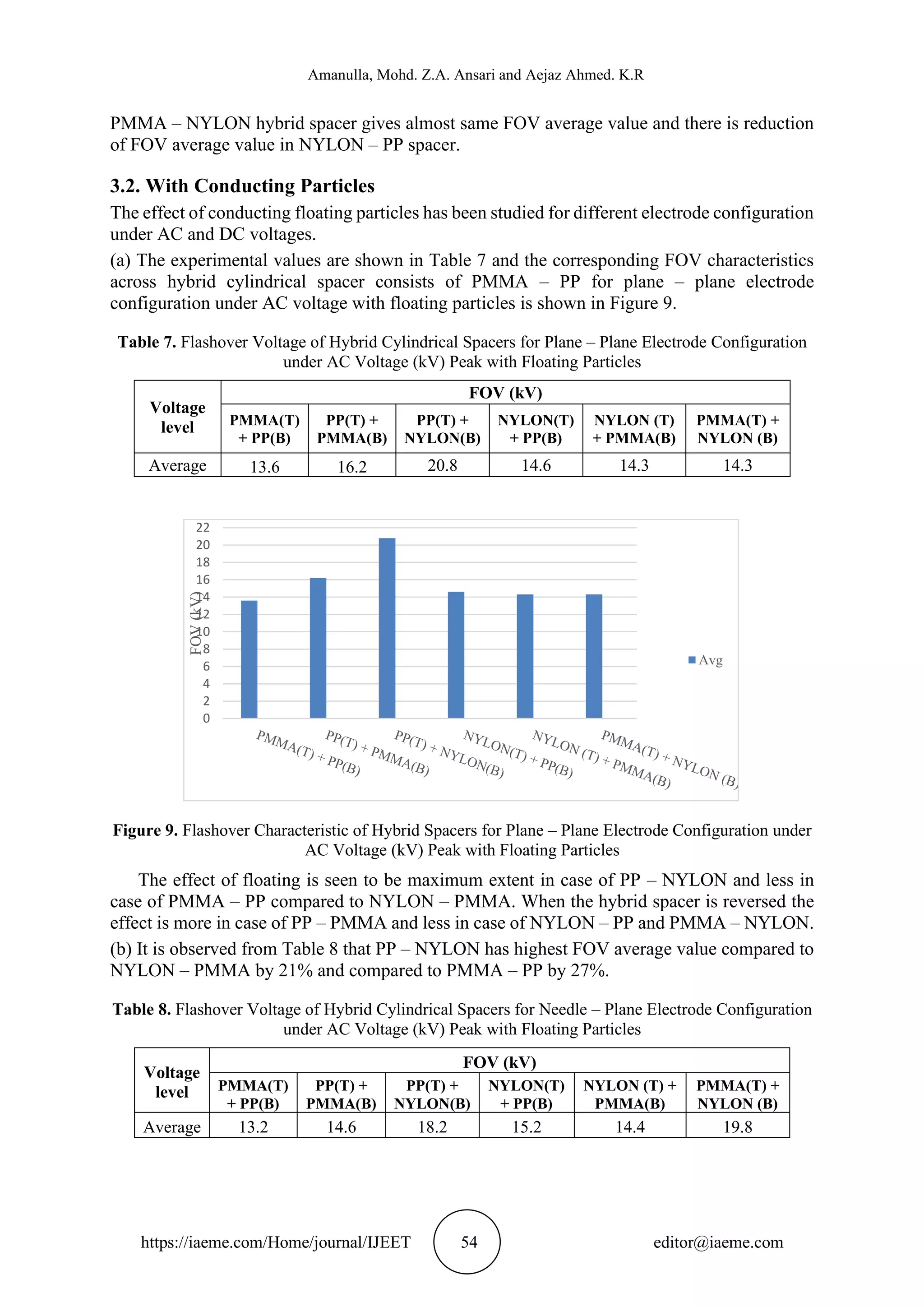
Figure 8. Flashover Characteristic of Hybrid Spacers for Hemisphere rod – Plane Electrode
Configuration under DC Voltage (kV)
It is observed from Figure 8 that, there is a reduction in FOV average value of PMMA – PP
and NYLON – PMMA compared to PP – NYLON by 30% and 9% respectively for hemisphere
rod – plane electrode configuration. In case of orientation of hybrid spacer, PP – PMMA and
0
4
8
12
16
20
24
28
32
36
40
44
FOV(KV)
Avg
0
4
8
12
16
20
24
28
32
36
40
44
FOV(KV)
Avg
Amanulla, Mohd. Z.A. Ansari and Aejaz Ahmed. K.R
https://iaeme.com/Home/journal/IJEET 54 editor@iaeme.com
PMMA – NYLON hybrid spacer gives almost same FOV average value and there is reduction
of FOV average value in NYLON – PP spacer.
3.2. With Conducting Particles
The effect of conducting floating particles has been studied for different electrode configuration
under AC and DC voltages.
(a) The experimental values are shown in Table 7 and the corresponding FOV characteristics
across hybrid cylindrical spacer consists of PMMA – PP for plane – plane electrode
configuration under AC voltage with floating particles is shown in Figure 9.
Table 7. Flashover Voltage of Hybrid Cylindrical Spacers for Plane – Plane Electrode Configuration
under AC Voltage (kV) Peak with Floating Particles
Voltage
level
FOV (kV)
PMMA(T)
+ PP(B)
PP(T) +
PMMA(B)
PP(T) +
NYLON(B)
NYLON(T)
+ PP(B)
NYLON (T)
+ PMMA(B)
PMMA(T) +
NYLON (B)
Average 13.6 16.2 20.8 14.6 14.3 14.3
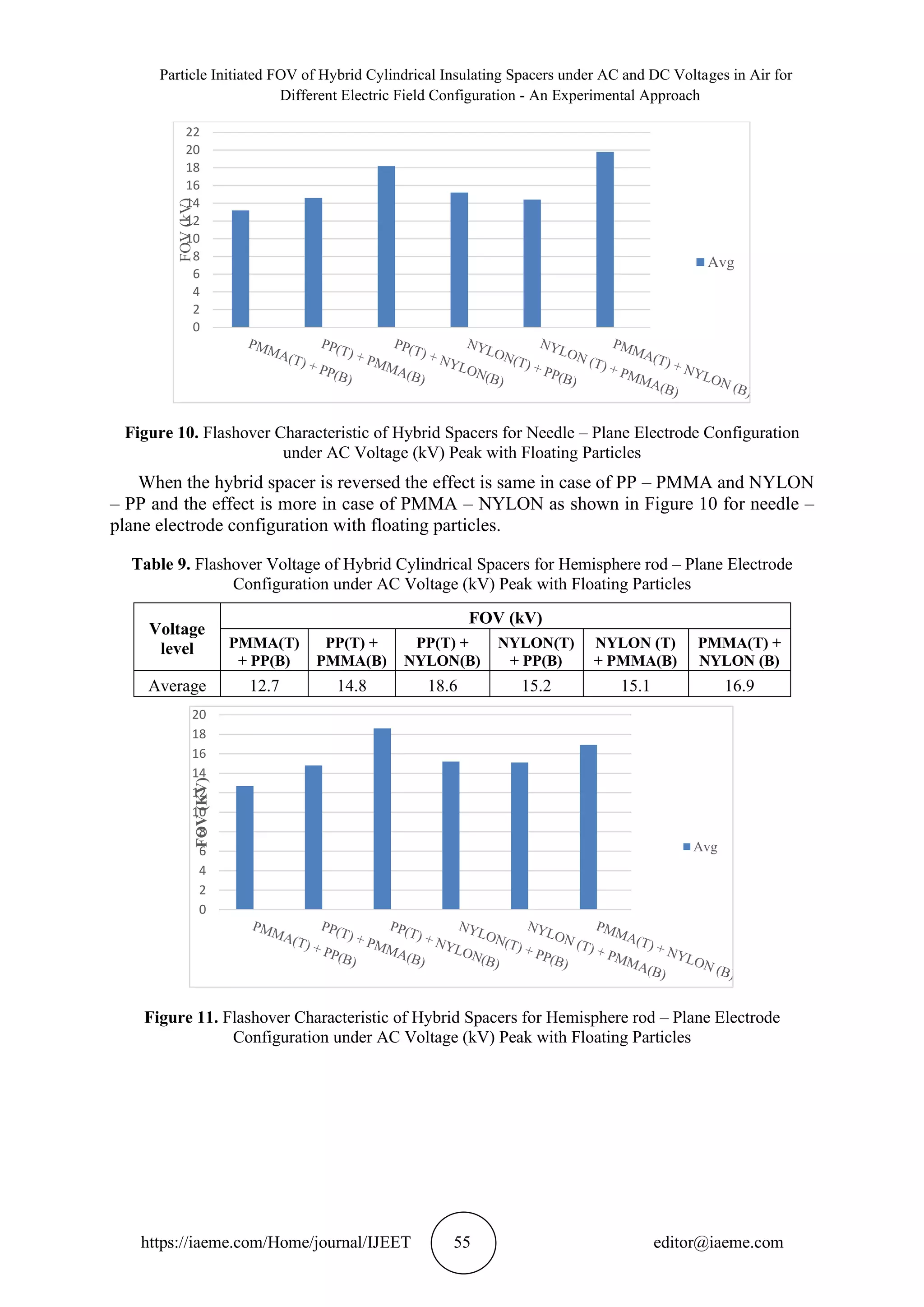
Figure 9. Flashover Characteristic of Hybrid Spacers for Plane – Plane Electrode Configuration under
AC Voltage (kV) Peak with Floating Particles
The effect of floating is seen to be maximum extent in case of PP – NYLON and less in
case of PMMA – PP compared to NYLON – PMMA. When the hybrid spacer is reversed the
effect is more in case of PP – PMMA and less in case of NYLON – PP and PMMA – NYLON.
(b) It is observed from Table 8 that PP – NYLON has highest FOV average value compared to
NYLON – PMMA by 21% and compared to PMMA – PP by 27%.
Table 8. Flashover Voltage of Hybrid Cylindrical Spacers for Needle – Plane Electrode Configuration
under AC Voltage (kV) Peak with Floating Particles
Voltage
level
FOV (kV)
PMMA(T)
+ PP(B)
PP(T) +
PMMA(B)
PP(T) +
NYLON(B)
NYLON(T)
+ PP(B)
NYLON (T) +
PMMA(B)
PMMA(T) +
NYLON (B)
Average 13.2 14.6 18.2 15.2 14.4 19.8
0
2
4
6
8
10
12
14
16
18
20
22
FOV
(kV)
Avg
Particle Initiated FOV of Hybrid Cylindrical Insulating Spacers under AC and DC Voltages in Air for
Different Electric Field Configuration - An Experimental Approach
https://iaeme.com/Home/journal/IJEET 55 editor@iaeme.com
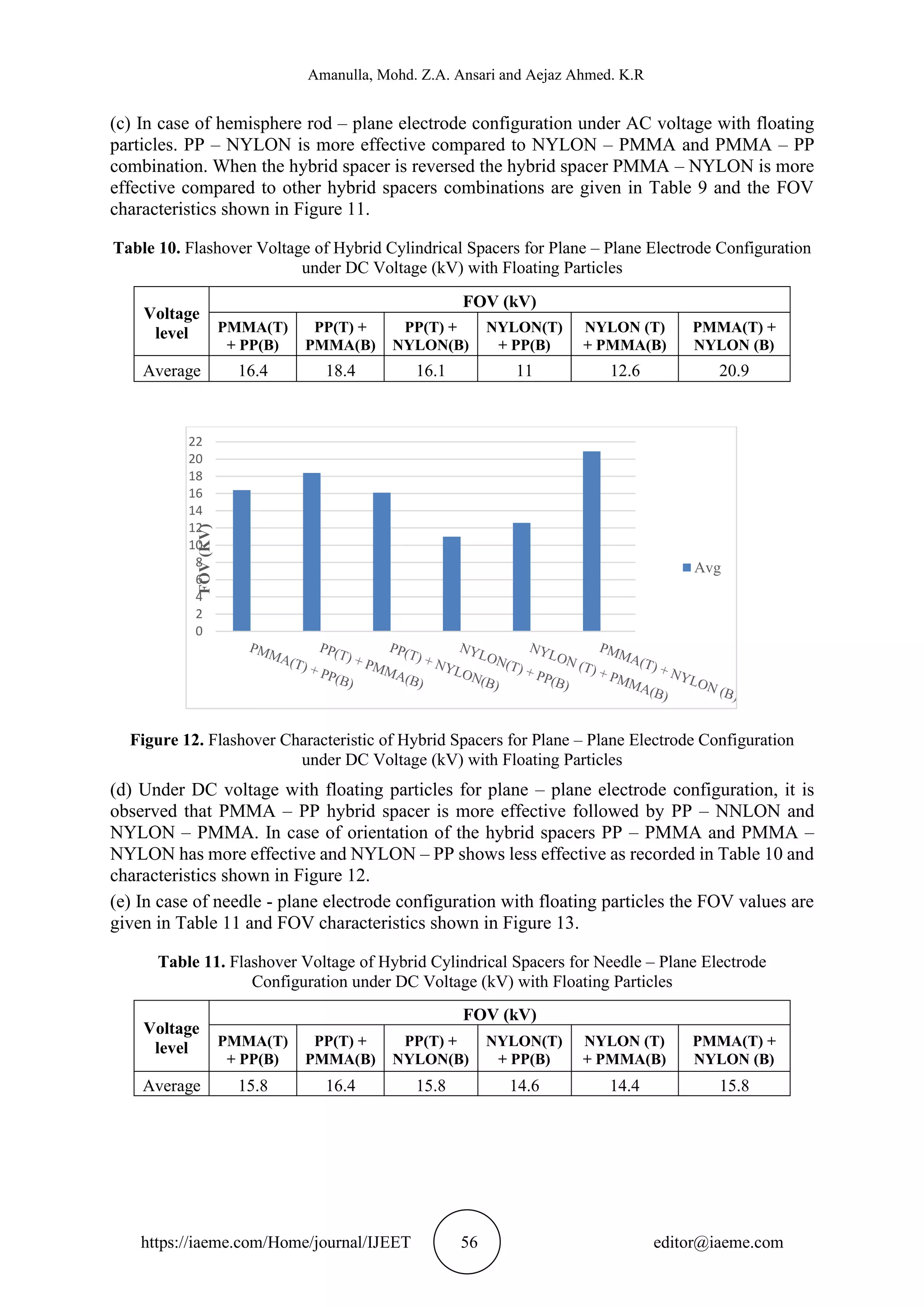
Figure 10. Flashover Characteristic of Hybrid Spacers for Needle – Plane Electrode Configuration
under AC Voltage (kV) Peak with Floating Particles
When the hybrid spacer is reversed the effect is same in case of PP – PMMA and NYLON
– PP and the effect is more in case of PMMA – NYLON as shown in Figure 10 for needle –
plane electrode configuration with floating particles.
Table 9. Flashover Voltage of Hybrid Cylindrical Spacers for Hemisphere rod – Plane Electrode
Configuration under AC Voltage (kV) Peak with Floating Particles
Voltage
level
FOV (kV)
PMMA(T)
+ PP(B)
PP(T) +
PMMA(B)
PP(T) +
NYLON(B)
NYLON(T)
+ PP(B)
NYLON (T)
+ PMMA(B)
PMMA(T) +
NYLON (B)
Average 12.7 14.8 18.6 15.2 15.1 16.9
Figure 11. Flashover Characteristic of Hybrid Spacers for Hemisphere rod – Plane Electrode
Configuration under AC Voltage (kV) Peak with Floating Particles
0
2
4
6
8
10
12
14
16
18
20
22
FOV
(kV)
Avg
0
2
4
6
8
10
12
14
16
18
20
FOV
(KV)
Avg
Amanulla, Mohd. Z.A. Ansari and Aejaz Ahmed. K.R
https://iaeme.com/Home/journal/IJEET 56 editor@iaeme.com
(c) In case of hemisphere rod – plane electrode configuration under AC voltage with floating
particles. PP – NYLON is more effective compared to NYLON – PMMA and PMMA – PP
combination. When the hybrid spacer is reversed the hybrid spacer PMMA – NYLON is more
effective compared to other hybrid spacers combinations are given in Table 9 and the FOV
characteristics shown in Figure 11.
Table 10. Flashover Voltage of Hybrid Cylindrical Spacers for Plane – Plane Electrode Configuration
under DC Voltage (kV) with Floating Particles
Voltage
level
FOV (kV)
PMMA(T)
+ PP(B)
PP(T) +
PMMA(B)
PP(T) +
NYLON(B)
NYLON(T)
+ PP(B)
NYLON (T)
+ PMMA(B)
PMMA(T) +
NYLON (B)
Average 16.4 18.4 16.1 11 12.6 20.9
Figure 12. Flashover Characteristic of Hybrid Spacers for Plane – Plane Electrode Configuration
under DC Voltage (kV) with Floating Particles
(d) Under DC voltage with floating particles for plane – plane electrode configuration, it is
observed that PMMA – PP hybrid spacer is more effective followed by PP – NNLON and
NYLON – PMMA. In case of orientation of the hybrid spacers PP – PMMA and PMMA –
NYLON has more effective and NYLON – PP shows less effective as recorded in Table 10 and
characteristics shown in Figure 12.
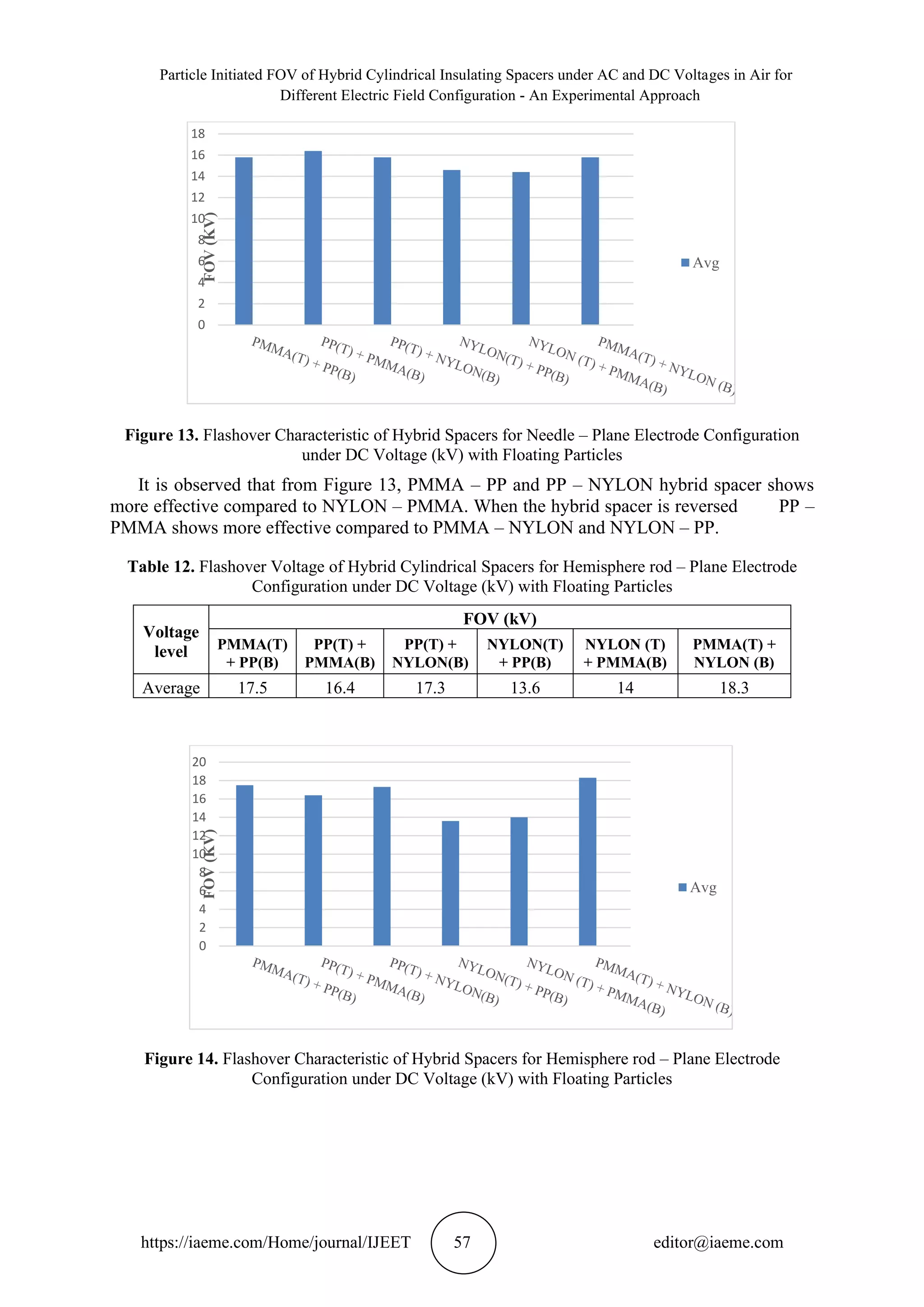
(e) In case of needle - plane electrode configuration with floating particles the FOV values are
given in Table 11 and FOV characteristics shown in Figure 13.
Table 11. Flashover Voltage of Hybrid Cylindrical Spacers for Needle – Plane Electrode
Configuration under DC Voltage (kV) with Floating Particles
Voltage
level
FOV (kV)
PMMA(T)
+ PP(B)
PP(T) +
PMMA(B)
PP(T) +
NYLON(B)
NYLON(T)
+ PP(B)
NYLON (T)
+ PMMA(B)
PMMA(T) +
NYLON (B)
Average 15.8 16.4 15.8 14.6 14.4 15.8
0
2
4
6
8
10
12
14
16
18
20
22
FOV
(KV)
Avg
Particle Initiated FOV of Hybrid Cylindrical Insulating Spacers under AC and DC Voltages in Air for
Different Electric Field Configuration - An Experimental Approach
https://iaeme.com/Home/journal/IJEET 57 editor@iaeme.com
Figure 13. Flashover Characteristic of Hybrid Spacers for Needle – Plane Electrode Configuration
under DC Voltage (kV) with Floating Particles
It is observed that from Figure 13, PMMA – PP and PP – NYLON hybrid spacer shows
more effective compared to NYLON – PMMA. When the hybrid spacer is reversed PP –
PMMA shows more effective compared to PMMA – NYLON and NYLON – PP.
Table 12. Flashover Voltage of Hybrid Cylindrical Spacers for Hemisphere rod – Plane Electrode
Configuration under DC Voltage (kV) with Floating Particles
Voltage
level
FOV (kV)
PMMA(T)
+ PP(B)
PP(T) +
PMMA(B)
PP(T) +
NYLON(B)
NYLON(T)
+ PP(B)
NYLON (T)
+ PMMA(B)
PMMA(T) +
NYLON (B)
Average 17.5 16.4 17.3 13.6 14 18.3
Figure 14. Flashover Characteristic of Hybrid Spacers for Hemisphere rod – Plane Electrode
Configuration under DC Voltage (kV) with Floating Particles
0
2
4
6
8
10
12
14
16
18
FOV
(KV)
Avg
0
2
4
6
8
10
12
14
16
18
20
FOV
(KV)
Avg
Amanulla, Mohd. Z.A. Ansari and Aejaz Ahmed. K.R
https://iaeme.com/Home/journal/IJEET 58 editor@iaeme.com
(f) The FOV of hybrid spacers for hemisphere rod – plane electrode configuration with floating
particles given in Table 12 and the FOV characteristics shown in Figure 14, it is observed that
PP – NYLON and PMMA – PP has the same effect compared to NYLON – PMMA is less
effective by 20%. In case of hybrid spacer orientation, it is observed that PMMA – NYLON
has more effective than PP – PMMA and NYLON – PP by 10% and 26% respectively.
4. CONCLUSION
The experimental investigations carried out leads to the following conclusions:
Without Conducting Particles
• Under AC voltages, the PMMA – PP and PP – PMMA is observed highest FOV for
plane – plane electrode configuration and in case of needle – plane electrode
configuration NYLON – PMMA and PMMA – PP shows highest FOV, whereas in case
hemisphere rod – plane PMMA – PP and PMMA – NYLON has highest FOV.
• In case of plane – plane electrode configuration under DC voltages, PP – NYLON and
PMMA – NYLON shows better FOV and in case of needle – plane electrode
configuration PP – NYLON and PMMA – NYLON spacers show better FOV, whereas
in case of hemisphere rod – plane electrode configuration NYLON – PMMA and PP
– NYLON shows better FOV.
With Conducting Particles
• Under AC voltages, the hybrid spacer PP – NYLON and PP – PMMA seen to be more
effective in case of plane – plane electrode configuration and PP – NYLON and PMMA
– NYLON is more effective in case of needle – plane electrode configuration, whereas
in case of hemisphere rod – plane PP – NYLON shows more effective.
• Under DC voltages, PMMA – PP and PMMA – NYLON is more effective in case of
plane – plane electrode configuration and PP – PMMA has more effective in case of
needle – plane electrode configuration whereas in case of hemisphere rod – plane
PMMA – PP and PMMA – NYLON shows more effective.
ACKNOWLEDGMENTS
The authors thank the authorities of Ghousia College of Engineering, Ramanagaram for
providing the facilities and encouragement for carrying out this research work.
REFERENCES
[1] Li, S., Zhong, L., Li, J., et al.: “A brief history and research progress on solid engineering
dielectrics in chine”, IEEE Electr. Insul. Mag., 2010, 26, (6), pp. 14-21.
[2] Lri, Q.: “ Recent progress of engineering dielectrics”, Sceince Press, Beijing, 1999, 1st
edn.
[3] Shengtao Li, Shihu Yu, Yang Feng, “Progress in and prospects for electrical insulating
materials”, IET Journals, High Voltage, 2016,Vol. 1, Issue 3, pp. 122 – 129.
[4] Josef Kindersberger and christoph Lederle, “Surface Charge Decay on Insulators in Air and
Sulfurhexafluorid-Part II: Measurements”, IEEE Transactions on Dielectric and Electrical
Insulation, Vol 15, No. 4; August 2008.
[5] K. L. Ratnakar, Dr. B. Rajesh Kamath, “Influence of Electrode Configuration on AC
Breakdown Voltages”, International Journal of Research and Sceintific Innovation (IJRSI),
Vol. IV, Issue VI, June 2017, pp. 60-63, ISSN: 2321-2705.
Particle Initiated FOV of Hybrid Cylindrical Insulating Spacers under AC and DC Voltages in Air for
Different Electric Field Configuration - An Experimental Approach
https://iaeme.com/Home/journal/IJEET 59 editor@iaeme.com
[6] Boudenne, A., Ibos, L., Fois, M., et al: “Electrical and thermal behaviour of polypropylene filled
with copper particles”, Compos. A, Appl. Sci. Manuf, 2005, 36,(11), pp. 1545-1554.
[7] Choulkov V.V., “Effect of Electrode surface roughness on electrical breakdown in HV
apparatus”, Dielectrics and Electric Insulation, IEEE Transactions, Volume 12, Issue 1, 2005,
p98-103.
[8] Subratha Karmakar, “An Experimental Study of Air Breakdown Voltage and its Effects on Solid
Insulation”, Journal of Electrical Systems, 8-2 (2012), p 209-217.
[9] R.Brambilla, A.pigini, Electric field strength in typical high voltage Insulation, International
symposium on High voltage Engineering, Zurich, September 1975.
[10] Qiu. Simple Expressions of field non uniformity factor for hemispherically Capped rod plane
gaps, IEEE Trans on E.I, Vol 21, PP 673 – 675, 1986.

PARTICLE INITIATED FOV OF HYBRID CYLINDRICAL INSULATING SPACERS UNDER AC AND DC VOLTAGES IN AIR FOR DIFFERENT ELECTRIC FIELD CONFIGURATION - AN EXPERIMENTAL APPROACH

  • 1.
    https://iaeme.com/Home/journal/IJEET 48 editor@iaeme.com InternationalJournal of Electrical Engineering and Technology (IJEET) Volume 12, Issue 11, November 2021, pp. 48-59, Article ID: IJEET_12_11_005 Available online at https://iaeme.com/Home/issue/IJEET?Volume=12&Issue=11 ISSN Print: 0976-6545 and ISSN Online: 0976-6553 DOI: https://doi.org/10.34218/IJEET.12.11.2021.005 © IAEME Publication Scopus Indexed PARTICLE INITIATED FOV OF HYBRID CYLINDRICAL INSULATING SPACERS UNDER AC AND DC VOLTAGES IN AIR FOR DIFFERENT ELECTRIC FIELD CONFIGURATION - AN EXPERIMENTAL APPROACH Amanulla1, Dr. Mohd. Z.A. Ansari1, Aejaz Ahmed. K.R1 1 Department of Electrical and Electronics Engineering, Ghousia College of Engineering, Ramanagara, Karnataka, India. ABSTRACT The ever – increasing voltage levels in electrical power systems need to enhance the power distribution and transmission system. The insulation failure is mainly due to the high voltage stress. The dielectric strength of air is greatly influenced by the presence of insulating surfaces. In the present research work the new hybrid cylindrical insulating spacers such as PMMA – PP, PP – NYLON and NYLON – PMMA and the orientation of hybrid cylindrical insulating spacers has been studied. The flashover performances are carried out experimentally in air as insulating media for different electrode configuration such as uniform electric field (Plane – Plane), non-uniform electric field (Needle – Plane) and moderately non-uniform electric field (Hemisphere rod – Plane) under AC and DC voltages. The effect of conducting floating particles is also carried out for different electrode configuration under AC and DC voltages. The experimental investigations shows that NYLON – PP and NYLON – PMMA hybrid spacers has highest flashover voltage (FOV) under AC voltages, in case of DC voltages PP – NYLON hybrid spacer gives highest FOV. The hybrid spacer PP – NYLON has more effective under AC voltage, whereas in case of DC voltage PMMA – NYLON has more effective with conducting floating particles. Key words: PMMA (Polymethyl Methacrylic), PP (Poly Propylene), NYLON, FOV (Flashover Voltage), HV (High Voltage), LV (Low Voltage), T (Top), B (Bottom). Cite this Article: Amanulla, Mohd. Z.A. Ansari and Aejaz Ahmed. K.R, Particle Initiated FOV of Hybrid Cylindrical Insulating Spacers under AC and DC Voltages in Air for Different Electric Field Configuration - An Experimental Approach, International Journal of Electrical Engineering and Technology (IJEET). 12(11), 2021, pp. 48-59. https://iaeme.com/Home/issue/IJEET?Volume=12&Issue=11
  • 2.
    Particle Initiated FOVof Hybrid Cylindrical Insulating Spacers under AC and DC Voltages in Air for Different Electric Field Configuration - An Experimental Approach https://iaeme.com/Home/journal/IJEET 49 editor@iaeme.com 1. INTRODUCTION The performance of high voltage equipment mainly depends on the withstand voltage of insulating materials. The insulating materials have to work in extreme conditions, which demand high quality insulating materials with good electrical properties [1]. The steadily increasing demand for electric power, which leading to rapid increase in the area of electrical instruments and insulating materials [2]. The future development of power systems depends on the progress in insulating materials. Hence, a new generation of power system requires novel growth in the field of insulating materials [3]. The dielectric strength of air is greatly influenced by the presence of insulating materials in conventional air insulated systems. Surface discharge appear from the contact point between insulators and components under high voltage stress, constitute possible cause for insulation failure. Therefore, the flashover mechanism has been subject of numerous research work [4]. The electric field distribution with different electrodes such as pointed electrode, plane electrode, sphere electrode, rod electrode and rogouski electrode with common plate electrode as the bottom electrode are used for the breakdown voltages [5]. The conductors are to be essentially supported by solid insulators called ‘Spacers’ in high voltage equipment. Hence, it needs to search for the new hybrid cylindrical insulating spacers such as PMMA – PP, PP – NYLON and NYLON – PMMA as shown in Figure 1. Figure 1. Hybrid Cylindrical Insulating Spacers In this paper, the surface flashover performance of hybrid cylindrical insulating spacers for different electrode configuration such as uniform (plane - Plane), moderately non-uniform (hemisphere - plane) and non-uniform (needle - plane) fields in air under AC and DC voltages have been studied. The work is also carried out to study the effect of floating particles. 2. EXPERIMENTAL SETUP The experimental setup to carry the flashover characteristics is as shown in Figure 2. The insulating spacer is placed tightly between the HV and LV electrode. The high voltage is applied by varying the auto-transformer, the voltage is gradually increased at an approximate rate of 1kV/sec till the flashover occurs along the surface of the spacer and voltage applied is recorded. The experiment is carried out for 5 trials and average value is calculated. Figure 2. Experimental Setup for Measurement of FOV
  • 3.
    Amanulla, Mohd. Z.A.Ansari and Aejaz Ahmed. K.R https://iaeme.com/Home/journal/IJEET 50 editor@iaeme.com This procedure is repeated for different hybrid insulating spacers for different electrode configuration under AC and DC voltages without and with conducting floating particles. 3. EXPERIMENTAL RESULTS AND DISCUSSIONS 3.1. Without Conducting Particles To study the flashover performance of combination of insulating spacers which have different dielectric properties, different resistivity and different dielectric constant are carried out under AC and DC voltages for different electrode configuration. The effect of orientation of the hybrid cylindrical spacers are also studied. Table 1 FOV of Hybrid Cylindrical Spacers for Plane – Plane Electrode Configuration under AC Voltage (kV) Peak Voltage level FOV (kV) PMMA(T) + PP(B) PP(T) + PMMA(B) PP(T) + NYLON(B) NYLON(T) + PP(B) NYLON (T) + PMMA(B) PMMA(T) + NYLON (B) Average 32.8 32.5 24.1 24.2 25.8 25.4 Figure 3 Flashover Characteristic of Hybrid Cylindrical Spacers for Plane – Plane Electrode Configuration under AC Voltage (kV) Peak (a) The experimental values obtained for FOV with plane - plane electrode configuration, the hybrid cylindrical spacer PMMA – PP is observed an increase in average value is 27% compared to PP – NYLON and 21% compared to PMMA – NYLON. When the hybrid spacer is reversed, the PP – PMMA has highest FOV compared to NYLON – PP by 26% and PMMA – NYLON by 22% in average value under AC voltages are given in the Table 1 and the flashover characteristics shown in Figure 3. Table 2. Flashover Voltage of Hybrid Cylindrical Spacers for Needle – Plane Electrode Configuration under AC Voltage (kV) Peak Voltage level FOV (kV) PMMA(T) + PP(B) PP(T) + PMMA(B) PP(T) + NYLON(B) NYLON(T) + PP(B) NYLON (T) + PMMA(B) PMMA(T) + NYLON (B) Average 32.4 30.2 29.6 31 31.1 31.1 0 4 8 12 16 20 24 28 32 36 FOV(KV) Avg
  • 4.
    Particle Initiated FOVof Hybrid Cylindrical Insulating Spacers under AC and DC Voltages in Air for Different Electric Field Configuration - An Experimental Approach https://iaeme.com/Home/journal/IJEET 51 editor@iaeme.com Figure 4. Flashover Characteristic of Hybrid Spacer for Needle – Plane Electrode Configuration under AC (kV) Peak (b) In case of needle – plane electrode configuration under AC voltages the hybrid spacer PMMA – PP has highest FOV in average value compared to NYLON – PMMA by 4% and PP – NYLON by 9%. When the hybrid spacer is inverted, NYLON – PP, PMMA – NYLON and PP – PMMA gives almost same FOV average value is as shown in Table 2 and Figure 4. (c) Table 3 and Figure 5 shows the results of FOV characteristics across hybrid spacers for hemisphere rod – plane electrode configuration. Table 3 Flashover Voltage of Hybrid Spacer for Hemisphere rod - Plane Electrode Configuration under AC Voltage (kV) Peak Voltage level FOV (kV) PMMA(T) + PP(B) PP(T) + PMMA(B) PP(T) + NYLON(B) NYLON(T) + PP(B) NYLON (T) + PMMA(B) PMMA(T) + NYLON (B) Average 30.8 29.6 30.8 28.9 29.7 31.1 Figure 5. Flashover Characteristic of Hybrid Spacer for Hemisphere rod - Plane Electrode Configuration under AC (kV) Peak The hybrid spacers PMMA – PP and PP – NYLON has shown the same FOV compared to NYLON – PMMA hybrid spacer. When the hybrid spacer is reversed, it observed that slight increase in average FOV value of PMMA – NYLON spacer compared to PP – PMMA and NYLON – PP spacers. 0 4 8 12 16 20 24 28 32 36 FOV(KV) Avg 0 4 8 12 16 20 24 28 32 36 FOV(KV) Avg
  • 5.
    Amanulla, Mohd. Z.A.Ansari and Aejaz Ahmed. K.R https://iaeme.com/Home/journal/IJEET 52 editor@iaeme.com (d) The results of FOV values for hybrid spacer for plane – plane electrode configuration under DC voltages is shown in Figure 6 and values are given in Table 4. Table 4. Flashover Voltage of Hybrid Spacers for Plane – Plane Electrode Configuration under DC Voltage (kV) Voltage level FOV (kV) PMMA(T) + PP(B) PP(T) + PMMA(B) PP(T) + NYLON(B) NYLON(T) + PP(B) NYLON (T) + PMMA(B) PMMA(T) + NYLON (B) Average 23.1 16.8 31.1 22.1 21.6 25.3 Figure 6. Flashover Characteristic of Hybrid Spacers for Plane – Plane Electrode Configuration under DC Voltage (kV) From Figure 6, it is observed that the hybrid spacer PMMA – PP shows 26% less compared to PP – NYLON and 6% more in average FOV value compared to NYLON - PMMA hybrid spacer. When the hybrid spacer is reversed there is a decrease in FOV average value is observed in case of PP – PMMA and NYLON – PP by 34% and 13% respectively compared to PMMA – NYLON. (e) The results obtained in case of needle – plane electrode configuration under DC voltages are shown in Table 5 and Figure 7. Table 5. Flashover Voltage of Hybrid Spacers for Needle - Plane Electrode Configuration under DC Voltage (kV) Voltage level FOV (kV) PMMA(T) + PP(B) PP(T) + PMMA(B) PP(T) + NYLON(B) NYLON(T) + PP(B) NYLON (T) + PMMA(B) PMMA(T) + NYLON (B) Average 26.5 24.2 38.5 30.6 33 33 0 4 8 12 16 20 24 28 32 36 FOV(KV) Avg
  • 6.
    Particle Initiated FOVof Hybrid Cylindrical Insulating Spacers under AC and DC Voltages in Air for Different Electric Field Configuration - An Experimental Approach https://iaeme.com/Home/journal/IJEET 53 editor@iaeme.com Figure 7. Flashover Characteristic of Hybrid Spacers for Needle - Plane Electrode Configuration under DC Voltage (kV) From Figure 7, the PP – NYLON shows highest FOV compared to NYLON – PMMA by 14% and PMMA – PP by 31% in average value. When the hybrid spacer is reversed, PMAA – NYLON has higher average FOV value compared to NYLON – PP by 7% and 27% compared to PP – PMMA. (f) The obtained FOV values are given in Table 6 and there FOV characteristics shown in Figure 8. Table 6. Flashover Voltage of Hybrid Cylindrical for Hemisphere rod – Plane Electrode Configuration under DC Voltage (kV) Voltage level FOV (kV) PMMA(T) + PP(B) PP(T) + PMMA(B) PP(T) + NYLON(B) NYLON(T) + PP(B) NYLON (T) + PMMA(B) PMMA(T) + NYLON (B) Average 26.7 32 38.2 29.2 34.6 31.3 Figure 8. Flashover Characteristic of Hybrid Spacers for Hemisphere rod – Plane Electrode Configuration under DC Voltage (kV) It is observed from Figure 8 that, there is a reduction in FOV average value of PMMA – PP and NYLON – PMMA compared to PP – NYLON by 30% and 9% respectively for hemisphere rod – plane electrode configuration. In case of orientation of hybrid spacer, PP – PMMA and 0 4 8 12 16 20 24 28 32 36 40 44 FOV(KV) Avg 0 4 8 12 16 20 24 28 32 36 40 44 FOV(KV) Avg
  • 7.
    Amanulla, Mohd. Z.A.Ansari and Aejaz Ahmed. K.R https://iaeme.com/Home/journal/IJEET 54 editor@iaeme.com PMMA – NYLON hybrid spacer gives almost same FOV average value and there is reduction of FOV average value in NYLON – PP spacer. 3.2. With Conducting Particles The effect of conducting floating particles has been studied for different electrode configuration under AC and DC voltages. (a) The experimental values are shown in Table 7 and the corresponding FOV characteristics across hybrid cylindrical spacer consists of PMMA – PP for plane – plane electrode configuration under AC voltage with floating particles is shown in Figure 9. Table 7. Flashover Voltage of Hybrid Cylindrical Spacers for Plane – Plane Electrode Configuration under AC Voltage (kV) Peak with Floating Particles Voltage level FOV (kV) PMMA(T) + PP(B) PP(T) + PMMA(B) PP(T) + NYLON(B) NYLON(T) + PP(B) NYLON (T) + PMMA(B) PMMA(T) + NYLON (B) Average 13.6 16.2 20.8 14.6 14.3 14.3 Figure 9. Flashover Characteristic of Hybrid Spacers for Plane – Plane Electrode Configuration under AC Voltage (kV) Peak with Floating Particles The effect of floating is seen to be maximum extent in case of PP – NYLON and less in case of PMMA – PP compared to NYLON – PMMA. When the hybrid spacer is reversed the effect is more in case of PP – PMMA and less in case of NYLON – PP and PMMA – NYLON. (b) It is observed from Table 8 that PP – NYLON has highest FOV average value compared to NYLON – PMMA by 21% and compared to PMMA – PP by 27%. Table 8. Flashover Voltage of Hybrid Cylindrical Spacers for Needle – Plane Electrode Configuration under AC Voltage (kV) Peak with Floating Particles Voltage level FOV (kV) PMMA(T) + PP(B) PP(T) + PMMA(B) PP(T) + NYLON(B) NYLON(T) + PP(B) NYLON (T) + PMMA(B) PMMA(T) + NYLON (B) Average 13.2 14.6 18.2 15.2 14.4 19.8 0 2 4 6 8 10 12 14 16 18 20 22 FOV (kV) Avg
  • 8.
    Particle Initiated FOVof Hybrid Cylindrical Insulating Spacers under AC and DC Voltages in Air for Different Electric Field Configuration - An Experimental Approach https://iaeme.com/Home/journal/IJEET 55 editor@iaeme.com Figure 10. Flashover Characteristic of Hybrid Spacers for Needle – Plane Electrode Configuration under AC Voltage (kV) Peak with Floating Particles When the hybrid spacer is reversed the effect is same in case of PP – PMMA and NYLON – PP and the effect is more in case of PMMA – NYLON as shown in Figure 10 for needle – plane electrode configuration with floating particles. Table 9. Flashover Voltage of Hybrid Cylindrical Spacers for Hemisphere rod – Plane Electrode Configuration under AC Voltage (kV) Peak with Floating Particles Voltage level FOV (kV) PMMA(T) + PP(B) PP(T) + PMMA(B) PP(T) + NYLON(B) NYLON(T) + PP(B) NYLON (T) + PMMA(B) PMMA(T) + NYLON (B) Average 12.7 14.8 18.6 15.2 15.1 16.9 Figure 11. Flashover Characteristic of Hybrid Spacers for Hemisphere rod – Plane Electrode Configuration under AC Voltage (kV) Peak with Floating Particles 0 2 4 6 8 10 12 14 16 18 20 22 FOV (kV) Avg 0 2 4 6 8 10 12 14 16 18 20 FOV (KV) Avg
  • 9.
    Amanulla, Mohd. Z.A.Ansari and Aejaz Ahmed. K.R https://iaeme.com/Home/journal/IJEET 56 editor@iaeme.com (c) In case of hemisphere rod – plane electrode configuration under AC voltage with floating particles. PP – NYLON is more effective compared to NYLON – PMMA and PMMA – PP combination. When the hybrid spacer is reversed the hybrid spacer PMMA – NYLON is more effective compared to other hybrid spacers combinations are given in Table 9 and the FOV characteristics shown in Figure 11. Table 10. Flashover Voltage of Hybrid Cylindrical Spacers for Plane – Plane Electrode Configuration under DC Voltage (kV) with Floating Particles Voltage level FOV (kV) PMMA(T) + PP(B) PP(T) + PMMA(B) PP(T) + NYLON(B) NYLON(T) + PP(B) NYLON (T) + PMMA(B) PMMA(T) + NYLON (B) Average 16.4 18.4 16.1 11 12.6 20.9 Figure 12. Flashover Characteristic of Hybrid Spacers for Plane – Plane Electrode Configuration under DC Voltage (kV) with Floating Particles (d) Under DC voltage with floating particles for plane – plane electrode configuration, it is observed that PMMA – PP hybrid spacer is more effective followed by PP – NNLON and NYLON – PMMA. In case of orientation of the hybrid spacers PP – PMMA and PMMA – NYLON has more effective and NYLON – PP shows less effective as recorded in Table 10 and characteristics shown in Figure 12. (e) In case of needle - plane electrode configuration with floating particles the FOV values are given in Table 11 and FOV characteristics shown in Figure 13. Table 11. Flashover Voltage of Hybrid Cylindrical Spacers for Needle – Plane Electrode Configuration under DC Voltage (kV) with Floating Particles Voltage level FOV (kV) PMMA(T) + PP(B) PP(T) + PMMA(B) PP(T) + NYLON(B) NYLON(T) + PP(B) NYLON (T) + PMMA(B) PMMA(T) + NYLON (B) Average 15.8 16.4 15.8 14.6 14.4 15.8 0 2 4 6 8 10 12 14 16 18 20 22 FOV (KV) Avg
  • 10.
    Particle Initiated FOVof Hybrid Cylindrical Insulating Spacers under AC and DC Voltages in Air for Different Electric Field Configuration - An Experimental Approach https://iaeme.com/Home/journal/IJEET 57 editor@iaeme.com Figure 13. Flashover Characteristic of Hybrid Spacers for Needle – Plane Electrode Configuration under DC Voltage (kV) with Floating Particles It is observed that from Figure 13, PMMA – PP and PP – NYLON hybrid spacer shows more effective compared to NYLON – PMMA. When the hybrid spacer is reversed PP – PMMA shows more effective compared to PMMA – NYLON and NYLON – PP. Table 12. Flashover Voltage of Hybrid Cylindrical Spacers for Hemisphere rod – Plane Electrode Configuration under DC Voltage (kV) with Floating Particles Voltage level FOV (kV) PMMA(T) + PP(B) PP(T) + PMMA(B) PP(T) + NYLON(B) NYLON(T) + PP(B) NYLON (T) + PMMA(B) PMMA(T) + NYLON (B) Average 17.5 16.4 17.3 13.6 14 18.3 Figure 14. Flashover Characteristic of Hybrid Spacers for Hemisphere rod – Plane Electrode Configuration under DC Voltage (kV) with Floating Particles 0 2 4 6 8 10 12 14 16 18 FOV (KV) Avg 0 2 4 6 8 10 12 14 16 18 20 FOV (KV) Avg
  • 11.
    Amanulla, Mohd. Z.A.Ansari and Aejaz Ahmed. K.R https://iaeme.com/Home/journal/IJEET 58 editor@iaeme.com (f) The FOV of hybrid spacers for hemisphere rod – plane electrode configuration with floating particles given in Table 12 and the FOV characteristics shown in Figure 14, it is observed that PP – NYLON and PMMA – PP has the same effect compared to NYLON – PMMA is less effective by 20%. In case of hybrid spacer orientation, it is observed that PMMA – NYLON has more effective than PP – PMMA and NYLON – PP by 10% and 26% respectively. 4. CONCLUSION The experimental investigations carried out leads to the following conclusions: Without Conducting Particles • Under AC voltages, the PMMA – PP and PP – PMMA is observed highest FOV for plane – plane electrode configuration and in case of needle – plane electrode configuration NYLON – PMMA and PMMA – PP shows highest FOV, whereas in case hemisphere rod – plane PMMA – PP and PMMA – NYLON has highest FOV. • In case of plane – plane electrode configuration under DC voltages, PP – NYLON and PMMA – NYLON shows better FOV and in case of needle – plane electrode configuration PP – NYLON and PMMA – NYLON spacers show better FOV, whereas in case of hemisphere rod – plane electrode configuration NYLON – PMMA and PP – NYLON shows better FOV. With Conducting Particles • Under AC voltages, the hybrid spacer PP – NYLON and PP – PMMA seen to be more effective in case of plane – plane electrode configuration and PP – NYLON and PMMA – NYLON is more effective in case of needle – plane electrode configuration, whereas in case of hemisphere rod – plane PP – NYLON shows more effective. • Under DC voltages, PMMA – PP and PMMA – NYLON is more effective in case of plane – plane electrode configuration and PP – PMMA has more effective in case of needle – plane electrode configuration whereas in case of hemisphere rod – plane PMMA – PP and PMMA – NYLON shows more effective. ACKNOWLEDGMENTS The authors thank the authorities of Ghousia College of Engineering, Ramanagaram for providing the facilities and encouragement for carrying out this research work. REFERENCES [1] Li, S., Zhong, L., Li, J., et al.: “A brief history and research progress on solid engineering dielectrics in chine”, IEEE Electr. Insul. Mag., 2010, 26, (6), pp. 14-21. [2] Lri, Q.: “ Recent progress of engineering dielectrics”, Sceince Press, Beijing, 1999, 1st edn. [3] Shengtao Li, Shihu Yu, Yang Feng, “Progress in and prospects for electrical insulating materials”, IET Journals, High Voltage, 2016,Vol. 1, Issue 3, pp. 122 – 129. [4] Josef Kindersberger and christoph Lederle, “Surface Charge Decay on Insulators in Air and Sulfurhexafluorid-Part II: Measurements”, IEEE Transactions on Dielectric and Electrical Insulation, Vol 15, No. 4; August 2008. [5] K. L. Ratnakar, Dr. B. Rajesh Kamath, “Influence of Electrode Configuration on AC Breakdown Voltages”, International Journal of Research and Sceintific Innovation (IJRSI), Vol. IV, Issue VI, June 2017, pp. 60-63, ISSN: 2321-2705.
  • 12.
    Particle Initiated FOVof Hybrid Cylindrical Insulating Spacers under AC and DC Voltages in Air for Different Electric Field Configuration - An Experimental Approach https://iaeme.com/Home/journal/IJEET 59 editor@iaeme.com [6] Boudenne, A., Ibos, L., Fois, M., et al: “Electrical and thermal behaviour of polypropylene filled with copper particles”, Compos. A, Appl. Sci. Manuf, 2005, 36,(11), pp. 1545-1554. [7] Choulkov V.V., “Effect of Electrode surface roughness on electrical breakdown in HV apparatus”, Dielectrics and Electric Insulation, IEEE Transactions, Volume 12, Issue 1, 2005, p98-103. [8] Subratha Karmakar, “An Experimental Study of Air Breakdown Voltage and its Effects on Solid Insulation”, Journal of Electrical Systems, 8-2 (2012), p 209-217. [9] R.Brambilla, A.pigini, Electric field strength in typical high voltage Insulation, International symposium on High voltage Engineering, Zurich, September 1975. [10] Qiu. Simple Expressions of field non uniformity factor for hemispherically Capped rod plane gaps, IEEE Trans on E.I, Vol 21, PP 673 – 675, 1986.