Download as PDF, PPTX


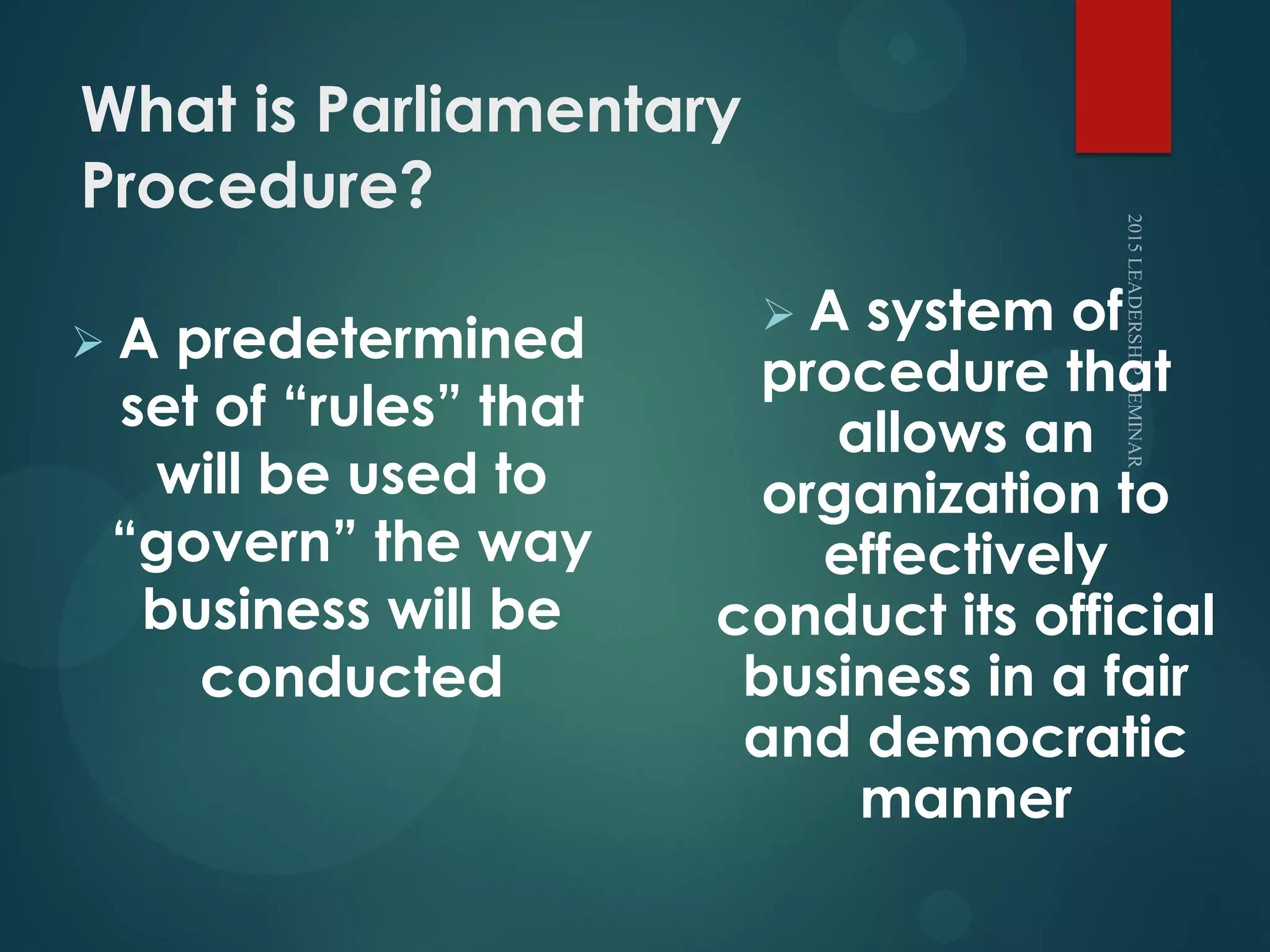


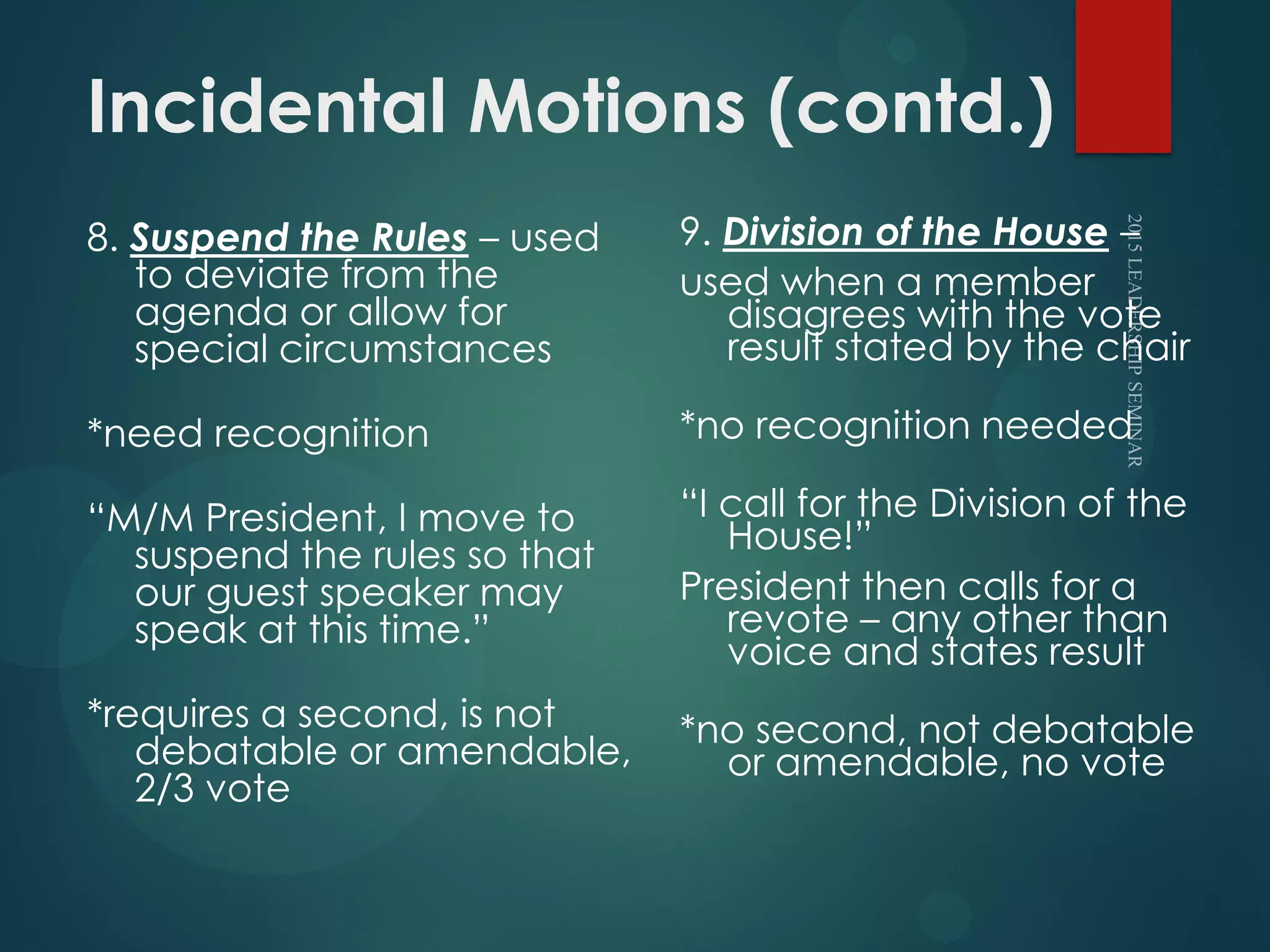


The document provides an overview of parliamentary procedures and their importance for conducting effective meetings. It discusses that parliamentary procedures allow organizations to conduct business in a fair and democratic manner by focusing discussion, extending courtesy to all members, observing majority rule, and ensuring minority rights. Key elements that are covered include the role of an agenda, responsibilities of members, classification of different types of motions, and examples of common motions like adjournment, laying a question on the table, and referring a matter to committee. The purpose is to educate members on using parliamentary procedures to eliminate frustration and ensure well-run meetings.


![Leadership Seminar On Parliamentary Procedure[1]](https://cdn.slidesharecdn.com/ss_thumbnails/leadershipseminaronparliamentaryprocedure1-090407024002-phpapp01-thumbnail.jpg?width=640&height=640&fit=bounds)


