Parenteral Fluids
Crystalloids
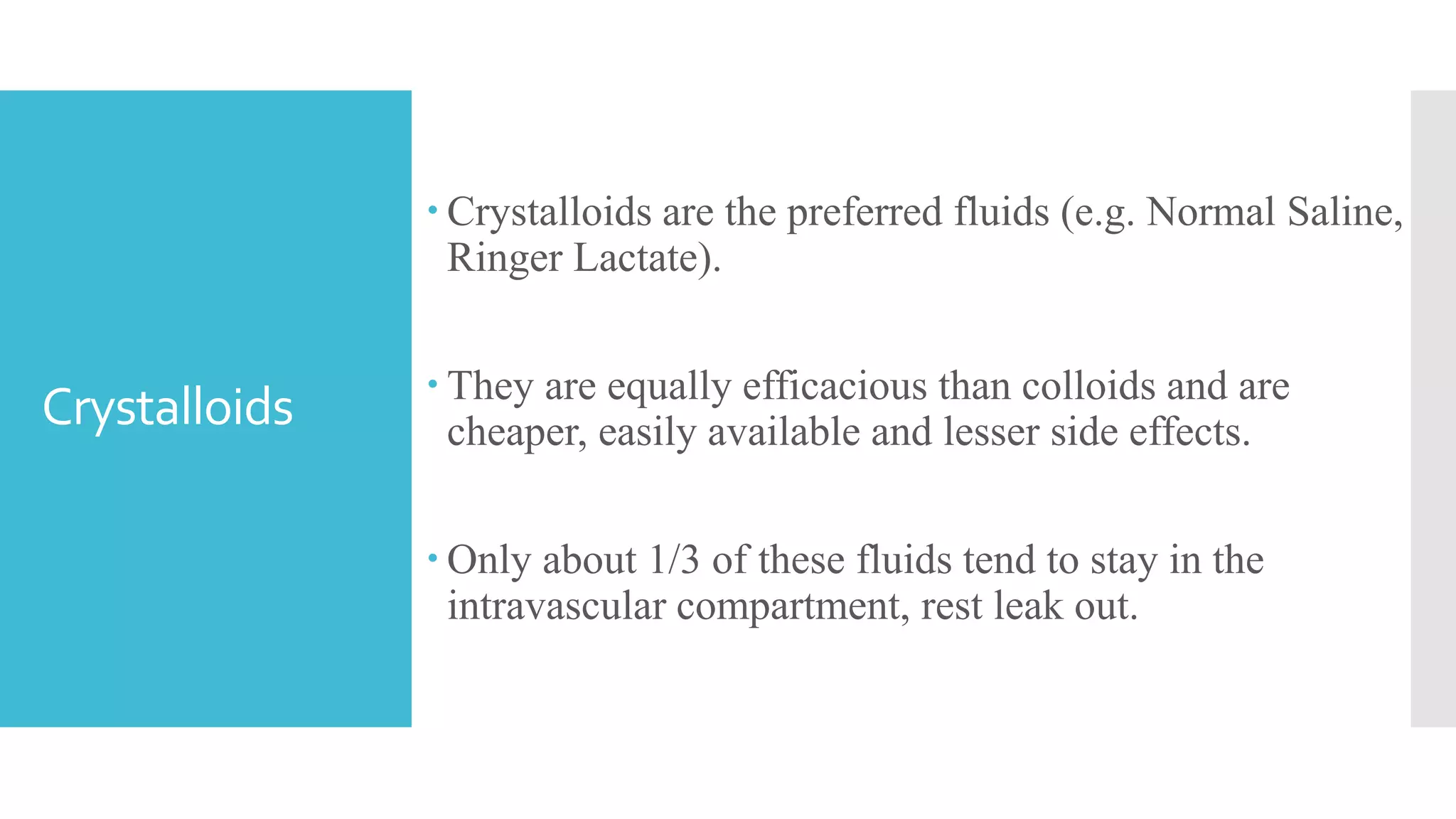
 Crystalloids are the preferred fluids (e.g. Normal Saline,
Ringer Lactate).
 They are equally efficacious than colloids and are
cheaper, easily available and lesser side effects.
 Only about 1/3 of these fluids tend to stay in the
intravascular compartment, rest leak out.
Crystalloids
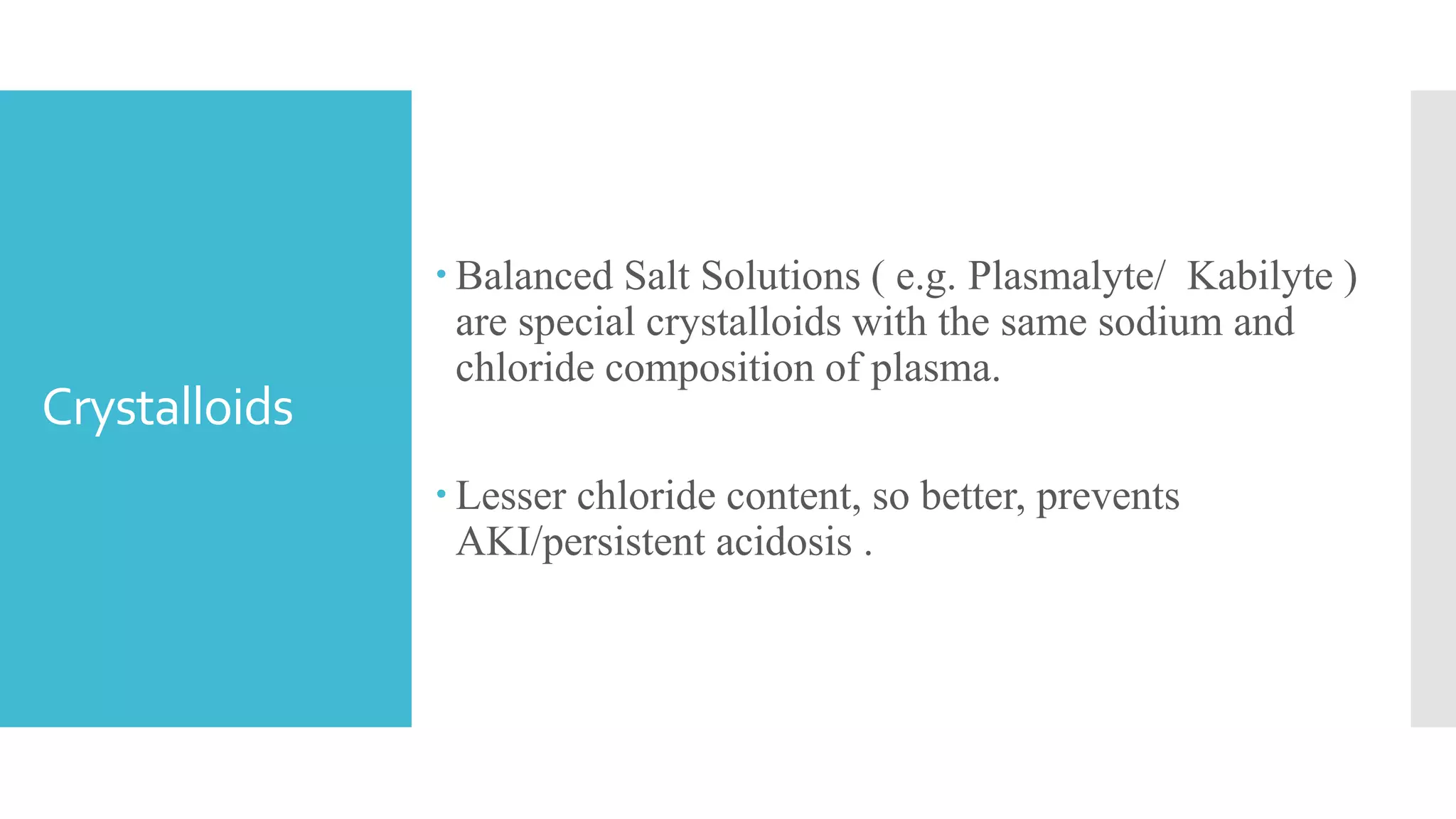
 Balanced Salt Solutions ( e.g. Plasmalyte/ Kabilyte )
are special crystalloids with the same sodium and
chloride composition of plasma.
 Lesser chloride content, so better, prevents
AKI/persistent acidosis .
Colloids
 Sticky fluids that always stay in the intravascular
compartment
 E.g. Albumin, Gelofusin, FFP
Maintenance
Fluid
Type
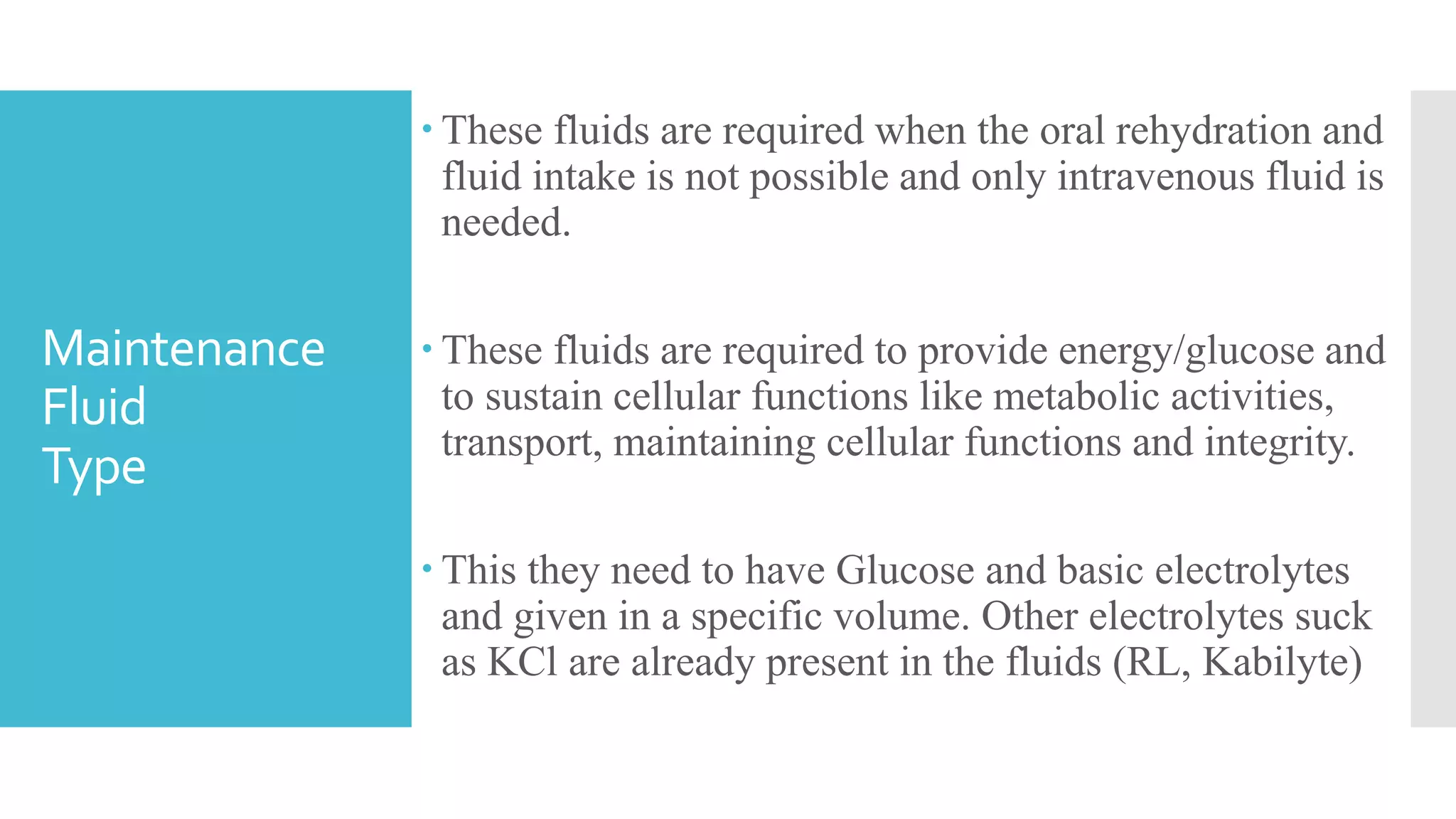
 These fluids are required when the oral rehydration and
fluid intake is not possible and only intravenous fluid is
needed.
 These fluids are required to provide energy/glucose and
to sustain cellular functions like metabolic activities,
transport, maintaining cellular functions and integrity.
 This they need to have Glucose and basic electrolytes
and given in a specific volume. Other electrolytes suck
as KCl are already present in the fluids (RL, Kabilyte)
Maintenance
Fluid
Volume
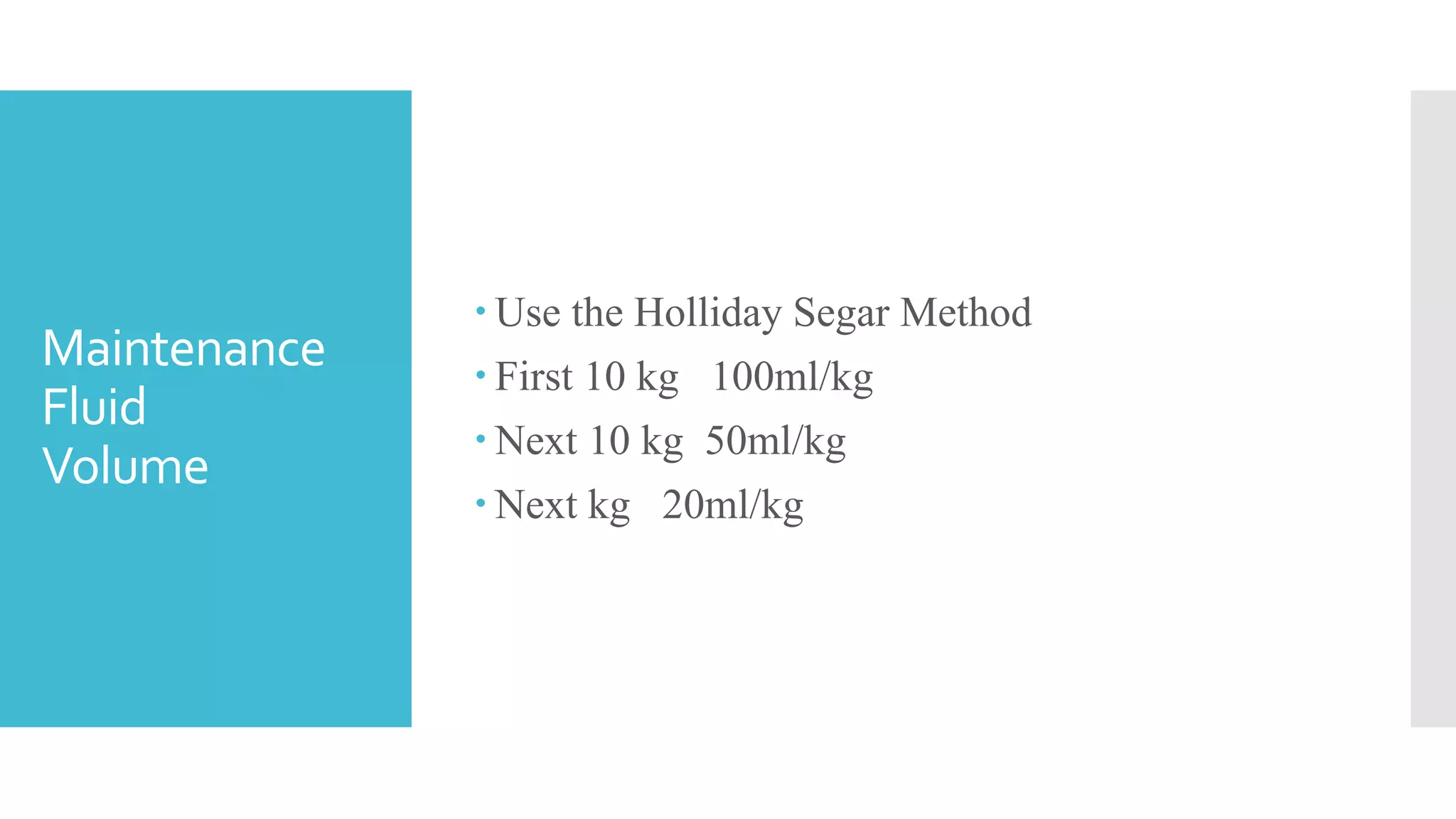
 Use the Holliday Segar Method
 First 10 kg 100ml/kg
 Next 10 kg 50ml/kg
 Next kg 20ml/kg
Tonicity
&
Osmolarity
 Osmolarity :
- Number of osmoles of solutes per kg of solution
- Concentration of permeable & impermeable solutes
- 2x[Na] + [glucose]/18+ [BUN]/2.8
 Tonicity ( Effective osmolarity ) :
- Concentration of non-permeable solutes
- 2x[Na] + [glucose]/18
Tonicity
of
Fluids
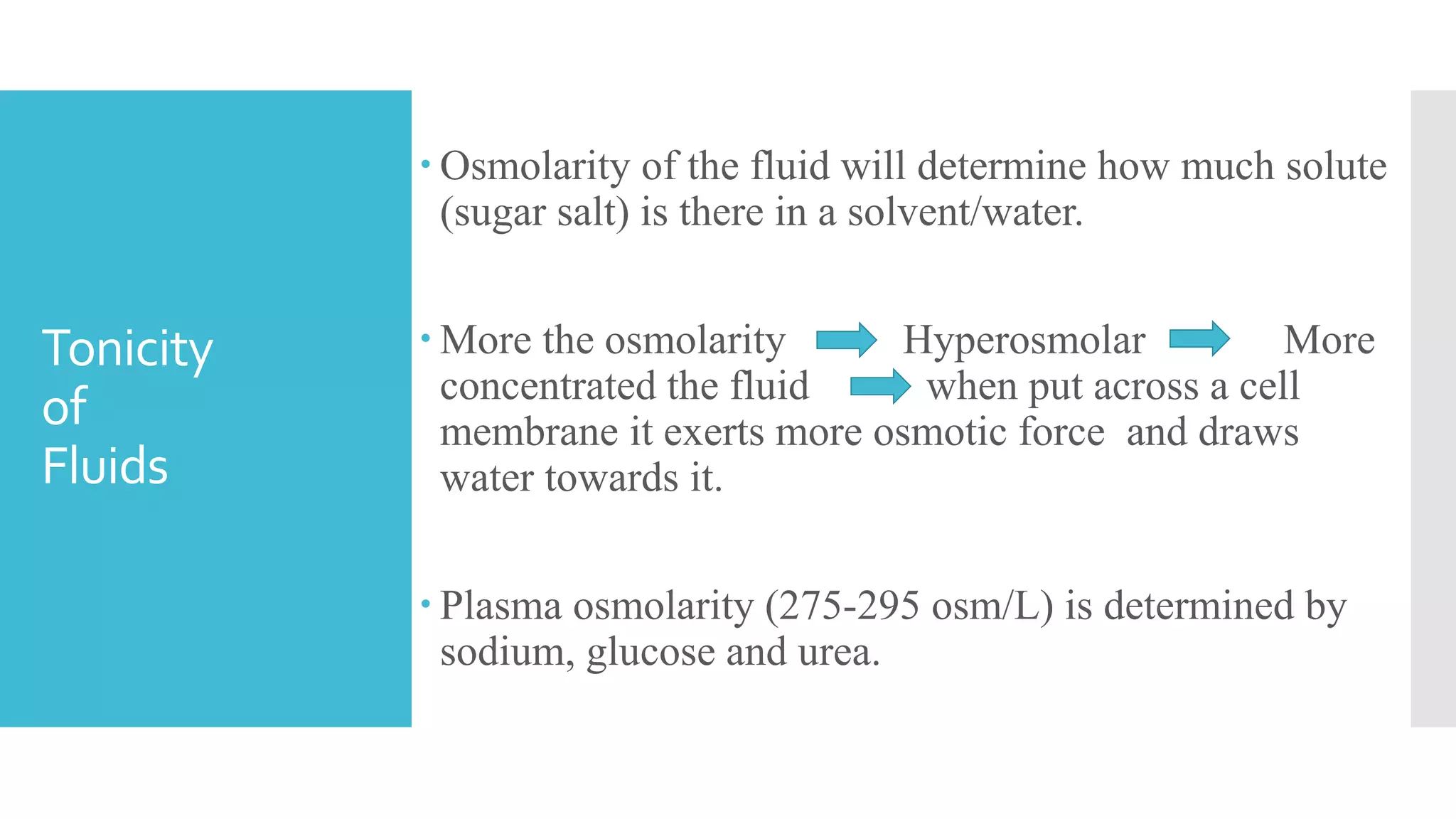
 Osmolarity of the fluid will determine how much solute
(sugar salt) is there in a solvent/water.
 More the osmolarity Hyperosmolar More
concentrated the fluid when put across a cell
membrane it exerts more osmotic force and draws
water towards it.
 Plasma osmolarity (275-295 osm/L) is determined by
sodium, glucose and urea.
Tonicity
of
Fluids
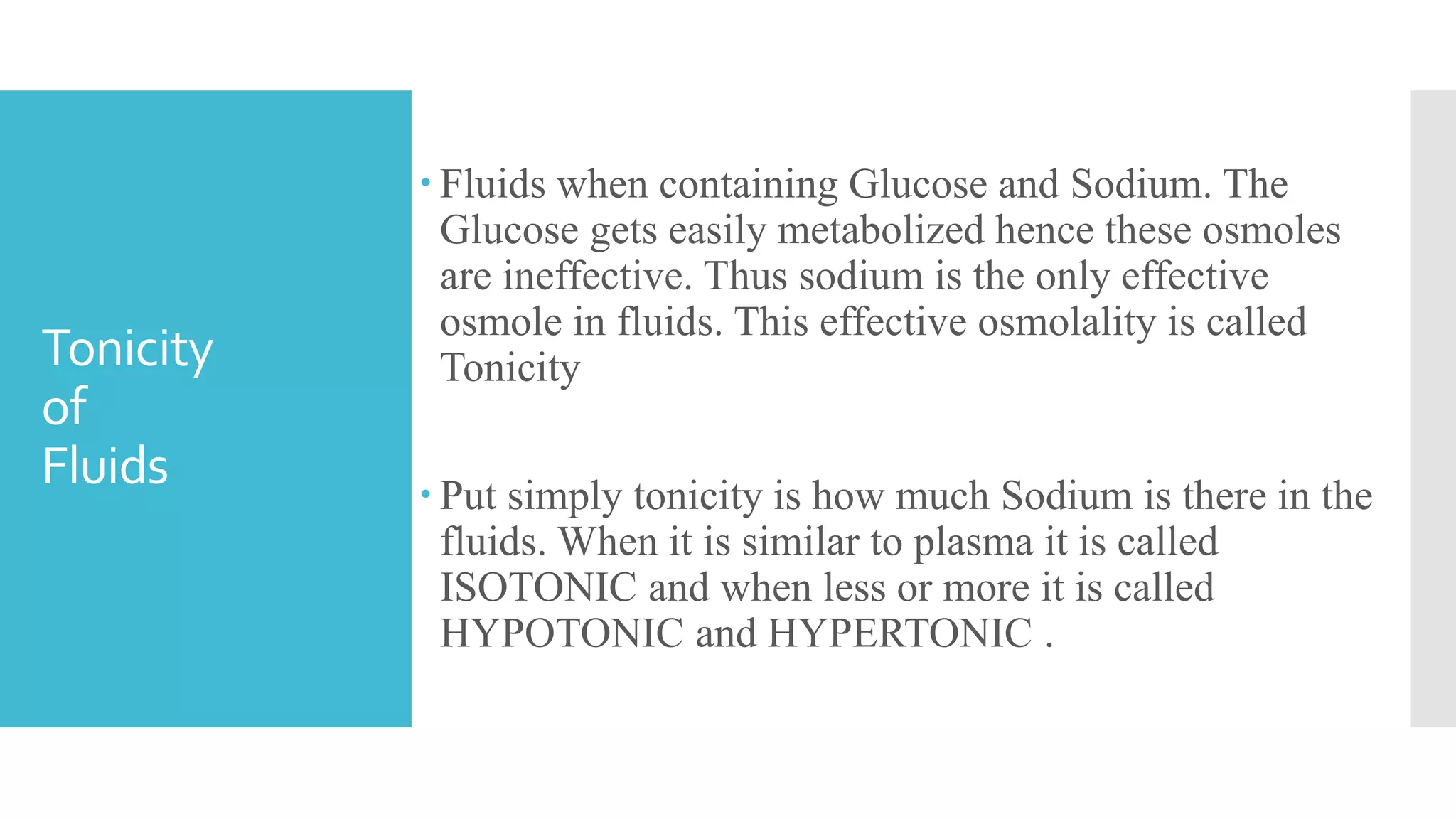
 Fluids when containing Glucose and Sodium. The
Glucose gets easily metabolized hence these osmoles
are ineffective. Thus sodium is the only effective
osmole in fluids. This effective osmolality is called
Tonicity
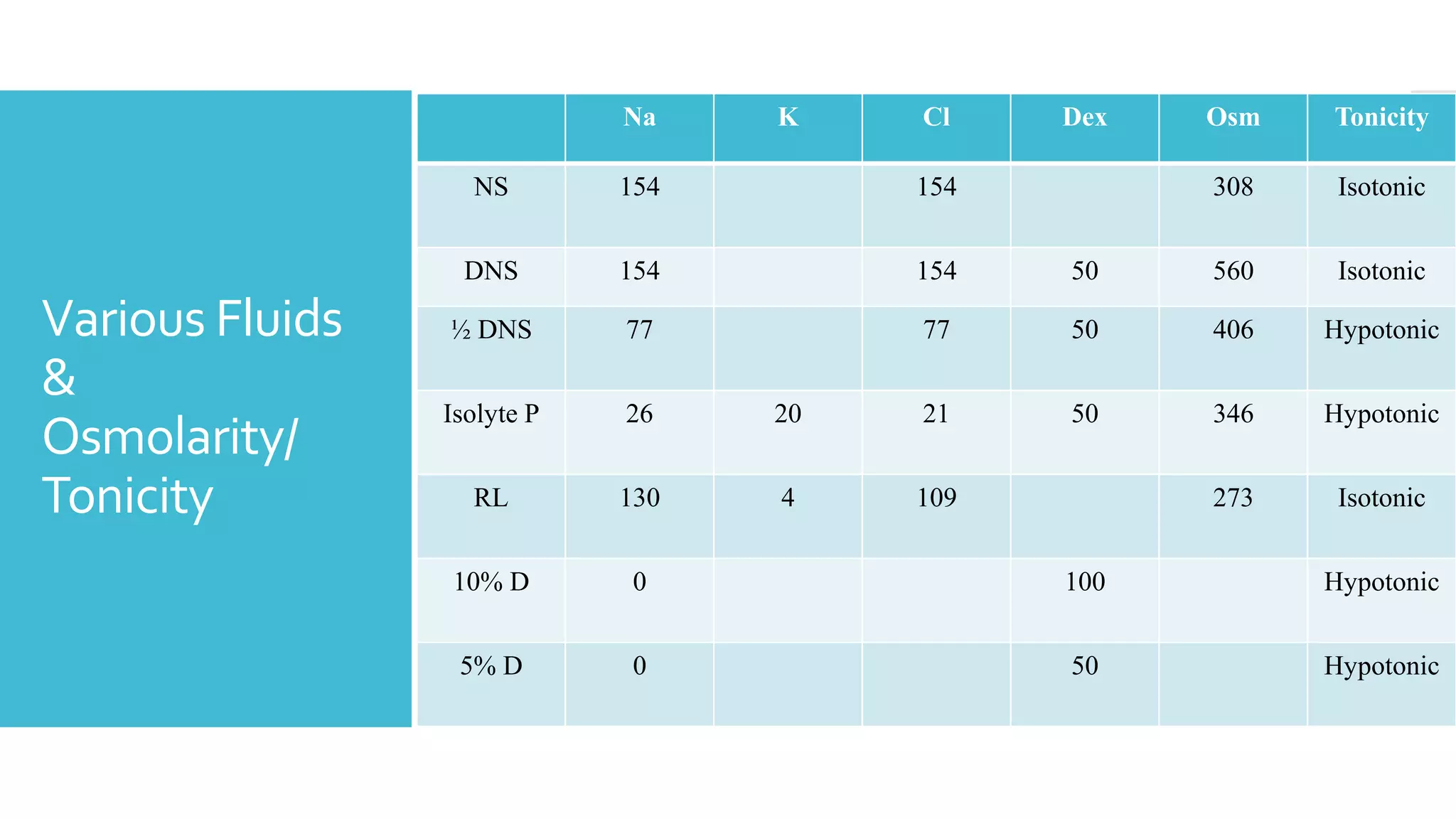
 Put simply tonicity is how much Sodium is there in the
fluids. When it is similar to plasma it is called
ISOTONIC and when less or more it is called
HYPOTONIC and HYPERTONIC .
Why Isotonic ?
 Hypotonic fluids will cause fluid shift across the cell
membrane hence we need to AVOID them. They may
cause hyponatremia
 Hence we choose dextrose containing isotonic fluids as
maintenance fluids e.g. DNS, Balanced fluids
(Plasmalyte, Kabilyte)
Crystalloid
solutions
compared to
human plasma
Crystalloid
solutions
compared to
human plasma
Sodium
(mmol/L)
Potassium
(mmol/L)
Chloride
(mmol/L)
pH Theoretical
Osmolarity
(mOsmol/kg)
Actual or measured
osmolality
(mOsmol/kg)
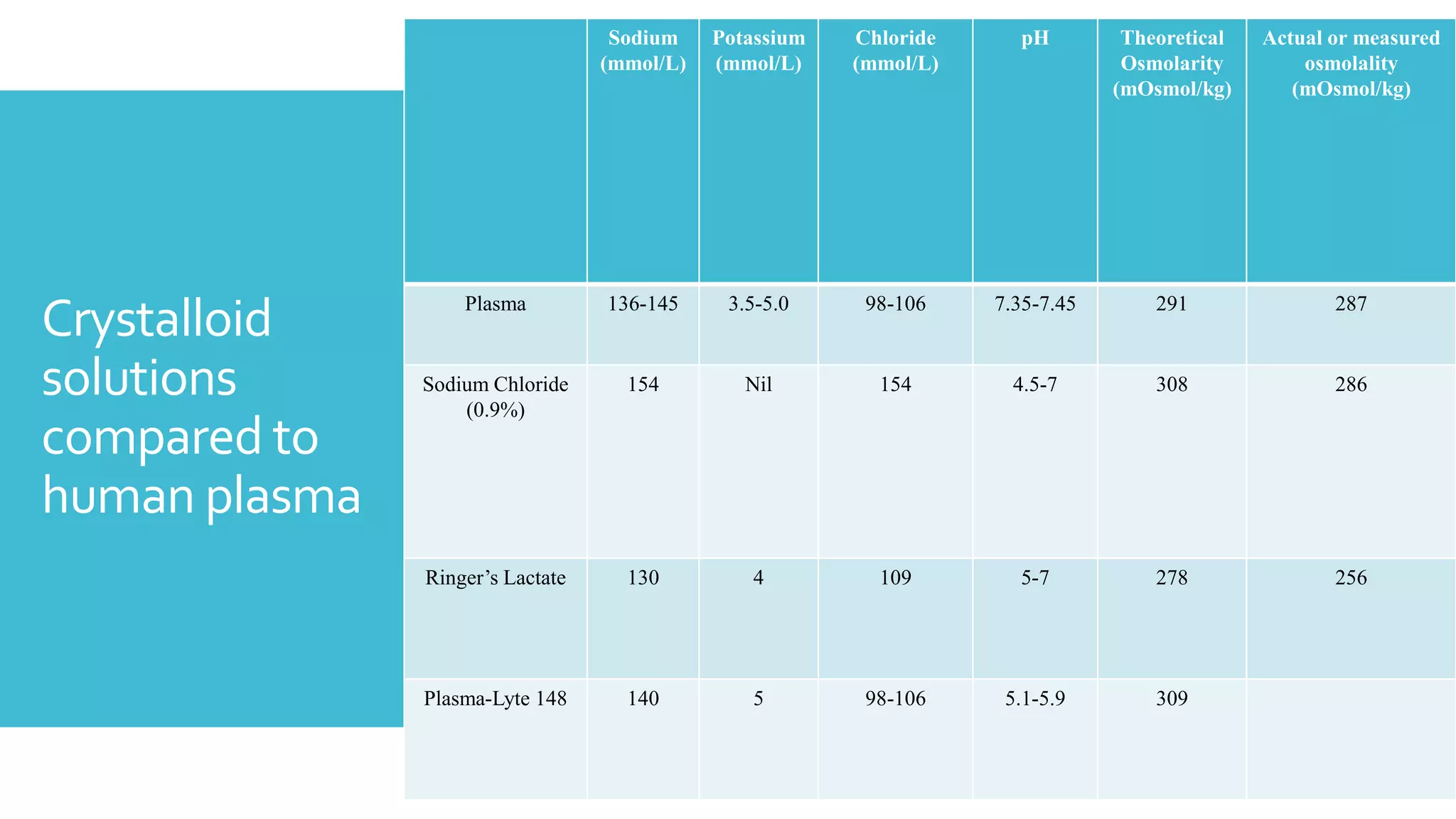
Plasma 136-145 3.5-5.0 98-106 7.35-7.45 291 287
Sodium Chloride
(0.9%)
154 Nil 154 4.5-7 308 286
Ringer’s Lactate 130 4 109 5-7 278 256
Plasma-Lyte 148 140 5 98-106 5.1-5.9 309
Various Fluids
&
Osmolarity/
Tonicity
Na K Cl Dex Osm Tonicity
NS 154 154 308 Isotonic
DNS 154 154 50 560 Isotonic
½ DNS 77 77 50 406 Hypotonic
Isolyte P 26 20 21 50 346 Hypotonic
RL 130 4 109 273 Isotonic
10% D 0 100 Hypotonic
5% D 0 50 Hypotonic
Resuscitation
Fluids
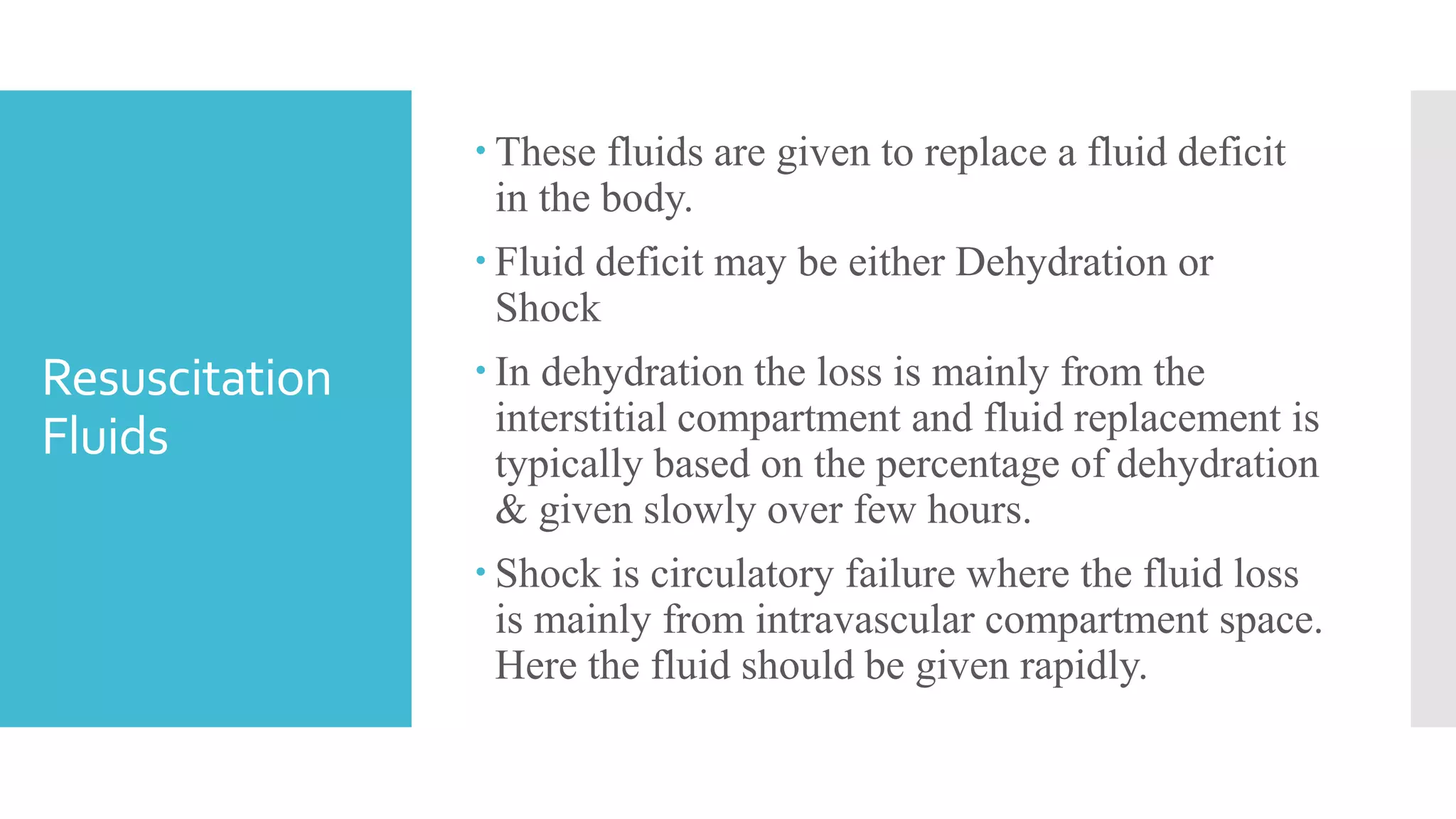
 These fluids are given to replace a fluid deficit
in the body.
 Fluid deficit may be either Dehydration or
Shock
 In dehydration the loss is mainly from the
interstitial compartment and fluid replacement is
typically based on the percentage of dehydration
& given slowly over few hours.
 Shock is circulatory failure where the fluid loss
is mainly from intravascular compartment space.
Here the fluid should be given rapidly.
Type of fluid
for
resuscitation
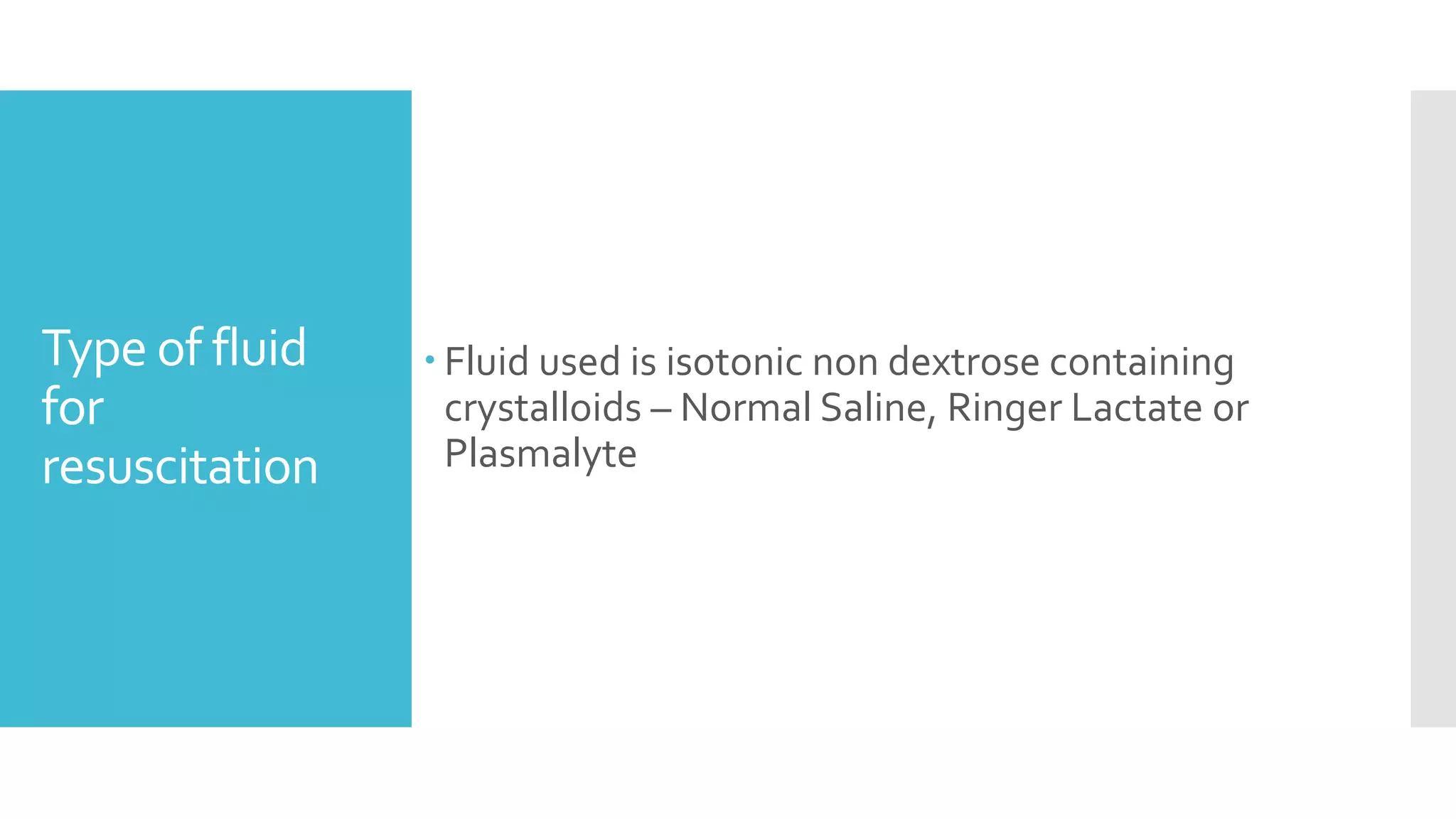
 Fluid used is isotonic non dextrose containing
crystalloids – Normal Saline, Ringer Lactate or
Plasmalyte

Parenteral Fluids.pptx

  • 1.
  • 2.
    Crystalloids  Crystalloids arethe preferred fluids (e.g. Normal Saline, Ringer Lactate).  They are equally efficacious than colloids and are cheaper, easily available and lesser side effects.  Only about 1/3 of these fluids tend to stay in the intravascular compartment, rest leak out.
  • 3.
    Crystalloids  Balanced SaltSolutions ( e.g. Plasmalyte/ Kabilyte ) are special crystalloids with the same sodium and chloride composition of plasma.  Lesser chloride content, so better, prevents AKI/persistent acidosis .
  • 4.
    Colloids  Sticky fluidsthat always stay in the intravascular compartment  E.g. Albumin, Gelofusin, FFP
  • 5.
    Maintenance Fluid Type  These fluidsare required when the oral rehydration and fluid intake is not possible and only intravenous fluid is needed.  These fluids are required to provide energy/glucose and to sustain cellular functions like metabolic activities, transport, maintaining cellular functions and integrity.  This they need to have Glucose and basic electrolytes and given in a specific volume. Other electrolytes suck as KCl are already present in the fluids (RL, Kabilyte)
  • 6.
    Maintenance Fluid Volume  Use theHolliday Segar Method  First 10 kg 100ml/kg  Next 10 kg 50ml/kg  Next kg 20ml/kg
  • 7.
    Tonicity & Osmolarity  Osmolarity : -Number of osmoles of solutes per kg of solution - Concentration of permeable & impermeable solutes - 2x[Na] + [glucose]/18+ [BUN]/2.8  Tonicity ( Effective osmolarity ) : - Concentration of non-permeable solutes - 2x[Na] + [glucose]/18
  • 8.
    Tonicity of Fluids  Osmolarity ofthe fluid will determine how much solute (sugar salt) is there in a solvent/water.  More the osmolarity Hyperosmolar More concentrated the fluid when put across a cell membrane it exerts more osmotic force and draws water towards it.  Plasma osmolarity (275-295 osm/L) is determined by sodium, glucose and urea.
  • 9.
    Tonicity of Fluids  Fluids whencontaining Glucose and Sodium. The Glucose gets easily metabolized hence these osmoles are ineffective. Thus sodium is the only effective osmole in fluids. This effective osmolality is called Tonicity  Put simply tonicity is how much Sodium is there in the fluids. When it is similar to plasma it is called ISOTONIC and when less or more it is called HYPOTONIC and HYPERTONIC .
  • 10.
    Why Isotonic ? Hypotonic fluids will cause fluid shift across the cell membrane hence we need to AVOID them. They may cause hyponatremia  Hence we choose dextrose containing isotonic fluids as maintenance fluids e.g. DNS, Balanced fluids (Plasmalyte, Kabilyte)
  • 11.
  • 12.
    Crystalloid solutions compared to human plasma Sodium (mmol/L) Potassium (mmol/L) Chloride (mmol/L) pHTheoretical Osmolarity (mOsmol/kg) Actual or measured osmolality (mOsmol/kg) Plasma 136-145 3.5-5.0 98-106 7.35-7.45 291 287 Sodium Chloride (0.9%) 154 Nil 154 4.5-7 308 286 Ringer’s Lactate 130 4 109 5-7 278 256 Plasma-Lyte 148 140 5 98-106 5.1-5.9 309
  • 13.
    Various Fluids & Osmolarity/ Tonicity Na KCl Dex Osm Tonicity NS 154 154 308 Isotonic DNS 154 154 50 560 Isotonic ½ DNS 77 77 50 406 Hypotonic Isolyte P 26 20 21 50 346 Hypotonic RL 130 4 109 273 Isotonic 10% D 0 100 Hypotonic 5% D 0 50 Hypotonic
  • 14.
    Resuscitation Fluids  These fluidsare given to replace a fluid deficit in the body.  Fluid deficit may be either Dehydration or Shock  In dehydration the loss is mainly from the interstitial compartment and fluid replacement is typically based on the percentage of dehydration & given slowly over few hours.  Shock is circulatory failure where the fluid loss is mainly from intravascular compartment space. Here the fluid should be given rapidly.
  • 15.
    Type of fluid for resuscitation Fluid used is isotonic non dextrose containing crystalloids – Normal Saline, Ringer Lactate or Plasmalyte