Group 3
Dede Listia Lestary
Nurul Khoniah S
Puspa Vigahandayani
Risa Oktaviani
Parallelism
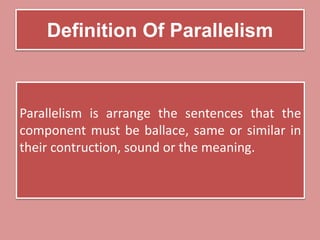
Definition Of Parallelism
Parallelism is arrange the sentences that the
component must be ballace, same or similar in
their contruction, sound or the meaning.
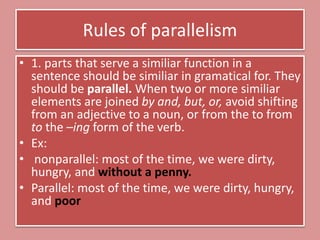
Rules of parallelism
• 1. parts that serve a similiar function in a
sentence should be similiar in gramatical for. They
should be parallel. When two or more similiar
elements are joined by and, but, or, avoid shifting
from an adjective to a noun, or from the to from
to the –ing form of the verb.
• Ex:
• nonparallel: most of the time, we were dirty,
hungry, and without a penny.
• Parallel: most of the time, we were dirty, hungry,
and poor
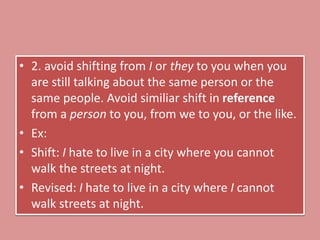
• 2. avoid shifting from I or they to you when you
are still talking about the same person or the
same people. Avoid similiar shift in reference
from a person to you, from we to you, or the like.
• Ex:
• Shift: I hate to live in a city where you cannot
walk the streets at night.
• Revised: I hate to live in a city where I cannot
walk streets at night.
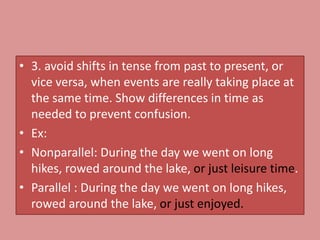
• 3. avoid shifts in tense from past to present, or
vice versa, when events are really taking place at
the same time. Show differences in time as
needed to prevent confusion.
• Ex:
• Nonparallel: During the day we went on long
hikes, rowed around the lake, or just leisure time.
• Parallel : During the day we went on long hikes,
rowed around the lake, or just enjoyed.
• 4. avoid shifting from active verbs (I ate my
dinner) to passive (my diner was eaten) when
the same person or thing is still active in the
sentence.
Ex:
Shift: I pilled the bedclothes on the floor, and a
potent insecticide was sprayed over everything.
Revised: I pilled the bedclothes on the floor, and
sprayed a potent insecticide over everything.

Parallelism

  • 1.
    Group 3 Dede ListiaLestary Nurul Khoniah S Puspa Vigahandayani Risa Oktaviani
  • 2.
  • 3.
    Definition Of Parallelism Parallelismis arrange the sentences that the component must be ballace, same or similar in their contruction, sound or the meaning.
  • 4.
    Rules of parallelism •1. parts that serve a similiar function in a sentence should be similiar in gramatical for. They should be parallel. When two or more similiar elements are joined by and, but, or, avoid shifting from an adjective to a noun, or from the to from to the –ing form of the verb. • Ex: • nonparallel: most of the time, we were dirty, hungry, and without a penny. • Parallel: most of the time, we were dirty, hungry, and poor
  • 5.
    • 2. avoidshifting from I or they to you when you are still talking about the same person or the same people. Avoid similiar shift in reference from a person to you, from we to you, or the like. • Ex: • Shift: I hate to live in a city where you cannot walk the streets at night. • Revised: I hate to live in a city where I cannot walk streets at night.
  • 6.
    • 3. avoidshifts in tense from past to present, or vice versa, when events are really taking place at the same time. Show differences in time as needed to prevent confusion. • Ex: • Nonparallel: During the day we went on long hikes, rowed around the lake, or just leisure time. • Parallel : During the day we went on long hikes, rowed around the lake, or just enjoyed.
  • 7.
    • 4. avoidshifting from active verbs (I ate my dinner) to passive (my diner was eaten) when the same person or thing is still active in the sentence. Ex: Shift: I pilled the bedclothes on the floor, and a potent insecticide was sprayed over everything. Revised: I pilled the bedclothes on the floor, and sprayed a potent insecticide over everything.