Decimation of bee populations
Research Proposal by Paola Caballero
RISE Program UPR- Cayey
Pesticide resistance in
bees
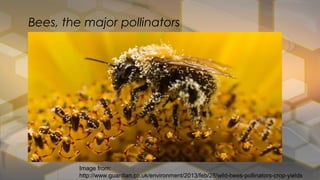
Bees, the major pollinators
Image from:
http://www.guardian.co.uk/environment/2013/feb/28/wild-bees-pollinators-crop-yields
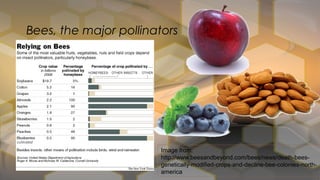
Bees, the major pollinators
Image from:
http://www.beesandbeyond.com/bees/news/death-bees-
genetically-modified-crops-and-decline-bee-colonies-north-
america
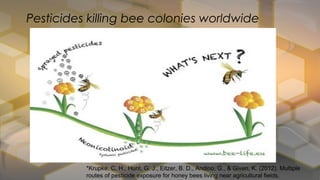
Pesticides killing bee colonies worldwide
*Krupke, C. H., Hunt, G. J., Eitzer, B. D., Andino, G., & Given, K. (2012). Multiple
routes of pesticide exposure for honey bees living near agricultural fields.
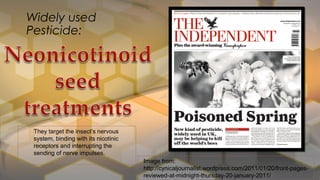
Widely used
Pesticide:
They target the insect’s nervous
system, binding with its nicotinic
receptors and interrupting the
sending of nerve impulses.
Image from:
http://cynicaljournalist.wordpress.com/2011/01/20/front-pages-
reviewed-at-midnight-thursday-20-january-2011/
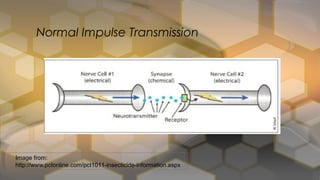
Normal Impulse Transmission
Image from:
http://www.pctonline.com/pct1011-insecticide-information.aspx
Neurological target sites
Image from:
http://www.pctonline.com/pct1011-insecticide-information.aspx
Acetylcholine (Ach Receptor)
•N
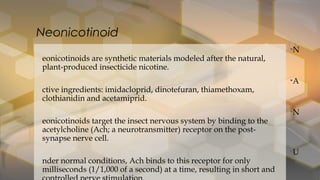
eonicotinoids are synthetic materials modeled after the natural,
plant-produced insecticide nicotine.
•A
ctive ingredients: imidacloprid, dinotefuran, thiamethoxam,
clothianidin and acetamiprid.
•N
eonicotinoids target the insect nervous system by binding to the
acetylcholine (Ach; a neurotransmitter) receptor on the post-
synapse nerve cell.
•U
nder normal conditions, Ach binds to this receptor for only
milliseconds (1/1,000 of a second) at a time, resulting in short and
Neonicotinoid
•D
ecreased effectiveness of a pesticide that was effective on previous
generations of a pest population.
•M
any organisms have resistance to many susbstances in their
environments in order to survive and adapt.
•N
atural selection plays an important role in building resistance.
•E
xamples:
B
acteria creating resistance to hand sanitizers
Pesticide Resistance
Research Project
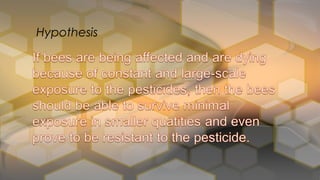
Hypothesis
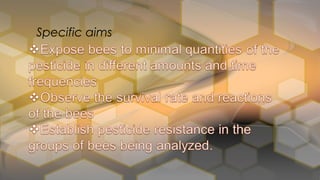
Specific aims
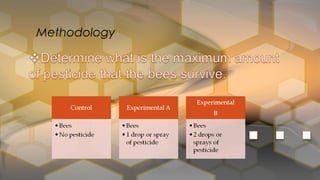
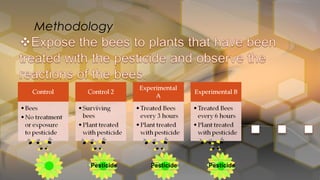
Methodology
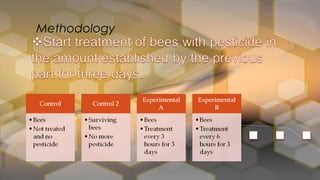
Methodology
Methodology
Pesticide Pesticide Pesticide
Analyzing the Results
Importance
•http://w
•http://w
•K
rupke, C. H., Hunt, G. J., Eitzer, B. D., Andino, G., & Given, K.
(2012). Multiple routes of pesticide exposure for honey bees living
near agricultural fields. PLoS One, 7(1)
doi:http://dx.doi.org/10.1371/journal.pone.0029268
References

Paola caballero final research presentation

  • 1.
    Decimation of beepopulations Research Proposal by Paola Caballero RISE Program UPR- Cayey Pesticide resistance in bees
  • 2.
    Bees, the majorpollinators Image from: http://www.guardian.co.uk/environment/2013/feb/28/wild-bees-pollinators-crop-yields
  • 3.
    Bees, the majorpollinators Image from: http://www.beesandbeyond.com/bees/news/death-bees- genetically-modified-crops-and-decline-bee-colonies-north- america
  • 4.
    Pesticides killing beecolonies worldwide *Krupke, C. H., Hunt, G. J., Eitzer, B. D., Andino, G., & Given, K. (2012). Multiple routes of pesticide exposure for honey bees living near agricultural fields.
  • 5.
    Widely used Pesticide: They targetthe insect’s nervous system, binding with its nicotinic receptors and interrupting the sending of nerve impulses. Image from: http://cynicaljournalist.wordpress.com/2011/01/20/front-pages- reviewed-at-midnight-thursday-20-january-2011/
  • 6.
    Normal Impulse Transmission Imagefrom: http://www.pctonline.com/pct1011-insecticide-information.aspx
  • 7.
    Neurological target sites Imagefrom: http://www.pctonline.com/pct1011-insecticide-information.aspx Acetylcholine (Ach Receptor)
  • 8.
    •N eonicotinoids are syntheticmaterials modeled after the natural, plant-produced insecticide nicotine. •A ctive ingredients: imidacloprid, dinotefuran, thiamethoxam, clothianidin and acetamiprid. •N eonicotinoids target the insect nervous system by binding to the acetylcholine (Ach; a neurotransmitter) receptor on the post- synapse nerve cell. •U nder normal conditions, Ach binds to this receptor for only milliseconds (1/1,000 of a second) at a time, resulting in short and Neonicotinoid
  • 9.
    •D ecreased effectiveness ofa pesticide that was effective on previous generations of a pest population. •M any organisms have resistance to many susbstances in their environments in order to survive and adapt. •N atural selection plays an important role in building resistance. •E xamples: B acteria creating resistance to hand sanitizers Pesticide Resistance
  • 10.
  • 11.
  • 12.
  • 13.
  • 14.
  • 15.
  • 16.
  • 17.
  • 19.
    •http://w •http://w •K rupke, C. H.,Hunt, G. J., Eitzer, B. D., Andino, G., & Given, K. (2012). Multiple routes of pesticide exposure for honey bees living near agricultural fields. PLoS One, 7(1) doi:http://dx.doi.org/10.1371/journal.pone.0029268 References

Editor's Notes

  • #6 Neonicotinoids attack insects by harming their nervous systems and are considered of low toxicity to mammals.they stay with the plant as it grows — and are applied as seed treatments, to roots, or into tree trunks,
  • #9 This mode of action results in nerve hyper-stimulation. Insects exposed to a neonicotinoid insecticide exhibit symptoms of tremors and hyperactivity, much like pyrethrins, pyrethroids and fipronil.