An Assignment on
Panchayati Raj
Course: Agriculture Research Research Ethics
and Rural Development Programme ( PGS CC5)
College of Fisheries Science,
Veraval
Introduction
 It was a Gandhi who realized the importance of
village Panchat as an important instrument of rural
development.
 The committee recommended a three tier system of
local government, christened, Panchayati raj by
Jawaharlal Neharu.
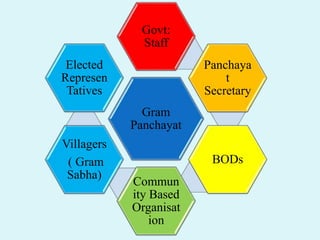
Gram
Panchayat
Govt:
Staff
Panchaya
t
Secretary
BODs
Commun
ity Based
Organisat
ion
Villagers
( Gram
Sabha)
Elected
Represen
Tatives
Objectives of Panchayati Raj
 Decentralization of power
 Grassroots democracy and local self-governance
 Inclusive and participatory decision-making
Functions
 Local governance and administration
 Planning and development at the grassroots level
 Revenue generation and resource allocation
 Social justice, welfare, and poverty alleviation
 Infrastructure development and maintenance
 Natural resource management
 Conflict resolution and mediation
 Citizen empowerment and participation
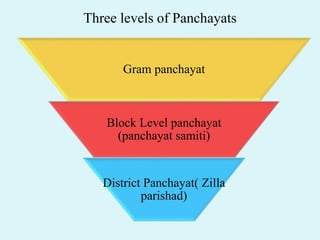
Three levels of Panchayats
Gram panchayat
Block Level panchayat
(panchayat samiti)
District Panchayat( Zilla
parishad)
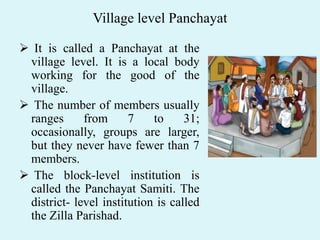
Village level Panchayat
 It is called a Panchayat at the
village level. It is a local body
working for the good of the
village.
 The number of members usually
ranges from 7 to 31;
occasionally, groups are larger,
but they never have fewer than 7
members.
 The block-level institution is
called the Panchayat Samiti. The
district- level institution is called
the Zilla Parishad.
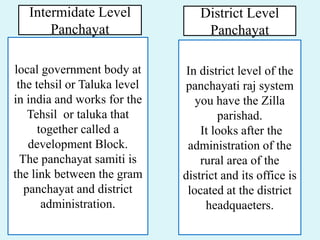
local government body at
the tehsil or Taluka level
in india and works for the
Tehsil or taluka that
together called a
development Block.
The panchayat samiti is
the link between the gram
panchayat and district
administration.
In district level of the
panchayati raj system
you have the Zilla
parishad.
It looks after the
administration of the
rural area of the
district and its office is
located at the district
headquaeters.
Intermidate Level
Panchayat
District Level
Panchayat
Panchayati raj system in india and basic information

Panchayati raj system in india and basic information

  • 1.
    An Assignment on PanchayatiRaj Course: Agriculture Research Research Ethics and Rural Development Programme ( PGS CC5) College of Fisheries Science, Veraval
  • 2.
    Introduction  It wasa Gandhi who realized the importance of village Panchat as an important instrument of rural development.  The committee recommended a three tier system of local government, christened, Panchayati raj by Jawaharlal Neharu.
  • 3.
  • 4.
    Objectives of PanchayatiRaj  Decentralization of power  Grassroots democracy and local self-governance  Inclusive and participatory decision-making
  • 5.
    Functions  Local governanceand administration  Planning and development at the grassroots level  Revenue generation and resource allocation  Social justice, welfare, and poverty alleviation  Infrastructure development and maintenance  Natural resource management  Conflict resolution and mediation  Citizen empowerment and participation
  • 6.
    Three levels ofPanchayats Gram panchayat Block Level panchayat (panchayat samiti) District Panchayat( Zilla parishad)
  • 7.
    Village level Panchayat It is called a Panchayat at the village level. It is a local body working for the good of the village.  The number of members usually ranges from 7 to 31; occasionally, groups are larger, but they never have fewer than 7 members.  The block-level institution is called the Panchayat Samiti. The district- level institution is called the Zilla Parishad.
  • 8.
    local government bodyat the tehsil or Taluka level in india and works for the Tehsil or taluka that together called a development Block. The panchayat samiti is the link between the gram panchayat and district administration. In district level of the panchayati raj system you have the Zilla parishad. It looks after the administration of the rural area of the district and its office is located at the district headquaeters. Intermidate Level Panchayat District Level Panchayat