

HOW TO INSTALL BATHTUB
NOOR ATIKAH BINTI YUSOF (03DPB10F2002)
NOR SUHAILA BINTI AHAMAD (03DPB10F2005)
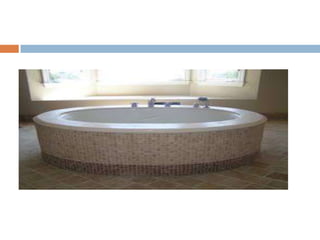
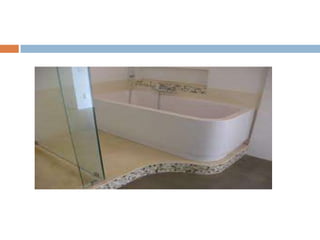
BATH TUB
 A bath tub is a large container for holding
water in which a person may bathe (take a
bath). A bathtub is usually placed in a
bathroom either as a stand-alone fixture or in
conjunction with a shower.
WAYS TO INSTALL BATH
TUB
 Installing a bathtub is not a job to be
undertaken lightly. If you're considering
replacing an existing tub, be sure you have
checked out your other options, such as
reglazing or adding a new bathtub liner. Both
of these options make use of the existing walls
and plumbing, and they don't require that you
physically remove the old tub.
Instructions
1. Gather together your materials. See "Things You'll Need"
below.
-Propane torch and soldering supplies
-Hacksaw
-Tube cutter
-Drill
-Galvanized nails and screws
-Level
-Wood strapping
-New bathtub
-Safety glasses
-PVC drain pipe, fittings, P-trap, and overflow pipe
-Hammer
-Copper supply pipe
-Tape measure
-Plastic shims
2. Frame the walls so that the
bathtub just fits into the
alcove, leaving a gap of 1/8
inch around the edge.
3. Install the rough-in plumbing
supply lines for the
faucet, risers and showerhead
4. Slide the tub into place and check
for level. Use plastic shims to level the
tub (wooden ones are more likely to rot
over time). After the tub is level, mark
the top of the tub's nailing flange on
the studs
5. Determine the positioning of the
ledger boards. These boards will
attach directly to the wall studs
underneath the lip of the tub and
help to support it.
6. Install the P-trap and drainpipe
so that the top of the P-trap is
level with the floor and will be
centered underneath the drainpipe
from the tub.
7. Assemble the drain pipe and overflow
pipes and dry fit them to the tub so you
can measure the required length to attach
the drainpipe to the P-trap. After
measuring, cut them to fit and attach them
to the tub.
8. Install the ledger boards on
the previously determined
markings. Use galvanized nails
or screws to prevent any
rusting.
9. Slide the tub into place and
set it on the ledgers. The
drainpipe from the tub should
slide into the P-trap.
10. Fasten the tub in position
by nailing through the flanges.
Here again use galvanized
nails
11. Insert the drain plug
assembly through the overflow
opening, then attach the cover
plate for the overflow.
12. Turn on the water and test
your plumbing and drainage
systems for leaks.
13. Have your installation
inspected.
14. Finish the walls and install
the showerhead, faucet
handles and tub spout.
That all…
THANKS.

S3 Pair Presentation - How to Install Bath Tub

  • 1.
    HOW TO INSTALLBATHTUB NOOR ATIKAH BINTI YUSOF (03DPB10F2002) NOR SUHAILA BINTI AHAMAD (03DPB10F2005)
  • 4.
    BATH TUB  Abath tub is a large container for holding water in which a person may bathe (take a bath). A bathtub is usually placed in a bathroom either as a stand-alone fixture or in conjunction with a shower.
  • 5.
    WAYS TO INSTALLBATH TUB  Installing a bathtub is not a job to be undertaken lightly. If you're considering replacing an existing tub, be sure you have checked out your other options, such as reglazing or adding a new bathtub liner. Both of these options make use of the existing walls and plumbing, and they don't require that you physically remove the old tub.
  • 6.
    Instructions 1. Gather togetheryour materials. See "Things You'll Need" below. -Propane torch and soldering supplies -Hacksaw -Tube cutter -Drill -Galvanized nails and screws -Level
  • 7.
    -Wood strapping -New bathtub -Safetyglasses -PVC drain pipe, fittings, P-trap, and overflow pipe -Hammer -Copper supply pipe -Tape measure -Plastic shims
  • 8.
    2. Frame thewalls so that the bathtub just fits into the alcove, leaving a gap of 1/8 inch around the edge.
  • 9.
    3. Install therough-in plumbing supply lines for the faucet, risers and showerhead
  • 10.
    4. Slide thetub into place and check for level. Use plastic shims to level the tub (wooden ones are more likely to rot over time). After the tub is level, mark the top of the tub's nailing flange on the studs
  • 11.
    5. Determine thepositioning of the ledger boards. These boards will attach directly to the wall studs underneath the lip of the tub and help to support it.
  • 12.
    6. Install theP-trap and drainpipe so that the top of the P-trap is level with the floor and will be centered underneath the drainpipe from the tub.
  • 13.
    7. Assemble thedrain pipe and overflow pipes and dry fit them to the tub so you can measure the required length to attach the drainpipe to the P-trap. After measuring, cut them to fit and attach them to the tub.
  • 14.
    8. Install theledger boards on the previously determined markings. Use galvanized nails or screws to prevent any rusting.
  • 15.
    9. Slide thetub into place and set it on the ledgers. The drainpipe from the tub should slide into the P-trap.
  • 16.
    10. Fasten thetub in position by nailing through the flanges. Here again use galvanized nails
  • 17.
    11. Insert thedrain plug assembly through the overflow opening, then attach the cover plate for the overflow.
  • 18.
    12. Turn onthe water and test your plumbing and drainage systems for leaks.
  • 19.
    13. Have yourinstallation inspected.
  • 20.
    14. Finish thewalls and install the showerhead, faucet handles and tub spout.
  • 21.