MS. DAISY DSOUZA
LECTURER
DEPT OF MSN
YNC
Learning objectives
Students will be able to:
 define pain
 list down the causes of pain
 enlist the factors influencing pain.
 enumerate the types of pain and explain pain
assessment
 explain management in detail.
Introduction
Pain is not just a simple physical sensation – it is also an
emotional experience and should be treated as such;
and isn’t always associated with actual damage to the
body’s tissues. It may be caused by potential tissue
damage, or even just feel like tissue damage even
though none has actually occurred.
Pain- definition
• The International Association for the Study of Pain
(IASP) defines pain as a "sensory and emotional
experience associated with tissue damage or described
in terms of such damage."
Causes
• headache.
• postsurgical pain.
• post-trauma pain.
• lower back pain.
• cancer pain.
• arthritis pain.
• neurogenic pain (pain caused by nerve
damage)
• psychogenic pain
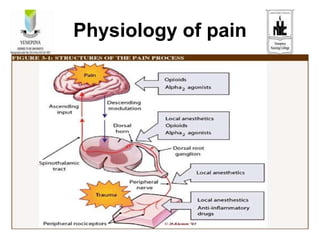
Physiology of pain
Major categories of pain
1. Nociceptive pain- Nociceptive pain is a medical term used
to describe the pain from physical damage or potential
damage to the body. Examples might be the pain felt from a
sports injury, a dental procedure, or arthritis. (stimuli from
somatic and visceral structures)
2. Neuropathic pain -Neuropathic pain is a medical term
used to describe the pain that develops when the nervous
system is damaged or not working properly due to disease
or injury.
Factors influencing pain
• Physiological- age, fatigue, genes, neurological function
• Social – attention, previous experiences, family and
support groups
• Psychological – anxiety, coping style
• Cultural/Spiritual-meaning of pain, ethinicity
Types of pain
• acute pain starts suddenly
• chronic pain lasts for a longer period of time
• soft tissue pain - when organs, muscles or tissues are
damaged or inflamed
• nerve pain - a nerve is damaged
• referred pain -pain from one part of the body is felt in
another
• phantom pain when there is pain in a part of the body that
has been removed
• bone pain
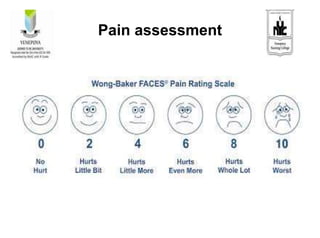
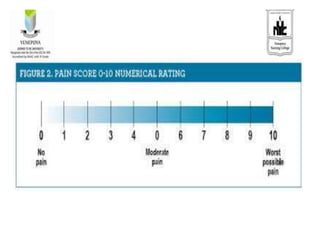
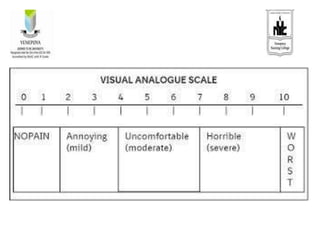
Pain assessment
Management
• Symptomatic treatment
• Identification of the cause
• Treatment for the cause
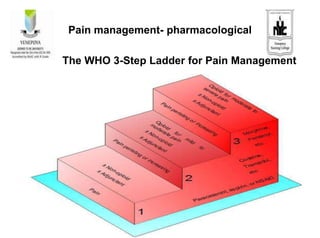
Pain management- pharmacological
The WHO 3-Step Ladder for Pain Management
Non- pharmacological
Comfort therapy
• Heat/cold application
• massage therapy
• Meditation
• Music therapy
• Positioning
• Counselling
• Transcutaneous electrical nerve stimulation(TENS)
Physical and occupational therapy
• Aquatherapy
• Tone and strengthening
Psychosocial
• Individual counseling
• Family counseling
Neurostimulation
• Acupuncture
• Acupressure
Nursing management
Subjective assessment
1. Pain history
2. Onset and duration of occurrence:
3. Location
4. Intensity
5. Pain assessment
Objective assessment
• Behavioral effects - assess verbalization, vocal response,
facial and body movements & social interaction, facial
expression is often 1st indication of pain, vocalization like
crying, screaming are associated with pain.
• Physiological responses - it vary with the origin and duration
of pain, early in onset of acute pain, the symapthetic nervous
system is stimulated, results in increased blood pressure,
pulse rate, respiration, pallor, diaphoresis and pupil dilation
Nursing diagnosis
• Acute pain related to -----------------------as evidenced by
pain scale score.
Summary
In this topic we have discussed about the
pain, causes of pain, factors influencing
pain, types of pain, pain assessment and
management in detail.
Conclusion
• Pain is a distressing feeling often caused by intense or
damaging stimuli. Pain motivates the individual to
withdraw from damaging situations, to protect a
damaged body part while it heals, and to avoid similar
experiences in the future. So pain management is very
important
Evaluation
 what is mean by pain pain
 discuss the causes of pain
 enlist the factors influencing pain.
 explain the types of pain and how to assess
pain
 explain management of pain in detail.
References
1. Black MJ. Textbook of medical surgical nursing.7th
ed.St. louis:Saunders
2. Brunner. Text book of medical surgical nursing.6th
ed.Philadelphia:Saunders;
3. Lewis. Medical surgical nursing.6th ed. St
louis:Mosby

PAIN.pptx

  • 2.
  • 3.
    Learning objectives Students willbe able to:  define pain  list down the causes of pain  enlist the factors influencing pain.  enumerate the types of pain and explain pain assessment  explain management in detail.
  • 4.
    Introduction Pain is notjust a simple physical sensation – it is also an emotional experience and should be treated as such; and isn’t always associated with actual damage to the body’s tissues. It may be caused by potential tissue damage, or even just feel like tissue damage even though none has actually occurred.
  • 5.
    Pain- definition • TheInternational Association for the Study of Pain (IASP) defines pain as a "sensory and emotional experience associated with tissue damage or described in terms of such damage."
  • 6.
    Causes • headache. • postsurgicalpain. • post-trauma pain. • lower back pain. • cancer pain. • arthritis pain. • neurogenic pain (pain caused by nerve damage) • psychogenic pain
  • 7.
  • 8.
    Major categories ofpain 1. Nociceptive pain- Nociceptive pain is a medical term used to describe the pain from physical damage or potential damage to the body. Examples might be the pain felt from a sports injury, a dental procedure, or arthritis. (stimuli from somatic and visceral structures) 2. Neuropathic pain -Neuropathic pain is a medical term used to describe the pain that develops when the nervous system is damaged or not working properly due to disease or injury.
  • 9.
    Factors influencing pain •Physiological- age, fatigue, genes, neurological function • Social – attention, previous experiences, family and support groups • Psychological – anxiety, coping style • Cultural/Spiritual-meaning of pain, ethinicity
  • 10.
    Types of pain •acute pain starts suddenly • chronic pain lasts for a longer period of time
  • 11.
    • soft tissuepain - when organs, muscles or tissues are damaged or inflamed • nerve pain - a nerve is damaged • referred pain -pain from one part of the body is felt in another • phantom pain when there is pain in a part of the body that has been removed • bone pain
  • 12.
  • 15.
    Management • Symptomatic treatment •Identification of the cause • Treatment for the cause
  • 16.
    Pain management- pharmacological TheWHO 3-Step Ladder for Pain Management
  • 17.
    Non- pharmacological Comfort therapy •Heat/cold application • massage therapy • Meditation • Music therapy • Positioning • Counselling • Transcutaneous electrical nerve stimulation(TENS)
  • 18.
    Physical and occupationaltherapy • Aquatherapy • Tone and strengthening Psychosocial • Individual counseling • Family counseling Neurostimulation • Acupuncture • Acupressure
  • 19.
    Nursing management Subjective assessment 1.Pain history 2. Onset and duration of occurrence: 3. Location 4. Intensity 5. Pain assessment
  • 20.
    Objective assessment • Behavioraleffects - assess verbalization, vocal response, facial and body movements & social interaction, facial expression is often 1st indication of pain, vocalization like crying, screaming are associated with pain. • Physiological responses - it vary with the origin and duration of pain, early in onset of acute pain, the symapthetic nervous system is stimulated, results in increased blood pressure, pulse rate, respiration, pallor, diaphoresis and pupil dilation
  • 21.
    Nursing diagnosis • Acutepain related to -----------------------as evidenced by pain scale score.
  • 22.
    Summary In this topicwe have discussed about the pain, causes of pain, factors influencing pain, types of pain, pain assessment and management in detail.
  • 23.
    Conclusion • Pain isa distressing feeling often caused by intense or damaging stimuli. Pain motivates the individual to withdraw from damaging situations, to protect a damaged body part while it heals, and to avoid similar experiences in the future. So pain management is very important
  • 24.
    Evaluation  what ismean by pain pain  discuss the causes of pain  enlist the factors influencing pain.  explain the types of pain and how to assess pain  explain management of pain in detail.
  • 25.
    References 1. Black MJ.Textbook of medical surgical nursing.7th ed.St. louis:Saunders 2. Brunner. Text book of medical surgical nursing.6th ed.Philadelphia:Saunders; 3. Lewis. Medical surgical nursing.6th ed. St louis:Mosby