BIMR NURSING COLLEGE GWALIOR
PRESENTED BY:
Mr. Pushpendra Dhakar
M.Sc Nursing
(MSN)
INTRODUCTION
 Pain is complex multi-factorial phenomenon. It is individual, unique experience that they may be
difficulty for clients to describe or explain and is often difficult for others to recognizes, understands and
assess.
 Pain is latin word peone meaning penality or punishmet.
DEFINITION
 “pain is a subjective, unpleasant sensory and emotional experience associated with
actual or potential tissue damage or described in terms of such as demage”
(Merskey and Bugdulk)
NATURE OF PAIN
 Pain is subjective and highly individualized.
 Its stimulus is physical and mental in nature.
 It interferes with personal relationships and influences the meaning of life.
 Only the patient knows whether pain is present and how the experience feels.
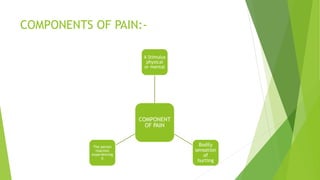
COMPONENTS OF PAIN:-
COMPONENT
OF PAIN
A Stimulus
physical
or mental
Bodily
sensation
of
hurting
The person
reaction
experiencing
it
 TYPES OF PAIN
 1.CUTANEOUS PAIN
 2.SOMATIC PAIN
 3.VISCERAL PAIN
 4.REFERRAL PAIN OR NEUROPATHIC PAIN
1. CUTANEOUS PAIN
 Cutaneous pain originates at the skin level and the depth of the trauma determines this
types of sensation that is experienced.
2.SOMATIC PAIN :-
Somatic pain is generated from deeper connective tissue structures such as muscles tendons
and joints.
3.VISCERAL PAIN:-
 Visceral pain arises from internal organs that are diseased or injured and tend to be
referred or poorly localized
4.REFERRAL PAIN:-
Referred pain describes discomfort that is perceived in a general area of the body, but not in
the exact site where an organ is anatomically located.
CATEGORIES OF PAIN
1.ACUTE PAIN
2.CHRONIC PAIN
 1.ACUTE PAIN:-
Acute pain is usually of short duration (lasting from second to 6 months) usually recent
onset and commonly associated with a specific injury acute pain indicates that dameges or
injury has occurred.
 If no lasting damages occurs and no systematic exists acute pain usually decreases
along with healing.
 Unrelieved acute pain leads to chronic pain states.
2.CHRONIC PAIN
Chronic pain may be defined as pain that last for 6 month or
longer, nevertheless after 6 month most pain experience are accompanied by
problems related to the pain itself.
ETILOGY AND PRECIPITATING FACTORS
 Surgical or accidental trauma
 Inflammation
 Musculoskeletal disorders
 Visceral disorders such as myocardial infarction
 Invasive diagnostic procedure
 Excessive pressure, such as with immobility
 Cancer
 SIGNS AND SYMPTOMS OF PAIN
 Restlessness
 Diaphoresis
 Pallor
 Tachycardia
 Tachypnea
 Increased blood pressure
 Change facial expressions
 Dialated pupils
 PAIN ASSESSMENT
 Precipitating/alleviating factors;
What causes the pain? What aggravate it? Has medication or treatment worked in
the past ?
 Quality of pain:
Ask the patient to describe the pain using words like “sharp”,dull,stabbing, burning”
 Radiation
 -Does pain exist in one location or radiate to other areas?
 Severity
Have patient use a descriptive ,numeric or visual scale to rate
severity of pain.
 Timing
Is the pain constant or intermittent, when did it begin.
 -Assess for objective sign of pain:
 1. Facial Expression:- Facial grimacing (a facial expression that usually suggest disgust
or pain)
 2. Vocalization:- Crying and moaning.
 3. Body Movements:- Gaurding, resistance to moving.
Pain assessment tools:
 -These are various tools that are design to assess the level of pain
the most commonly used tools are:-
 1. Verbal rating scale
 2. Numerical rating scale
 3. Wong baker’s Faces pain scale
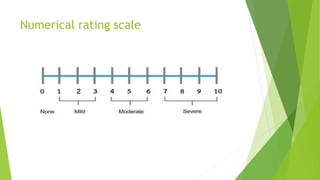
Numerical rating scale
 Management of pain:-
Pain can be managed through:
1. Pharmacological interventions
2. Non Pharmacological interventions
Pharmacological interventions
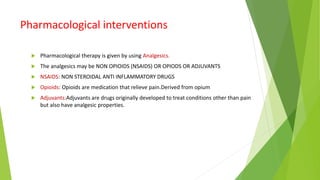
 Pharmacological therapy is given by using Analgesics.
 The analgesics may be NON OPIOIDS (NSAIDS) OR OPIODS OR ADJUVANTS
 NSAIDS: NON STEROIDAL ANTI INFLAMMATORY DRUGS
 Opioids: Opioids are medication that relieve pain.Derived from opium
 Adjuvants:Adjuvants are drugs originally developed to treat conditions other than pain
but also have analgesic properties.
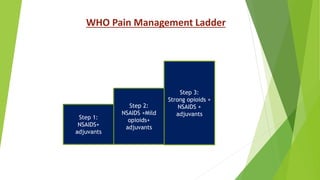
Step 1:
NSAIDS+
adjuvants
Step 2:
NSAIDS +Mild
opioids+
adjuvants
Step 3:
Strong opioids +
NSAIDS +
adjuvants
WHO Pain Management Ladder
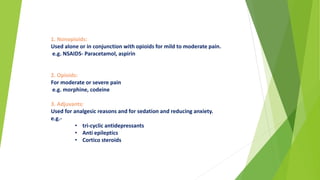
1. Nonopioids:
Used alone or in conjunction with opioids for mild to moderate pain.
e.g. NSAIDS- Paracetamol, aspirin
2. Opioids:
For moderate or severe pain
e.g. morphine, codeine
3. Adjuvants:
Used for analgesic reasons and for sedation and reducing anxiety.
e.g.-
• tri-cyclic antidepressants
• Anti epileptics
• Cortico steroids
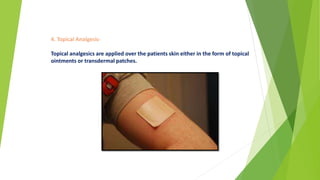
4. Topical Analgesic-
Topical analgesics are applied over the patients skin either in the form of topical
ointments or transdermal patches.
Non-Pharmacological Intervention:
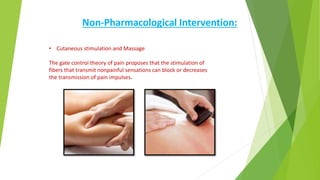
• Cutaneous stimulation and Massage
The gate control theory of pain proposes that the stimulation of
fibers that transmit nonpainful sensations can block or decreases
the transmission of pain impulses.
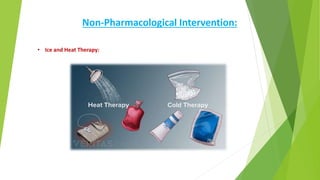
Non-Pharmacological Intervention:
• Ice and Heat Therapy:
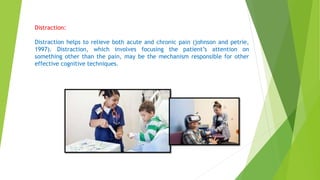
Distraction:
Distraction helps to relieve both acute and chronic pain (johnson and petrie,
1997). Distraction, which involves focusing the patient’s attention on
something other than the pain, may be the mechanism responsible for other
effective cognitive techniques.
pain

pain

  • 1.
    BIMR NURSING COLLEGEGWALIOR PRESENTED BY: Mr. Pushpendra Dhakar M.Sc Nursing (MSN)
  • 2.
    INTRODUCTION  Pain iscomplex multi-factorial phenomenon. It is individual, unique experience that they may be difficulty for clients to describe or explain and is often difficult for others to recognizes, understands and assess.  Pain is latin word peone meaning penality or punishmet. DEFINITION  “pain is a subjective, unpleasant sensory and emotional experience associated with actual or potential tissue damage or described in terms of such as demage” (Merskey and Bugdulk)
  • 3.
    NATURE OF PAIN Pain is subjective and highly individualized.  Its stimulus is physical and mental in nature.  It interferes with personal relationships and influences the meaning of life.  Only the patient knows whether pain is present and how the experience feels.
  • 4.
    COMPONENTS OF PAIN:- COMPONENT OFPAIN A Stimulus physical or mental Bodily sensation of hurting The person reaction experiencing it
  • 5.
     TYPES OFPAIN  1.CUTANEOUS PAIN  2.SOMATIC PAIN  3.VISCERAL PAIN  4.REFERRAL PAIN OR NEUROPATHIC PAIN
  • 6.
    1. CUTANEOUS PAIN Cutaneous pain originates at the skin level and the depth of the trauma determines this types of sensation that is experienced. 2.SOMATIC PAIN :- Somatic pain is generated from deeper connective tissue structures such as muscles tendons and joints. 3.VISCERAL PAIN:-  Visceral pain arises from internal organs that are diseased or injured and tend to be referred or poorly localized 4.REFERRAL PAIN:- Referred pain describes discomfort that is perceived in a general area of the body, but not in the exact site where an organ is anatomically located.
  • 7.
    CATEGORIES OF PAIN 1.ACUTEPAIN 2.CHRONIC PAIN  1.ACUTE PAIN:- Acute pain is usually of short duration (lasting from second to 6 months) usually recent onset and commonly associated with a specific injury acute pain indicates that dameges or injury has occurred.  If no lasting damages occurs and no systematic exists acute pain usually decreases along with healing.  Unrelieved acute pain leads to chronic pain states.
  • 8.
    2.CHRONIC PAIN Chronic painmay be defined as pain that last for 6 month or longer, nevertheless after 6 month most pain experience are accompanied by problems related to the pain itself.
  • 9.
    ETILOGY AND PRECIPITATINGFACTORS  Surgical or accidental trauma  Inflammation  Musculoskeletal disorders  Visceral disorders such as myocardial infarction  Invasive diagnostic procedure  Excessive pressure, such as with immobility  Cancer
  • 10.
     SIGNS ANDSYMPTOMS OF PAIN  Restlessness  Diaphoresis  Pallor  Tachycardia  Tachypnea  Increased blood pressure  Change facial expressions  Dialated pupils
  • 11.
     PAIN ASSESSMENT Precipitating/alleviating factors; What causes the pain? What aggravate it? Has medication or treatment worked in the past ?  Quality of pain: Ask the patient to describe the pain using words like “sharp”,dull,stabbing, burning”  Radiation  -Does pain exist in one location or radiate to other areas?
  • 12.
     Severity Have patientuse a descriptive ,numeric or visual scale to rate severity of pain.  Timing Is the pain constant or intermittent, when did it begin.
  • 13.
     -Assess forobjective sign of pain:  1. Facial Expression:- Facial grimacing (a facial expression that usually suggest disgust or pain)  2. Vocalization:- Crying and moaning.  3. Body Movements:- Gaurding, resistance to moving.
  • 15.
    Pain assessment tools: -These are various tools that are design to assess the level of pain the most commonly used tools are:-  1. Verbal rating scale  2. Numerical rating scale  3. Wong baker’s Faces pain scale
  • 17.
  • 19.
     Management ofpain:- Pain can be managed through: 1. Pharmacological interventions 2. Non Pharmacological interventions
  • 20.
    Pharmacological interventions  Pharmacologicaltherapy is given by using Analgesics.  The analgesics may be NON OPIOIDS (NSAIDS) OR OPIODS OR ADJUVANTS  NSAIDS: NON STEROIDAL ANTI INFLAMMATORY DRUGS  Opioids: Opioids are medication that relieve pain.Derived from opium  Adjuvants:Adjuvants are drugs originally developed to treat conditions other than pain but also have analgesic properties.
  • 21.
    Step 1: NSAIDS+ adjuvants Step 2: NSAIDS+Mild opioids+ adjuvants Step 3: Strong opioids + NSAIDS + adjuvants WHO Pain Management Ladder
  • 22.
    1. Nonopioids: Used aloneor in conjunction with opioids for mild to moderate pain. e.g. NSAIDS- Paracetamol, aspirin 2. Opioids: For moderate or severe pain e.g. morphine, codeine 3. Adjuvants: Used for analgesic reasons and for sedation and reducing anxiety. e.g.- • tri-cyclic antidepressants • Anti epileptics • Cortico steroids
  • 23.
    4. Topical Analgesic- Topicalanalgesics are applied over the patients skin either in the form of topical ointments or transdermal patches.
  • 24.
    Non-Pharmacological Intervention: • Cutaneousstimulation and Massage The gate control theory of pain proposes that the stimulation of fibers that transmit nonpainful sensations can block or decreases the transmission of pain impulses.
  • 25.
  • 26.
    Distraction: Distraction helps torelieve both acute and chronic pain (johnson and petrie, 1997). Distraction, which involves focusing the patient’s attention on something other than the pain, may be the mechanism responsible for other effective cognitive techniques.