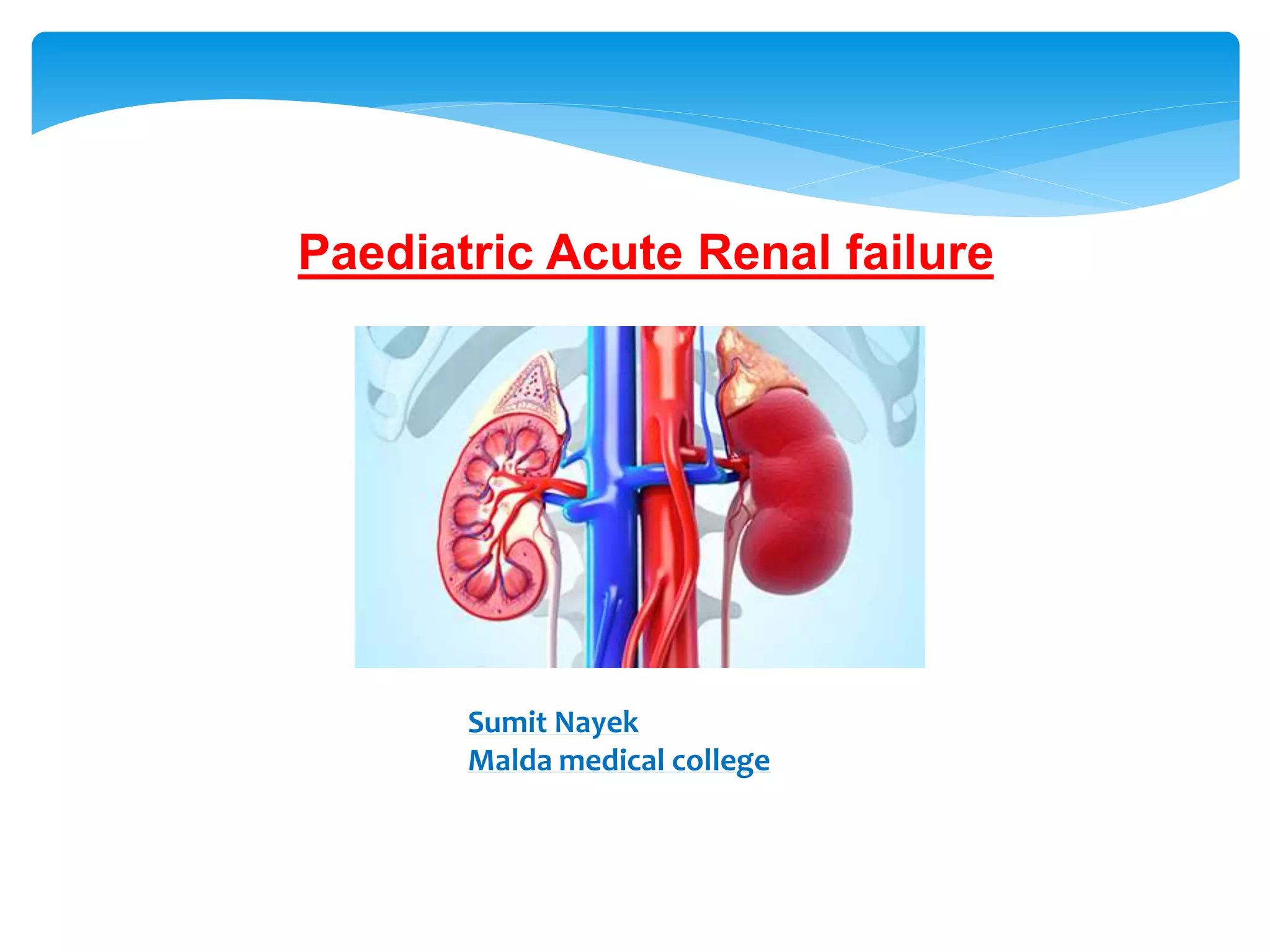
Paediatric Acute Renal failure
Sumit Nayek
Malda medical college
Introduction
 Acute kidney injury (AKI)—or acute renal failure (ARF), as it was previously
termed—is defined as an abrupt or rapid decline in renal filtration function. This
condition is usually marked by a rise in serum creatinine concentration or by
azotemia (a rise in blood urea nitrogen [BUN] concentration). [1] However,
immediately after a kidney injury, BUN or creatinine levels may be normal, and
the only sign of a kidney injury may be decreased urine production.
Etiology of AKI
 Prerenal AKI
As an adaptive response to severe volume depletion and hypotension, with
structurally intact nephrons
 volume depletion can be caused by the following:
• Renal losses - Diuretics, polyuria
• GI losses - Vomiting, diarrhea
• Cutaneous losses - Burns, Stevens-Johnson syndrome
• Hemorrhage
• Pancreatitis
 Decreased cardiac output can be caused by the following:
 Heart failure
 Pulmonary embolus
 Acute myocardial infarction
 Severe valvular disease
 Systemic vasodilation can be caused by the following:
 Sepsis
 Anaphylaxis
 Anesthetics
 Diseases that decrease effective arterial blood volume include the following:
 Hypovolemia
 Heart failure
Newborns and infants
The patient's age has significant implications for the differential diagnosis of AKI.
In newborns and infants, causes of prerenal AKI include the following:
 Perinatal hemorrhage - Twin-twin transfusion, complications of amniocentesis,
abruptio placenta, birth trauma
 Neonatal hemorrhage - Severe intraventricular hemorrhage, adrenal
hemorrhage
 Perinatal asphyxia and hyaline membrane disease (newborn respiratory distress
syndrome) - Both may result in preferential blood shunting away from the
kidneys (ie, prerenal) to central circulation
children
In children, gastroenteritis is the most common cause of hypovolemia and
can result in prerenal AKI. Congenital and acquired heart diseases are also
important causes of decreased renal perfusion in this age group.
Prerenal AKI
Etiology of AKI
 Renal/intrinsic AKI
In response to cytotoxic, ischemic, or inflammatory insults to the kidney, with
structural and functional damage
 vascular (large- and small-vessel) causes of intrinsic AKI include the following:
 Renal artery obstruction - Thrombosis, emboli, dissection, vasculitis
 Renal vein obstruction – Thrombosis
 Microangiopathy - DIC, preeclampsia
 Malignant hypertension
 Glomerular causes include the following:
 Anti–glomerular basement membrane (GBM) disease - As part of Goodpasture syndrome
or renal limited disease
 Anti-neutrophil cytoplasmic antibody (ANCA)–associated glomerulonephritis -
granulomatosis with polyangiitis(Wegener granulomatosis), eosinophilic granulomatosis
with polyangiitis (Churg-Strauss syndrome), microscopic polyangiitis
 Immune complex glomerulonephritis - Lupus, postinfectious glomerulonephritis,
cryoglobulinemia, primary membranoproliferative glomerulonephritis
 Interstitial causes include the following:
 Drugs - Penicillins, cephalosporins, NSAIDs, proton-pump inhibitors, allopurinol, rifampin,
indinavir, mesalamine, sulfonamides
 Infection - Pyelonephritis, viral nephritides
 Systemic disease - Sjögren syndrome, sarcoid, lupus, lymphoma, leukemia, tubulonephritis,
uveitis
Renal/intrinsic AKI
newborns and infants
Causes of intrinsic AKI include the following:
 ATN - Can occur in the setting of perinatal asphyxia; ATN also has been observed
secondary to medications (eg, aminoglycosides, NSAIDs) given to the mother
perinatally
 ACE inhibitors - Can traverse the placenta, resulting in a hemodynamically mediated
form of AKI
 Acute glomerulonephritis – Rare; most commonly the result of maternal-fetal transfer
of antibodies against the neonate's glomeruli or transfer of chronic infections
(syphilis, cytomegalovirus) associated with acute glomerulonephritis
children
Intrinsic AKI may result from any of the following:
Acute poststreptococcal glomerulonephritis - Should be considered in any
child who presents with hypertension, edema, hematuria, and renal failure
HUS - Often is cited as the most common cause of AKI in children
Post renal
From obstruction to the passage of urine
causes of postrenal AKI include the following:
 Ureteric obstruction - Stone disease, tumor, fibrosis, ligation during pelvic surgery
 Bladder neck obstruction - Benign prostatic hypertrophy (BPH), cancer of the
prostate (CA prostate or prostatic CA), neurogenic bladder, tricyclic
antidepressants, ganglion blockers, bladder tumor, stone disease, hemorrhage/clot
 Urethral obstruction - Strictures, tumor, phimosis
 Renal vein thrombosis
Diseases causing urinary obstruction from the level of the renal tubules to the
urethra include the following:
 Tubular obstruction from crystals - Eg, uric acid, calcium oxalate, acyclovir,
sulfonamide, methotrexate, myeloma light chains
 Ureteral obstruction - Retroperitoneal tumor, retroperitoneal fibrosis
(methysergide, propranolol, hydralazine), urolithiasis, or papillary necrosis
 Urethral obstruction - Benign prostatic hypertrophy; prostate, cervical, bladder, or
colorectal carcinoma; bladder hematoma; bladder stone; obstructed Foley
catheter; neurogenic bladder; stricture
Etiology of AKI
CLINICAL EVALUATION
Clinical features range from asymptomatic with mild to moderate elevation in
S.creatinine to anuric renal failure
 Decrease or no urine output
 Fluid overload
 Hypertension
 Uraemia, dyselectrolytemia
HISTORY
 H/o blood loss, diarrhea, vomitting – prerenal aki.
 Past h/o pharyngitis with gross hematuria, edema,hypertension – acute PSGN.
 Dysentery, petechiae, pallor- HUS.
 Sudden passage of dark red urine, pallor and jaundice with h/o drug exposure
– acute intravascular hemolysis
 Rash with arthritis – SLE or HSP
 H/o prolonged hypotension or exposure to nephrotoxic drugs – ATN.
 H/o poor urinary stream with palpable UB or kidney –obstructive uropathy.
 Abdominal colic, haematuria, dysuria – urinary tract stones.
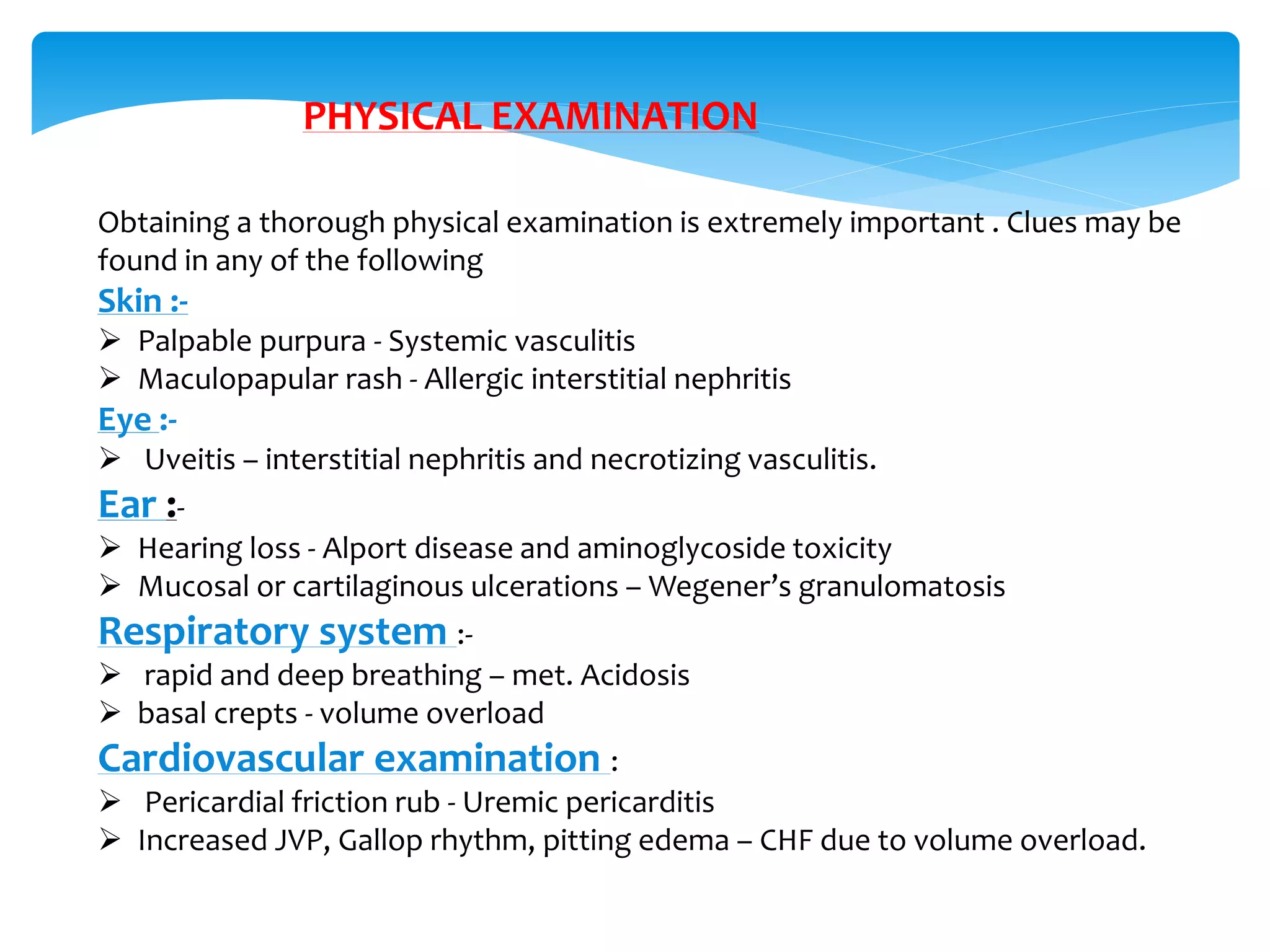
Obtaining a thorough physical examination is extremely important . Clues may be
found in any of the following
Skin :-
 Palpable purpura - Systemic vasculitis
 Maculopapular rash - Allergic interstitial nephritis
Eye :-
 Uveitis – interstitial nephritis and necrotizing vasculitis.
Ear :-
 Hearing loss - Alport disease and aminoglycoside toxicity
 Mucosal or cartilaginous ulcerations – Wegener’s granulomatosis
Respiratory system :-
 rapid and deep breathing – met. Acidosis
 basal crepts - volume overload
Cardiovascular examination :
 Pericardial friction rub - Uremic pericarditis
 Increased JVP, Gallop rhythm, pitting edema – CHF due to volume overload.
PHYSICAL EXAMINATION
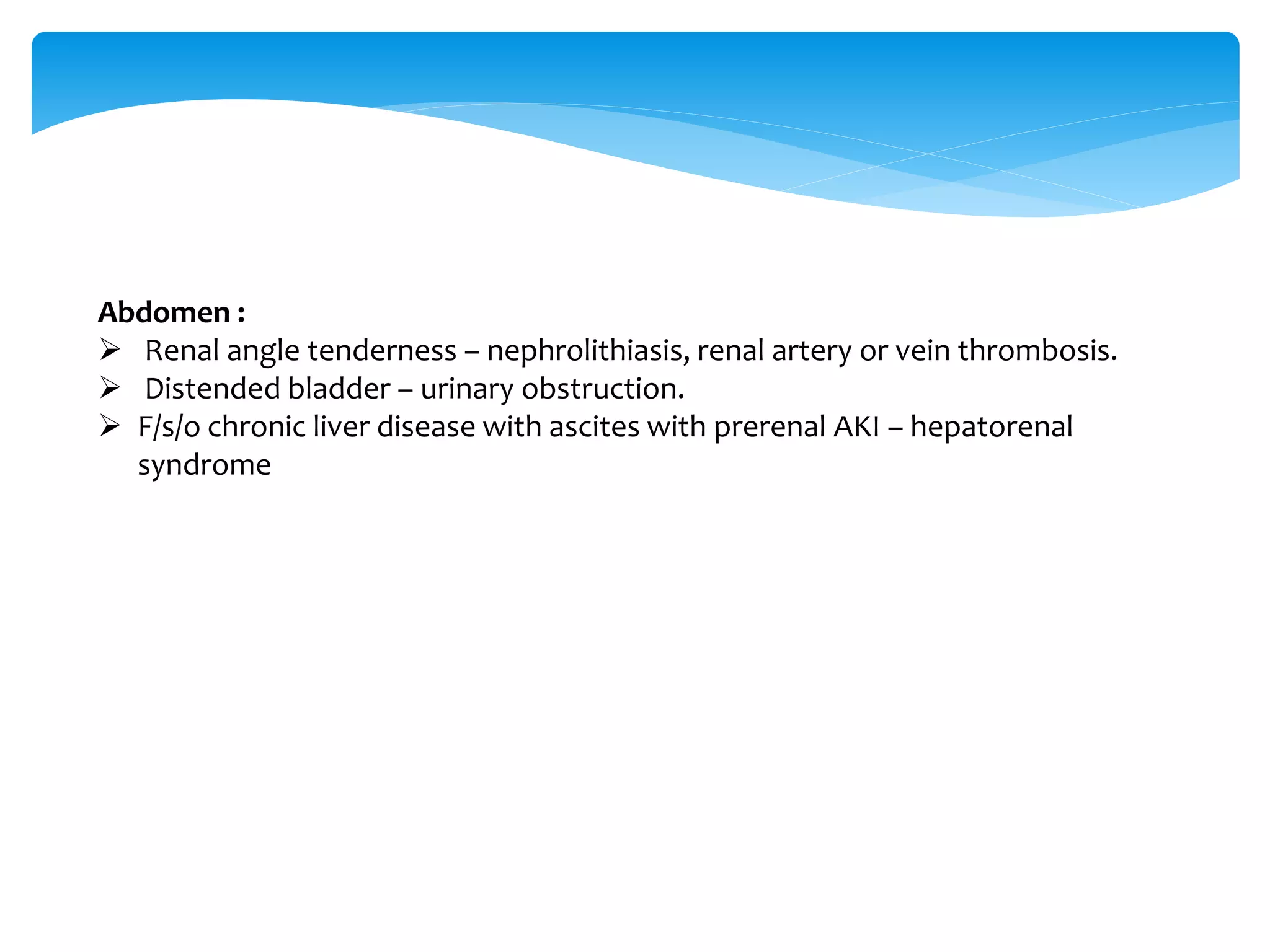
Abdomen :
 Renal angle tenderness – nephrolithiasis, renal artery or vein thrombosis.
 Distended bladder – urinary obstruction.
 F/s/o chronic liver disease with ascites with prerenal AKI – hepatorenal
syndrome
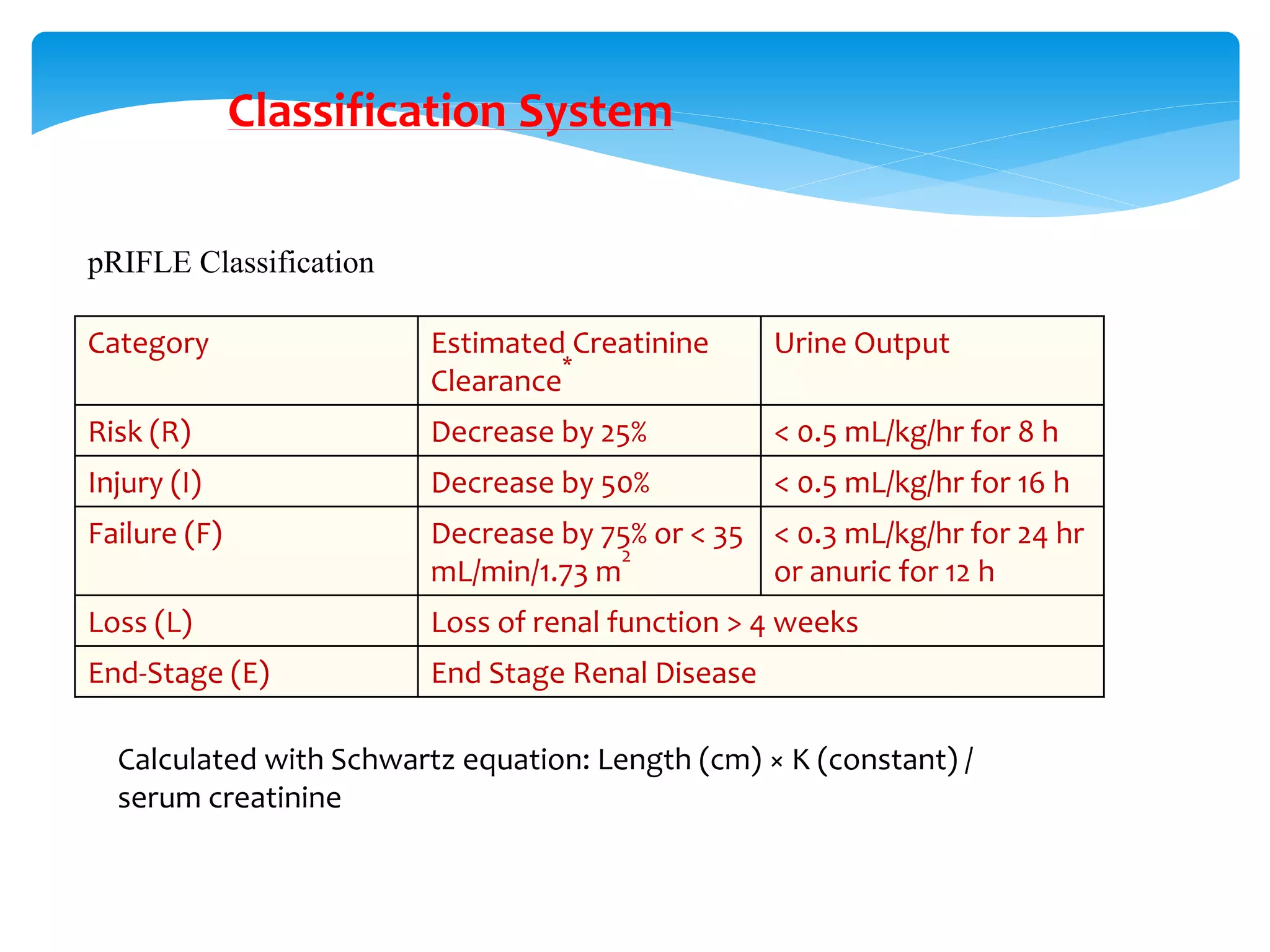
pRIFLE Classification
Category Estimated Creatinine
Clearance
*
Urine Output
Risk (R) Decrease by 25% < 0.5 mL/kg/hr for 8 h
Injury (I) Decrease by 50% < 0.5 mL/kg/hr for 16 h
Failure (F) Decrease by 75% or < 35
mL/min/1.73 m
2
< 0.3 mL/kg/hr for 24 hr
or anuric for 12 h
Loss (L) Loss of renal function > 4 weeks
End-Stage (E) End Stage Renal Disease
Calculated with Schwartz equation: Length (cm) × K (constant) /
serum creatinine
Classification System
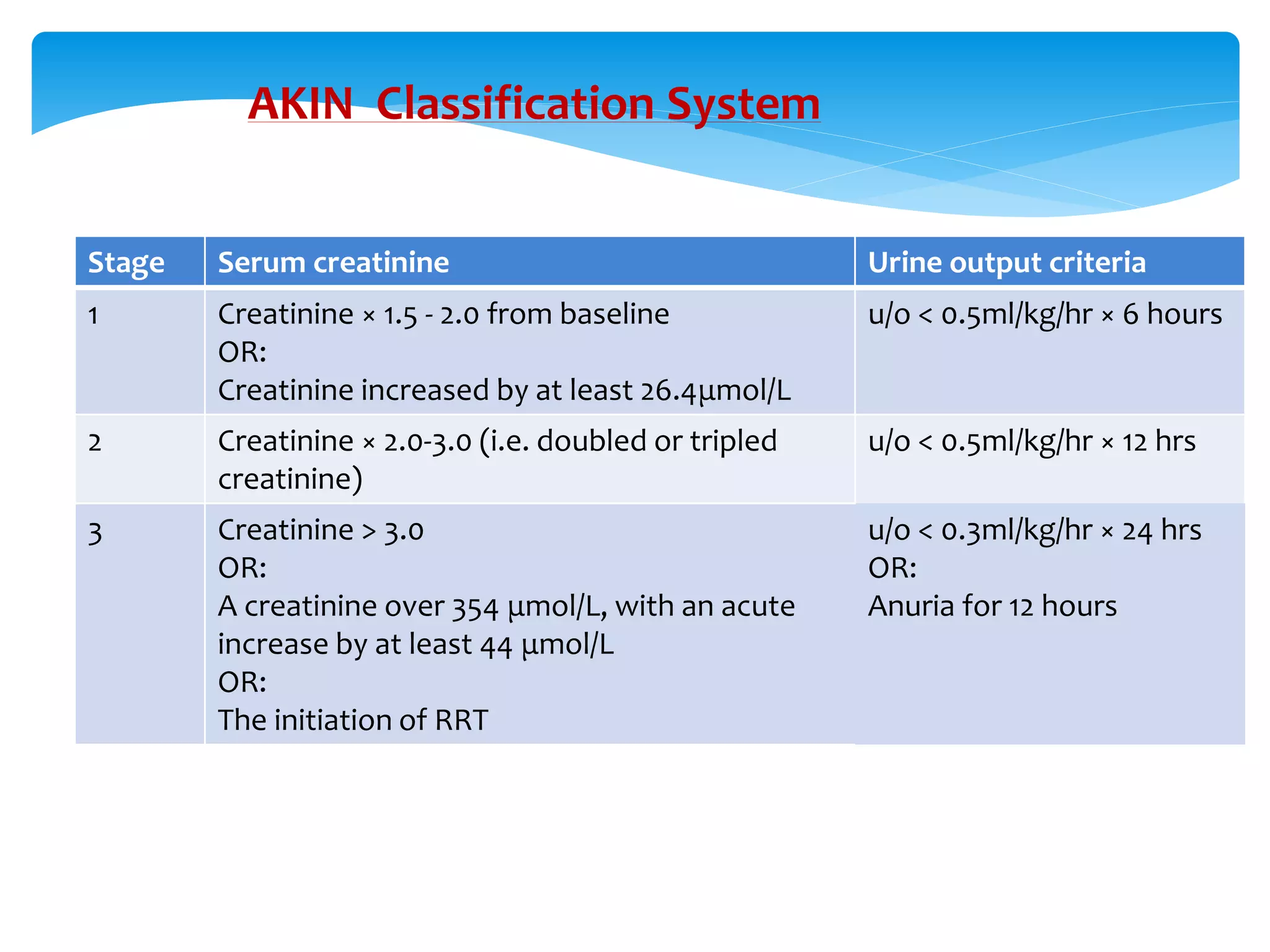
Stage Serum creatinine Urine output criteria
1 Creatinine × 1.5 - 2.0 from baseline
OR:
Creatinine increased by at least 26.4μmol/L
u/o < 0.5ml/kg/hr × 6 hours
2 Creatinine × 2.0-3.0 (i.e. doubled or tripled
creatinine)
u/o < 0.5ml/kg/hr × 12 hrs
3 Creatinine > 3.0
OR:
A creatinine over 354 μmol/L, with an acute
increase by at least 44 μmol/L
OR:
The initiation of RRT
u/o < 0.3ml/kg/hr × 24 hrs
OR:
Anuria for 12 hours
AKIN Classification System
Laboratory findings
 Anemia : Dilutional or hemolytic eg. SLE, renal vein
thrombosis, HUS
 Leukopenia : SLE, sepsis
 Thrombocytopenia :SLE, renal vein thrombosis, sepsis, HUS
 Hyponatremia : dilutional
 Metabolic acidosis
 Elevated BUN, creatinine, uric acid, potassium, and phosphate
(diminished renal function); and hypocalcemia
(hyperphosphatemia)
 Decreased serum C3 level :
-Postinfectious glomerulonephritis, SLE, MPGN
 Antibodies :
 Streptococcal : PSGN
 Nuclear : SLE
 Neutrophil cytoplasmic : Wegener granulomatosis, microscopic
polyarthritis
 GBM :Goodpasture disease
CXR :
Cardiomegaly, pulmonary congestion (fluid
overload) or pleural effusions.
• Renal USG :
Hydronephrosis /hydroureter, Nephromegaly- s/o intrinsic
renal disease.
• Renal biopsy :
who do not have clearly defined prerenal or postrenal
ARF
• biomarkers:
-changes in plasma neutrophil gelatinaseassociated
lipocalin (NGAL) and cystatin C levels
-urinary changes in NGAL, interleukin- 18 (IL-18), and
kidney injury molecule-1 (KIM-1).
Management
• Catheterization - in newborn with suspected posterior ureteral valves &
nonambulatory older children.
• Fluid Bolus : If there is no evidence of volume overload or cardiac failure,
intravenous administration of isotonic saline, 20 mL/kg over 30 min
hypovolemic patients generally void within 2 hr after bolus; failure points to intrinsic
or postrenalARF.
Hypotension due to sepsis - vigorous fluid resuscitation f/b continuous infusion of
norepinephrine
Diuretic therapy :
only after the adequate hydration.
Mannitol (0.5 g/kg) and furosemide (2-4 mg/kg) - as a single IV dose
Bumetanide (0.1 mg/kg)- an alternative to furosemide.
If urine output is not improved - continuous diuretic infusion may be considered.
Consider Dopamine (2-3 μg/kg/min) in conjunction with diuretic therapy.
There is little evidence that diuretics or dopamine can prevent ARF or hasten
recovery.
• Hyperkalemia : Sr K >6 mEq/L
• cardiac arrhythmia, cardiac arrest, and death
• Earliest ECG change - peaked T waves f/b widening of theQRS intervals, ST
segment depression, ventricular arrhythmias, and cardiac arrest.
• Exogenous sources of K : dietary, intravenous fluids, total parenteral nutrition)
should be eliminated.
• Sodium polystyrene sulfonate resin (Kayexalate) : (1 g/kg) -orally or by
retention enema when Sr K>6 mEq/L
- exchanges sodium for potassium
- can take several hours to take effect.Asingle dose of 1 g/kg can lower the sr K level by
about 1 mEq/L.
- Resin therapy may be repeated every 2 hr, the frequency being limited primarily by the
risk of sodium overload.
If Sr K >7 mEq/L :
emergency measures in addition to Kayexalate
Calcium gluconate 10% solution : 1.0 mL/kg IV, over 3-5 min
Sodium bicarbonate :1-2 mEq/kg IV, over 5-10 min
Regular insulin : 0.1 U/kg, with glucose 50% solution, 1mL/kg, over 1 hr
• Metabolic acidosis:
Mild is common in ARF - rarely requires treatment.
Severe (arterial pH < 7.15; serum bicarbonate < 8 mEq/L) or contributes to
hyperkalemia it should be corrected.
Hypocalcemia :
-Primarily treated by lowering the serum phosphorus level
-Calcium should not be given IV except in cases of tetany, to avoid deposition of
calcium salts into tissues.
-Follow a low-phosphorus diet
- Hyponatremia :
- Most commonly a dilutional
- Must be corrected by fluid restriction.
- Hypertonic (3%) saline - limited to symptomatic hyponatremia
(seizures, lethargy) or those with a serum sodium level <120 mEq/L
• GI bleeding :
• Because of uremic platelet dysfunction, increased stress,and heparin exposure in
hemodialysis.
Oral or intravenous H2 blocker- Ranitidine.
• Hypertension :
• Common in ARF patients with acute glomerulonephritis or HUS.
Salt and water restriction
Diuretics
Isradipine (0.05-0.15 mg/kg/dose)
amlodipine, 0.1-0.6 mg/kg/24 hr qd or divided bid
propranolol, 0.5-8 mg/kg/24 hr divided bid or tid
labetalol, 4-40 mg/kg/24 hr divided bid or tid
severe symptomatic hypertension - continuous infusions of sodium nitroprusside
or esmolol
• Neurologic symptoms :
• Headache, seizures, lethargy, and confusion(encephalopathy).
• Potential etiologic factors - hyponatremia, hypocalcemia,hypertension, cerebral
hemorrhage, cerebral vasculitis, and the uremic state.
Diazepam - most effective in controlling seizures
Treat the underlying cause.
• Anemia of ARF :
• Generally mild
Packed red blood cells if Hb < 7 g/dl
Slow (4-6 hr) transfusion with packed red blood cells (10 ml/kg) diminishes the
risk of hypervolemia
• Nutrition :
In most cases, sodium, potassium, and phosphorus should be restricted.
Protein – restricted & caloric intake maximised to minimize the accumulation
of nitrogenous wastes.
Critically ill patients with ARF - parenteral essential amino acids given
• Protein :
enough protein for growth - limiting high protein intake.
Protein needs increase on dialysis.
Foods with protein include
•Eggs
•Milk cheese
•Chicken
•Fish
•Red meats beans yogurt
•Cottage cheese
• Sodium:
Depend on stage of their kidney disease,their age, and sometimes other
factors.
Foods high in sodiuminclude
• Canned foods
• Some frozen foods
• Most processedfoods
• Some snack foods, such as chips
DIALYSIS :
• Indications
Volume overload with evidence of hypertension and/or pulmonary
edema refractory to diuretic therapy
Persistent hyperkalemia
Severe metabolic acidosis unresponsive to medical management
Neurologic symptoms (altered mental status, seizures)
Blood urea nitrogen >100-150 mg/dL (or lower if rapidly rising)
Calcium:phosphorus imbalance, with hypocalcemictetany
Thank You

Paediatric acute renal failure

  • 1.
    Paediatric Acute Renalfailure Sumit Nayek Malda medical college
  • 2.
    Introduction  Acute kidneyinjury (AKI)—or acute renal failure (ARF), as it was previously termed—is defined as an abrupt or rapid decline in renal filtration function. This condition is usually marked by a rise in serum creatinine concentration or by azotemia (a rise in blood urea nitrogen [BUN] concentration). [1] However, immediately after a kidney injury, BUN or creatinine levels may be normal, and the only sign of a kidney injury may be decreased urine production.
  • 3.
    Etiology of AKI Prerenal AKI As an adaptive response to severe volume depletion and hypotension, with structurally intact nephrons  volume depletion can be caused by the following: • Renal losses - Diuretics, polyuria • GI losses - Vomiting, diarrhea • Cutaneous losses - Burns, Stevens-Johnson syndrome • Hemorrhage • Pancreatitis  Decreased cardiac output can be caused by the following:  Heart failure  Pulmonary embolus  Acute myocardial infarction  Severe valvular disease  Systemic vasodilation can be caused by the following:  Sepsis  Anaphylaxis  Anesthetics  Diseases that decrease effective arterial blood volume include the following:  Hypovolemia  Heart failure
  • 4.
    Newborns and infants Thepatient's age has significant implications for the differential diagnosis of AKI. In newborns and infants, causes of prerenal AKI include the following:  Perinatal hemorrhage - Twin-twin transfusion, complications of amniocentesis, abruptio placenta, birth trauma  Neonatal hemorrhage - Severe intraventricular hemorrhage, adrenal hemorrhage  Perinatal asphyxia and hyaline membrane disease (newborn respiratory distress syndrome) - Both may result in preferential blood shunting away from the kidneys (ie, prerenal) to central circulation children In children, gastroenteritis is the most common cause of hypovolemia and can result in prerenal AKI. Congenital and acquired heart diseases are also important causes of decreased renal perfusion in this age group. Prerenal AKI
  • 5.
    Etiology of AKI Renal/intrinsic AKI In response to cytotoxic, ischemic, or inflammatory insults to the kidney, with structural and functional damage  vascular (large- and small-vessel) causes of intrinsic AKI include the following:  Renal artery obstruction - Thrombosis, emboli, dissection, vasculitis  Renal vein obstruction – Thrombosis  Microangiopathy - DIC, preeclampsia  Malignant hypertension  Glomerular causes include the following:  Anti–glomerular basement membrane (GBM) disease - As part of Goodpasture syndrome or renal limited disease  Anti-neutrophil cytoplasmic antibody (ANCA)–associated glomerulonephritis - granulomatosis with polyangiitis(Wegener granulomatosis), eosinophilic granulomatosis with polyangiitis (Churg-Strauss syndrome), microscopic polyangiitis  Immune complex glomerulonephritis - Lupus, postinfectious glomerulonephritis, cryoglobulinemia, primary membranoproliferative glomerulonephritis  Interstitial causes include the following:  Drugs - Penicillins, cephalosporins, NSAIDs, proton-pump inhibitors, allopurinol, rifampin, indinavir, mesalamine, sulfonamides  Infection - Pyelonephritis, viral nephritides  Systemic disease - Sjögren syndrome, sarcoid, lupus, lymphoma, leukemia, tubulonephritis, uveitis
  • 6.
    Renal/intrinsic AKI newborns andinfants Causes of intrinsic AKI include the following:  ATN - Can occur in the setting of perinatal asphyxia; ATN also has been observed secondary to medications (eg, aminoglycosides, NSAIDs) given to the mother perinatally  ACE inhibitors - Can traverse the placenta, resulting in a hemodynamically mediated form of AKI  Acute glomerulonephritis – Rare; most commonly the result of maternal-fetal transfer of antibodies against the neonate's glomeruli or transfer of chronic infections (syphilis, cytomegalovirus) associated with acute glomerulonephritis children Intrinsic AKI may result from any of the following: Acute poststreptococcal glomerulonephritis - Should be considered in any child who presents with hypertension, edema, hematuria, and renal failure HUS - Often is cited as the most common cause of AKI in children
  • 7.
    Post renal From obstructionto the passage of urine causes of postrenal AKI include the following:  Ureteric obstruction - Stone disease, tumor, fibrosis, ligation during pelvic surgery  Bladder neck obstruction - Benign prostatic hypertrophy (BPH), cancer of the prostate (CA prostate or prostatic CA), neurogenic bladder, tricyclic antidepressants, ganglion blockers, bladder tumor, stone disease, hemorrhage/clot  Urethral obstruction - Strictures, tumor, phimosis  Renal vein thrombosis Diseases causing urinary obstruction from the level of the renal tubules to the urethra include the following:  Tubular obstruction from crystals - Eg, uric acid, calcium oxalate, acyclovir, sulfonamide, methotrexate, myeloma light chains  Ureteral obstruction - Retroperitoneal tumor, retroperitoneal fibrosis (methysergide, propranolol, hydralazine), urolithiasis, or papillary necrosis  Urethral obstruction - Benign prostatic hypertrophy; prostate, cervical, bladder, or colorectal carcinoma; bladder hematoma; bladder stone; obstructed Foley catheter; neurogenic bladder; stricture Etiology of AKI
  • 8.
    CLINICAL EVALUATION Clinical featuresrange from asymptomatic with mild to moderate elevation in S.creatinine to anuric renal failure  Decrease or no urine output  Fluid overload  Hypertension  Uraemia, dyselectrolytemia HISTORY  H/o blood loss, diarrhea, vomitting – prerenal aki.  Past h/o pharyngitis with gross hematuria, edema,hypertension – acute PSGN.  Dysentery, petechiae, pallor- HUS.  Sudden passage of dark red urine, pallor and jaundice with h/o drug exposure – acute intravascular hemolysis  Rash with arthritis – SLE or HSP  H/o prolonged hypotension or exposure to nephrotoxic drugs – ATN.  H/o poor urinary stream with palpable UB or kidney –obstructive uropathy.  Abdominal colic, haematuria, dysuria – urinary tract stones.
  • 9.
    Obtaining a thoroughphysical examination is extremely important . Clues may be found in any of the following Skin :-  Palpable purpura - Systemic vasculitis  Maculopapular rash - Allergic interstitial nephritis Eye :-  Uveitis – interstitial nephritis and necrotizing vasculitis. Ear :-  Hearing loss - Alport disease and aminoglycoside toxicity  Mucosal or cartilaginous ulcerations – Wegener’s granulomatosis Respiratory system :-  rapid and deep breathing – met. Acidosis  basal crepts - volume overload Cardiovascular examination :  Pericardial friction rub - Uremic pericarditis  Increased JVP, Gallop rhythm, pitting edema – CHF due to volume overload. PHYSICAL EXAMINATION
  • 10.
    Abdomen :  Renalangle tenderness – nephrolithiasis, renal artery or vein thrombosis.  Distended bladder – urinary obstruction.  F/s/o chronic liver disease with ascites with prerenal AKI – hepatorenal syndrome
  • 11.
    pRIFLE Classification Category EstimatedCreatinine Clearance * Urine Output Risk (R) Decrease by 25% < 0.5 mL/kg/hr for 8 h Injury (I) Decrease by 50% < 0.5 mL/kg/hr for 16 h Failure (F) Decrease by 75% or < 35 mL/min/1.73 m 2 < 0.3 mL/kg/hr for 24 hr or anuric for 12 h Loss (L) Loss of renal function > 4 weeks End-Stage (E) End Stage Renal Disease Calculated with Schwartz equation: Length (cm) × K (constant) / serum creatinine Classification System
  • 12.
    Stage Serum creatinineUrine output criteria 1 Creatinine × 1.5 - 2.0 from baseline OR: Creatinine increased by at least 26.4μmol/L u/o < 0.5ml/kg/hr × 6 hours 2 Creatinine × 2.0-3.0 (i.e. doubled or tripled creatinine) u/o < 0.5ml/kg/hr × 12 hrs 3 Creatinine > 3.0 OR: A creatinine over 354 μmol/L, with an acute increase by at least 44 μmol/L OR: The initiation of RRT u/o < 0.3ml/kg/hr × 24 hrs OR: Anuria for 12 hours AKIN Classification System
  • 13.
    Laboratory findings  Anemia: Dilutional or hemolytic eg. SLE, renal vein thrombosis, HUS  Leukopenia : SLE, sepsis  Thrombocytopenia :SLE, renal vein thrombosis, sepsis, HUS  Hyponatremia : dilutional  Metabolic acidosis  Elevated BUN, creatinine, uric acid, potassium, and phosphate (diminished renal function); and hypocalcemia (hyperphosphatemia)  Decreased serum C3 level : -Postinfectious glomerulonephritis, SLE, MPGN  Antibodies :  Streptococcal : PSGN  Nuclear : SLE  Neutrophil cytoplasmic : Wegener granulomatosis, microscopic polyarthritis  GBM :Goodpasture disease
  • 14.
    CXR : Cardiomegaly, pulmonarycongestion (fluid overload) or pleural effusions. • Renal USG : Hydronephrosis /hydroureter, Nephromegaly- s/o intrinsic renal disease. • Renal biopsy : who do not have clearly defined prerenal or postrenal ARF • biomarkers: -changes in plasma neutrophil gelatinaseassociated lipocalin (NGAL) and cystatin C levels -urinary changes in NGAL, interleukin- 18 (IL-18), and kidney injury molecule-1 (KIM-1).
  • 16.
    Management • Catheterization -in newborn with suspected posterior ureteral valves & nonambulatory older children. • Fluid Bolus : If there is no evidence of volume overload or cardiac failure, intravenous administration of isotonic saline, 20 mL/kg over 30 min hypovolemic patients generally void within 2 hr after bolus; failure points to intrinsic or postrenalARF. Hypotension due to sepsis - vigorous fluid resuscitation f/b continuous infusion of norepinephrine Diuretic therapy : only after the adequate hydration. Mannitol (0.5 g/kg) and furosemide (2-4 mg/kg) - as a single IV dose Bumetanide (0.1 mg/kg)- an alternative to furosemide. If urine output is not improved - continuous diuretic infusion may be considered. Consider Dopamine (2-3 μg/kg/min) in conjunction with diuretic therapy. There is little evidence that diuretics or dopamine can prevent ARF or hasten recovery.
  • 17.
    • Hyperkalemia :Sr K >6 mEq/L • cardiac arrhythmia, cardiac arrest, and death • Earliest ECG change - peaked T waves f/b widening of theQRS intervals, ST segment depression, ventricular arrhythmias, and cardiac arrest. • Exogenous sources of K : dietary, intravenous fluids, total parenteral nutrition) should be eliminated. • Sodium polystyrene sulfonate resin (Kayexalate) : (1 g/kg) -orally or by retention enema when Sr K>6 mEq/L - exchanges sodium for potassium - can take several hours to take effect.Asingle dose of 1 g/kg can lower the sr K level by about 1 mEq/L. - Resin therapy may be repeated every 2 hr, the frequency being limited primarily by the risk of sodium overload. If Sr K >7 mEq/L : emergency measures in addition to Kayexalate Calcium gluconate 10% solution : 1.0 mL/kg IV, over 3-5 min Sodium bicarbonate :1-2 mEq/kg IV, over 5-10 min Regular insulin : 0.1 U/kg, with glucose 50% solution, 1mL/kg, over 1 hr
  • 18.
    • Metabolic acidosis: Mildis common in ARF - rarely requires treatment. Severe (arterial pH < 7.15; serum bicarbonate < 8 mEq/L) or contributes to hyperkalemia it should be corrected. Hypocalcemia : -Primarily treated by lowering the serum phosphorus level -Calcium should not be given IV except in cases of tetany, to avoid deposition of calcium salts into tissues. -Follow a low-phosphorus diet - Hyponatremia : - Most commonly a dilutional - Must be corrected by fluid restriction. - Hypertonic (3%) saline - limited to symptomatic hyponatremia (seizures, lethargy) or those with a serum sodium level <120 mEq/L • GI bleeding : • Because of uremic platelet dysfunction, increased stress,and heparin exposure in hemodialysis. Oral or intravenous H2 blocker- Ranitidine.
  • 19.
    • Hypertension : •Common in ARF patients with acute glomerulonephritis or HUS. Salt and water restriction Diuretics Isradipine (0.05-0.15 mg/kg/dose) amlodipine, 0.1-0.6 mg/kg/24 hr qd or divided bid propranolol, 0.5-8 mg/kg/24 hr divided bid or tid labetalol, 4-40 mg/kg/24 hr divided bid or tid severe symptomatic hypertension - continuous infusions of sodium nitroprusside or esmolol • Neurologic symptoms : • Headache, seizures, lethargy, and confusion(encephalopathy). • Potential etiologic factors - hyponatremia, hypocalcemia,hypertension, cerebral hemorrhage, cerebral vasculitis, and the uremic state. Diazepam - most effective in controlling seizures Treat the underlying cause.
  • 20.
    • Anemia ofARF : • Generally mild Packed red blood cells if Hb < 7 g/dl Slow (4-6 hr) transfusion with packed red blood cells (10 ml/kg) diminishes the risk of hypervolemia • Nutrition : In most cases, sodium, potassium, and phosphorus should be restricted. Protein – restricted & caloric intake maximised to minimize the accumulation of nitrogenous wastes. Critically ill patients with ARF - parenteral essential amino acids given • Protein : enough protein for growth - limiting high protein intake. Protein needs increase on dialysis. Foods with protein include •Eggs •Milk cheese •Chicken •Fish •Red meats beans yogurt •Cottage cheese
  • 21.
    • Sodium: Depend onstage of their kidney disease,their age, and sometimes other factors. Foods high in sodiuminclude • Canned foods • Some frozen foods • Most processedfoods • Some snack foods, such as chips
  • 22.
    DIALYSIS : • Indications Volumeoverload with evidence of hypertension and/or pulmonary edema refractory to diuretic therapy Persistent hyperkalemia Severe metabolic acidosis unresponsive to medical management Neurologic symptoms (altered mental status, seizures) Blood urea nitrogen >100-150 mg/dL (or lower if rapidly rising) Calcium:phosphorus imbalance, with hypocalcemictetany
  • 23.