TMI: Two Minutes of Information
Principles of
Principal Communication
Assuming the Role
Role of the Principal
Historically, the Principal of a school was the
Principal Teacher of the school. The “teacher”
portion was dropped probably due to the highly
administrative responsibilities of contemporary
times. The Principal Teacher used to be chosen
due to expertise in teaching methodology,
pedagogy, and leadership.
Currently, there is no requirement of teaching
experience or expertise to become an
educational administrator. Districts use “Site
Administrator” to acknowledge this change.
Which are you?
Principal Teacher?
Or
Administrator?
Administrator or Principal Teacher?
This presentation acknowledges the
highly ADMINISTRATIVE activity
of a school PRINCIPAL…
AND, acknowledges
that many PRINCIPALS carry
a lot of EDUCATIONAL EXPERTISE
Role of the Principal
Knowing the history of your title will give you
insight into what expectations your staff
has of you.
Often, veteran educators expect a Principal
to be an educational expert.
However, beginning educators rely on the
Principal more for administrative reference
and referral.
Know “their” Expectations
Be very aware
of the expectations other stakeholders
have of you as a Principal…
especially in your role as
chief communicator.
TMI: Principal Communication
What exactly is your role as Principal?
What exactly are your responsibilities?
What exactly are your required tasks?
What are your required relationships?
How will you administer?
Principal Communicator
An effective Principal
encourages dynamic relationships
amongst all stakeholders
by modeling and establishing
a predictable communication routine.
Stakeholders learn to communicate via the Principal’s routine and style:
Contributing stakeholders seek out any information from all established
sources: Memos, week-at-a-glance, designated bulletin board, word-of-
mouth, gossip, meeting minutes, documents, newsletters…
Passive stakeholders do not seek out information, but absorb local
culture, gossip, hearsay, speculation, politicking…
So, be sure all stakeholders have ample access
to information you…want…them… to… have.
An effective Principal gets all
defining and clarifying
information out to stakeholders
clearly and frequently
via
multiple means
and
lots of repetition.
Roles of the Players
Name the titles of your staff and stakeholders.
What is the most effective way to
communicate with each stakeholder?
What exactly are their individual roles?
What are their individual responsibilities?
What are their required tasks?
What are their required relationships?
What’s their agenda?
Communicating the Action Plan
• Multiple modes of communication:
weekly newsletter, PA announcements, memo in teacher
mailbox, meeting agenda, mini-posters
• Frequent and repeated opportunities:
in the morning announcement, posted in the lounge,
casual mention in the hallway
• To all groups and subgroups:
to faculty, to staff, to parents, to student leadership, to
neighbors, to “downtown”
Communicating
Communication from Administration is just like teaching:
If a student hasn’t learned it,
the teacher hasn’t taught it…
If the community doesn’t know about it,
the Principal hasn’t communicated it.
Communication backtracking…
But I DID teach it!
But I DID communicate it!
Pat yourself on the back for getting the process started.
Then recognize that the audience was attuned to a
different mode or method of delivery.
Now you can repeat the necessary information in the mode
and method that other audience members prefer.
Partnerships: Human Resources
To reach your goals,
requires the appropriate partnerships.
How will you encourage effective relations?
Materials: Material Resources
To reach your goals requires that material
resources be in place as needed.
How will you assure that ample resources
are available in a timely fashion?
Intangible Resources
• How will you maintain the morale?
• How will you affirm appropriate activity?
• How will you redirect inappropriate
activity?
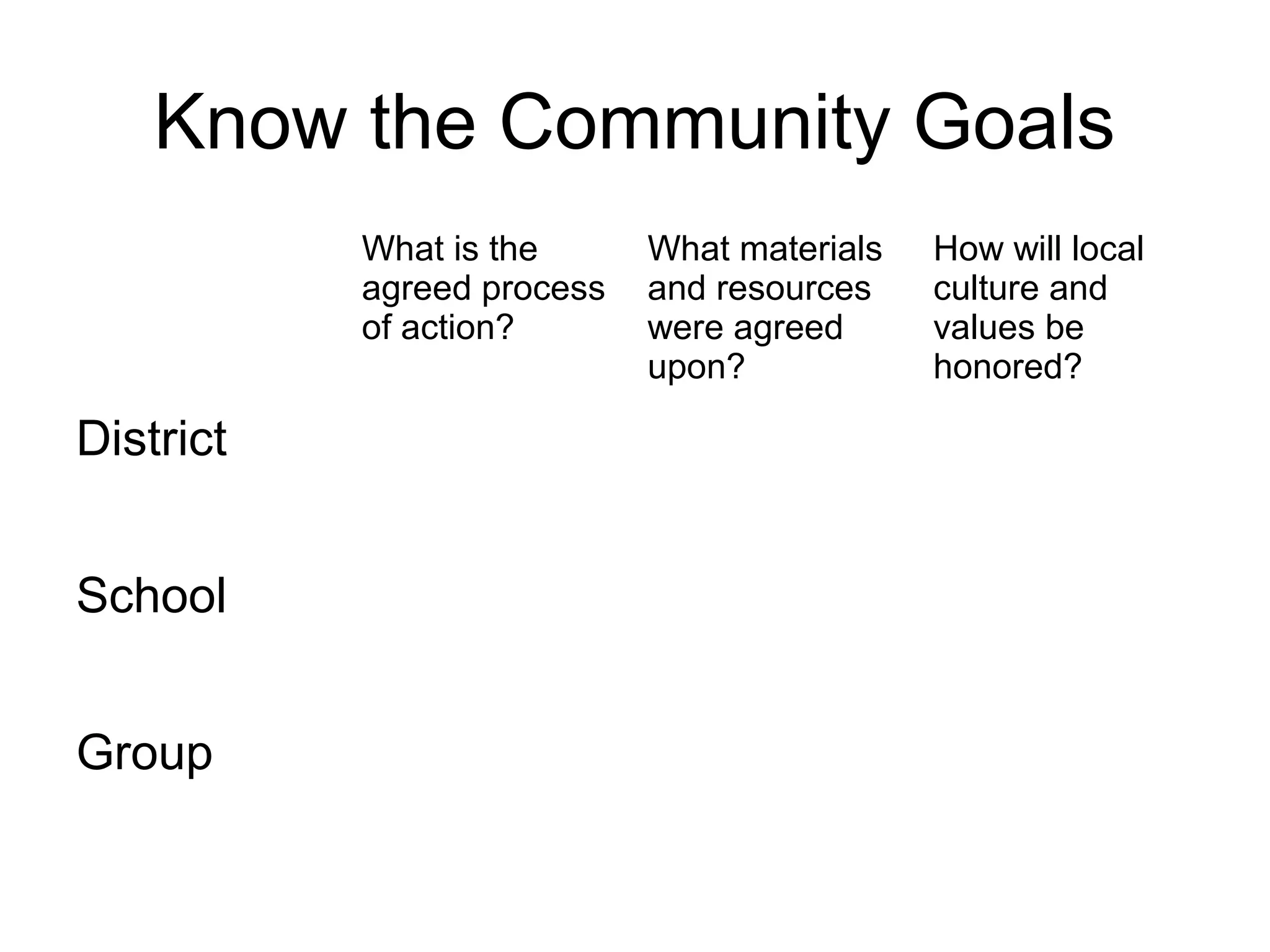
Know the Community Goals
What is the
agreed process
of action?
What materials
and resources
were agreed
upon?
How will local
culture and
values be
honored?
District
School
Group
Encourage Working Relationships
• Know the expertise of each player.
• Affirm each for their expertise.
• Make each planning session satisfying and
pleasant.
• Associate positive emotions to each session.
(acknowledge successes, arrange comfortable meeting place, say, “glad to
see you”, smile, provide hospitality, affirm, show gratitude)
• Affirm and appreciate progress at each session.
• Congratulate team ethics.
• Acknowledge ongoing effort and contribution.
Be Pro-Active
Knowing what others expect prepares you.
• Plan bridges in place of vast differences,
• Focus on common ground,
• Support professional, effective relations,
• Make most of time,
• Make most of effort,
• Make most of resources,
• Build high morale and job satisfaction.
Principal TMI
Two Minutes of Information
Thank you for viewing.
You may request topics, make suggestions,
or express your comments in an email to
TeacherTMI@usa.com
Administering Resources
• Human Resources
• Material Resources
• Intangible Resources

P tmi Principal as Chief Communicator

  • 1.
    TMI: Two Minutesof Information Principles of Principal Communication Assuming the Role
  • 2.
    Role of thePrincipal Historically, the Principal of a school was the Principal Teacher of the school. The “teacher” portion was dropped probably due to the highly administrative responsibilities of contemporary times. The Principal Teacher used to be chosen due to expertise in teaching methodology, pedagogy, and leadership. Currently, there is no requirement of teaching experience or expertise to become an educational administrator. Districts use “Site Administrator” to acknowledge this change.
  • 3.
    Which are you? PrincipalTeacher? Or Administrator?
  • 4.
    Administrator or PrincipalTeacher? This presentation acknowledges the highly ADMINISTRATIVE activity of a school PRINCIPAL… AND, acknowledges that many PRINCIPALS carry a lot of EDUCATIONAL EXPERTISE
  • 5.
    Role of thePrincipal Knowing the history of your title will give you insight into what expectations your staff has of you. Often, veteran educators expect a Principal to be an educational expert. However, beginning educators rely on the Principal more for administrative reference and referral.
  • 6.
    Know “their” Expectations Bevery aware of the expectations other stakeholders have of you as a Principal… especially in your role as chief communicator.
  • 7.
    TMI: Principal Communication Whatexactly is your role as Principal? What exactly are your responsibilities? What exactly are your required tasks? What are your required relationships? How will you administer?
  • 8.
    Principal Communicator An effectivePrincipal encourages dynamic relationships amongst all stakeholders by modeling and establishing a predictable communication routine.
  • 9.
    Stakeholders learn tocommunicate via the Principal’s routine and style: Contributing stakeholders seek out any information from all established sources: Memos, week-at-a-glance, designated bulletin board, word-of- mouth, gossip, meeting minutes, documents, newsletters… Passive stakeholders do not seek out information, but absorb local culture, gossip, hearsay, speculation, politicking… So, be sure all stakeholders have ample access to information you…want…them… to… have.
  • 10.
    An effective Principalgets all defining and clarifying information out to stakeholders clearly and frequently via multiple means and lots of repetition.
  • 11.
    Roles of thePlayers Name the titles of your staff and stakeholders. What is the most effective way to communicate with each stakeholder? What exactly are their individual roles? What are their individual responsibilities? What are their required tasks? What are their required relationships? What’s their agenda?
  • 12.
    Communicating the ActionPlan • Multiple modes of communication: weekly newsletter, PA announcements, memo in teacher mailbox, meeting agenda, mini-posters • Frequent and repeated opportunities: in the morning announcement, posted in the lounge, casual mention in the hallway • To all groups and subgroups: to faculty, to staff, to parents, to student leadership, to neighbors, to “downtown”
  • 13.
    Communicating Communication from Administrationis just like teaching: If a student hasn’t learned it, the teacher hasn’t taught it… If the community doesn’t know about it, the Principal hasn’t communicated it.
  • 14.
    Communication backtracking… But IDID teach it! But I DID communicate it! Pat yourself on the back for getting the process started. Then recognize that the audience was attuned to a different mode or method of delivery. Now you can repeat the necessary information in the mode and method that other audience members prefer.
  • 15.
    Partnerships: Human Resources Toreach your goals, requires the appropriate partnerships. How will you encourage effective relations?
  • 16.
    Materials: Material Resources Toreach your goals requires that material resources be in place as needed. How will you assure that ample resources are available in a timely fashion?
  • 17.
    Intangible Resources • Howwill you maintain the morale? • How will you affirm appropriate activity? • How will you redirect inappropriate activity?
  • 18.
    Know the CommunityGoals What is the agreed process of action? What materials and resources were agreed upon? How will local culture and values be honored? District School Group
  • 19.
    Encourage Working Relationships •Know the expertise of each player. • Affirm each for their expertise. • Make each planning session satisfying and pleasant. • Associate positive emotions to each session. (acknowledge successes, arrange comfortable meeting place, say, “glad to see you”, smile, provide hospitality, affirm, show gratitude) • Affirm and appreciate progress at each session. • Congratulate team ethics. • Acknowledge ongoing effort and contribution.
  • 20.
    Be Pro-Active Knowing whatothers expect prepares you. • Plan bridges in place of vast differences, • Focus on common ground, • Support professional, effective relations, • Make most of time, • Make most of effort, • Make most of resources, • Build high morale and job satisfaction.
  • 21.
    Principal TMI Two Minutesof Information Thank you for viewing. You may request topics, make suggestions, or express your comments in an email to TeacherTMI@usa.com
  • 22.
    Administering Resources • HumanResources • Material Resources • Intangible Resources