P- Process Plus
Sanjeeta Agnihotri
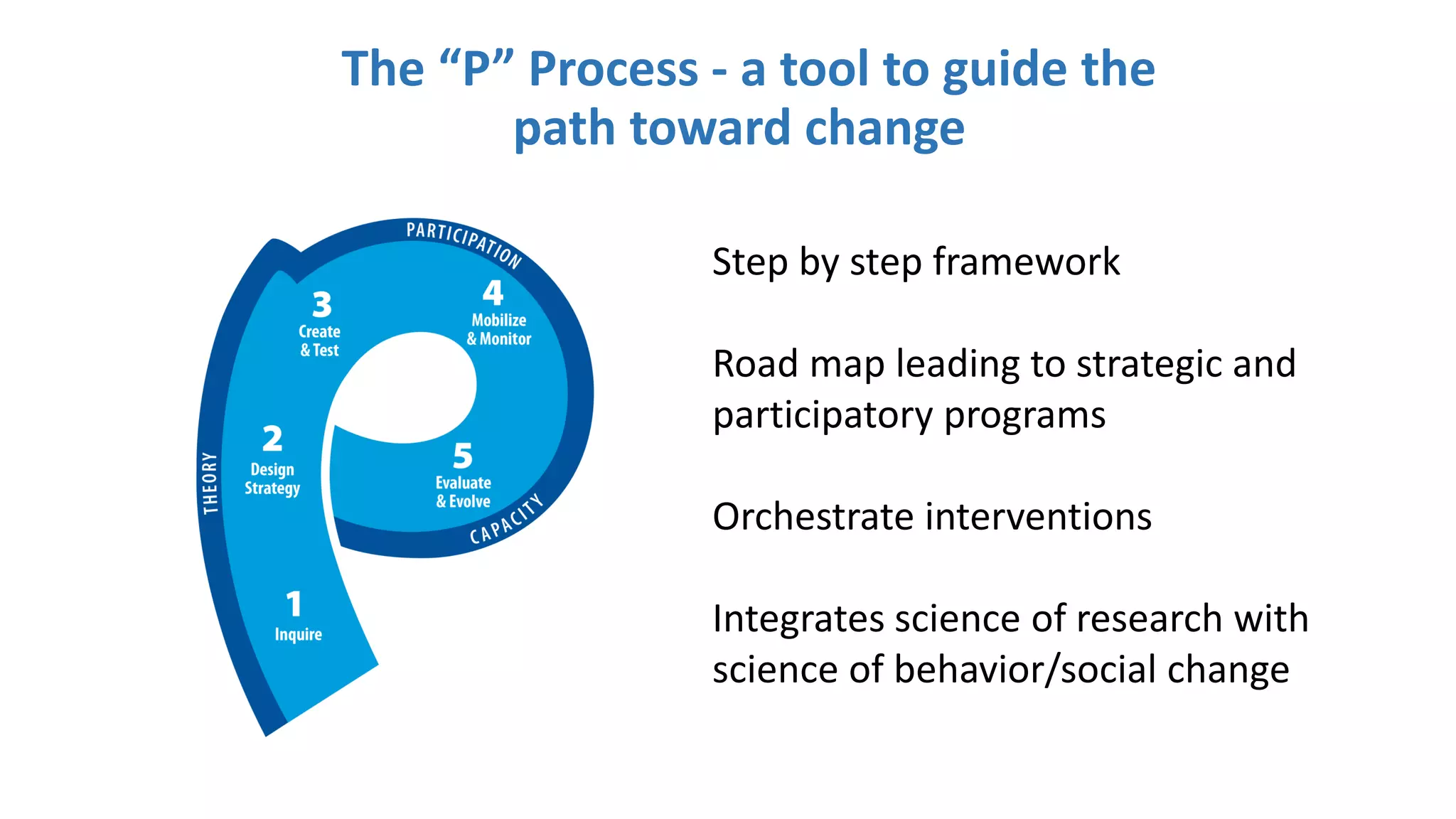
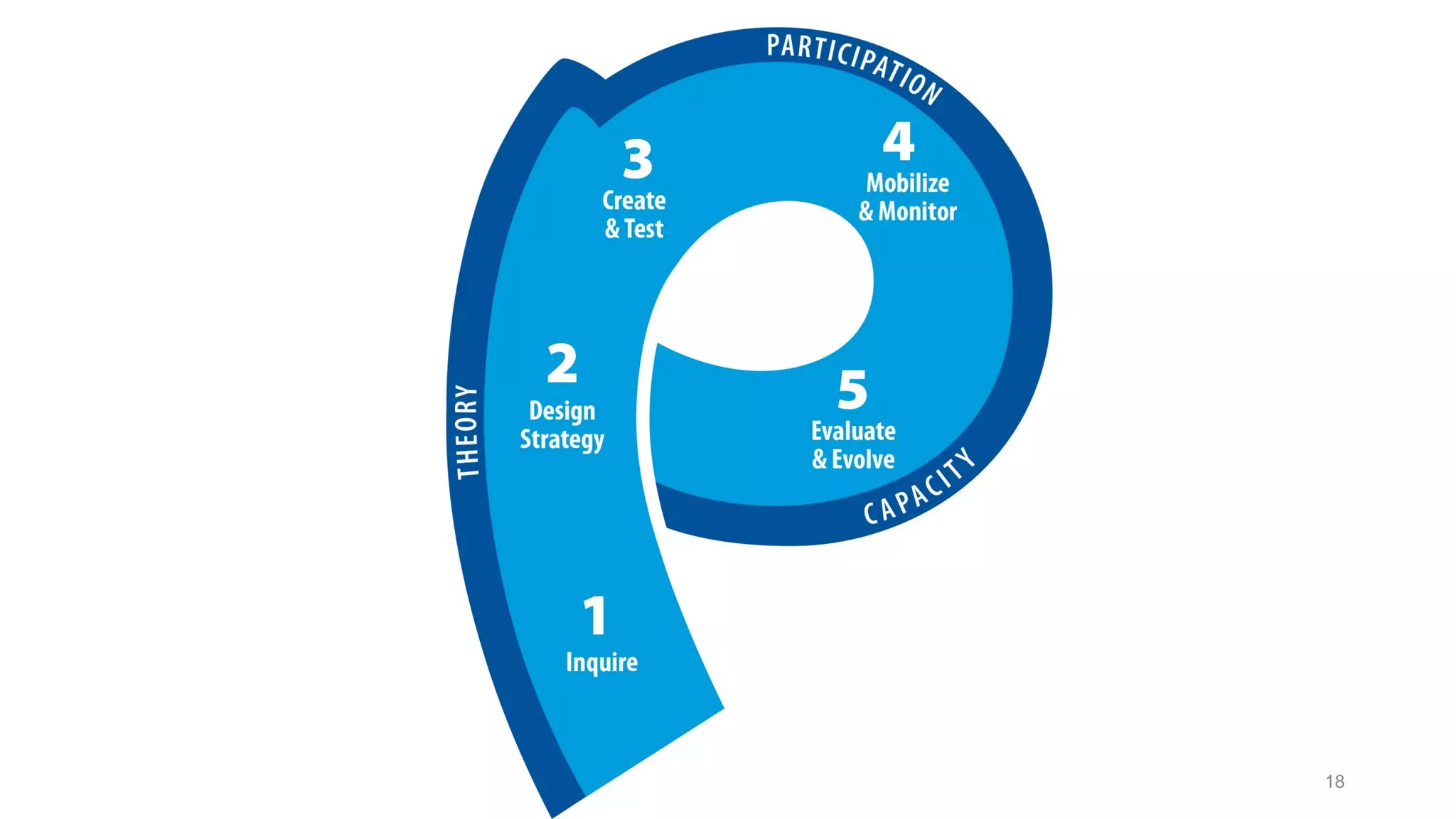
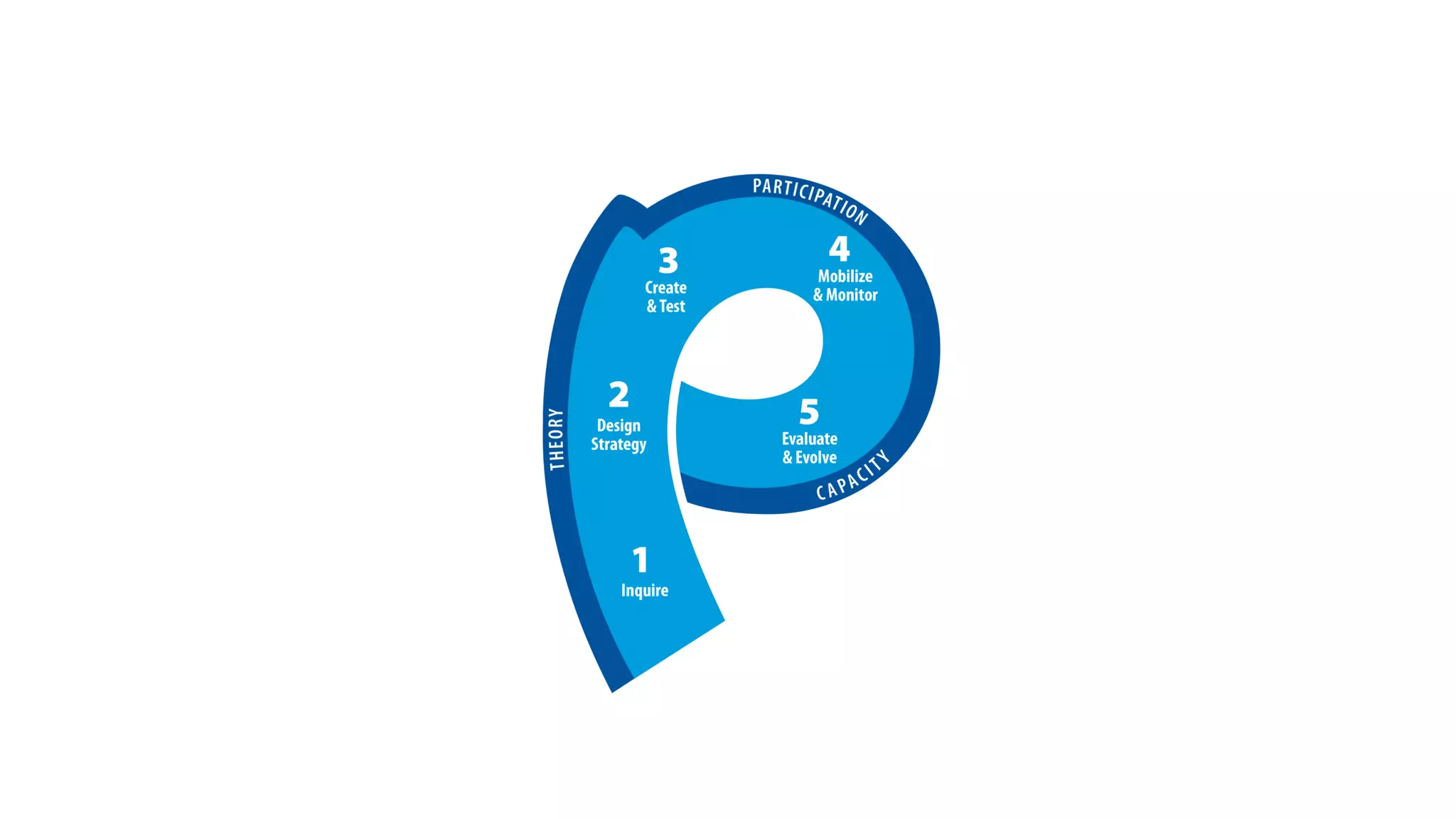
The “P” Process - a tool to guide the
path toward change
Step by step framework
Road map leading to strategic and
participatory programs
Orchestrate interventions
Integrates science of research with
science of behavior/social change
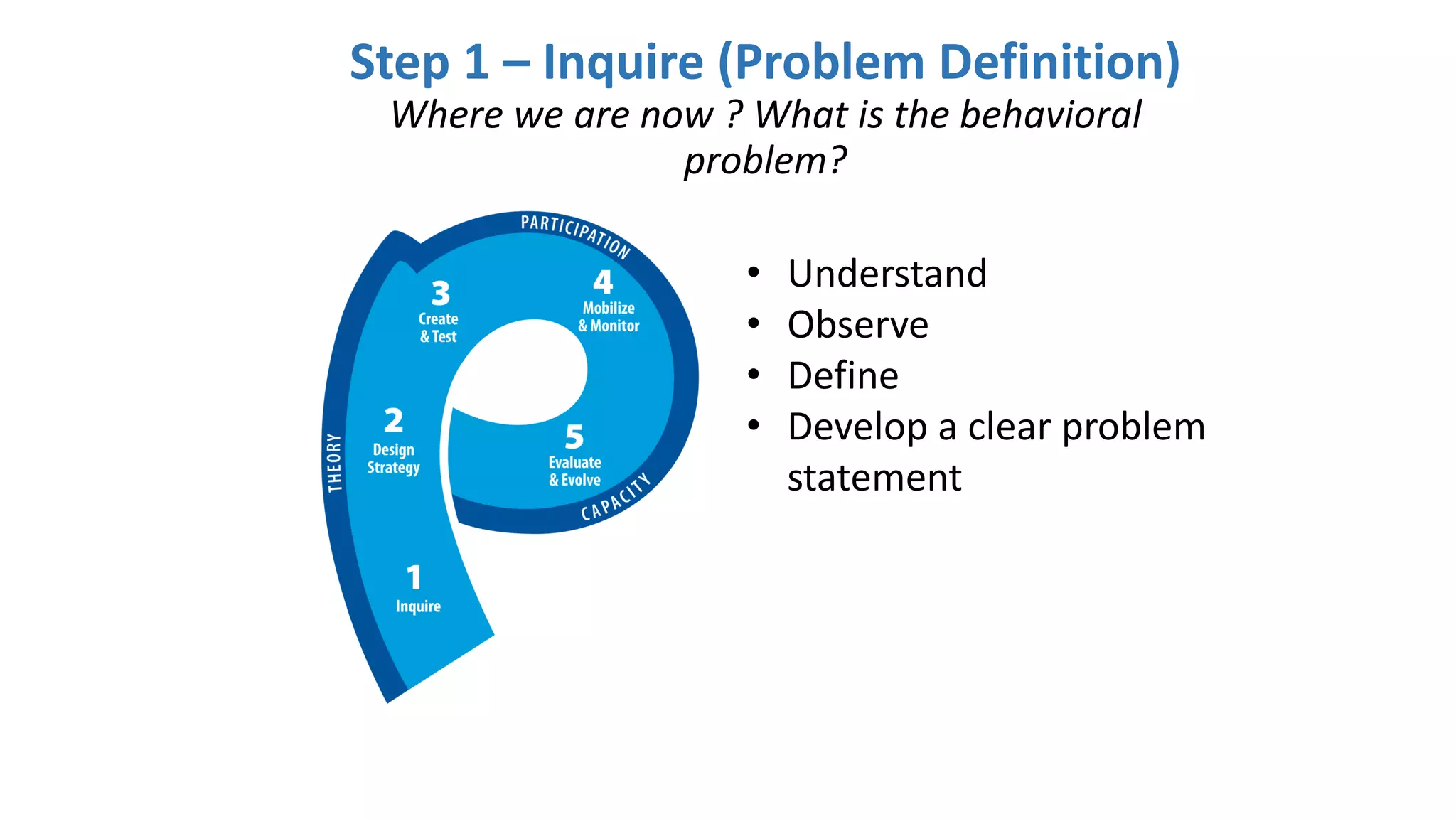
• Understand
• Observe
• Define
• Develop a clear problem
statement
Step 1 – Inquire (Problem Definition)
Where we are now ? What is the behavioral
problem?
Step 1 – Inquire (Problem Definition)
Where we are now ? What is the behavioral problem?
• Begin to understand the extent of the problem
• Identify your audiences
• Uncover your intended audiences’ barriers to behavior change-
economic, social, structural, cultural or educational—or something
else entirely
• Identify facilitating factors to behavior change, including potential
messengers and media
• Develop a succinct problem statement
Analysis: Situation
 Understand the environment and context in which you will operate
 Observe the problems, their severity and causes
 Define factors inhibiting or facilitating desired changes
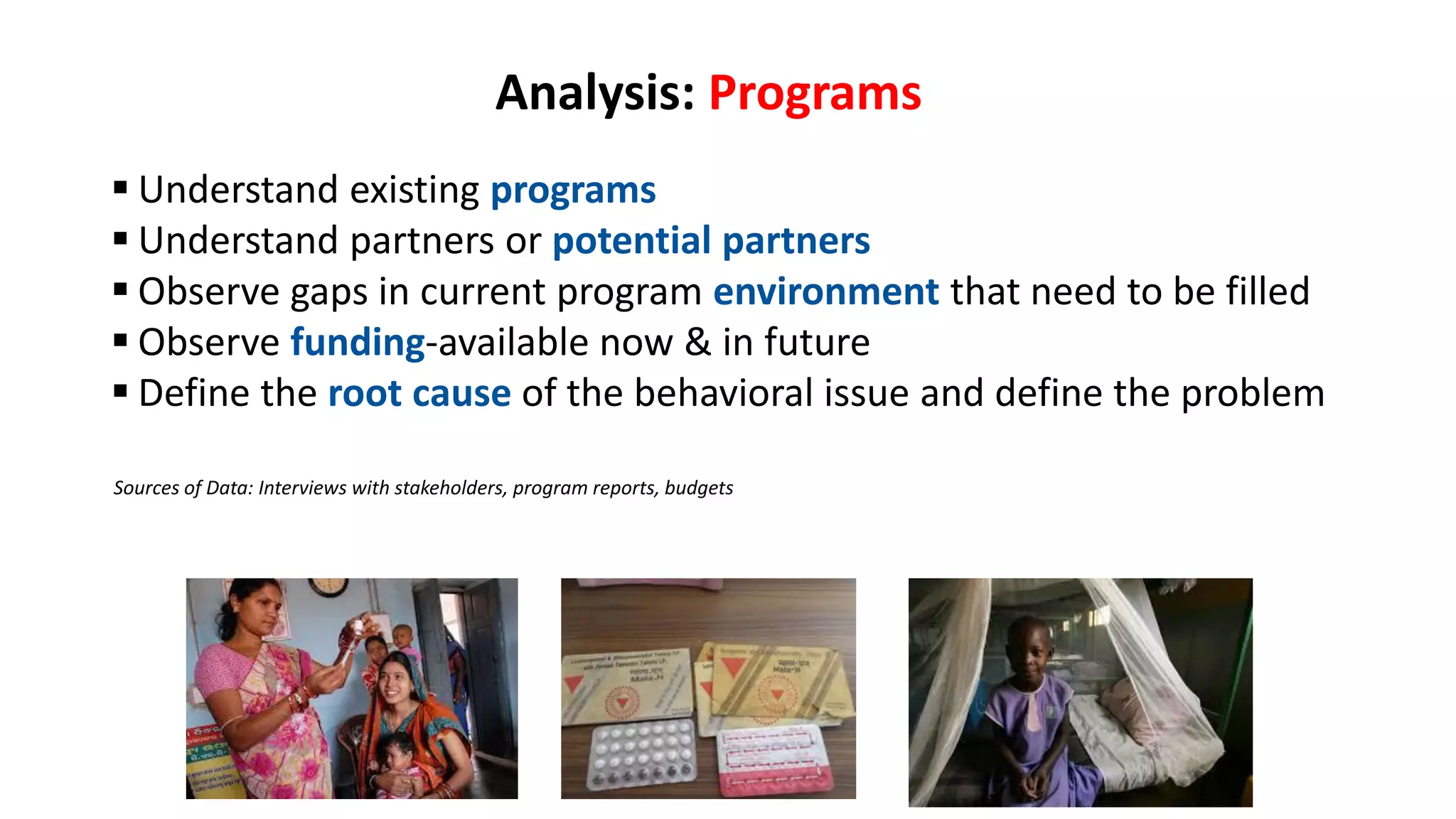
Analysis: Programs
 Understand existing programs
 Understand partners or potential partners
 Observe gaps in current program environment that need to be filled
 Observe funding-available now & in future
 Define the root cause of the behavioral issue and define the problem
Sources of Data: Interviews with stakeholders, program reports, budgets
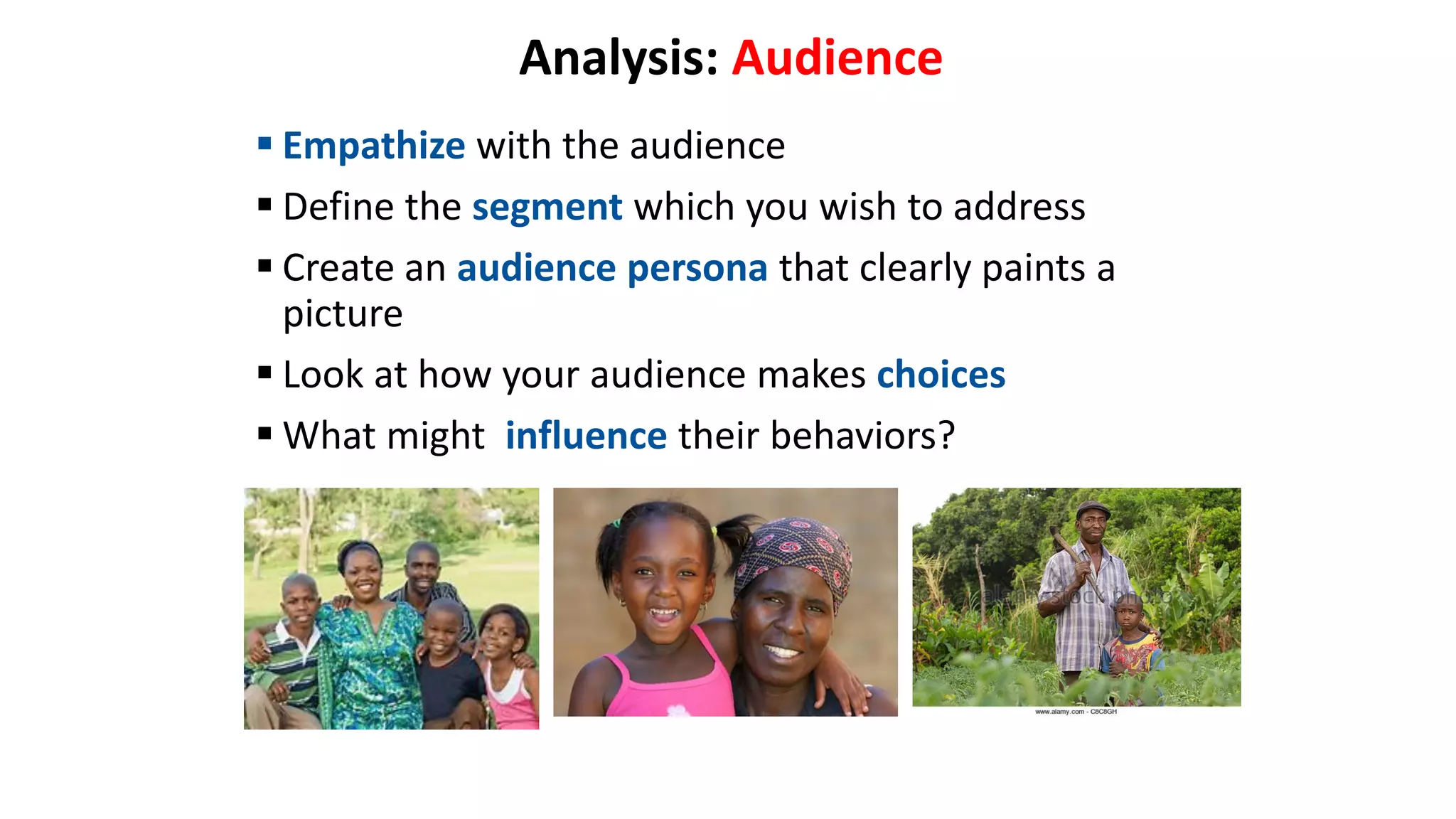
Analysis: Audience
 Empathize with the audience
 Define the segment which you wish to address
 Create an audience persona that clearly paints a
picture
 Look at how your audience makes choices
 What might influence their behaviors?
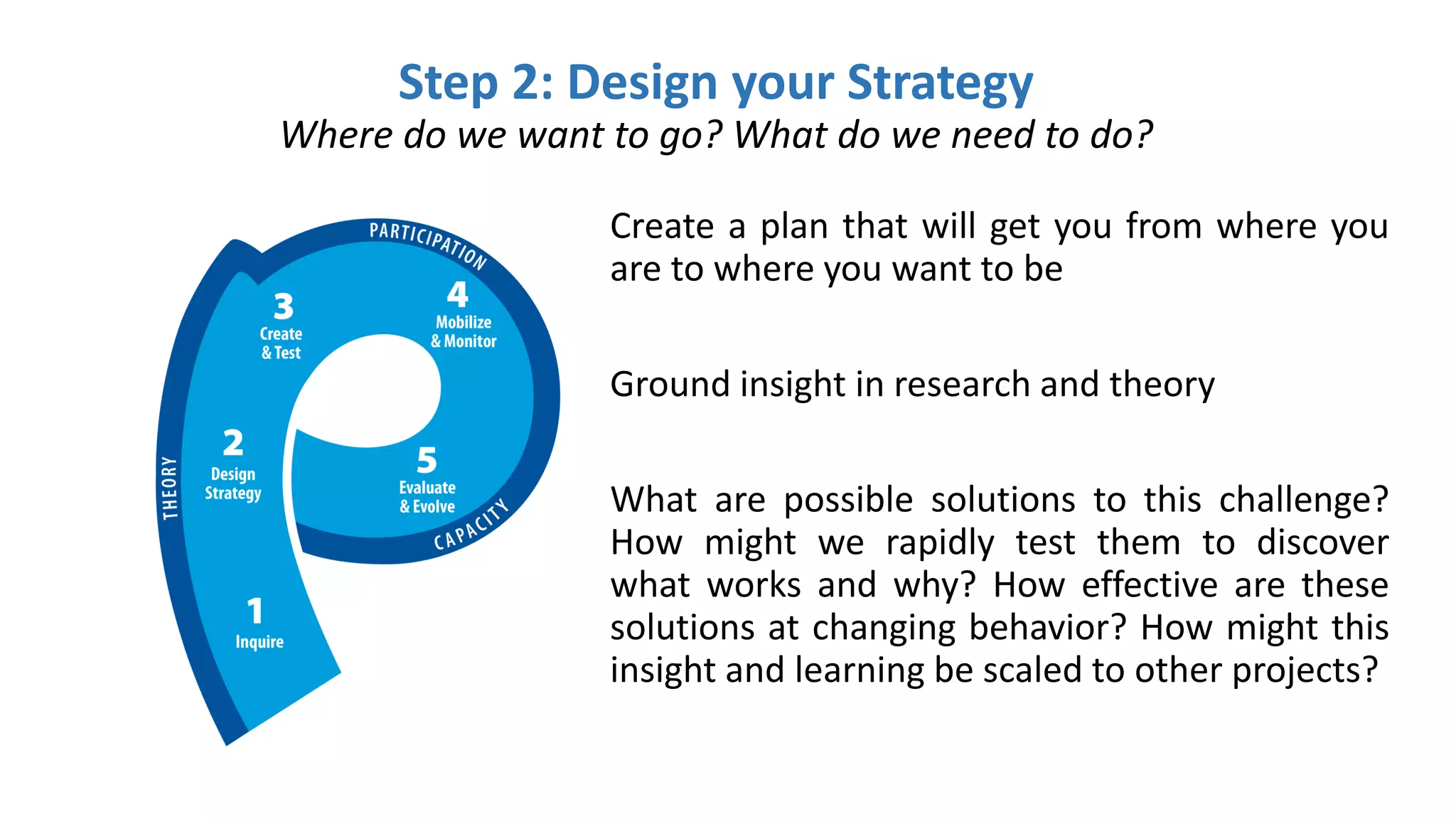
Step 2: Design your Strategy
Where do we want to go? What do we need to do?
Create a plan that will get you from where you
are to where you want to be
Ground insight in research and theory
What are possible solutions to this challenge?
How might we rapidly test them to discover
what works and why? How effective are these
solutions at changing behavior? How might this
insight and learning be scaled to other projects?
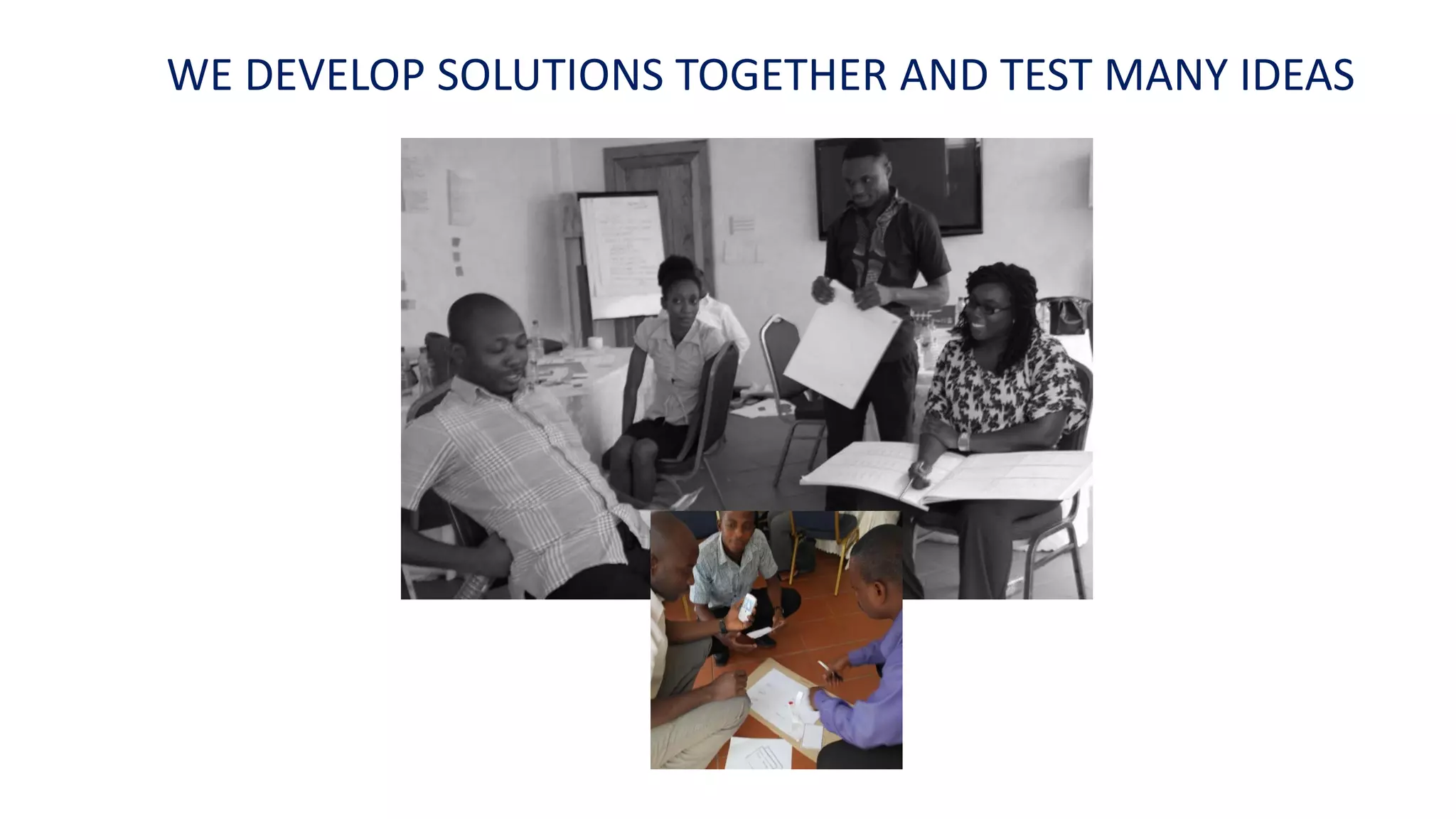
WE DEVELOP SOLUTIONS TOGETHER AND TEST MANY IDEAS
1.Bring together all the relevant players
2.Agree on the scope of the program
3.Discuss any limitations
4.Choose a behavior change model/theory and theoretical framework.
5.Decide, given budget, time and other constraints, on important aspects of
the program: audience, communication objectives. M&E plan.
Communication channels, etc.
6.Draft the ‘How might we…’ statement
Step 2: Design your Strategy
Where do we want to go? What do we need to do?
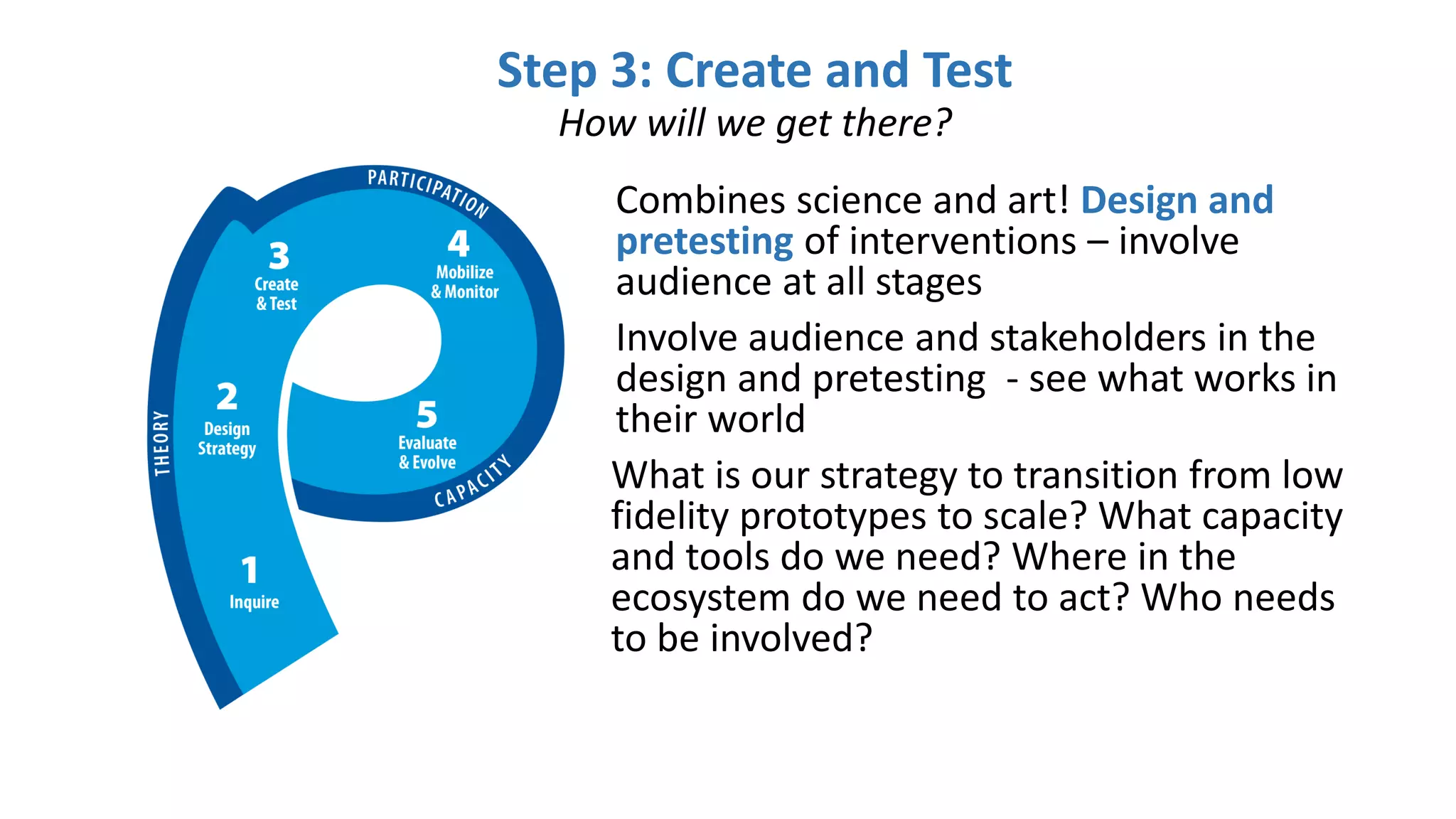
Step 3: Create and Test
How will we get there?
Combines science and art! Design and
pretesting of interventions – involve
audience at all stages
Involve audience and stakeholders in the
design and pretesting - see what works in
their world
What is our strategy to transition from low
fidelity prototypes to scale? What capacity
and tools do we need? Where in the
ecosystem do we need to act? Who needs
to be involved?
1.Choose your creative team
2.Plan a design workshop
3.Create draft concepts and materials for audience pretesting.
4.Test concepts and materials with intended audiences and key
decision-makers.
5.Share the results of the pretesting with the creative team and your
key stakeholders and,
6.Agree on necessary revisions.
7.Revise the materials based on the feedback you received.
8.Retest and finalize the materials.
Step 3: Create and Test
How will we get there?
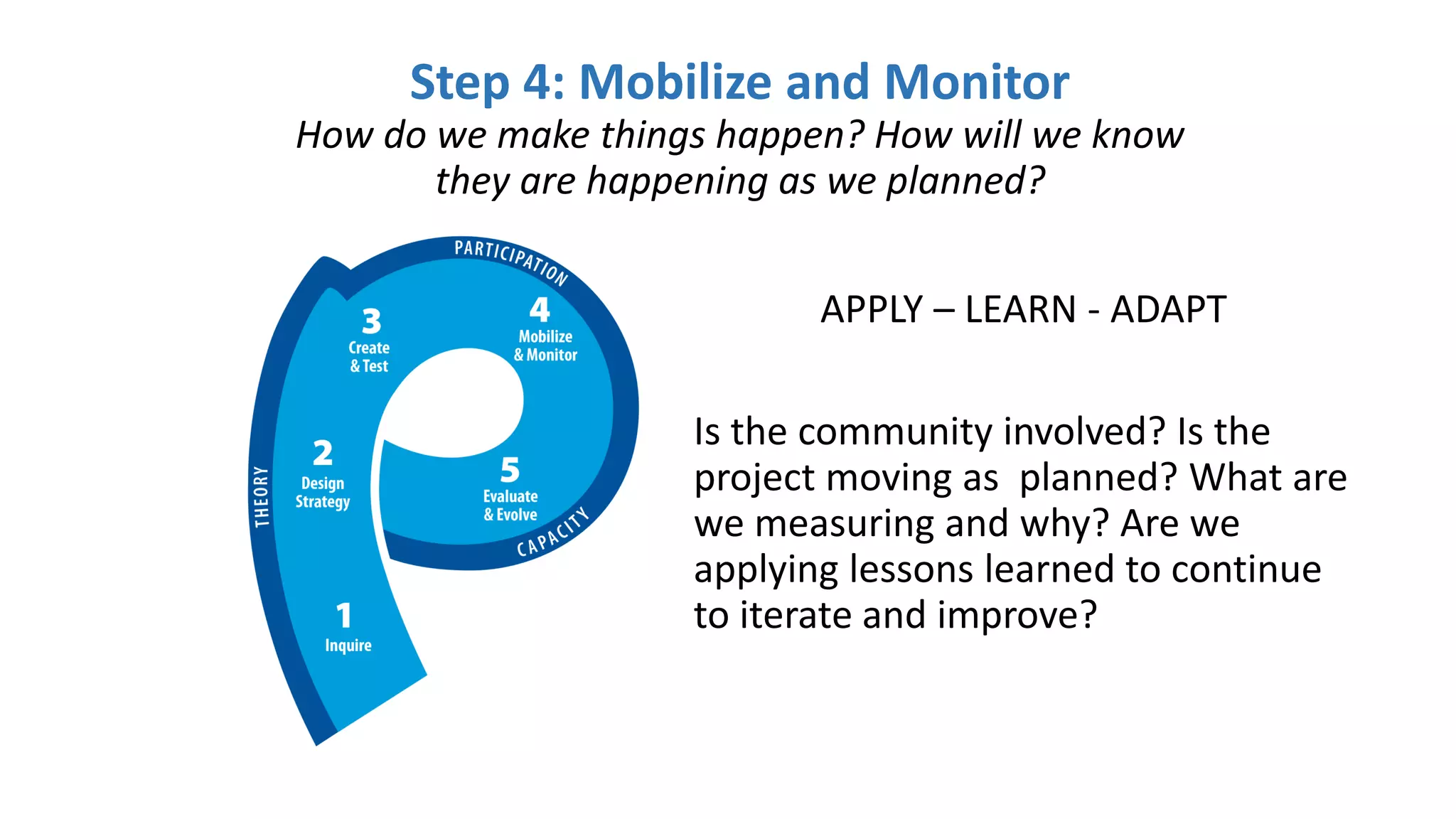
Step 4: Mobilize and Monitor
How do we make things happen? How will we know
they are happening as we planned?
APPLY – LEARN - ADAPT
Is the community involved? Is the
project moving as planned? What are
we measuring and why? Are we
applying lessons learned to continue
to iterate and improve?
1.Make sure monitoring activities are occurring as planned
2.Make mid-course corrections as needed. Fine tune your
implementation
3.Keep all partners updated on implementation process.
4.Share the credit for good work with partners, decision-makers and
other stakeholders.
5.Prepare for further evaluation activities.
Step 4: Mobilize and Monitor
How do we make things happen? How will we know
they are happening as we planned?
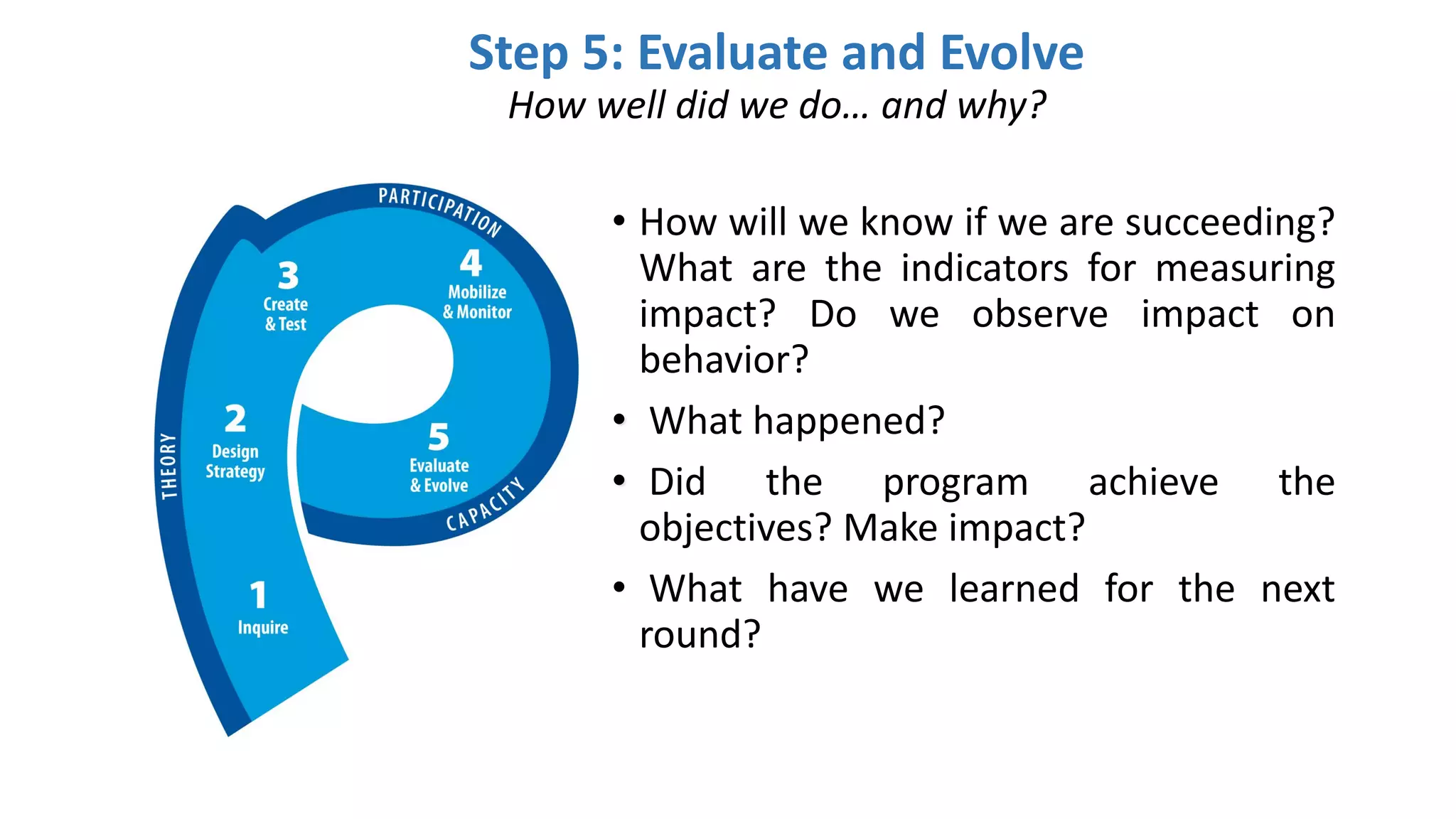
Step 5: Evaluate and Evolve
How well did we do… and why?
• How will we know if we are succeeding?
What are the indicators for measuring
impact? Do we observe impact on
behavior?
• What happened?
• Did the program achieve the
objectives? Make impact?
• What have we learned for the next
round?
Step 5: Evaluate and Evolve
How well did we do… and why?
1.Measure outcomes and assessing impact
2.Disseminate results with donors, partners, key stakeholders and
decision-makers, media, etc.
3.Look to the future: future opportunities, how to apply lessons learned,
where follow-up is needed and how results could be scaled up.
18
Other things to consider
Truly linking
analysis/
inquiry and
design
strategy
Gender and social norms
Quality production &
new media platforms
Timely data actually used to re-
plan
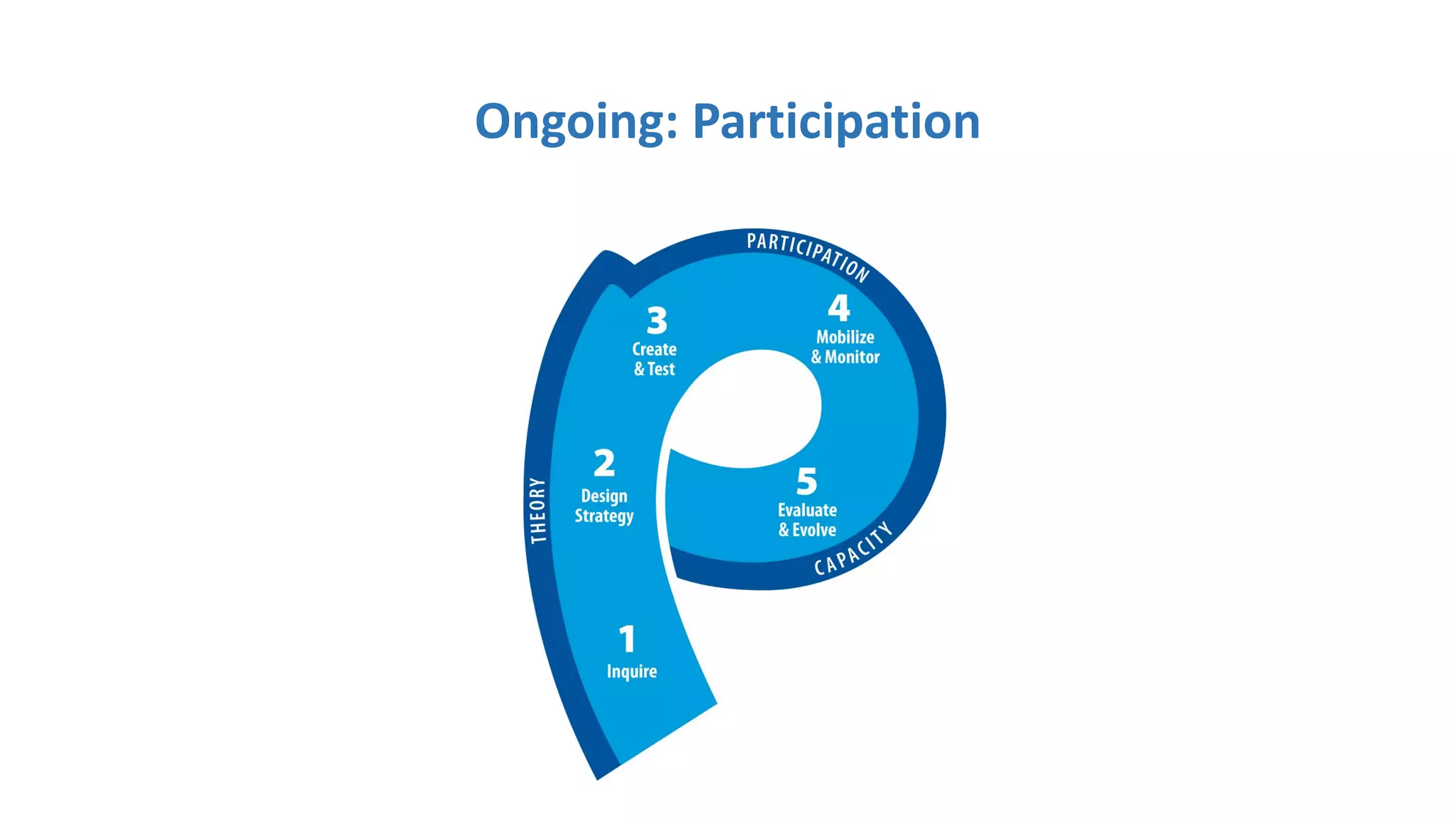
Ongoing: Participation
How do we ensure participation?
• Without the participation and buy-in of partners and key stakeholders,
a program can neither be sustainable nor successful.
• Involve partners and stakeholders from the very beginning
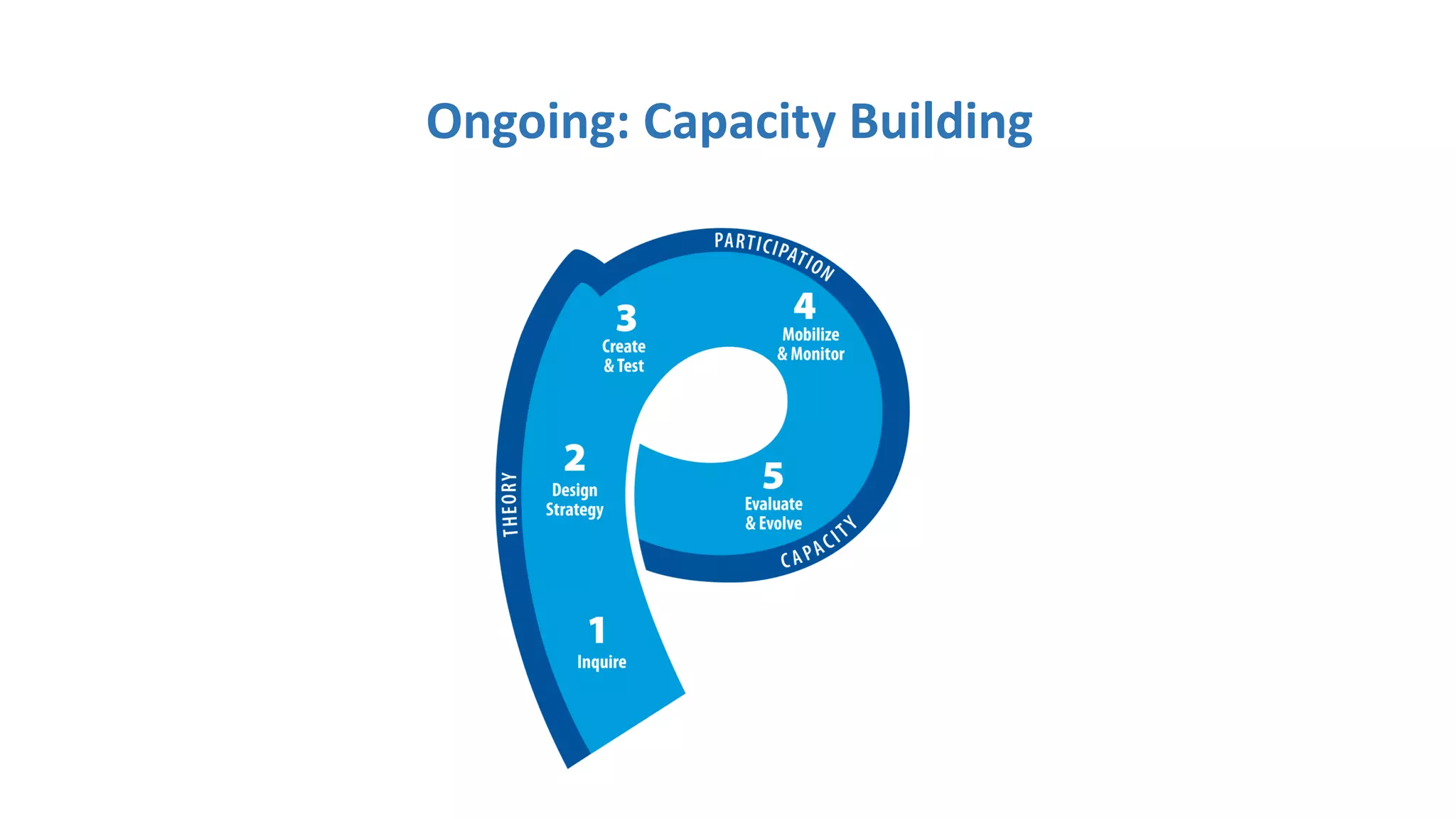
Ongoing: Capacity Building
How do we build capacity of all stakeholders in
activities
• Consider ways to build capacity at the individual, institutional
community and national levels
• Capacity building will contribute to sustainability of a program
P process plus sa (1)

P process plus sa (1)

  • 1.
  • 3.
    The “P” Process- a tool to guide the path toward change Step by step framework Road map leading to strategic and participatory programs Orchestrate interventions Integrates science of research with science of behavior/social change
  • 4.
    • Understand • Observe •Define • Develop a clear problem statement Step 1 – Inquire (Problem Definition) Where we are now ? What is the behavioral problem?
  • 5.
    Step 1 –Inquire (Problem Definition) Where we are now ? What is the behavioral problem? • Begin to understand the extent of the problem • Identify your audiences • Uncover your intended audiences’ barriers to behavior change- economic, social, structural, cultural or educational—or something else entirely • Identify facilitating factors to behavior change, including potential messengers and media • Develop a succinct problem statement
  • 6.
    Analysis: Situation  Understandthe environment and context in which you will operate  Observe the problems, their severity and causes  Define factors inhibiting or facilitating desired changes
  • 7.
    Analysis: Programs  Understandexisting programs  Understand partners or potential partners  Observe gaps in current program environment that need to be filled  Observe funding-available now & in future  Define the root cause of the behavioral issue and define the problem Sources of Data: Interviews with stakeholders, program reports, budgets
  • 8.
    Analysis: Audience  Empathizewith the audience  Define the segment which you wish to address  Create an audience persona that clearly paints a picture  Look at how your audience makes choices  What might influence their behaviors?
  • 9.
    Step 2: Designyour Strategy Where do we want to go? What do we need to do? Create a plan that will get you from where you are to where you want to be Ground insight in research and theory What are possible solutions to this challenge? How might we rapidly test them to discover what works and why? How effective are these solutions at changing behavior? How might this insight and learning be scaled to other projects?
  • 10.
    WE DEVELOP SOLUTIONSTOGETHER AND TEST MANY IDEAS
  • 11.
    1.Bring together allthe relevant players 2.Agree on the scope of the program 3.Discuss any limitations 4.Choose a behavior change model/theory and theoretical framework. 5.Decide, given budget, time and other constraints, on important aspects of the program: audience, communication objectives. M&E plan. Communication channels, etc. 6.Draft the ‘How might we…’ statement Step 2: Design your Strategy Where do we want to go? What do we need to do?
  • 12.
    Step 3: Createand Test How will we get there? Combines science and art! Design and pretesting of interventions – involve audience at all stages Involve audience and stakeholders in the design and pretesting - see what works in their world What is our strategy to transition from low fidelity prototypes to scale? What capacity and tools do we need? Where in the ecosystem do we need to act? Who needs to be involved?
  • 13.
    1.Choose your creativeteam 2.Plan a design workshop 3.Create draft concepts and materials for audience pretesting. 4.Test concepts and materials with intended audiences and key decision-makers. 5.Share the results of the pretesting with the creative team and your key stakeholders and, 6.Agree on necessary revisions. 7.Revise the materials based on the feedback you received. 8.Retest and finalize the materials. Step 3: Create and Test How will we get there?
  • 14.
    Step 4: Mobilizeand Monitor How do we make things happen? How will we know they are happening as we planned? APPLY – LEARN - ADAPT Is the community involved? Is the project moving as planned? What are we measuring and why? Are we applying lessons learned to continue to iterate and improve?
  • 15.
    1.Make sure monitoringactivities are occurring as planned 2.Make mid-course corrections as needed. Fine tune your implementation 3.Keep all partners updated on implementation process. 4.Share the credit for good work with partners, decision-makers and other stakeholders. 5.Prepare for further evaluation activities. Step 4: Mobilize and Monitor How do we make things happen? How will we know they are happening as we planned?
  • 16.
    Step 5: Evaluateand Evolve How well did we do… and why? • How will we know if we are succeeding? What are the indicators for measuring impact? Do we observe impact on behavior? • What happened? • Did the program achieve the objectives? Make impact? • What have we learned for the next round?
  • 17.
    Step 5: Evaluateand Evolve How well did we do… and why? 1.Measure outcomes and assessing impact 2.Disseminate results with donors, partners, key stakeholders and decision-makers, media, etc. 3.Look to the future: future opportunities, how to apply lessons learned, where follow-up is needed and how results could be scaled up.
  • 18.
  • 19.
    Other things toconsider Truly linking analysis/ inquiry and design strategy Gender and social norms Quality production & new media platforms Timely data actually used to re- plan
  • 20.
  • 21.
    How do weensure participation? • Without the participation and buy-in of partners and key stakeholders, a program can neither be sustainable nor successful. • Involve partners and stakeholders from the very beginning
  • 22.
  • 23.
    How do webuild capacity of all stakeholders in activities • Consider ways to build capacity at the individual, institutional community and national levels • Capacity building will contribute to sustainability of a program