Made by Rahat Ashraf
Objectives:
At the end of this unit you will be able to;
 Identify factors that can interfere with effective oxygenation of body tissue.
 Describe common manifestation of altered respiratory and cardiovascular
system.
 Discuss lifespan-related changes and problems in respiratory function and
cardiovascular system.
 Describe nursing measures to ensure a patient airway.
 Recognize the emergency related to respiratory and cardiovascular system.
 Explain ways that caregiver can decrease the exposure of the clinical client
to infection.
 Differentiate between medical and surgical asepsis.
Oxygenation:
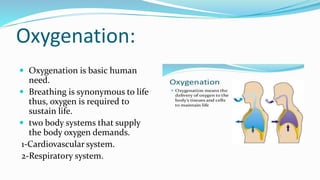
 Oxygenation is basic human
need.
 Breathing is synonymous to life
thus, oxygen is required to
sustain life.
 two body systems that supply
the body oxygen demands.
1-Cardiovascular system.
2-Respiratory system.
Respiratory system:
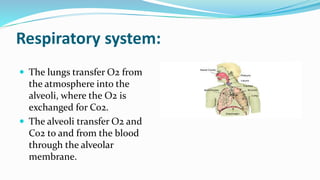
 The lungs transfer O2 from
the atmosphere into the
alveoli, where the O2 is
exchanged for Co2.
 The alveoli transfer O2 and
Co2 to and from the blood
through the alveolar
membrane.
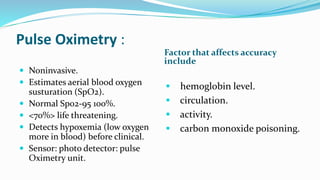
Pulse Oximetry :
Factor that affects accuracy
include
 Noninvasive.
 Estimates aerial blood oxygen
susturation (SpO2).
 Normal Spo2-95 100%.
 <70%> life threatening.
 Detects hypoxemia (low oxygen
more in blood) before clinical.
 Sensor: photo detector: pulse
Oximetry unit.
 hemoglobin level.
 circulation.
 activity.
 carbon monoxide poisoning.
Factor Affecting Oxygenation:
 Environment (altitude, heat , cold , air pollution).
 Age and
 Emotions ( fear , anxiety , anger).
 Lifestyles ( smoking , occupations , sedentary life Exercise,
etc.).
 Health status ( anemia [ low red blood cells] respiratory).
 Narcotics ( morphine , Demerol , etc.).
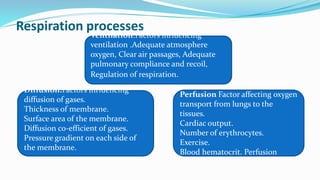
Respiration processes
Ventilation.Factors influencing
ventilation .Adequate atmosphere
oxygen, Clear air passages, Adequate
pulmonary compliance and recoil,
Regulation of respiration.
Diffusion.Factors influencing
diffusion of gases.
Thickness of membrane.
Surface area of the membrane.
Diffusion co-efficient of gases.
Pressure gradient on each side of
the membrane.
Perfusion Factor affecting oxygen
transport from lungs to the
tissues.
Cardiac output.
Number of erythrocytes.
Exercise.
Blood hematocrit. Perfusion
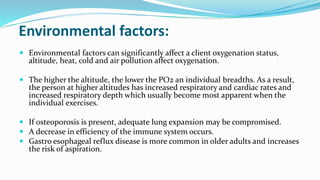
Environmental factors:
 Environmental factors can significantly affect a client oxygenation status,
altitude, heat, cold and air pollution affect oxygenation.
 The higher the altitude, the lower the PO2 an individual breadths. As a result,
the person at higher altitudes has increased respiratory and cardiac rates and
increased respiratory depth which usually become most apparent when the
individual exercises.
 If osteoporosis is present, adequate lung expansion may be compromised.
 A decrease in efficiency of the immune system occurs.
 Gastro esophageal reflux disease is more common in older adults and increases
the risk of aspiration.
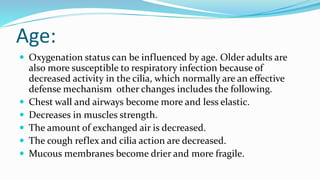
Age:
 Oxygenation status can be influenced by age. Older adults are
also more susceptible to respiratory infection because of
decreased activity in the cilia, which normally are an effective
defense mechanism other changes includes the following.
 Chest wall and airways become more and less elastic.
 Decreases in muscles strength.
 The amount of exchanged air is decreased.
 The cough reflex and cilia action are decreased.
 Mucous membranes become drier and more fragile.
Health status:
 In the healthy person, the respiratory system can
provide sufficient oxygen to meet the body’s needs.
Diseases of the respiratory system however , can
adversely affect the oxygenation of the blood.
Stress:
 When stress and stressors are encountered both
psychological and psychological responses can affect
oxygenation. Some people may hyperventilate in
response to stress. when this occurs, arterial PO2 rises
and PCO2 falls. The person may experience light-
headedness and numbness and tingling of the fingers,
toes and around the mouth as result.
Conti:
 Physiologically the sympathetic nervous system is
stimulated and epinephrine is released during stress.
Epinephrine causes the bronchioles to dilate,
increasing blood flow and oxygen delivery to active
muscles. Although these responses are adaptive in the
short term, when stress continues they can be
destructive disease.
Medications:
 A variety of medication can decreased the rate and
depth of respirations. The most common medications
having this effect are the benzodiazepine sedative-
hypnotics and antianxiety drugs (e.g. diazepan
[valium], lorazepan [ativan] midazolam [versed],
barbiturates (e.g. phenobarbital), and narcotics such
as morphine and meperidine hydrochloride (
Demerol).
Cont..
 When administering these, the nurse must be
carefully monitor respiratory status, especially when
the medication is begun or when the dose increased.
Older clients are at high risk reparatory depression
and, hence, usually requires reduced dosage.
Major Alternations in reparation functions:
 Hypoxia.
 Respiratory insufficiency.
 Acapnea (absence of Co2 in blood).
 Hypocarbia.
 Depressed level of Co2 in the blood.
 Hyperpnoea ( rapid breathing).
 Hypopnea ( slow breathing).
Signs of Hypoxia:
Early/acute signs Late/chronic signs
 Restlessness.
 Increased pulse rate.
 Increased rate and depth of
respiration.
 Increased in systolic blood
pressures.
 Decreased pulse rate.
 Decreased systolic blood
pressure.
 Dyspnea.
 Fatigue and lethargy.
 Cough.
 Hemoptysis.
 Clubbing of fingers.
NANDA Nursing Diagnosis Related to
Oxygenation:
 1) In effective airways clearance.
 Refers to inability of the individual to clear secretion
or obstruction from the respiratory track to maintain
airway patency.
 Tracheobronchial infections.
 Obstruction secretions.
NANDA Nursing Diagnosis Related to
Oxygenation:
 2) Ineffective breathing pattern.
 Refers to and individual’s inhalation or exhalation
pattern that inhabits adequate ventilation.
 Neuromuscular.
 Pain , anxiety.
 Decreased energy and fatigue.
 Inflammatory process.
NANDA Nursing Diagnosis Related of
Oxygenation:
 3) Decreased cardiac output.
 State in which the blood pumped by the heart is
sufficiently reduced that it is inadequate to meet the
needs of the body.
 Structural alternation.
 Ventricular- septal rupture , valvular disease.
NANDA Nursing Diagnosis Related to
Oxygenation:
 5) Altered tissue perfusion.
 State in which an individual experiences a decrease in
nutrition and oxygenation and the cellular level
because of deficit in capillary blood supply.
 Interrupted Venus or arterial flow.
 Hypo/hyper volemia.
NANDA Nursing Diagnosis Related to
Oxygenation:
 4) Impaired gas exchange.
 State in which here is ambulance between O2 and Co2
elimination at the alveolar capillary membrane gas
exchange area.
 Altered O2 supply.
 Altered blood.
Major Alternation in Respiratory
Functions.
 Altered breathing patterns.
 Rate.
 Volume( hypo or hyper).
 Rhythm ( cheyne stokes , kussmaul’s , apneustic and
bait’s).
 Relative case of effort respiration (dyspnea and orthopnea).
 Obstructive or particular obstructive airways.
 Upper airways , obstruction.
 Nose , pharynx , larynx , trachea.
`Measures that Promote Adequate
Respiratory Function.
 1) Ensure a patient airway.
 To promote gaseous exchange between client and
environment.
 Check for obstruction.
 Foreign object mucus.
 2) Positioning.
 To allow maximum chest expansion.
 Fowler’s position.
 Encourage frequent changes.
Measures That Promotes Adequate
Respiratory Function:
 3) Deep breathing and coughing exercise.
 To promote lung expansion and loosen secretions.
 F.g. abdominal breathing (diaphragmatic and pursed lip).
 4) Adequate hydration.
 Maintain moisture of the respiratory mucus membrane.
 Use of humidifiers/nebulizers.
 Steam/aerosol/medimist.
Measures that Promote Adequate
Respiratory Function:
 5) chest physiotherapy.
 Percussion.
 Forceful striking of skin with cupped hands.
 Vibration.
 Serves of vigorous quivering produced by hands that are placed
flat against clients chest wall done during exhalation.
 Postural drainage.
 Drainage by gravity of secretions from various lung segments.
Measures That Promote Adequate
Respiratory Function:
 6) proper suctioning.
 A catheter-12 to 18 mmHg , tip of mouth to earlobe 5 meters suction 5-10
seconds , max is 15 seconds , wall suction 80-120 mmHg.
 7) avoid environmental pollutants + smoking.
 8) using inflation devices.
 Incentive spirometer - to enhance deep inspiration.
 Intermittent positive pressure breathing.
 To administer O2 at pressures higher than the
atmospheric pressure.
 9) administration of supplemental O2.
 Nasal cannula.
Nursing Implication:
 Since oxygen is colorless , order less , and tasteless
leakage can’t be detected.
 Since oxygen is dry , gas mucus membrane invitation
could happen.
Nursing Planning , Intervention , and
Evaluation on O2 Administration:
 Assess and sx hypoxemia.
 Check doctor’s orders.
 Open source before insertion of device.
 Place a “ No Smoking” sign.
 Avoid use of oil , grease and alcohol.
Nursing Planning Intervention and
Evaluation in O2 Administration:
 Check of electrical device malfunction.
 Avoid using materials that could generate static
electricity.
 Humidify O2.
 Provide good oro- nasal hygiene.
 Lubricate with water soluble stuff.
 Document.
Life Span Changes And Problems:
 Respiratory muscle strength decreases with age and
can impair effective cough, which is important for
airway clearance. The lung matures by age 20-25 years,
and thereafter aging is associated with the progressive
decline in lung function.
Life Span Consideration Problems:
Premature infant:
 Lack of surfactant (a substance in alveoli which keeps
the lungs wet and prevent collapse.
Infants and toddlers:
 risk of upper respiratory tract infection due to
exposure of other children and second hand smoke.
 Risk of air way obstruction also.
Life Span Considerations Problems:
School age children and adolescents:
 Respiratory infections and respiratory risk factors such
as second hand smoke and cigarette smoking. can
leads to cardiopulmonary disease if continues.
Young and middle age adults:
 Multiply cardiopulmonary risk factors due to
unhealthy diet lack of exercise stress drugs and
smoking.
Life Span Consideration Changes:
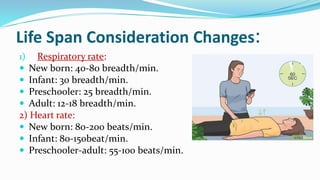
1) Respiratory rate:
 New born: 40-80 breadth/min.
 Infant: 30 breadth/min.
 Preschooler: 25 breadth/min.
 Adult: 12-18 breadth/min.
2) Heart rate:
 New born: 80-200 beats/min.
 Infant: 80-150beat/min.
 Preschooler-adult: 55-100 beats/min.
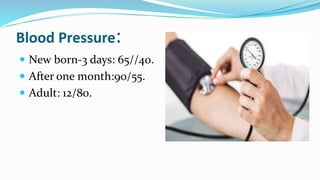
Blood Pressure:
 New born-3 days: 65//40.
 After one month:90/55.
 Adult: 12/80.
Cardiovascular system
The heart muscles cell degenerate slightly. The valves inside
the heart, which control the direction of blood flow, thicken
and become stiffer. A heart murmur caused by valve stiffness
is fairly common in older people.
Factors interfere with effective cardiovascular system .
Increase heart rate .
Increase BP.
Increase blood flow and blood diameters.
Increase body temperature.
Increase coronary circulation.
Common Manifestations Of Altered Respiratory And
Cardiovascular Function:
 Apnea: Temporary cessation of breathing.
 Dyspnea: Difficulty in breathing. E.g. SOB.
 Eupnea: Normal breathing. 12 to 20 b/m.
 Hypernea: Increased rate and depth of breathing.
 Hyperventilation: Increased pulmonary ventilation leading
to low blood level of CO2.
 Hypoventilation: Decreased pulmonary ventilation leading
to increased blood level of CO2.
Maintaining Health Oxygenation:
Encourage clients to:
1.) leave window open for ventilation instead of using an air
conditioner or humidifier.
2.) wear a mask when working with hazardous materials,
such as asbestos.
3.) limit physical exertion if it causes shortness of breath.
4.) refrain from smoking.
5.) change filters on furnaces, heater and range hoods as
recommended by manufacture.
Asepsis: asepsis the state of being free from disease causing agent is
defined as the asepsis
 Medical asepsis  Surgical asepsis
 Medical asepsis is the removal and
prevention of microbial
contamination in a healthcare setting..
 Procedures involved in medical
asepsis include: proper hand washing,
wearing gloves and face masks,
cleaning and sterilizing surfaces, and
changing of bed linens.
 Medical asepsis is not involved in
specific procedures that are invasive,
such as surgeries.
 Surgical asepsis is the removal and
prevention of microbes during a surgical
or other invasive procedure
 Procedures involved in surgical asepsis
include, strict hand washing, wearing of
surgical scrubs, gloves, masks, and
surgical caps, sterilization of all surfaces,
and the use of single-use equipment
packs. S
 urgical asepsis is involved in invasive
procedures such as angiography,
laparoscopic or open surgery methods.

Respiratoy emergences
 Acute bronchiolitis - this is a severe inflammation of the bronchioles, caused most often by a virus (e.g.
influenza, , respiratory syncytial virus, rhinovirus, adenovirus, etc.). Patients with bronchiolitis present with symptoms
of a cold or virus, and a severe cough with dyspnoea, chest pain and fatigue.
 Pneumonia - pneumonia is an acute inflammatory reaction in the lungs in response to the presence of pathogens,
often bacteria. Patients with pneumonia present with fever, fatigue, a cough with haemoptysis, dyspnoea and pleuritic
chest pain. On auscultation of the patient's chest, 'crackles' will be heard, and it may also be possible to identify areas
of consolidation.
 Asthma -a chronic obstructive disease of the lungs, characterised by hyper-reactive inflammation and narrowing of
the airways. patients can present as severe dyspnoea, coughing, wheezing, chest tightness and distress.
 Chronic obstructive pulmonary disease (COPD) - COPD is a progressive and irreversible disease,
associated with smoking. patients can develop acute complications, presenting as severe dyspnoea, the production of
purulent sputum, chest pain and distress.
 Spontaneous pneumothorax - pneumothorax involves an accumulation of air in the pleural space around the
lungs and the resultant 'collapse' of the lung.
 Pulmonary embolus (PE) - a PE is a condition where a substance occludes a large vessel in the lungs. Patients
with PE present with a variety of non-specific symptoms, including worsening dyspnoea, tachycardia, cough,
diaphoresis and anxiety. Diagnosis is difficult, and may require CT scans, ABG analysis, electrocardiography (ECG) and
also perhaps ultrasonography.
 Cariovacular emergenceses
 Myocardial infarct (MI) - a MI occurs when one of the arteries in the heart becomes
occluded. An MI may be diagnosed by ECG). Patients experiencing an MI present with chest or
radiating pain, nausea, dyspnoea, diaphoresis, fatigue and dizziness, and they may be very
anxious.
 Angina pectoris - angina occurs when the arteries in a patient's heart become partially
occluded, often due to narrowing. Angina may be classified into one of two types: (1) stable,
where chest pain occurs in a pattern following a predictable amount of exertion, or (2)
unstable, where chest pain may occur unpredictably at any time, including without exertion.
 Dysrhythmias - 'dysrhythmia' is a term used to describe an abnormality in the normal rhythm
of the heart. These are classified into two categories: (1) tachycardias (heart rate >100 beats per
minute), and (2) bradycardias (heart rate <60 beats per minute). Dysrhythmias may be due to a
variety of causes;, such as MI and angina, are common
 Hypertensive crisis - a hypertensive crisis occurs when a patient's blood pressure is so high
that there is a risk of acute end-organ damage. It is often due to dysfunction in the endocrine
and / or renal systems. The close monitoring of patients is important so that complications can
be rapidly identified and managed.
 HOW CAN CAREGIVERS HELP REDUCE THE RISK
OF INFECTION?
 You already know the basics — clean your hands
regularly, wear the appropriate personal protective
equipment (PPE), stay at least 6 feet from others at all
times.

Oxygenation, respiratory function and cardiovascular system

  • 1.
  • 2.
    Objectives: At the endof this unit you will be able to;  Identify factors that can interfere with effective oxygenation of body tissue.  Describe common manifestation of altered respiratory and cardiovascular system.  Discuss lifespan-related changes and problems in respiratory function and cardiovascular system.  Describe nursing measures to ensure a patient airway.  Recognize the emergency related to respiratory and cardiovascular system.  Explain ways that caregiver can decrease the exposure of the clinical client to infection.  Differentiate between medical and surgical asepsis.
  • 3.
    Oxygenation:  Oxygenation isbasic human need.  Breathing is synonymous to life thus, oxygen is required to sustain life.  two body systems that supply the body oxygen demands. 1-Cardiovascular system. 2-Respiratory system.
  • 4.
    Respiratory system:  Thelungs transfer O2 from the atmosphere into the alveoli, where the O2 is exchanged for Co2.  The alveoli transfer O2 and Co2 to and from the blood through the alveolar membrane.
  • 5.
    Pulse Oximetry : Factorthat affects accuracy include  Noninvasive.  Estimates aerial blood oxygen susturation (SpO2).  Normal Spo2-95 100%.  <70%> life threatening.  Detects hypoxemia (low oxygen more in blood) before clinical.  Sensor: photo detector: pulse Oximetry unit.  hemoglobin level.  circulation.  activity.  carbon monoxide poisoning.
  • 6.
    Factor Affecting Oxygenation: Environment (altitude, heat , cold , air pollution).  Age and  Emotions ( fear , anxiety , anger).  Lifestyles ( smoking , occupations , sedentary life Exercise, etc.).  Health status ( anemia [ low red blood cells] respiratory).  Narcotics ( morphine , Demerol , etc.).
  • 7.
    Respiration processes Ventilation.Factors influencing ventilation.Adequate atmosphere oxygen, Clear air passages, Adequate pulmonary compliance and recoil, Regulation of respiration. Diffusion.Factors influencing diffusion of gases. Thickness of membrane. Surface area of the membrane. Diffusion co-efficient of gases. Pressure gradient on each side of the membrane. Perfusion Factor affecting oxygen transport from lungs to the tissues. Cardiac output. Number of erythrocytes. Exercise. Blood hematocrit. Perfusion
  • 8.
    Environmental factors:  Environmentalfactors can significantly affect a client oxygenation status, altitude, heat, cold and air pollution affect oxygenation.  The higher the altitude, the lower the PO2 an individual breadths. As a result, the person at higher altitudes has increased respiratory and cardiac rates and increased respiratory depth which usually become most apparent when the individual exercises.  If osteoporosis is present, adequate lung expansion may be compromised.  A decrease in efficiency of the immune system occurs.  Gastro esophageal reflux disease is more common in older adults and increases the risk of aspiration.
  • 9.
    Age:  Oxygenation statuscan be influenced by age. Older adults are also more susceptible to respiratory infection because of decreased activity in the cilia, which normally are an effective defense mechanism other changes includes the following.  Chest wall and airways become more and less elastic.  Decreases in muscles strength.  The amount of exchanged air is decreased.  The cough reflex and cilia action are decreased.  Mucous membranes become drier and more fragile.
  • 10.
    Health status:  Inthe healthy person, the respiratory system can provide sufficient oxygen to meet the body’s needs. Diseases of the respiratory system however , can adversely affect the oxygenation of the blood.
  • 11.
    Stress:  When stressand stressors are encountered both psychological and psychological responses can affect oxygenation. Some people may hyperventilate in response to stress. when this occurs, arterial PO2 rises and PCO2 falls. The person may experience light- headedness and numbness and tingling of the fingers, toes and around the mouth as result.
  • 12.
    Conti:  Physiologically thesympathetic nervous system is stimulated and epinephrine is released during stress. Epinephrine causes the bronchioles to dilate, increasing blood flow and oxygen delivery to active muscles. Although these responses are adaptive in the short term, when stress continues they can be destructive disease.
  • 13.
    Medications:  A varietyof medication can decreased the rate and depth of respirations. The most common medications having this effect are the benzodiazepine sedative- hypnotics and antianxiety drugs (e.g. diazepan [valium], lorazepan [ativan] midazolam [versed], barbiturates (e.g. phenobarbital), and narcotics such as morphine and meperidine hydrochloride ( Demerol).
  • 14.
    Cont..  When administeringthese, the nurse must be carefully monitor respiratory status, especially when the medication is begun or when the dose increased. Older clients are at high risk reparatory depression and, hence, usually requires reduced dosage.
  • 15.
    Major Alternations inreparation functions:  Hypoxia.  Respiratory insufficiency.  Acapnea (absence of Co2 in blood).  Hypocarbia.  Depressed level of Co2 in the blood.  Hyperpnoea ( rapid breathing).  Hypopnea ( slow breathing).
  • 16.
    Signs of Hypoxia: Early/acutesigns Late/chronic signs  Restlessness.  Increased pulse rate.  Increased rate and depth of respiration.  Increased in systolic blood pressures.  Decreased pulse rate.  Decreased systolic blood pressure.  Dyspnea.  Fatigue and lethargy.  Cough.  Hemoptysis.  Clubbing of fingers.
  • 17.
    NANDA Nursing DiagnosisRelated to Oxygenation:  1) In effective airways clearance.  Refers to inability of the individual to clear secretion or obstruction from the respiratory track to maintain airway patency.  Tracheobronchial infections.  Obstruction secretions.
  • 18.
    NANDA Nursing DiagnosisRelated to Oxygenation:  2) Ineffective breathing pattern.  Refers to and individual’s inhalation or exhalation pattern that inhabits adequate ventilation.  Neuromuscular.  Pain , anxiety.  Decreased energy and fatigue.  Inflammatory process.
  • 19.
    NANDA Nursing DiagnosisRelated of Oxygenation:  3) Decreased cardiac output.  State in which the blood pumped by the heart is sufficiently reduced that it is inadequate to meet the needs of the body.  Structural alternation.  Ventricular- septal rupture , valvular disease.
  • 20.
    NANDA Nursing DiagnosisRelated to Oxygenation:  5) Altered tissue perfusion.  State in which an individual experiences a decrease in nutrition and oxygenation and the cellular level because of deficit in capillary blood supply.  Interrupted Venus or arterial flow.  Hypo/hyper volemia.
  • 21.
    NANDA Nursing DiagnosisRelated to Oxygenation:  4) Impaired gas exchange.  State in which here is ambulance between O2 and Co2 elimination at the alveolar capillary membrane gas exchange area.  Altered O2 supply.  Altered blood.
  • 22.
    Major Alternation inRespiratory Functions.  Altered breathing patterns.  Rate.  Volume( hypo or hyper).  Rhythm ( cheyne stokes , kussmaul’s , apneustic and bait’s).  Relative case of effort respiration (dyspnea and orthopnea).  Obstructive or particular obstructive airways.  Upper airways , obstruction.  Nose , pharynx , larynx , trachea.
  • 23.
    `Measures that PromoteAdequate Respiratory Function.  1) Ensure a patient airway.  To promote gaseous exchange between client and environment.  Check for obstruction.  Foreign object mucus.  2) Positioning.  To allow maximum chest expansion.  Fowler’s position.  Encourage frequent changes.
  • 24.
    Measures That PromotesAdequate Respiratory Function:  3) Deep breathing and coughing exercise.  To promote lung expansion and loosen secretions.  F.g. abdominal breathing (diaphragmatic and pursed lip).  4) Adequate hydration.  Maintain moisture of the respiratory mucus membrane.  Use of humidifiers/nebulizers.  Steam/aerosol/medimist.
  • 25.
    Measures that PromoteAdequate Respiratory Function:  5) chest physiotherapy.  Percussion.  Forceful striking of skin with cupped hands.  Vibration.  Serves of vigorous quivering produced by hands that are placed flat against clients chest wall done during exhalation.  Postural drainage.  Drainage by gravity of secretions from various lung segments.
  • 26.
    Measures That PromoteAdequate Respiratory Function:  6) proper suctioning.  A catheter-12 to 18 mmHg , tip of mouth to earlobe 5 meters suction 5-10 seconds , max is 15 seconds , wall suction 80-120 mmHg.  7) avoid environmental pollutants + smoking.  8) using inflation devices.  Incentive spirometer - to enhance deep inspiration.  Intermittent positive pressure breathing.  To administer O2 at pressures higher than the atmospheric pressure.  9) administration of supplemental O2.  Nasal cannula.
  • 27.
    Nursing Implication:  Sinceoxygen is colorless , order less , and tasteless leakage can’t be detected.  Since oxygen is dry , gas mucus membrane invitation could happen.
  • 28.
    Nursing Planning ,Intervention , and Evaluation on O2 Administration:  Assess and sx hypoxemia.  Check doctor’s orders.  Open source before insertion of device.  Place a “ No Smoking” sign.  Avoid use of oil , grease and alcohol.
  • 29.
    Nursing Planning Interventionand Evaluation in O2 Administration:  Check of electrical device malfunction.  Avoid using materials that could generate static electricity.  Humidify O2.  Provide good oro- nasal hygiene.  Lubricate with water soluble stuff.  Document.
  • 30.
    Life Span ChangesAnd Problems:  Respiratory muscle strength decreases with age and can impair effective cough, which is important for airway clearance. The lung matures by age 20-25 years, and thereafter aging is associated with the progressive decline in lung function.
  • 31.
    Life Span ConsiderationProblems: Premature infant:  Lack of surfactant (a substance in alveoli which keeps the lungs wet and prevent collapse. Infants and toddlers:  risk of upper respiratory tract infection due to exposure of other children and second hand smoke.  Risk of air way obstruction also.
  • 32.
    Life Span ConsiderationsProblems: School age children and adolescents:  Respiratory infections and respiratory risk factors such as second hand smoke and cigarette smoking. can leads to cardiopulmonary disease if continues. Young and middle age adults:  Multiply cardiopulmonary risk factors due to unhealthy diet lack of exercise stress drugs and smoking.
  • 33.
    Life Span ConsiderationChanges: 1) Respiratory rate:  New born: 40-80 breadth/min.  Infant: 30 breadth/min.  Preschooler: 25 breadth/min.  Adult: 12-18 breadth/min. 2) Heart rate:  New born: 80-200 beats/min.  Infant: 80-150beat/min.  Preschooler-adult: 55-100 beats/min.
  • 34.
    Blood Pressure:  Newborn-3 days: 65//40.  After one month:90/55.  Adult: 12/80.
  • 35.
    Cardiovascular system The heartmuscles cell degenerate slightly. The valves inside the heart, which control the direction of blood flow, thicken and become stiffer. A heart murmur caused by valve stiffness is fairly common in older people. Factors interfere with effective cardiovascular system . Increase heart rate . Increase BP. Increase blood flow and blood diameters. Increase body temperature. Increase coronary circulation.
  • 36.
    Common Manifestations OfAltered Respiratory And Cardiovascular Function:  Apnea: Temporary cessation of breathing.  Dyspnea: Difficulty in breathing. E.g. SOB.  Eupnea: Normal breathing. 12 to 20 b/m.  Hypernea: Increased rate and depth of breathing.  Hyperventilation: Increased pulmonary ventilation leading to low blood level of CO2.  Hypoventilation: Decreased pulmonary ventilation leading to increased blood level of CO2.
  • 37.
    Maintaining Health Oxygenation: Encourageclients to: 1.) leave window open for ventilation instead of using an air conditioner or humidifier. 2.) wear a mask when working with hazardous materials, such as asbestos. 3.) limit physical exertion if it causes shortness of breath. 4.) refrain from smoking. 5.) change filters on furnaces, heater and range hoods as recommended by manufacture.
  • 38.
    Asepsis: asepsis thestate of being free from disease causing agent is defined as the asepsis  Medical asepsis  Surgical asepsis  Medical asepsis is the removal and prevention of microbial contamination in a healthcare setting..  Procedures involved in medical asepsis include: proper hand washing, wearing gloves and face masks, cleaning and sterilizing surfaces, and changing of bed linens.  Medical asepsis is not involved in specific procedures that are invasive, such as surgeries.  Surgical asepsis is the removal and prevention of microbes during a surgical or other invasive procedure  Procedures involved in surgical asepsis include, strict hand washing, wearing of surgical scrubs, gloves, masks, and surgical caps, sterilization of all surfaces, and the use of single-use equipment packs. S  urgical asepsis is involved in invasive procedures such as angiography, laparoscopic or open surgery methods. 
  • 39.
    Respiratoy emergences  Acutebronchiolitis - this is a severe inflammation of the bronchioles, caused most often by a virus (e.g. influenza, , respiratory syncytial virus, rhinovirus, adenovirus, etc.). Patients with bronchiolitis present with symptoms of a cold or virus, and a severe cough with dyspnoea, chest pain and fatigue.  Pneumonia - pneumonia is an acute inflammatory reaction in the lungs in response to the presence of pathogens, often bacteria. Patients with pneumonia present with fever, fatigue, a cough with haemoptysis, dyspnoea and pleuritic chest pain. On auscultation of the patient's chest, 'crackles' will be heard, and it may also be possible to identify areas of consolidation.  Asthma -a chronic obstructive disease of the lungs, characterised by hyper-reactive inflammation and narrowing of the airways. patients can present as severe dyspnoea, coughing, wheezing, chest tightness and distress.  Chronic obstructive pulmonary disease (COPD) - COPD is a progressive and irreversible disease, associated with smoking. patients can develop acute complications, presenting as severe dyspnoea, the production of purulent sputum, chest pain and distress.  Spontaneous pneumothorax - pneumothorax involves an accumulation of air in the pleural space around the lungs and the resultant 'collapse' of the lung.  Pulmonary embolus (PE) - a PE is a condition where a substance occludes a large vessel in the lungs. Patients with PE present with a variety of non-specific symptoms, including worsening dyspnoea, tachycardia, cough, diaphoresis and anxiety. Diagnosis is difficult, and may require CT scans, ABG analysis, electrocardiography (ECG) and also perhaps ultrasonography.
  • 40.
     Cariovacular emergenceses Myocardial infarct (MI) - a MI occurs when one of the arteries in the heart becomes occluded. An MI may be diagnosed by ECG). Patients experiencing an MI present with chest or radiating pain, nausea, dyspnoea, diaphoresis, fatigue and dizziness, and they may be very anxious.  Angina pectoris - angina occurs when the arteries in a patient's heart become partially occluded, often due to narrowing. Angina may be classified into one of two types: (1) stable, where chest pain occurs in a pattern following a predictable amount of exertion, or (2) unstable, where chest pain may occur unpredictably at any time, including without exertion.  Dysrhythmias - 'dysrhythmia' is a term used to describe an abnormality in the normal rhythm of the heart. These are classified into two categories: (1) tachycardias (heart rate >100 beats per minute), and (2) bradycardias (heart rate <60 beats per minute). Dysrhythmias may be due to a variety of causes;, such as MI and angina, are common  Hypertensive crisis - a hypertensive crisis occurs when a patient's blood pressure is so high that there is a risk of acute end-organ damage. It is often due to dysfunction in the endocrine and / or renal systems. The close monitoring of patients is important so that complications can be rapidly identified and managed.
  • 41.
     HOW CANCAREGIVERS HELP REDUCE THE RISK OF INFECTION?  You already know the basics — clean your hands regularly, wear the appropriate personal protective equipment (PPE), stay at least 6 feet from others at all times.