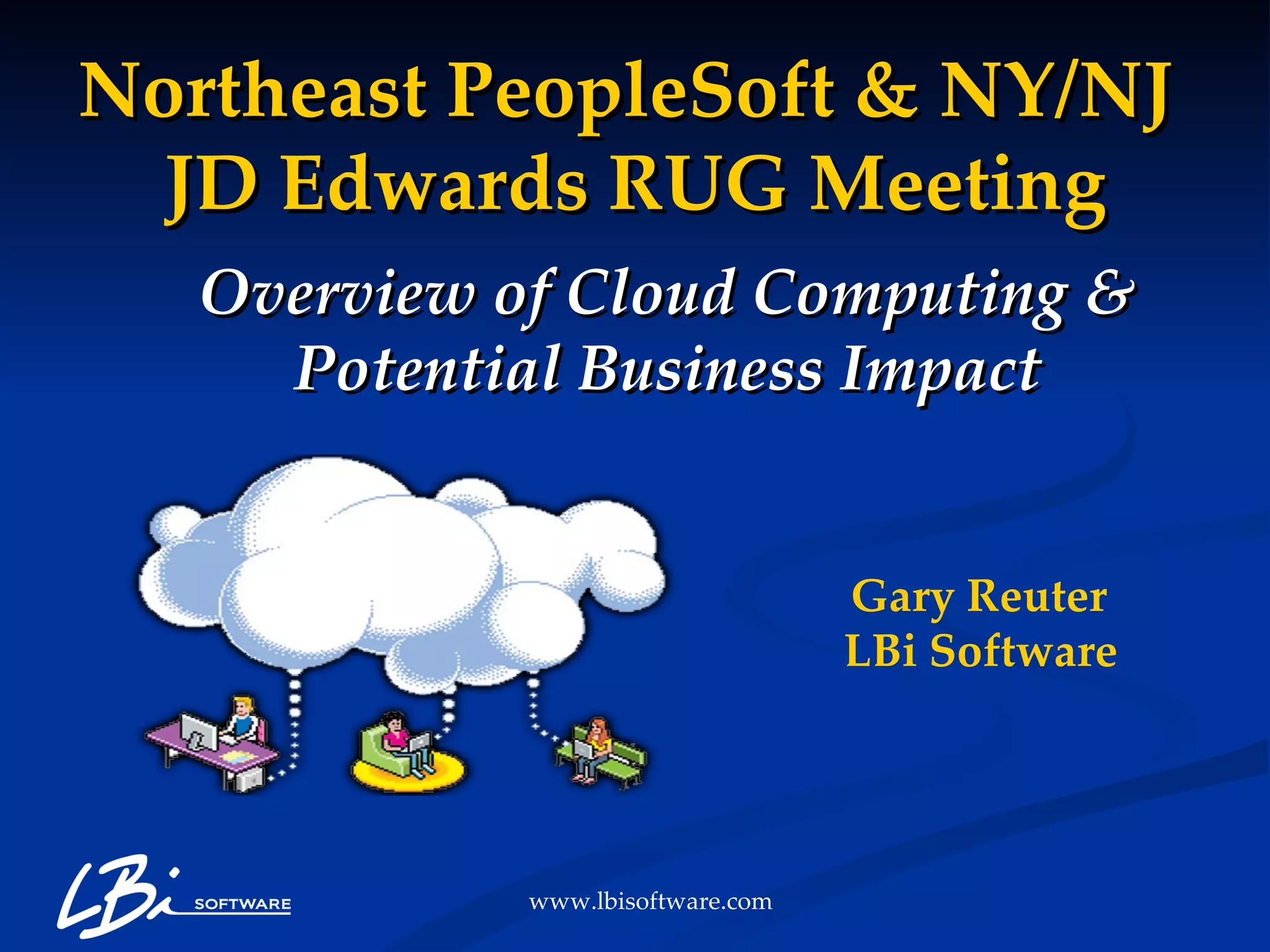
Overview of Cloud Computing & Potential Business Impact Gary Reuter  LBi Software   Northeast PeopleSoft & NY/NJ  JD Edwards RUG Meeting
Agenda Introductions Describing Cloud Computing Advantages/Issues Cloud Appropriate Solutions Getting Started in the Cloud Q & A
LBi Software Over 20 years HCM Focus Experience with Packaged Software Solutions Active Participant in Quest & RUG Events Team culture – average tenure is 10 years Platform independent/process oriented Technology centric
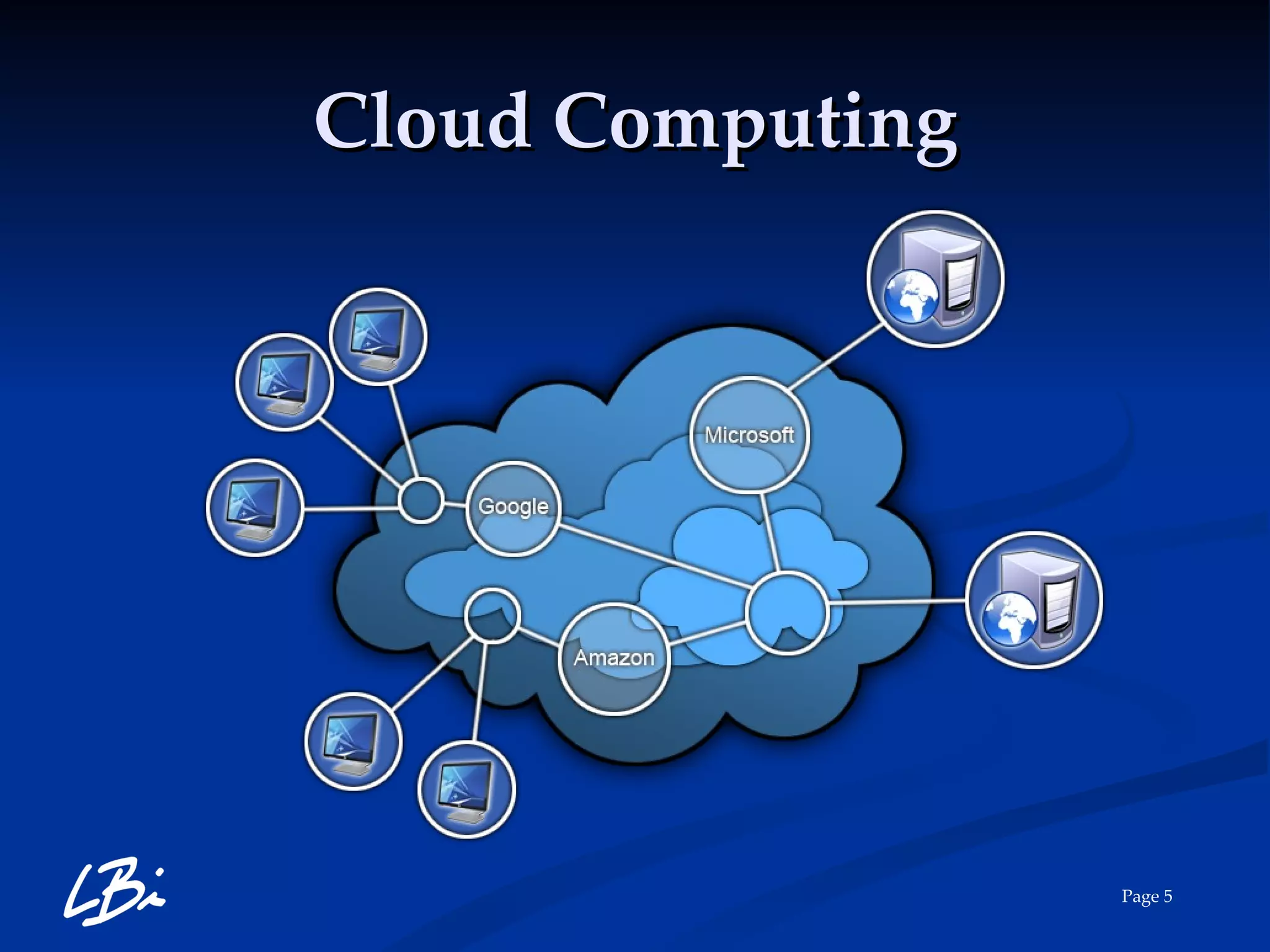
Origin of the term Cloud Computing Origins are from the early days of the Internet where the network was portrayed as a cloud First cloud around networking (TCP/IP abstraction) Second cloud around documents (WWW data abstraction) The emerging cloud abstracts infrastructure complexities of servers, applications, data, and heterogeneous platforms
Cloud Computing
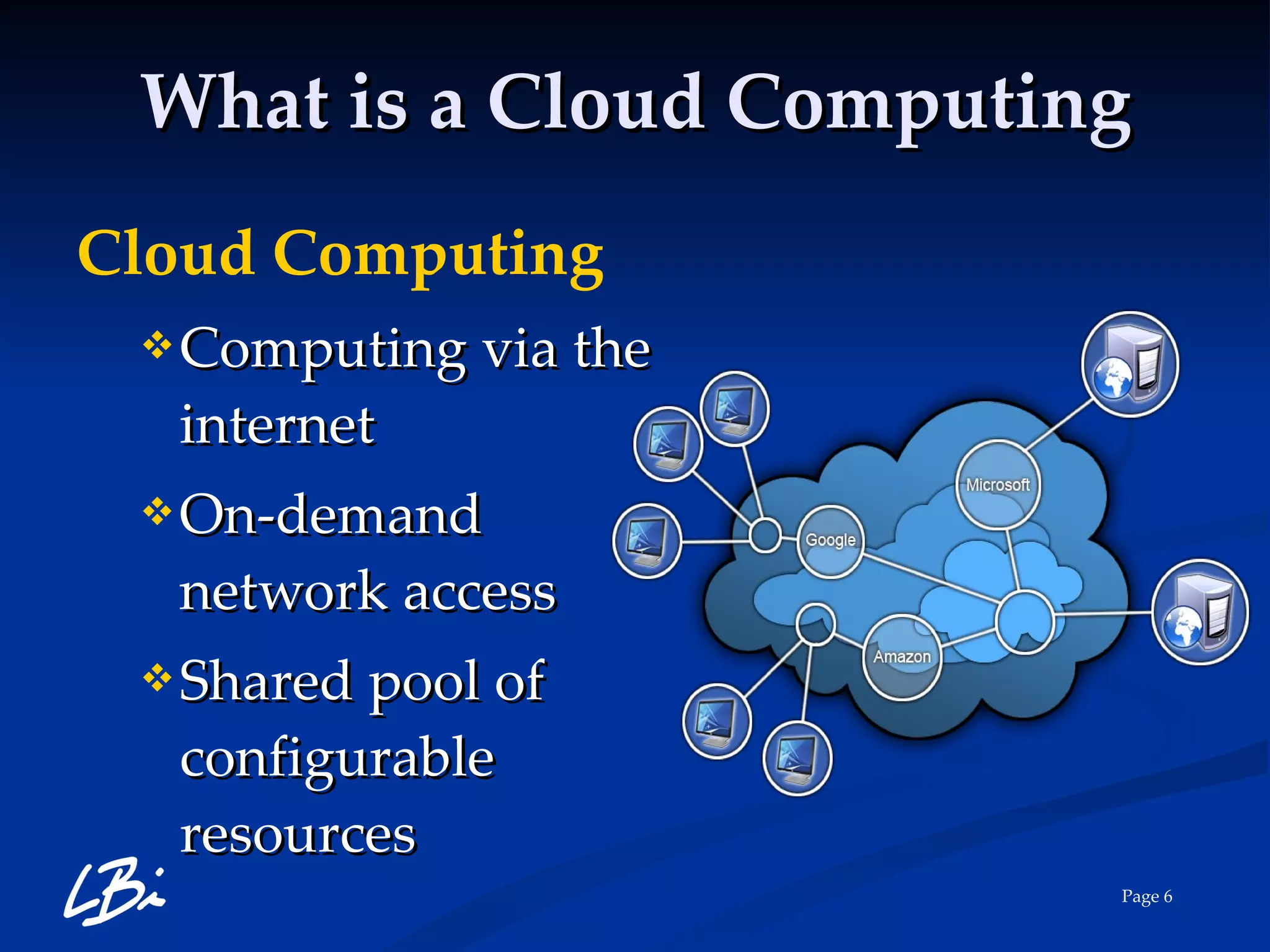
What is a Cloud Computing Cloud Computing Computing via the internet On-demand network access Shared pool of configurable resources
A Working Description of  Cloud Computing Cloud computing   -  a model for enabling convenient, on-demand network access to a shared pool of configurable computing resources (e.g., networks, servers, storage, applications, and services) that can be rapidly deployed and/or released with minimal management effort or service provider interaction
5 Essential Cloud Characteristics Broad network access  On-demand  Resource pooling Location independence “ Infinite” scale Measured service
4 Cloud Deployment Models Private cloud  Community cloud Hybrid cloud Public cloud
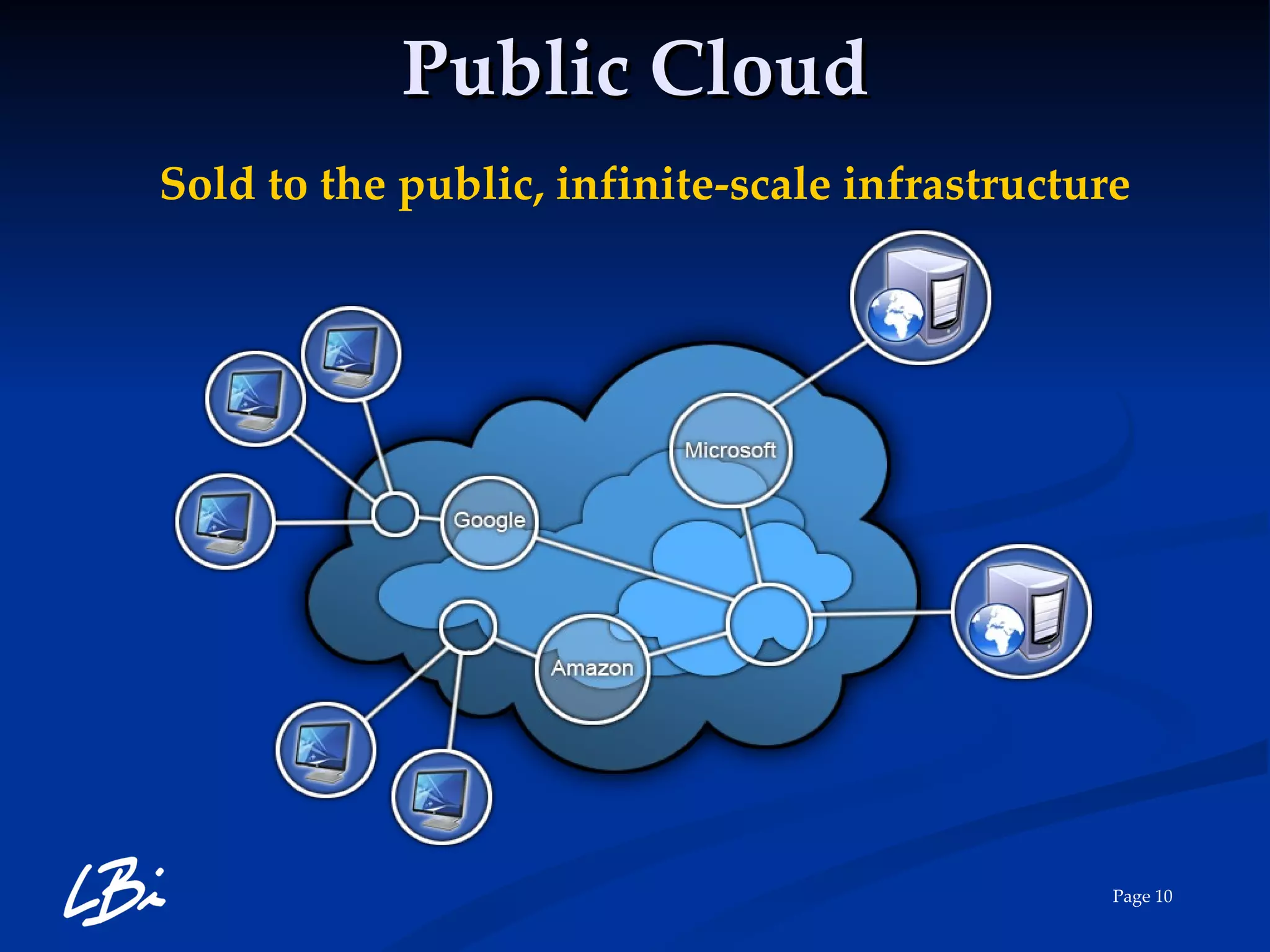
Public Cloud   Sold to the public, infinite-scale infrastructure
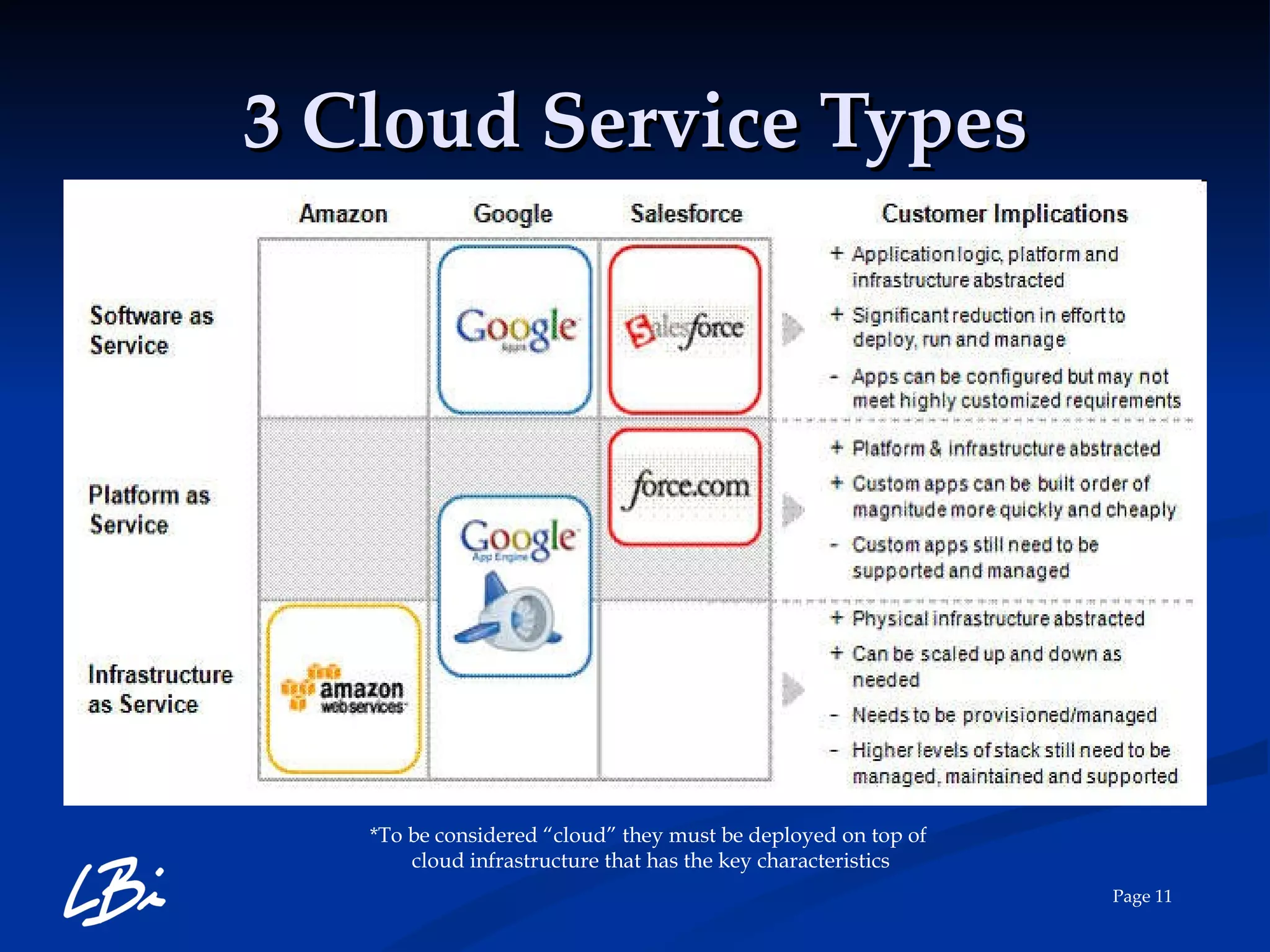
3 Cloud Service Types *To be considered “cloud” they must be deployed on top of  cloud infrastructure that has the key characteristics
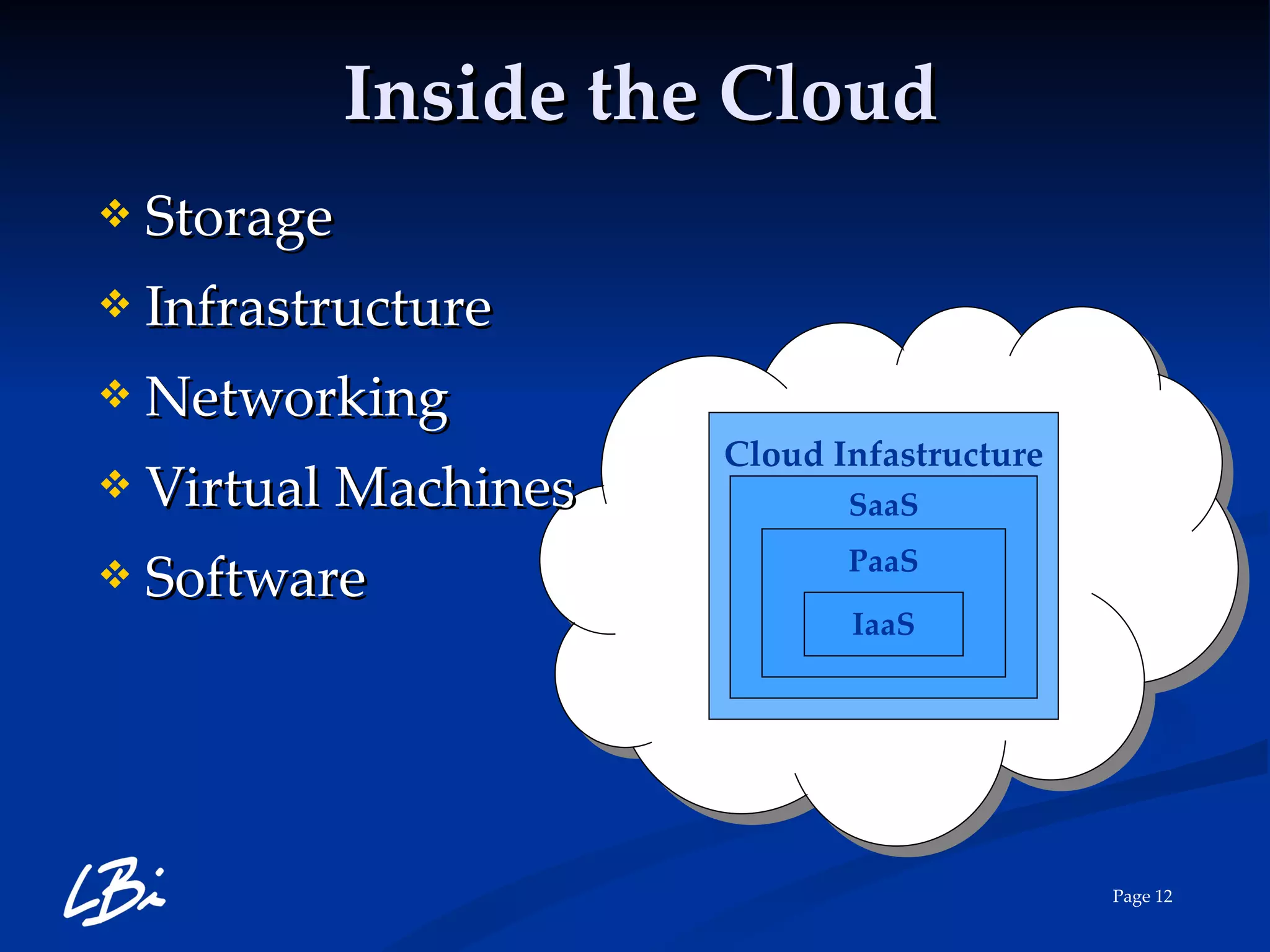
Storage Infrastructure  Networking Virtual Machines Software Inside the Cloud Cloud Infastructure SaaS PaaS IaaS
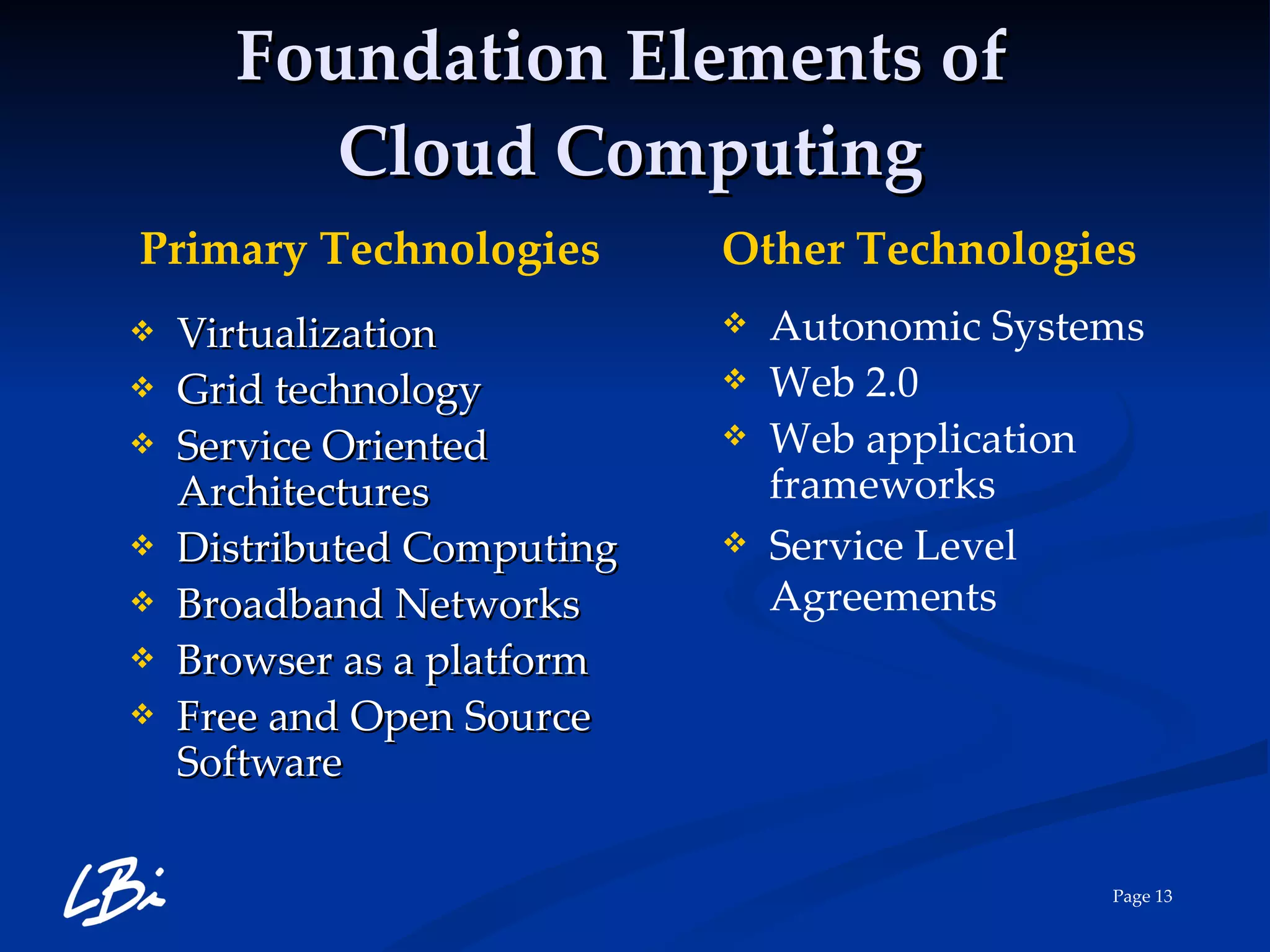
Foundation Elements of  Cloud Computing Virtualization Grid technology Service Oriented Architectures Distributed Computing Broadband Networks Browser as a platform Free and Open Source Software Autonomic Systems  Web 2.0 Web application frameworks Service Level Agreements Other Technologies Primary Technologies
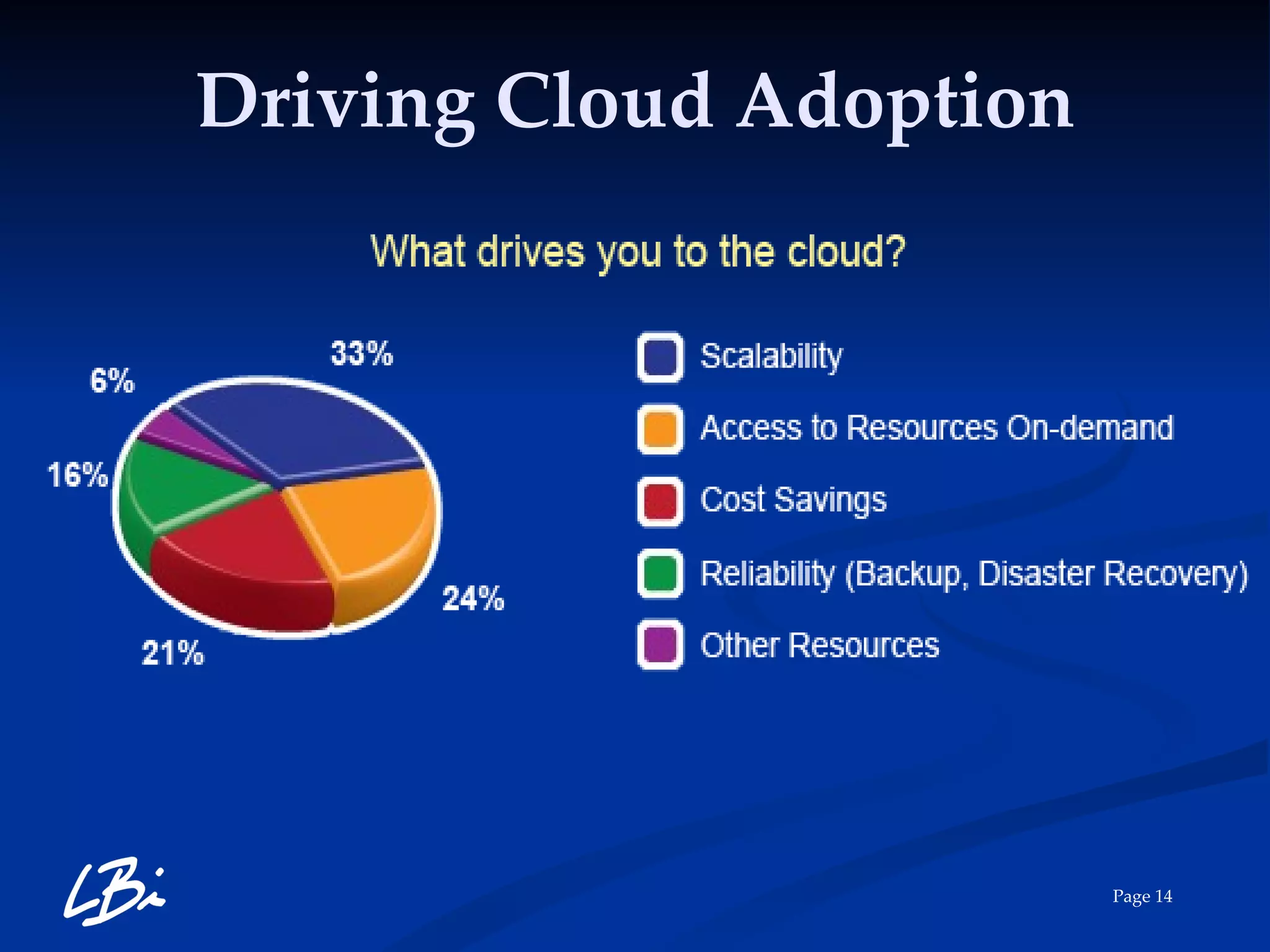
Driving Cloud Adoption
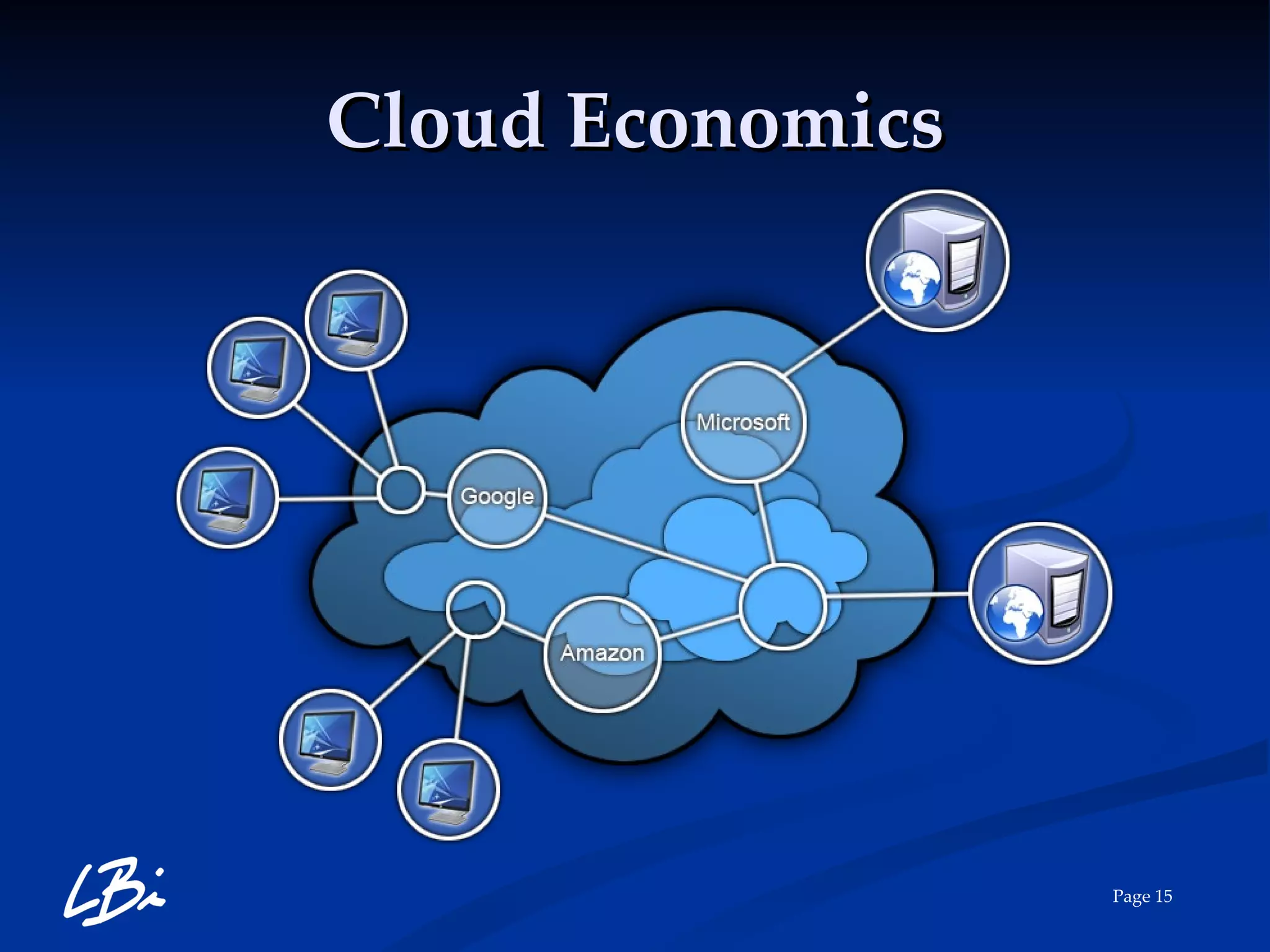
Cloud Economics
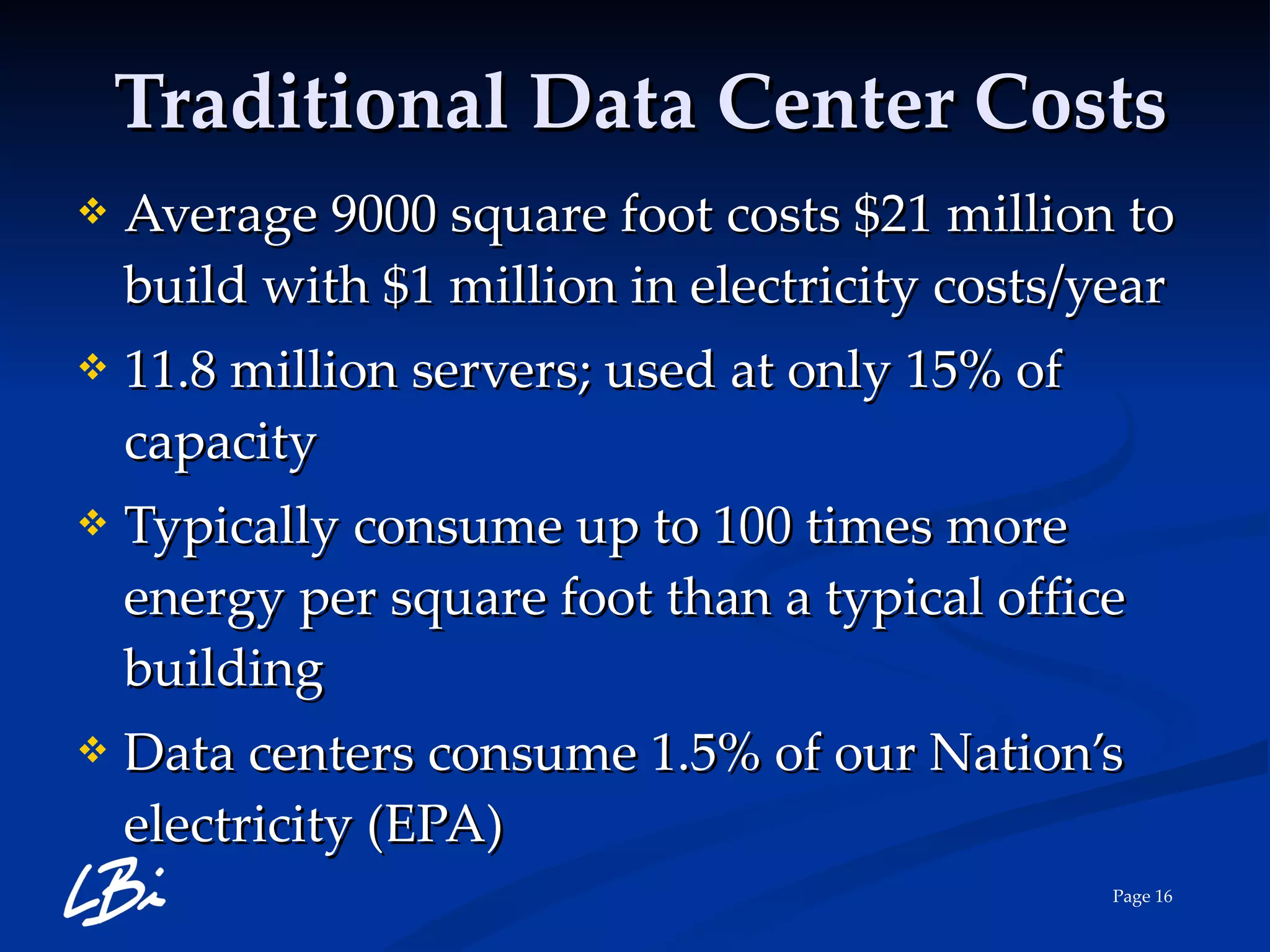
Traditional Data Center Costs Average 9000 square foot costs $21 million to build with $1 million in electricity costs/year 11.8 million servers; used at only 15% of capacity Typically consume up to 100 times more energy per square foot than a typical office building Data centers consume 1.5% of our Nation’s electricity (EPA)
Traditional Software Costs $800 billion dollars spent yearly on purchasing and maintaining enterprise software  Expensive upgrade costs Expensive licensing costs Inflexibility 80% of enterprise software expenditure is on installation and maintenance
Cloud Economics Estimates vary widely on possible cost savings: “ If you move your data center to a cloud provider, it will cost a tenth of the cost.” –  Brian Gammage, Gartner Fellow “ Use of cloud applications can reduce costs 50% to 90%” -  CTO of Washington D.C. “ IT resource subscription pilot saw 28% cost savings” - Alchemy Plus (backing from Microsoft) Preferred Hotel Traditional: $210k server refresh and $10k/month Cloud: $10k implementation and $16k/month
Possible Effects of Cloud Computing Small enterprises use SaaS and public clouds minimize growth of data centers Large enterprises data centers evolve to act as private clouds use hybrid clouds to leverage both internal and public clouds Public clouds may adopt standards in order to run workloads from competing hybrid cloud infrastructures
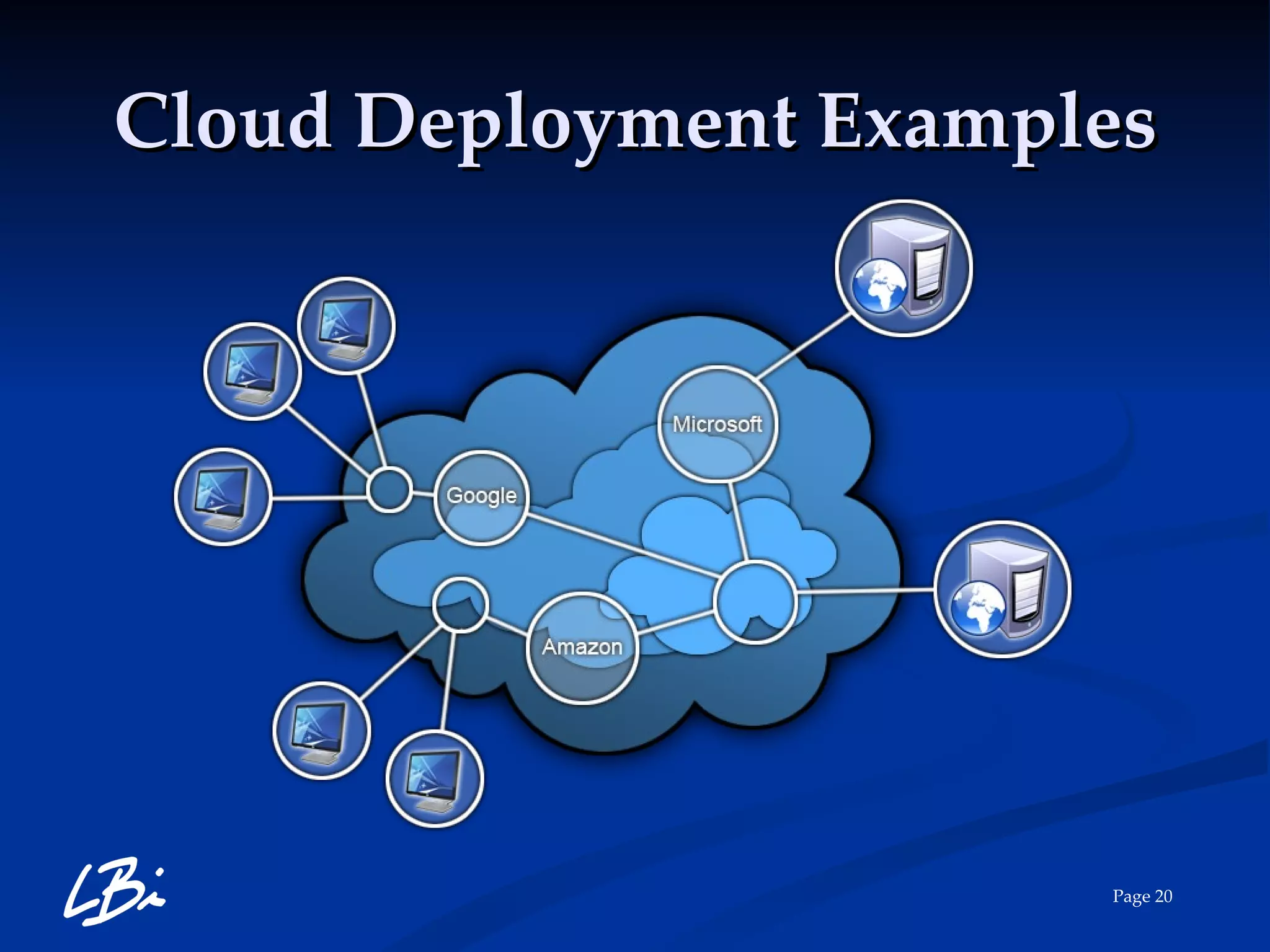
Cloud Deployment Examples
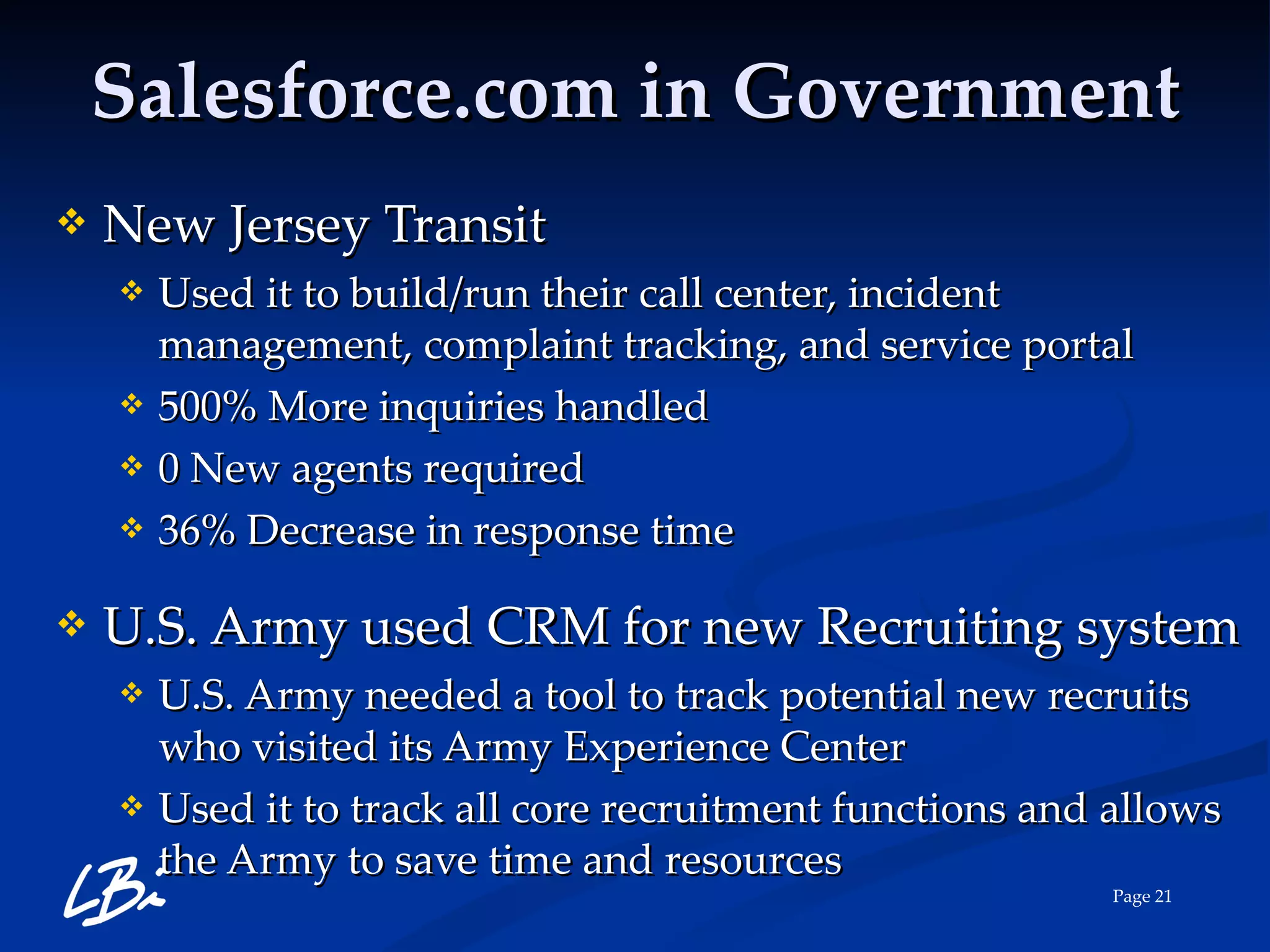
Salesforce.com in Government New Jersey Transit Used it to build/run their call center, incident management, complaint tracking, and service portal 500% More inquiries handled 0 New agents required 36% Decrease in response time U.S. Army used CRM for new Recruiting system U.S. Army needed a tool to track potential new recruits who visited its Army Experience Center Used it to track all core recruitment functions and allows the Army to save time and resources
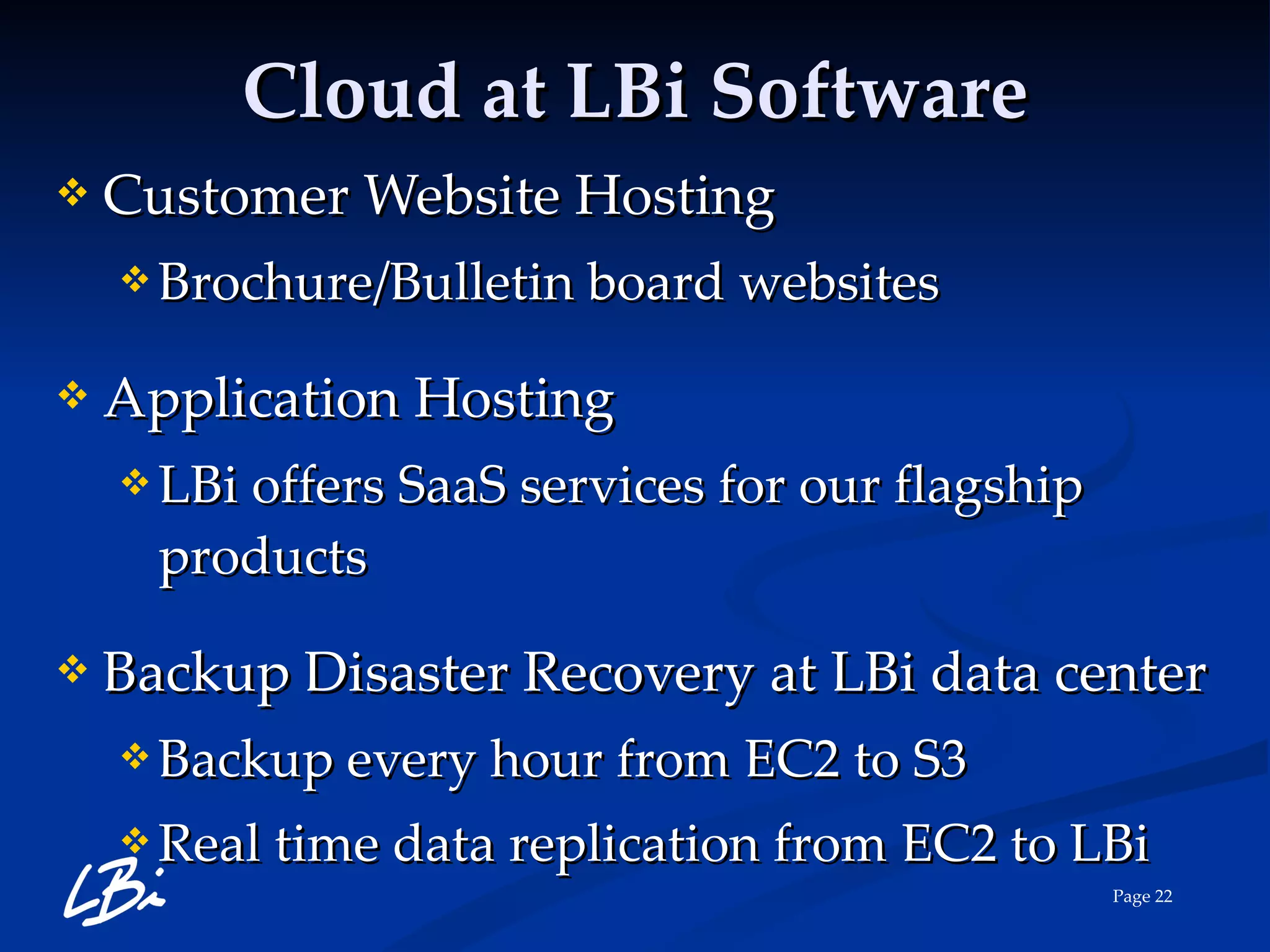
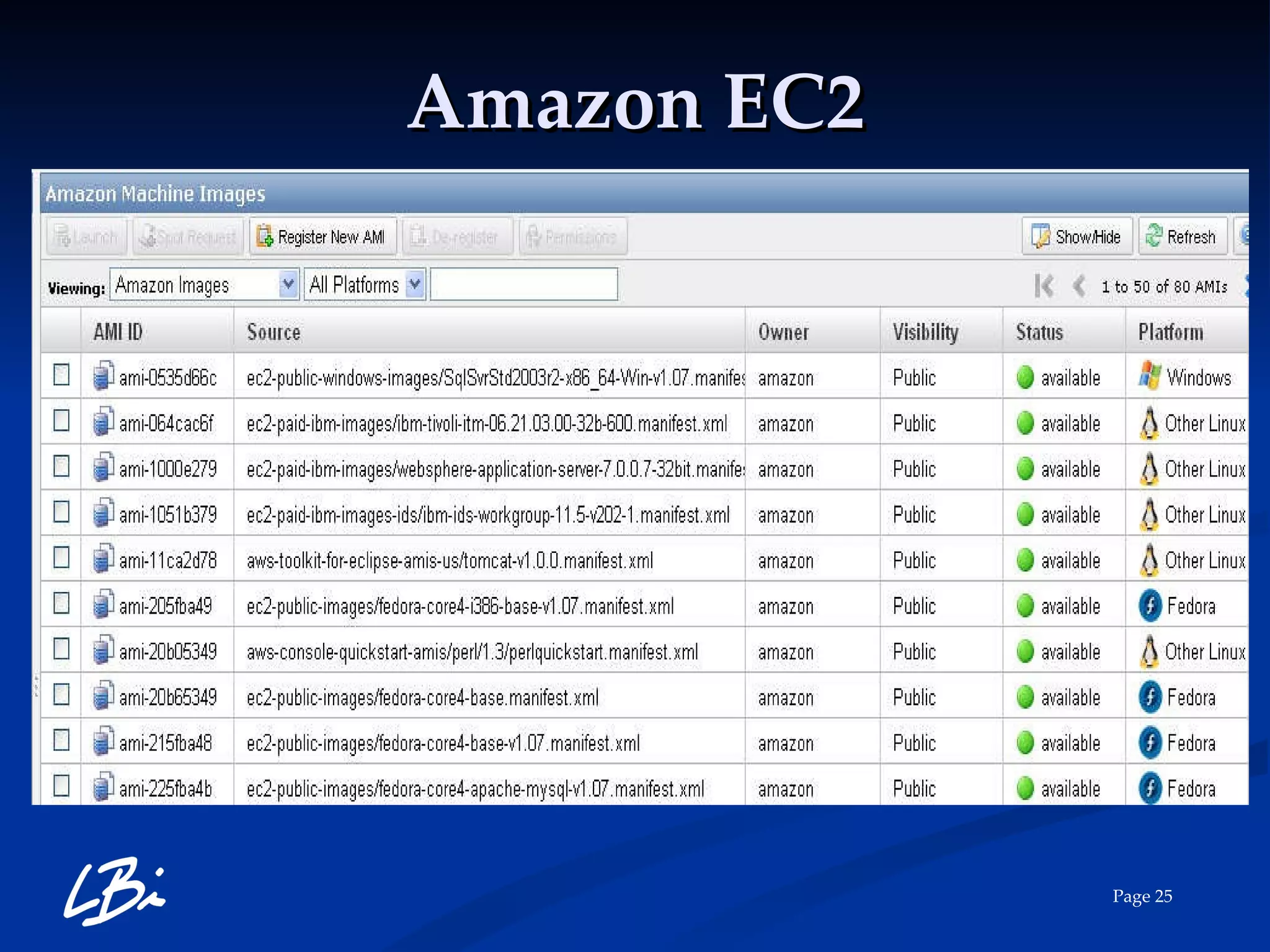
Cloud at LBi Software Customer Website Hosting Brochure/Bulletin board websites Application Hosting LBi offers SaaS services for our flagship products Backup Disaster Recovery at LBi data center Backup every hour from EC2 to S3 Real time data replication from EC2 to LBi
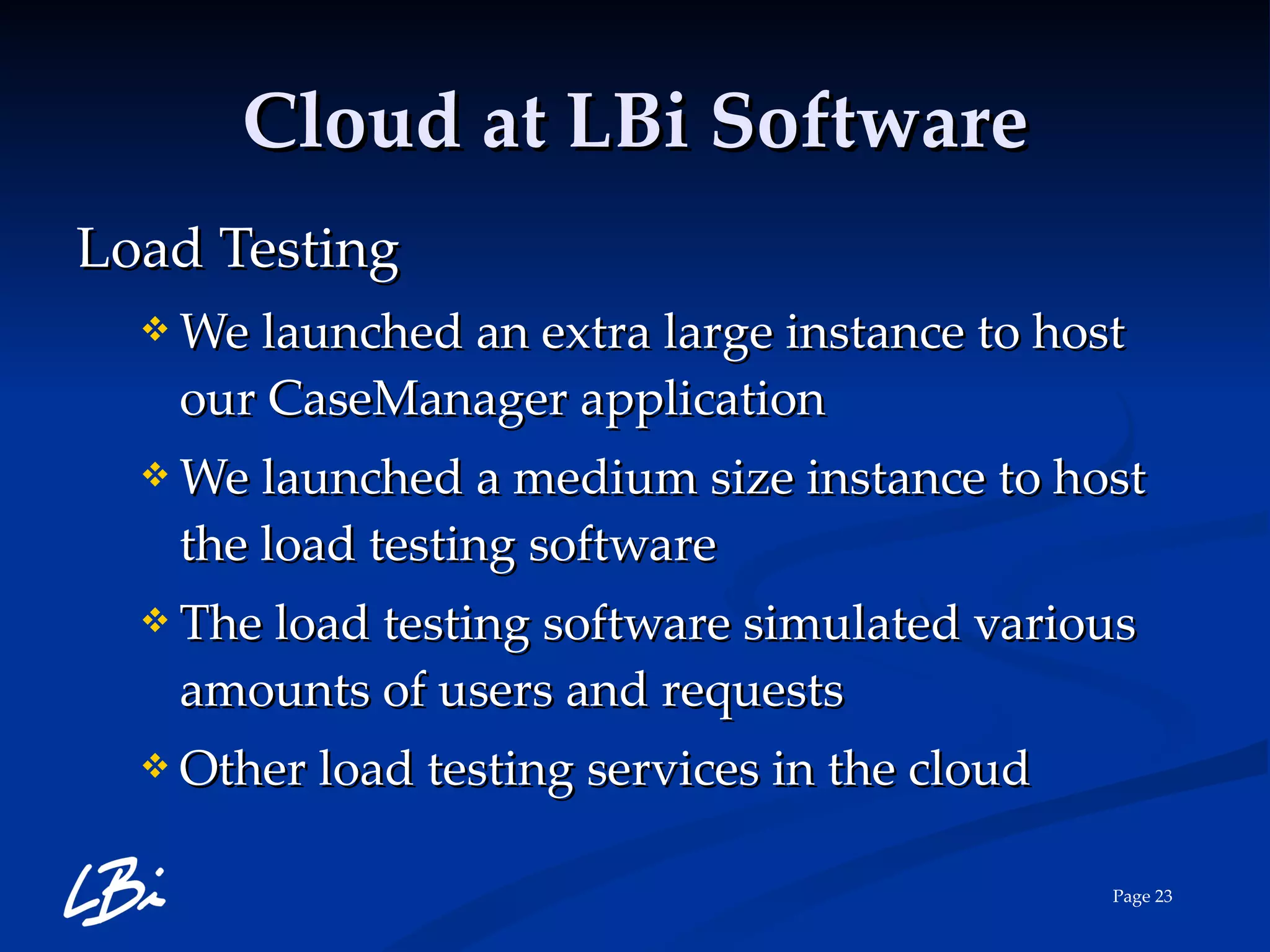
Cloud at LBi Software Load Testing We launched an extra large instance to host our CaseManager application We launched a medium size instance to host the load testing software  The load testing software simulated various amounts of users and requests  Other load testing services in the cloud
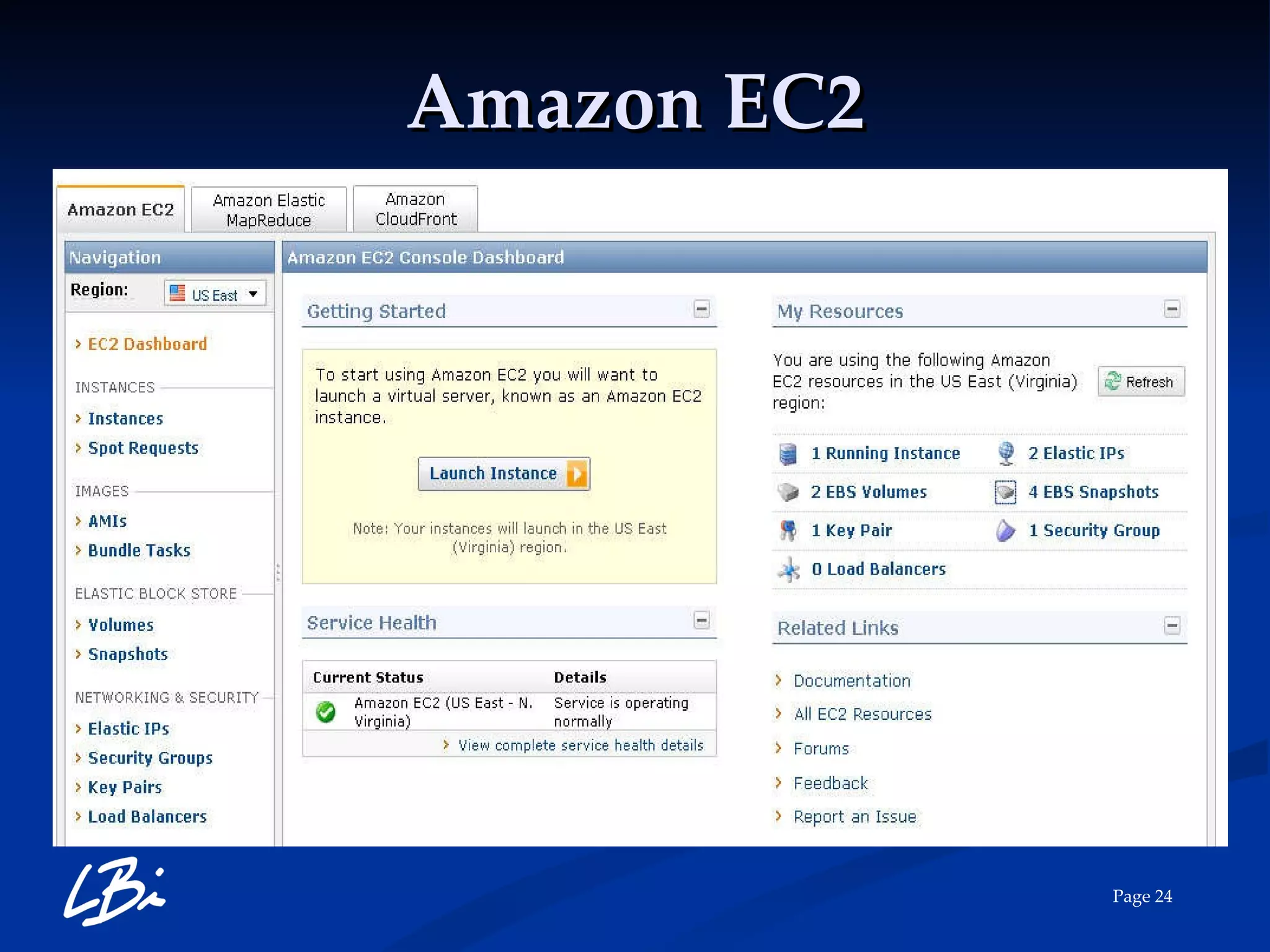
Amazon EC2
Amazon EC2
Thank You! For more information:  www.LBiSoftware.com

Overview of Cloud Computing and the Potential Business Impact

  • 1.
    Overview of CloudComputing & Potential Business Impact Gary Reuter LBi Software Northeast PeopleSoft & NY/NJ JD Edwards RUG Meeting
  • 2.
    Agenda Introductions DescribingCloud Computing Advantages/Issues Cloud Appropriate Solutions Getting Started in the Cloud Q & A
  • 3.
    LBi Software Over20 years HCM Focus Experience with Packaged Software Solutions Active Participant in Quest & RUG Events Team culture – average tenure is 10 years Platform independent/process oriented Technology centric
  • 4.
    Origin of theterm Cloud Computing Origins are from the early days of the Internet where the network was portrayed as a cloud First cloud around networking (TCP/IP abstraction) Second cloud around documents (WWW data abstraction) The emerging cloud abstracts infrastructure complexities of servers, applications, data, and heterogeneous platforms
  • 5.
  • 6.
    What is aCloud Computing Cloud Computing Computing via the internet On-demand network access Shared pool of configurable resources
  • 7.
    A Working Descriptionof Cloud Computing Cloud computing - a model for enabling convenient, on-demand network access to a shared pool of configurable computing resources (e.g., networks, servers, storage, applications, and services) that can be rapidly deployed and/or released with minimal management effort or service provider interaction
  • 8.
    5 Essential CloudCharacteristics Broad network access On-demand Resource pooling Location independence “ Infinite” scale Measured service
  • 9.
    4 Cloud DeploymentModels Private cloud Community cloud Hybrid cloud Public cloud
  • 10.
    Public Cloud Sold to the public, infinite-scale infrastructure
  • 11.
    3 Cloud ServiceTypes *To be considered “cloud” they must be deployed on top of cloud infrastructure that has the key characteristics
  • 12.
    Storage Infrastructure Networking Virtual Machines Software Inside the Cloud Cloud Infastructure SaaS PaaS IaaS
  • 13.
    Foundation Elements of Cloud Computing Virtualization Grid technology Service Oriented Architectures Distributed Computing Broadband Networks Browser as a platform Free and Open Source Software Autonomic Systems Web 2.0 Web application frameworks Service Level Agreements Other Technologies Primary Technologies
  • 14.
  • 15.
  • 16.
    Traditional Data CenterCosts Average 9000 square foot costs $21 million to build with $1 million in electricity costs/year 11.8 million servers; used at only 15% of capacity Typically consume up to 100 times more energy per square foot than a typical office building Data centers consume 1.5% of our Nation’s electricity (EPA)
  • 17.
    Traditional Software Costs$800 billion dollars spent yearly on purchasing and maintaining enterprise software Expensive upgrade costs Expensive licensing costs Inflexibility 80% of enterprise software expenditure is on installation and maintenance
  • 18.
    Cloud Economics Estimatesvary widely on possible cost savings: “ If you move your data center to a cloud provider, it will cost a tenth of the cost.” – Brian Gammage, Gartner Fellow “ Use of cloud applications can reduce costs 50% to 90%” - CTO of Washington D.C. “ IT resource subscription pilot saw 28% cost savings” - Alchemy Plus (backing from Microsoft) Preferred Hotel Traditional: $210k server refresh and $10k/month Cloud: $10k implementation and $16k/month
  • 19.
    Possible Effects ofCloud Computing Small enterprises use SaaS and public clouds minimize growth of data centers Large enterprises data centers evolve to act as private clouds use hybrid clouds to leverage both internal and public clouds Public clouds may adopt standards in order to run workloads from competing hybrid cloud infrastructures
  • 20.
  • 21.
    Salesforce.com in GovernmentNew Jersey Transit Used it to build/run their call center, incident management, complaint tracking, and service portal 500% More inquiries handled 0 New agents required 36% Decrease in response time U.S. Army used CRM for new Recruiting system U.S. Army needed a tool to track potential new recruits who visited its Army Experience Center Used it to track all core recruitment functions and allows the Army to save time and resources
  • 22.
    Cloud at LBiSoftware Customer Website Hosting Brochure/Bulletin board websites Application Hosting LBi offers SaaS services for our flagship products Backup Disaster Recovery at LBi data center Backup every hour from EC2 to S3 Real time data replication from EC2 to LBi
  • 23.
    Cloud at LBiSoftware Load Testing We launched an extra large instance to host our CaseManager application We launched a medium size instance to host the load testing software The load testing software simulated various amounts of users and requests Other load testing services in the cloud
  • 24.
  • 25.
  • 26.
    Thank You! Formore information: www.LBiSoftware.com