Outcomes-Based
Education (OBE)
- Sumayan, Lea Jean S.
 Educational Outcome - is a culminating
demonstration of learning (Spady, 1993).
 Outcomes- are clear learning results that
we want students to demonstrate at the
end of significant learning experiences,
and are actions and performances that
embody and reflect learner competence in
using content, information, ideas, and tools
successfully (Spady, 1994)
What is OBE?
According to William Spady (1994),
Outcome-Based Education means clearly
focusing and organizing everything in an
educational system around what is essential
for all students to be able to do successfully at
the end of their learning experiences.
The four basic principles (Spady, 1994)
are:
1. Clarity of focus
2. Designing down
3. High expectations
4. Expanded opportunities
 Clarify short & long term
learning intentions
 Assist learners to attain
the outcomes
 Focus assessments on
significant outcomes
CLARITY OF FOCUS
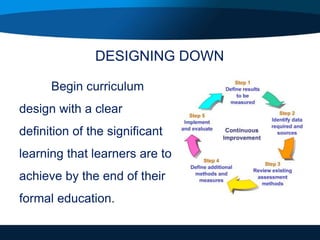
Begin curriculum
design with a clear
definition of the significant
learning that learners are to
achieve by the end of their
formal education.
DESIGNING DOWN
Most students can
achieve high standards if
they are given
opportunities.
HIGH
EXPECTATIONS for
all to succeed.
Provide multiple learning
opportunities to match different
learner’s needs.
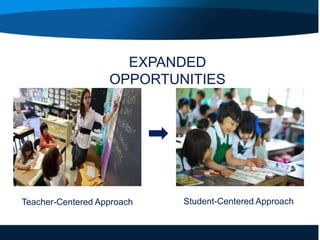
EXPANDED
OPPORTUNITIES
EXPANDED
OPPORTUNITIES
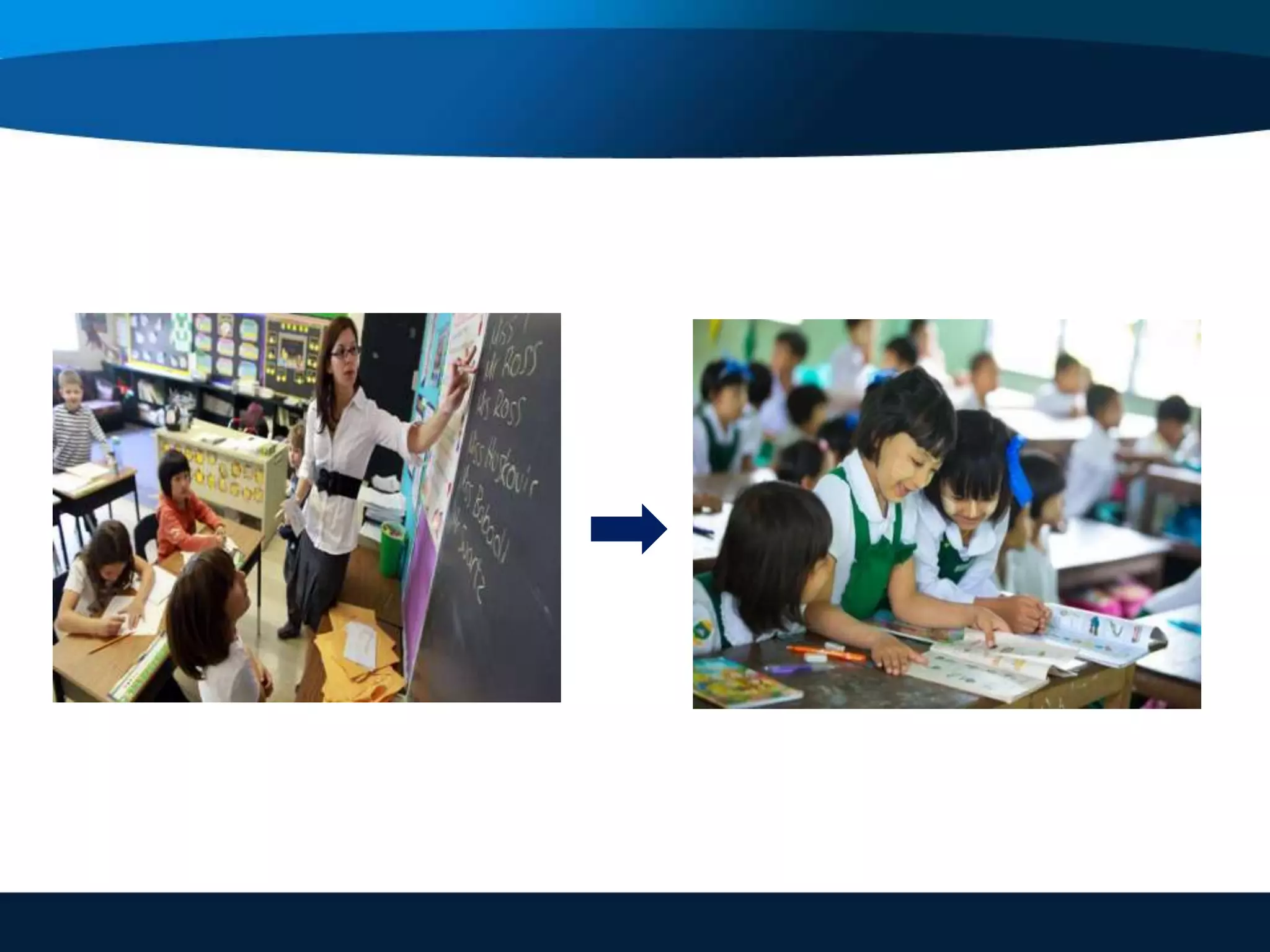
Teacher-Centered Approach Student-Centered Approach
5 Stages of OBE Implementation
1.Understand the Big Picture
 the Why?
 to produce graduates whom are ready for
industry's demand globally
 to meet global level of quality assurance
2. Setting Objectives and Outcomes
 Formulate Aims, PEO, PLO
 Identify Domains and Taxonomies
(Depth)
3. Mapping of Outcomes
4. Delivery of OBE Courses
 Student Learning Time (SLT)
 Plan and Implement Strategies
 Assessment of Courses
- Assignment/Projects
- Test/Examination
(TOS)
5. Continuous Quality Improvement
 Closing the inner loop
 Closing the outer loop

Outcomes-Based Education (OBE) - Lea Jean S. Sumayan

  • 2.
  • 3.
     Educational Outcome- is a culminating demonstration of learning (Spady, 1993).  Outcomes- are clear learning results that we want students to demonstrate at the end of significant learning experiences, and are actions and performances that embody and reflect learner competence in using content, information, ideas, and tools successfully (Spady, 1994)
  • 4.
    What is OBE? Accordingto William Spady (1994), Outcome-Based Education means clearly focusing and organizing everything in an educational system around what is essential for all students to be able to do successfully at the end of their learning experiences.
  • 5.
    The four basicprinciples (Spady, 1994) are: 1. Clarity of focus 2. Designing down 3. High expectations 4. Expanded opportunities
  • 6.
     Clarify short& long term learning intentions  Assist learners to attain the outcomes  Focus assessments on significant outcomes CLARITY OF FOCUS
  • 7.
    Begin curriculum design witha clear definition of the significant learning that learners are to achieve by the end of their formal education. DESIGNING DOWN
  • 8.
    Most students can achievehigh standards if they are given opportunities. HIGH EXPECTATIONS for all to succeed.
  • 9.
    Provide multiple learning opportunitiesto match different learner’s needs. EXPANDED OPPORTUNITIES
  • 10.
  • 11.
    5 Stages ofOBE Implementation 1.Understand the Big Picture  the Why?  to produce graduates whom are ready for industry's demand globally  to meet global level of quality assurance
  • 12.
    2. Setting Objectivesand Outcomes  Formulate Aims, PEO, PLO  Identify Domains and Taxonomies (Depth)
  • 13.
    3. Mapping ofOutcomes
  • 14.
    4. Delivery ofOBE Courses  Student Learning Time (SLT)  Plan and Implement Strategies  Assessment of Courses - Assignment/Projects - Test/Examination (TOS)
  • 15.
    5. Continuous QualityImprovement  Closing the inner loop  Closing the outer loop