OBJECTIVE STRUCTURED CLINICAL
EXAMINATION(OSCE) & OSPE
Dr. Govardhan Vaghasiya
M.S. (surgery), FMAS, FAIS, FIAGES
Associate Professor & Head Of Surgical Unit, Dept. of Surgery, PDU Medical
College, Rajkot.
DEFINITION:
 OSCE is a procedure where
predetermined decisions are made on the
competencies to be tested and checklists
incorporating important evaluable skills are
prepared.
OSCE
Objective : examiners use a checklist for
evaluating the trainees
Structured: trainee sees the same problem
and performs the same tasks in the same
time frame
Clinical: the tasks are representative of those
faced in real clinical situations
MODIFICATION OF OSCE
OSLER:objective structured long examination
record
OSPE: objective structured practical
examination
OSVE: objective structured video examination
OSTE: objective structured teaching evaluation
OSPRE: objective structured performance-
related examination
OSSE: objective structured selection exam.
POLITICAL…….!!!!
Organization for Security and
Cooperation in Europe
PURPOSE OF OSCE
To Eliminet Following:
 Variability
 Defects in competencies examined
 Difficulties in conducting Exams
OBJECTIVE STRUCTURED
CLINICAL EXAMINATION (OSCE)
 It is a method of assessing a student’s
clinical competence which is objective rather
than subjective and in which the areas tested
are carefully planned by the examiners.
 The clinical competence is broken down in to
its various components e.g. taking a history /
auscultation of heart / interpretation of ECG
or coming to a conclusion on the basis of the
findings.
 Each component is the objective of one of
the stations in the examination
OBJECTIVE STRUCTURED
EXAMINATION (OSCE / OSPE)
 PRINCIPLE :
 Skill to be tested is given in form of a
specific question
• To be answered in 4-5 minutes
• Each question is a station
• For each question (station) a check list is
prepared in advance
• Check list prepared by breaking the skill to
be tested into its vital components and
precautions to be observed
ADVANTAGES OF THE OSCE
 All components of clinical Exams are assesed
So More
 Valid examination
 The examiners can control the complexities of
the examination
 Used as summative as well formative
 Can be used with larger number of students
 Reproducible
 Components of clinical Skills& standards of
competencies are predetermined So Objectivity
& Reliability is higher
ADVANTAGES OF THE OSCE (CONT)
 The variable of the examiner and the patient
are to a large extent removed
 Fun activity within the department or college,
which promotes team work
DISADVANTAGES OF THE OSCE
 Knowledge and skills are tested in
compartments & not tested in ability to look
at the Pt. as a whole, So long case may also
needed
 The OSCE may be demanding for both
examiners and patients
 More time in setting it up
 Shortage of examiners
 Might be quite distressing to the student
HARDEN’S 12 TIPS FOR ORGANIZING AN OSCE
 What is to be assessed?
 Duration of station
 Number of stations
 Use of examiners
 Range of approaches
 New stations
HARDEN’S 12 TIPS FOR ORGANIZING AN OSCE
(CONT.)
 Organization of the examination
 Assigning priority
 Resource requirements
 Plan of the examination
 Change signal
 Records
CONDUCTING OSCE / OSPE
• Student rotates round a number of
stations – about 20
• Spends specified time on each station (4-5
minutes)
• On a signal (e.g. bell) moves to the next.
17
PROCEDURE STATION
e.g. Taking history of a patient
Examine eye of a patient
QUESTION STATION
•MCQs related to finding
•Interpretation of lab report etc.
18
e.g. 1
History taking / Examining a patient
- Examiner is present
- Uses a check list to record the performance of the
students as they pass through stations
e.g. 2
Chest X-Ray inspection
- No examiner
- Student asked about his findings & interpretation at
the next question station.
- May be given additional information and asked
about patient management (MCQs / TRUE – FALSE
type Question used)
19
Student’s Name :………………………………………………
Instructions to students
This patient complains of ‘Stomach Pain”. Obtain a history from him
(i) Key points in history
(Mark with a tick)
Patient’s Name Nausea, vomiting
Patient’s age Weight loss
Occupation Bowel habit
Pain Type Melena
Site Family history
Radiation Drug History
Relieving Factors Smoking
Exacerbating factors Alcohol
Periodicity Previous medical history
Duration e.g. perf. Hemetemesis
Severity Bonus ( +1 or +2)
Appetite
Total
(3) Student’s Attitude to Patient
Allocate a mark taking into account : Scale
Consideration of Patients Feeling 8-10 Distinction
Attempts to Establish a rapport 7 Very good pass
with the patient 6 Pass Total
5 Bare pass
4 Fail
(2) History taking technique
Allocate a mark taking into account : Scale
Dates established 8-10 Distinction
Correct pace of questions 7 Very good pas
Correct phrasing of question 6 Pass
Attention paid to answer 5 Bare pass
Answer followed up appropriately 4 Fail
Total
Examiners Checklist
20
Question : “ Which of the following statement is / are true about the
patient whose history you have just taken ?
1. A) The patient’s name is RAHUL
B) He is a salesman
C) He is married with one child.
D) He smokes around 30 cigarettes per day
E) He travels a lot.
2. A) His present complaint is of stomach pain present for 2 weeks.
B) He has had stomach pain like this in the past.
C) The pain is localized in the epigastria.
D) During Day time it is present constantly.
E) The pain often wakes him up at night.
3. A) The pain is relieved with milk and food
B) His brother had an ulcer
C) He is worried about his work
D) He complaints of diarrhea
E) He has lost about 3-4 kg weight recently.
21
Examiner’s Checklist
Student’s Name :………………………………………………
Instructions to students
Carry out a neurological examination of the lower limbs
excluding sensation and coordination
(1) Inspection of legs
(2) Test for tone
(3) Test for clonus
(4) Test power – Ankle
(5) Test power – Knee
(6) Test power – Hip
(7) Test reflexes – Knee
(8) Test reflexes – Ankle
(9) Test reflexes – Plantar
Total
(2) Mark for general proficiency
Taking into account, for
example Scale
Procedure carried out 8-10 Distinction
Sequence of procedures 7 Very good pass
Student has tendon hammer 6 Pass
5 Bare Pass
4 Fail
0-3 Bad Fail
Total
(3)
Mark for attitude to patient
Taking into account, for
example Scale
Use of patient’s name 8-10 Distinction
Explanation to patient 7 Very good pass
Discomfort to patient 6 Pass
5 Bare Pass
4 Fail
0-3 Bad Fail
Total
22
Question : “ Which of the following statement is / are true about the
patient you have just examined?
1. A) Inspection reveals muscle wasting in left leg.
B) The tone in the left leg is decreased.
C) Adduction at the left hip is decreased in power
D) Flexion power at left knee is decreased
E) Muscle power at the left ankle is decreased
2. A) The knee jerk on left side is increased
B) The ankle jerk on left side is increased
C) Clonuses is present at the left ankle.
D) The left plantar reflex is flexor
E) The signs in the left leg are those of an upper motor neuron lesion
23
1. Inspection – e.g.. Inspect the hands / face of this patient.
2. Interpretation of Patient’s charts / Lab. Investigations :
Record of temperature
B.P. Chart
ECG, Chest X-Ray.
Biochemical / Hematological report
Respiratory function report…….
3. Patient education
4. Interpersonal skills
5. Instruments
6. Specimens
7. Practical procedures – on models e.g. CPR, L.P….
8. Fundus examination -
24
EXAMINE
ABDOMEN
ANS.-Q.
ON ST.1
QUE.ON
ECG
ECG
ANS.-Q
ON CT
CT SCAN
QUE.ON
ST. 7
HISTORY
QUE. ON
ST. 5
HISTORY
ANS.-Q
ON ST.3
EXAMINE
CHEST
SPOT
SLIDE
(SPOT)
QUE.ON
ST.17
NEURO
EXAM.
QUE.ON
ST.15
CVS
EXAM.
LAB
DATA
INSTRU.
& QUE.
1
14
15
16
17
18
19
20
9
8
7
6
5
4
3
2
10
11
12
13
EXAMPLE
OF
OSCE
EXAM VENUE
CHANGING STATIONS
SIMULATED PATIENT(EXAMINATION)
29
30
Adaptation of OSCE to be applied for evaluation
of skills in preclinical and paraclinical subjects.
 Basic format remains same i.e. procedure
stations and question stations.
 Can be used as supplement to different
method of evaluation
31
QUESTION : You are provided with an oxygen-filled
spirometer. Determine your vital capacity.
EXAMINER’S CHECKLIST:
YES NO
1. Does he check the spirometer for leakage ? 0.4 0
2. Mouth piece inserted properly 0.3 0
3. Nose clipped properly 0.3 0
4. Does he take a few normal breaths before
determining vital capacity ? 0.5 0
5. Takes a deep inspiration 1.0 0
6. Exhales maximally 1.0 0
7. Takes more than one reading 0.5 0
8. Takes the highest reading as the vital
capacity 0.5 0
9. Also determines two-stage vital capacity 0.5 0
Total- /5
32
33
DEMO.
MOVEMENTS X RAY
LAB
DATA
Q.ANS
ON10
URINE
PROTEIN
NEUB.
CHAMBER
QUE.ON
ST. 7
NEURO
EXAM.
QUE. ON
ST. 5
VITAL
CAPACITY
IDENTIFY
PART
Q.ANS
ON 2
PRESCRI-
PTION
FDC-
EVALUATE.
DOSAGE
FORM
WITHDRAW
FROM VIAL.
QUE.ON
ST.15
GROSS
SPECIMEN.
LAB
DATA
SLIDE
(SPOT
1
14
15
16
17
18
19
20
9
8
7
6
5
4
3
2
10
11
12
13
EXAMPLE
OF
OSPE
34
 Determining vital capacity
 Charging the Neubauer chamber for doing the RBC count
 Recording blood pressure by auscultatory method
 Preparing the blood smear from given sample
 Identification of structures in the specimen (e.g. horizontal section
of brain) or a dissected part or x ray
 Interpretation of histological specimen
 Examination and interpretation of gross specimen
35
36
A.Advance Planning
B.Organization The Day Before Examination
C.The Day Of Examination
A.After The Examination
(A) Advance Planning :
Time ideally 6 months for major examination
8 weeks for formative.
1) Examiners decided
- What is to be examined.
- Weightage to different components
- Minimum standard to pass.
2) Briefing the examiners and concerned staff
37
3) Preparing the ward (venue) and ward staff
4) Selection and briefing Patients
5) Preparation of documentation including
checklist, instructions for examiners and
questions.
38
39
B) The Day Before The Examination:
1)Final check for preparations & arrangement in
ward
2)Final documentation to be given to each
examiner
C) The Day Of Examination
 Coordinator -1 hour prior
 Final check for arrangement
 Staff member brief the student
 All examiners have arrived and are at
their correct station
40
D) After The Examination:
1) Give feedback to students by
showing checklists & questions
scored by examiners.
41
42
Limitations
1. Knowledge and skills tested in COMPARTMENTS, not for
ability to look at the patient as a whole. Can combine
with traditional type ‘Long Case’ to overcome.
2. DEMANDING for examiners and patients – use more
patients/ simulated patient.
3. TIME taken for planning in advance greater than
traditional examination.
More effort and time are required before examination.
Can reduce with a) Experience and
b) Bank of objective test items &
checklist.
43
USES:
In any situation where one has to assess a student’s clinical
competence / psychomotor/communication
1) STAGE OF STUDENT :
a) As term ending & internal examination (Formative)
b) Final (summative) examination.
2) PURPOSE :
a) Criteria reference – Pass / Fail decision
(Criteria decided in advance)
b) Formative – To find out areas where deficient & needs to
improve
- Provides Feedback
c) Selection of student for a course
3) Relation to other assessments - may be used as
- Sole assessment of clinical competence?
- Combined with a ‘long case’ or some other form of assessment
When used correctly, the OSCE can be
highly successful as an instrument to
assess competence in medicine
Ronald Harden
RESOURCES
 www.Ltsn-01.ac.uk
 www.osceskills.com
 www.oscehome.com
 A practical guide for medical teachers,3rd
edition (Harden& Dent)
 www.mededuworld.com
GROUP WORK
Each participant to prepare 1 station with
check list & material required
Group 1: Procedure station-OSCE
Group 2: Question station- OSCE
Group 3: Procedure station- OSPE
Group 4: Question station- OSPE
-To be presented in the plenary session
Time- 30 minutes
46
THANK YOU
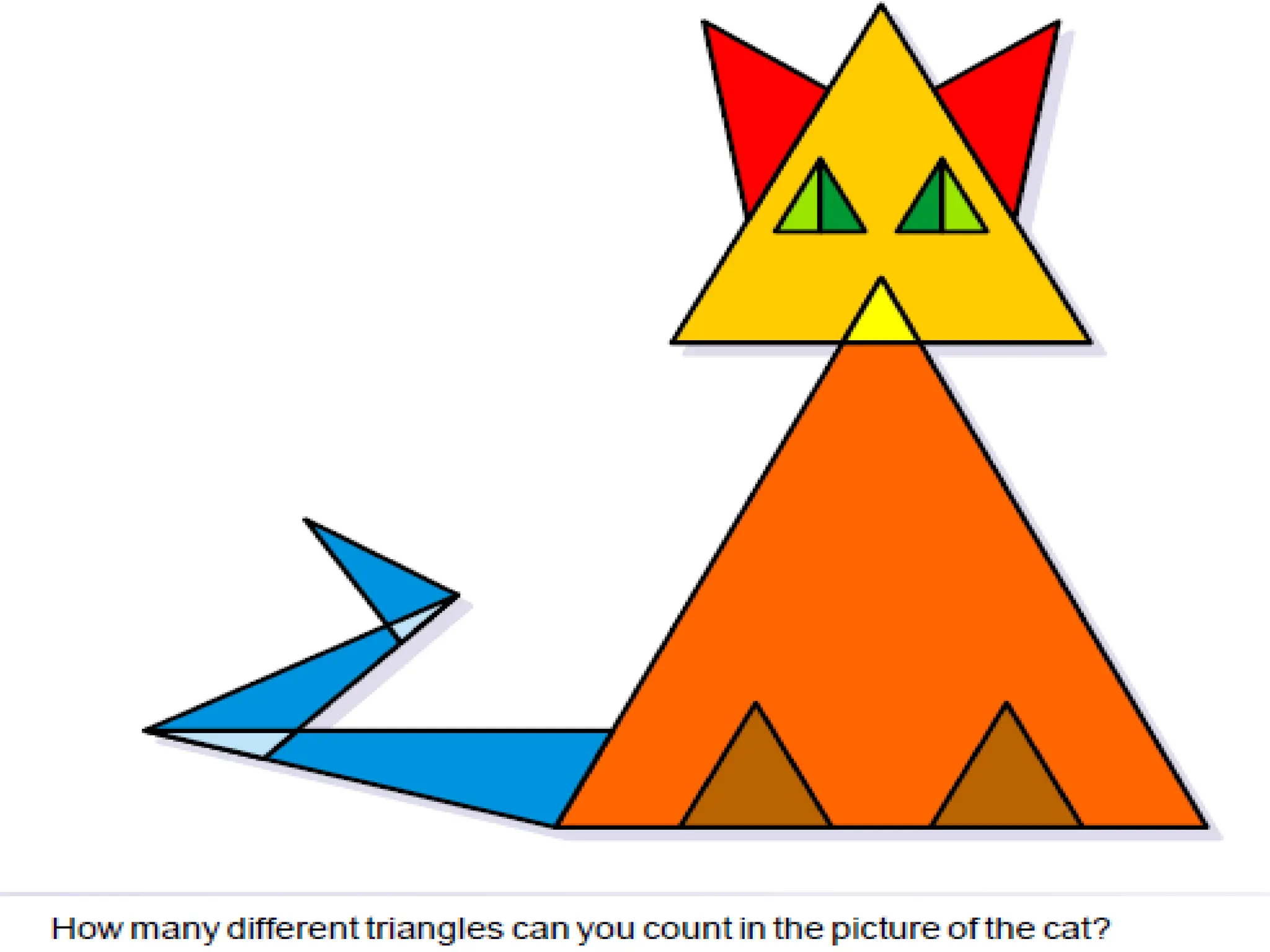
CUT THE Q :TWO REGION MUST B SAME SIZE &
SHAPE
OSCE & OSPE Final presentation.ppt teaching evaluation

OSCE & OSPE Final presentation.ppt teaching evaluation

  • 1.
    OBJECTIVE STRUCTURED CLINICAL EXAMINATION(OSCE)& OSPE Dr. Govardhan Vaghasiya M.S. (surgery), FMAS, FAIS, FIAGES Associate Professor & Head Of Surgical Unit, Dept. of Surgery, PDU Medical College, Rajkot.
  • 4.
    DEFINITION:  OSCE isa procedure where predetermined decisions are made on the competencies to be tested and checklists incorporating important evaluable skills are prepared.
  • 5.
    OSCE Objective : examinersuse a checklist for evaluating the trainees Structured: trainee sees the same problem and performs the same tasks in the same time frame Clinical: the tasks are representative of those faced in real clinical situations
  • 6.
    MODIFICATION OF OSCE OSLER:objectivestructured long examination record OSPE: objective structured practical examination OSVE: objective structured video examination OSTE: objective structured teaching evaluation OSPRE: objective structured performance- related examination OSSE: objective structured selection exam.
  • 7.
  • 8.
    PURPOSE OF OSCE ToEliminet Following:  Variability  Defects in competencies examined  Difficulties in conducting Exams
  • 9.
    OBJECTIVE STRUCTURED CLINICAL EXAMINATION(OSCE)  It is a method of assessing a student’s clinical competence which is objective rather than subjective and in which the areas tested are carefully planned by the examiners.  The clinical competence is broken down in to its various components e.g. taking a history / auscultation of heart / interpretation of ECG or coming to a conclusion on the basis of the findings.  Each component is the objective of one of the stations in the examination
  • 10.
    OBJECTIVE STRUCTURED EXAMINATION (OSCE/ OSPE)  PRINCIPLE :  Skill to be tested is given in form of a specific question • To be answered in 4-5 minutes • Each question is a station • For each question (station) a check list is prepared in advance • Check list prepared by breaking the skill to be tested into its vital components and precautions to be observed
  • 11.
    ADVANTAGES OF THEOSCE  All components of clinical Exams are assesed So More  Valid examination  The examiners can control the complexities of the examination  Used as summative as well formative  Can be used with larger number of students  Reproducible  Components of clinical Skills& standards of competencies are predetermined So Objectivity & Reliability is higher
  • 12.
    ADVANTAGES OF THEOSCE (CONT)  The variable of the examiner and the patient are to a large extent removed  Fun activity within the department or college, which promotes team work
  • 13.
    DISADVANTAGES OF THEOSCE  Knowledge and skills are tested in compartments & not tested in ability to look at the Pt. as a whole, So long case may also needed  The OSCE may be demanding for both examiners and patients  More time in setting it up  Shortage of examiners  Might be quite distressing to the student
  • 14.
    HARDEN’S 12 TIPSFOR ORGANIZING AN OSCE  What is to be assessed?  Duration of station  Number of stations  Use of examiners  Range of approaches  New stations
  • 15.
    HARDEN’S 12 TIPSFOR ORGANIZING AN OSCE (CONT.)  Organization of the examination  Assigning priority  Resource requirements  Plan of the examination  Change signal  Records
  • 16.
    CONDUCTING OSCE /OSPE • Student rotates round a number of stations – about 20 • Spends specified time on each station (4-5 minutes) • On a signal (e.g. bell) moves to the next.
  • 17.
    17 PROCEDURE STATION e.g. Takinghistory of a patient Examine eye of a patient QUESTION STATION •MCQs related to finding •Interpretation of lab report etc.
  • 18.
    18 e.g. 1 History taking/ Examining a patient - Examiner is present - Uses a check list to record the performance of the students as they pass through stations e.g. 2 Chest X-Ray inspection - No examiner - Student asked about his findings & interpretation at the next question station. - May be given additional information and asked about patient management (MCQs / TRUE – FALSE type Question used)
  • 19.
    19 Student’s Name :……………………………………………… Instructionsto students This patient complains of ‘Stomach Pain”. Obtain a history from him (i) Key points in history (Mark with a tick) Patient’s Name Nausea, vomiting Patient’s age Weight loss Occupation Bowel habit Pain Type Melena Site Family history Radiation Drug History Relieving Factors Smoking Exacerbating factors Alcohol Periodicity Previous medical history Duration e.g. perf. Hemetemesis Severity Bonus ( +1 or +2) Appetite Total (3) Student’s Attitude to Patient Allocate a mark taking into account : Scale Consideration of Patients Feeling 8-10 Distinction Attempts to Establish a rapport 7 Very good pass with the patient 6 Pass Total 5 Bare pass 4 Fail (2) History taking technique Allocate a mark taking into account : Scale Dates established 8-10 Distinction Correct pace of questions 7 Very good pas Correct phrasing of question 6 Pass Attention paid to answer 5 Bare pass Answer followed up appropriately 4 Fail Total Examiners Checklist
  • 20.
    20 Question : “Which of the following statement is / are true about the patient whose history you have just taken ? 1. A) The patient’s name is RAHUL B) He is a salesman C) He is married with one child. D) He smokes around 30 cigarettes per day E) He travels a lot. 2. A) His present complaint is of stomach pain present for 2 weeks. B) He has had stomach pain like this in the past. C) The pain is localized in the epigastria. D) During Day time it is present constantly. E) The pain often wakes him up at night. 3. A) The pain is relieved with milk and food B) His brother had an ulcer C) He is worried about his work D) He complaints of diarrhea E) He has lost about 3-4 kg weight recently.
  • 21.
    21 Examiner’s Checklist Student’s Name:……………………………………………… Instructions to students Carry out a neurological examination of the lower limbs excluding sensation and coordination (1) Inspection of legs (2) Test for tone (3) Test for clonus (4) Test power – Ankle (5) Test power – Knee (6) Test power – Hip (7) Test reflexes – Knee (8) Test reflexes – Ankle (9) Test reflexes – Plantar Total (2) Mark for general proficiency Taking into account, for example Scale Procedure carried out 8-10 Distinction Sequence of procedures 7 Very good pass Student has tendon hammer 6 Pass 5 Bare Pass 4 Fail 0-3 Bad Fail Total (3) Mark for attitude to patient Taking into account, for example Scale Use of patient’s name 8-10 Distinction Explanation to patient 7 Very good pass Discomfort to patient 6 Pass 5 Bare Pass 4 Fail 0-3 Bad Fail Total
  • 22.
    22 Question : “Which of the following statement is / are true about the patient you have just examined? 1. A) Inspection reveals muscle wasting in left leg. B) The tone in the left leg is decreased. C) Adduction at the left hip is decreased in power D) Flexion power at left knee is decreased E) Muscle power at the left ankle is decreased 2. A) The knee jerk on left side is increased B) The ankle jerk on left side is increased C) Clonuses is present at the left ankle. D) The left plantar reflex is flexor E) The signs in the left leg are those of an upper motor neuron lesion
  • 23.
    23 1. Inspection –e.g.. Inspect the hands / face of this patient. 2. Interpretation of Patient’s charts / Lab. Investigations : Record of temperature B.P. Chart ECG, Chest X-Ray. Biochemical / Hematological report Respiratory function report……. 3. Patient education 4. Interpersonal skills 5. Instruments 6. Specimens 7. Practical procedures – on models e.g. CPR, L.P…. 8. Fundus examination -
  • 24.
    24 EXAMINE ABDOMEN ANS.-Q. ON ST.1 QUE.ON ECG ECG ANS.-Q ON CT CTSCAN QUE.ON ST. 7 HISTORY QUE. ON ST. 5 HISTORY ANS.-Q ON ST.3 EXAMINE CHEST SPOT SLIDE (SPOT) QUE.ON ST.17 NEURO EXAM. QUE.ON ST.15 CVS EXAM. LAB DATA INSTRU. & QUE. 1 14 15 16 17 18 19 20 9 8 7 6 5 4 3 2 10 11 12 13 EXAMPLE OF OSCE
  • 25.
  • 26.
  • 27.
  • 29.
  • 30.
    30 Adaptation of OSCEto be applied for evaluation of skills in preclinical and paraclinical subjects.  Basic format remains same i.e. procedure stations and question stations.  Can be used as supplement to different method of evaluation
  • 31.
    31 QUESTION : Youare provided with an oxygen-filled spirometer. Determine your vital capacity. EXAMINER’S CHECKLIST: YES NO 1. Does he check the spirometer for leakage ? 0.4 0 2. Mouth piece inserted properly 0.3 0 3. Nose clipped properly 0.3 0 4. Does he take a few normal breaths before determining vital capacity ? 0.5 0 5. Takes a deep inspiration 1.0 0 6. Exhales maximally 1.0 0 7. Takes more than one reading 0.5 0 8. Takes the highest reading as the vital capacity 0.5 0 9. Also determines two-stage vital capacity 0.5 0 Total- /5
  • 32.
  • 33.
    33 DEMO. MOVEMENTS X RAY LAB DATA Q.ANS ON10 URINE PROTEIN NEUB. CHAMBER QUE.ON ST.7 NEURO EXAM. QUE. ON ST. 5 VITAL CAPACITY IDENTIFY PART Q.ANS ON 2 PRESCRI- PTION FDC- EVALUATE. DOSAGE FORM WITHDRAW FROM VIAL. QUE.ON ST.15 GROSS SPECIMEN. LAB DATA SLIDE (SPOT 1 14 15 16 17 18 19 20 9 8 7 6 5 4 3 2 10 11 12 13 EXAMPLE OF OSPE
  • 34.
    34  Determining vitalcapacity  Charging the Neubauer chamber for doing the RBC count  Recording blood pressure by auscultatory method  Preparing the blood smear from given sample  Identification of structures in the specimen (e.g. horizontal section of brain) or a dissected part or x ray  Interpretation of histological specimen  Examination and interpretation of gross specimen
  • 35.
  • 36.
    36 A.Advance Planning B.Organization TheDay Before Examination C.The Day Of Examination A.After The Examination
  • 37.
    (A) Advance Planning: Time ideally 6 months for major examination 8 weeks for formative. 1) Examiners decided - What is to be examined. - Weightage to different components - Minimum standard to pass. 2) Briefing the examiners and concerned staff 37
  • 38.
    3) Preparing theward (venue) and ward staff 4) Selection and briefing Patients 5) Preparation of documentation including checklist, instructions for examiners and questions. 38
  • 39.
    39 B) The DayBefore The Examination: 1)Final check for preparations & arrangement in ward 2)Final documentation to be given to each examiner
  • 40.
    C) The DayOf Examination  Coordinator -1 hour prior  Final check for arrangement  Staff member brief the student  All examiners have arrived and are at their correct station 40
  • 41.
    D) After TheExamination: 1) Give feedback to students by showing checklists & questions scored by examiners. 41
  • 42.
    42 Limitations 1. Knowledge andskills tested in COMPARTMENTS, not for ability to look at the patient as a whole. Can combine with traditional type ‘Long Case’ to overcome. 2. DEMANDING for examiners and patients – use more patients/ simulated patient. 3. TIME taken for planning in advance greater than traditional examination. More effort and time are required before examination. Can reduce with a) Experience and b) Bank of objective test items & checklist.
  • 43.
    43 USES: In any situationwhere one has to assess a student’s clinical competence / psychomotor/communication 1) STAGE OF STUDENT : a) As term ending & internal examination (Formative) b) Final (summative) examination. 2) PURPOSE : a) Criteria reference – Pass / Fail decision (Criteria decided in advance) b) Formative – To find out areas where deficient & needs to improve - Provides Feedback c) Selection of student for a course 3) Relation to other assessments - may be used as - Sole assessment of clinical competence? - Combined with a ‘long case’ or some other form of assessment
  • 44.
    When used correctly,the OSCE can be highly successful as an instrument to assess competence in medicine Ronald Harden
  • 45.
    RESOURCES  www.Ltsn-01.ac.uk  www.osceskills.com www.oscehome.com  A practical guide for medical teachers,3rd edition (Harden& Dent)  www.mededuworld.com
  • 46.
    GROUP WORK Each participantto prepare 1 station with check list & material required Group 1: Procedure station-OSCE Group 2: Question station- OSCE Group 3: Procedure station- OSPE Group 4: Question station- OSPE -To be presented in the plenary session Time- 30 minutes 46
  • 47.
  • 48.
    CUT THE Q:TWO REGION MUST B SAME SIZE & SHAPE