Roxanne Peña ACOR, NRP
 Introduction of Facility
 Restrooms
 Snacks located in office area
 Kitchen Area
 Smoking Section
 Keep area clean
 We will have chores everyday
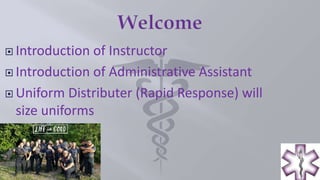
 Introduction of Instructor
 Introduction of Administrative Assistant
 Uniform Distributer (Rapid Response) will
size uniforms
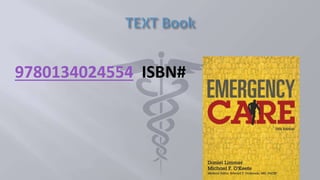
9780134024554 ISBN#
 Roxanne Peña NRP,ACOR
 Started EMS 1993
 Started Fire Department 1995
 Started STEC 1997
 Started Teaching 1995
 Started Coordinating classes 2005
 Currently teaching, fire and ems.
 Sharon Bray
 Over 25yrs Experience
 Volunteer Firefighter over 20yrs
 Alfredo Gonzales
 Computer Network Manager 1999
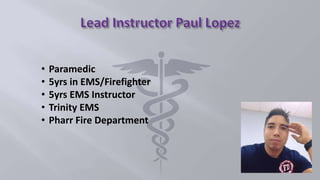
• Paramedic
• 5yrs in EMS/Firefighter
• 5yrs EMS Instructor
• Trinity EMS
• Pharr Fire Department
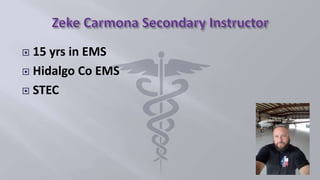
 15 yrs in EMS
 Hidalgo Co EMS
 STEC
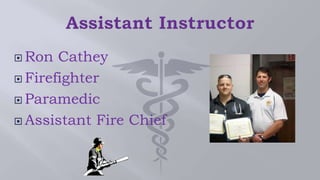
 Ron Cathey
 Firefighter
 Paramedic
 Assistant Fire Chief
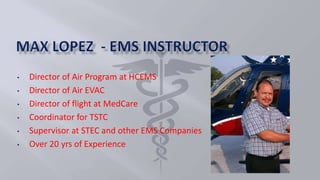
• Director of Air Program at HCEMS
• Director of Air EVAC
• Director of flight at MedCare
• Coordinator for TSTC
• Supervisor at STEC and other EMS Companies
• Over 20 yrs of Experience
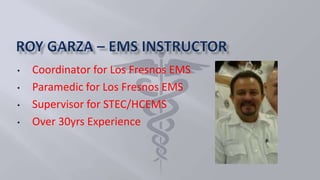
• Coordinator for Los Fresnos EMS
• Paramedic for Los Fresnos EMS
• Supervisor for STEC/HCEMS
• Over 30yrs Experience
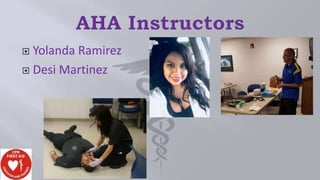
 Yolanda Ramirez
 Desi Martinez
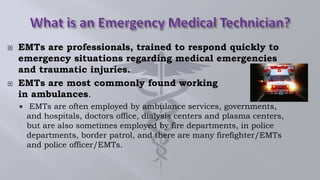
 EMTs are professionals, trained to respond quickly to
emergency situations regarding medical emergencies
and traumatic injuries.
 EMTs are most commonly found working
in ambulances.
 EMTs are often employed by ambulance services, governments,
and hospitals, doctors office, dialysis centers and plasma centers,
but are also sometimes employed by fire departments, in police
departments, border patrol, and there are many firefighter/EMTs
and police officer/EMTs.
 The procedures for bleeding control
 Positive pressure ventilation with a bag valve mask
 How to apply an oropharyngeal airway, nasopharyngeal airway, &
& supplemental oxygen
 How to read a Pulse Oximeter
 How to preform oral suctioning, cardio-pulmonary
resuscitation (CPR), use of an automated external
defibrillator (AED),
 How to splint (including full spinal immobilization)
 Basic medication administration (such as epinephrine auto-
injectors, oral glucose, aspirin, nitroglycerin, and albuterol).
 Day in the life
 Documentary
 Must be turned in 30days from first day of class!! No exceptions!
 Current TB
 MMR #1
 MMR#2
 Varicella
 Annual Flu vaccine
 Tetanus
 Hep B – 1,2 (3)
 Bacterial Meningitis
 Must be turned in before Ride Alongs
 You me be dropped from the course if drug screen/background is not
turned in.
 May be done at iCheckU in Weslaco
 Must be turned in 30days from first day of class!
 May be done at your doctors office
 Call around and find the cheapest
 We have a physical form if needed
 Must be turned in 30days from 1st day of class!
 DL
 We accept State ID
 We accept transcript
 If you have issues we can help
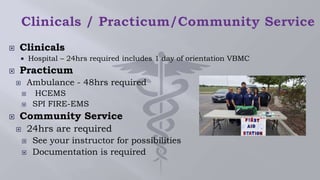
 Clinicals
 Hospital – 24hrs required includes 1 day of orientation VBMC
 Practicum
 Ambulance - 48hrs required
 HCEMS
 SPI FIRE-EMS
 Community Service
 24hrs are required
 See your instructor for possibilities
 Documentation is required
Faculty is committed to assisting students to be successful in the
program.
Therefore, students who are not meeting courses objectives in theory, lab, clinical, or field
internship will be informed of their performance status using the following progressive
discipline process.
Step 1: Warning
 The instructor provides the student with a verbal warning. The instructor counsels the
student regarding criteria for successful completion of the course and makes
recommendations for improvement. Recommendations may include but are not limited
to – remediation by faculty, utilization of peer study groups, tutors, computer-assisted
instruction, and seeking assistance from Emergency Ed. Faculty. At the discretion of
the instructor and depending on the situation, this step may be skipped and a
conference completed.
Step 2: Conference
 The student meets with the instructor and Coordinator in a formal
conference to review the performance deficiency. A written
Emergency Ed. Conference Report will identify specific course or
program objectives not met. A remediation contract including
deadlines for completion will be developed to correct the deficit so the
student can successfully progress through the program. If at any time
the student does not comply with all terms outlined in the conference
report, the student may be placed on probation or withdrawn from
the program.
Step 3: Withdrawal
 If at any time during the probation period, the student fails to meet any of the
conditions of the probation contract, the student may be withdrawn from the
program. Accordingly, if at the end of the probation period the student has not
met the criteria for satisfactory performance outlined in the probation contract,
the student will be withdrawn from the program.
 A student who is placed on probation for unsafe or unprofessional conduct will
be withdrawn from the program for subsequent safety or professional conduct
violations at any time during the program. Some situations do not allow for the
progressive discipline process due to the severity, nature, or the timing of their
occurrence. Incidents of this nature may require the student to be immediately
placed on probation or withdrawn from the program. Examples of these
include, but are not limited to:
 • Violations of patient confidentially
 • Academic dishonesty
 • Falsification of documentation
 Unprofessional behavior that jeopardizes patient, student
staff, or preceptor safety
 The withdrawing student must meet with the course
instructor and the Coordinator to complete all exit forms
and have an Exit Meeting within two weeks of the
withdrawal. The student is required to turn in their,
Hospital ID, and any equipment or items that belong to
the department. Failure to do so will compromise their
standing at Emergency Ed.
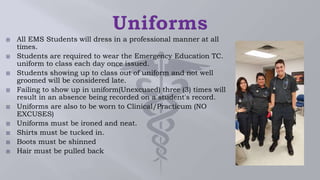
 All EMS Students will dress in a professional manner at all
times.
 Students are required to wear the Emergency Education TC.
uniform to class each day once issued.
 Students showing up to class out of uniform and not well
groomed will be considered late.
 Failing to show up in uniform(Unexcused) three (3) times will
result in an absence being recorded on a student's record.
 Uniforms are also to be worn to Clinical/Practicum (NO
EXCUSES)
 Uniforms must be ironed and neat.
 Shirts must be tucked in.
 Boots must be shinned
 Hair must be pulled back
• PAM’s Cards is part of final grade
• Must be turned in prior to the start of
class day
 Please be respectful
 Phones will be placed on vibrate during any class time
 If a student is caught using their cellphone in any way
during an exam, student will be asked to leave and will
receive a zero on the exam!
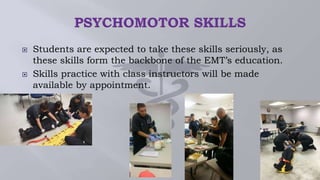
 Students are expected to take these skills seriously, as
these skills form the backbone of the EMT’s education.
 Skills practice with class instructors will be made
available by appointment.
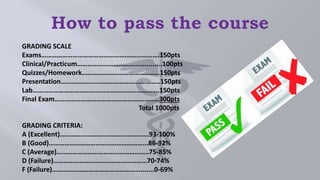
GRADING SCALE
Exams………………………………………….……………….150pts
Clinical/Practicum………………………………….........100pts
Quizzes/Homework………………………………………150pts
Presentation……………………………………….………..150pts
Lab……………………………………………………………….150pts
Final Exam……………………………………….………..…300pts
Total 1000pts
GRADING CRITERIA:
A (Excellent)……………………………………….…..93-100%
B (Good)………………………………………………...86-92%
C (Average)……………………………………………..75-85%
D (Failure)………………………………………………70-74%
F (Failure)…………………………………………….......0-69%
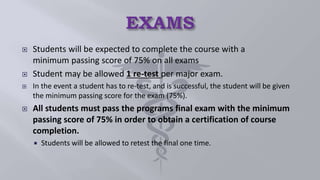
 Students will be expected to complete the course with a
minimum passing score of 75% on all exams
 Student may be allowed 1 re-test per major exam.
 In the event a student has to re-test, and is successful, the student will be given
the minimum passing score for the exam (75%).
 All students must pass the programs final exam with the minimum
passing score of 75% in order to obtain a certification of course
completion.
 Students will be allowed to retest the final one time.
• Stay positive
• Motivate each other
• “I can’t” will not be used
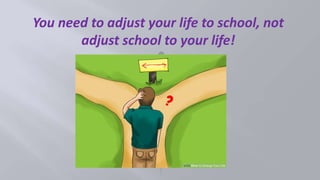
You need to adjust your life to school, not
adjust school to your life!
 We are here to assist you in successfully completing this course.
 We offer tutoring free of charge
 We offer cram sessions free of charge after class in complete
 We will have a mini job fair in house
 We will work with your payment plan
 The course instructor reserves the right to make any changes to the
course information sheet and schedule he/she perceives necessary
to facilitate the delivery of the course material and student
learning. The class will be notified if any changes occur.
Orientation

Orientation

  • 1.
  • 3.
     Introduction ofFacility  Restrooms  Snacks located in office area  Kitchen Area  Smoking Section  Keep area clean  We will have chores everyday
  • 4.
     Introduction ofInstructor  Introduction of Administrative Assistant  Uniform Distributer (Rapid Response) will size uniforms
  • 5.
  • 7.
     Roxanne PeñaNRP,ACOR  Started EMS 1993  Started Fire Department 1995  Started STEC 1997  Started Teaching 1995  Started Coordinating classes 2005  Currently teaching, fire and ems.
  • 8.
     Sharon Bray Over 25yrs Experience  Volunteer Firefighter over 20yrs
  • 9.
     Alfredo Gonzales Computer Network Manager 1999
  • 10.
    • Paramedic • 5yrsin EMS/Firefighter • 5yrs EMS Instructor • Trinity EMS • Pharr Fire Department
  • 11.
     15 yrsin EMS  Hidalgo Co EMS  STEC
  • 12.
     Ron Cathey Firefighter  Paramedic  Assistant Fire Chief
  • 13.
    • Director ofAir Program at HCEMS • Director of Air EVAC • Director of flight at MedCare • Coordinator for TSTC • Supervisor at STEC and other EMS Companies • Over 20 yrs of Experience
  • 14.
    • Coordinator forLos Fresnos EMS • Paramedic for Los Fresnos EMS • Supervisor for STEC/HCEMS • Over 30yrs Experience
  • 15.
  • 18.
     EMTs areprofessionals, trained to respond quickly to emergency situations regarding medical emergencies and traumatic injuries.  EMTs are most commonly found working in ambulances.  EMTs are often employed by ambulance services, governments, and hospitals, doctors office, dialysis centers and plasma centers, but are also sometimes employed by fire departments, in police departments, border patrol, and there are many firefighter/EMTs and police officer/EMTs.
  • 19.
     The proceduresfor bleeding control  Positive pressure ventilation with a bag valve mask  How to apply an oropharyngeal airway, nasopharyngeal airway, & & supplemental oxygen  How to read a Pulse Oximeter  How to preform oral suctioning, cardio-pulmonary resuscitation (CPR), use of an automated external defibrillator (AED),  How to splint (including full spinal immobilization)  Basic medication administration (such as epinephrine auto- injectors, oral glucose, aspirin, nitroglycerin, and albuterol).
  • 20.
     Day inthe life  Documentary
  • 23.
     Must beturned in 30days from first day of class!! No exceptions!  Current TB  MMR #1  MMR#2  Varicella  Annual Flu vaccine  Tetanus  Hep B – 1,2 (3)  Bacterial Meningitis
  • 24.
     Must beturned in before Ride Alongs  You me be dropped from the course if drug screen/background is not turned in.  May be done at iCheckU in Weslaco
  • 25.
     Must beturned in 30days from first day of class!  May be done at your doctors office  Call around and find the cheapest  We have a physical form if needed
  • 26.
     Must beturned in 30days from 1st day of class!  DL  We accept State ID  We accept transcript  If you have issues we can help
  • 29.
     Clinicals  Hospital– 24hrs required includes 1 day of orientation VBMC  Practicum  Ambulance - 48hrs required  HCEMS  SPI FIRE-EMS  Community Service  24hrs are required  See your instructor for possibilities  Documentation is required
  • 30.
    Faculty is committedto assisting students to be successful in the program. Therefore, students who are not meeting courses objectives in theory, lab, clinical, or field internship will be informed of their performance status using the following progressive discipline process. Step 1: Warning  The instructor provides the student with a verbal warning. The instructor counsels the student regarding criteria for successful completion of the course and makes recommendations for improvement. Recommendations may include but are not limited to – remediation by faculty, utilization of peer study groups, tutors, computer-assisted instruction, and seeking assistance from Emergency Ed. Faculty. At the discretion of the instructor and depending on the situation, this step may be skipped and a conference completed.
  • 31.
    Step 2: Conference The student meets with the instructor and Coordinator in a formal conference to review the performance deficiency. A written Emergency Ed. Conference Report will identify specific course or program objectives not met. A remediation contract including deadlines for completion will be developed to correct the deficit so the student can successfully progress through the program. If at any time the student does not comply with all terms outlined in the conference report, the student may be placed on probation or withdrawn from the program.
  • 32.
    Step 3: Withdrawal If at any time during the probation period, the student fails to meet any of the conditions of the probation contract, the student may be withdrawn from the program. Accordingly, if at the end of the probation period the student has not met the criteria for satisfactory performance outlined in the probation contract, the student will be withdrawn from the program.  A student who is placed on probation for unsafe or unprofessional conduct will be withdrawn from the program for subsequent safety or professional conduct violations at any time during the program. Some situations do not allow for the progressive discipline process due to the severity, nature, or the timing of their occurrence. Incidents of this nature may require the student to be immediately placed on probation or withdrawn from the program. Examples of these include, but are not limited to:  • Violations of patient confidentially  • Academic dishonesty  • Falsification of documentation
  • 33.
     Unprofessional behaviorthat jeopardizes patient, student staff, or preceptor safety  The withdrawing student must meet with the course instructor and the Coordinator to complete all exit forms and have an Exit Meeting within two weeks of the withdrawal. The student is required to turn in their, Hospital ID, and any equipment or items that belong to the department. Failure to do so will compromise their standing at Emergency Ed.
  • 34.
     All EMSStudents will dress in a professional manner at all times.  Students are required to wear the Emergency Education TC. uniform to class each day once issued.  Students showing up to class out of uniform and not well groomed will be considered late.  Failing to show up in uniform(Unexcused) three (3) times will result in an absence being recorded on a student's record.  Uniforms are also to be worn to Clinical/Practicum (NO EXCUSES)  Uniforms must be ironed and neat.  Shirts must be tucked in.  Boots must be shinned  Hair must be pulled back
  • 35.
    • PAM’s Cardsis part of final grade • Must be turned in prior to the start of class day
  • 36.
     Please berespectful  Phones will be placed on vibrate during any class time  If a student is caught using their cellphone in any way during an exam, student will be asked to leave and will receive a zero on the exam!
  • 37.
     Students areexpected to take these skills seriously, as these skills form the backbone of the EMT’s education.  Skills practice with class instructors will be made available by appointment.
  • 38.
    GRADING SCALE Exams………………………………………….……………….150pts Clinical/Practicum………………………………….........100pts Quizzes/Homework………………………………………150pts Presentation……………………………………….………..150pts Lab……………………………………………………………….150pts Final Exam……………………………………….………..…300pts Total1000pts GRADING CRITERIA: A (Excellent)……………………………………….…..93-100% B (Good)………………………………………………...86-92% C (Average)……………………………………………..75-85% D (Failure)………………………………………………70-74% F (Failure)…………………………………………….......0-69%
  • 39.
     Students willbe expected to complete the course with a minimum passing score of 75% on all exams  Student may be allowed 1 re-test per major exam.  In the event a student has to re-test, and is successful, the student will be given the minimum passing score for the exam (75%).  All students must pass the programs final exam with the minimum passing score of 75% in order to obtain a certification of course completion.  Students will be allowed to retest the final one time.
  • 40.
    • Stay positive •Motivate each other • “I can’t” will not be used
  • 41.
    You need toadjust your life to school, not adjust school to your life!
  • 42.
     We arehere to assist you in successfully completing this course.  We offer tutoring free of charge  We offer cram sessions free of charge after class in complete  We will have a mini job fair in house  We will work with your payment plan
  • 43.
     The courseinstructor reserves the right to make any changes to the course information sheet and schedule he/she perceives necessary to facilitate the delivery of the course material and student learning. The class will be notified if any changes occur.