BRITISH AIRWAYS
British Airways (BA) is the flag carrier airline of
the United Kingdom and it is largest airline based
on fleet size, international flights and
international destinations. When measured by
passengers carried it is second-largest, behind
easyJet . The airline is based in Waterside near its
main hub at London Heathrow Airport
In 1980s due to increased competition , fuel costs,a
diverse and aging fleet , high staffing costs BA was
about to bankrupt .
The main issues they were facing :-
- BA’s money was draining at a rate of nearly £200 a
minute
- Convincing their workforce of the paramount
importance of customer service,
- Dramatically improving BA’s perception in the
marketplace,
- Maintaining momentum and recapturing the focus
that would allow them to meet new challenges
The main reasons for BA’s failure :-
• The lack of proper integration disallowed BA to
achieve the desired benefits of consolidation,
prevented it from attaining a common focus,
created management demarcation squabbles and
resulted in a lack of a unifying corporate culture.
• The employees believed that their job was simply
to get aircraft into the air and get them down on
time. Productivity, profit margins and people issues
were not considered to be top priorities.
• Government financial support and a string of years
in the 1970s of profitability made it even easier for
BA to neglect its increasing inefficiencies and even
more difficult to persuade the workforce and
management that fundamental changes were
critical.
• The company’s purely inward focus on resolving
industrial relation issues and organizational conflicts
did not allow it to respond in a quick and effective
manner to its rapidly changing environment.
CHANGES:-
The 1981 Survival Plan –
• Reducing of staff from 52,000-43,000 and later on
to 35,000 (1982)
• Closing 16 routes, 8 online stations, and 2
engineering bases.
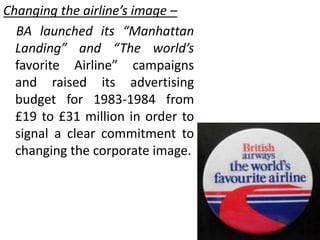
Changing the airline’s image –
BA launched its “Manhattan
Landing” and “The world’s
favorite Airline” campaigns
and raised its advertising
budget for 1983-1984 from
£19 to £31 million in order to
signal a clear commitment to
changing the corporate image.
Building its turnaround team-
In 1983, Colin Marshall, BA’s CEO, made customer
service a personal crusade. He wanted to achieve a
shift from a strongly British, engineering, and
operationally driven culture to one that emphasized
productivity and profits while increasing the value
placed on customer service
Role Model the desired behaviors and strong
communication from the top –
Marshall spend a lot of his time in terminals with
• Staff communicating and
• Reinforcing his desired culture for the company.
Education and Training –
BA put in place, among others, the following
programs to reinforce the need for change and
create the desired culture.
-Putting People First (PPF)
-Managing People First (MPF)
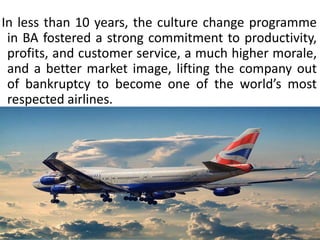
In less than 10 years, the culture change programme
in BA fostered a strong commitment to productivity,
profits, and customer service, a much higher morale,
and a better market image, lifting the company out
of bankruptcy to become one of the world’s most
respected airlines.

organisation development (case study of british airways )

  • 1.
    BRITISH AIRWAYS British Airways(BA) is the flag carrier airline of the United Kingdom and it is largest airline based on fleet size, international flights and international destinations. When measured by passengers carried it is second-largest, behind easyJet . The airline is based in Waterside near its main hub at London Heathrow Airport
  • 2.
    In 1980s dueto increased competition , fuel costs,a diverse and aging fleet , high staffing costs BA was about to bankrupt . The main issues they were facing :- - BA’s money was draining at a rate of nearly £200 a minute - Convincing their workforce of the paramount importance of customer service, - Dramatically improving BA’s perception in the marketplace, - Maintaining momentum and recapturing the focus that would allow them to meet new challenges
  • 3.
    The main reasonsfor BA’s failure :- • The lack of proper integration disallowed BA to achieve the desired benefits of consolidation, prevented it from attaining a common focus, created management demarcation squabbles and resulted in a lack of a unifying corporate culture. • The employees believed that their job was simply to get aircraft into the air and get them down on time. Productivity, profit margins and people issues were not considered to be top priorities.
  • 4.
    • Government financialsupport and a string of years in the 1970s of profitability made it even easier for BA to neglect its increasing inefficiencies and even more difficult to persuade the workforce and management that fundamental changes were critical. • The company’s purely inward focus on resolving industrial relation issues and organizational conflicts did not allow it to respond in a quick and effective manner to its rapidly changing environment.
  • 5.
    CHANGES:- The 1981 SurvivalPlan – • Reducing of staff from 52,000-43,000 and later on to 35,000 (1982) • Closing 16 routes, 8 online stations, and 2 engineering bases.
  • 6.
    Changing the airline’simage – BA launched its “Manhattan Landing” and “The world’s favorite Airline” campaigns and raised its advertising budget for 1983-1984 from £19 to £31 million in order to signal a clear commitment to changing the corporate image.
  • 7.
    Building its turnaroundteam- In 1983, Colin Marshall, BA’s CEO, made customer service a personal crusade. He wanted to achieve a shift from a strongly British, engineering, and operationally driven culture to one that emphasized productivity and profits while increasing the value placed on customer service
  • 8.
    Role Model thedesired behaviors and strong communication from the top – Marshall spend a lot of his time in terminals with • Staff communicating and • Reinforcing his desired culture for the company. Education and Training – BA put in place, among others, the following programs to reinforce the need for change and create the desired culture. -Putting People First (PPF) -Managing People First (MPF)
  • 9.
    In less than10 years, the culture change programme in BA fostered a strong commitment to productivity, profits, and customer service, a much higher morale, and a better market image, lifting the company out of bankruptcy to become one of the world’s most respected airlines.