Order Sphenisciformes“Penguins”
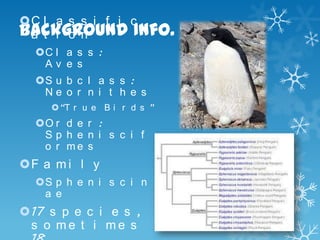
Background Info.ClassificationClass:  AvesSubclass:  Neornithes“True Birds”Order:  SphenisciformesFamilySpheniscinae17 species, sometimes 18
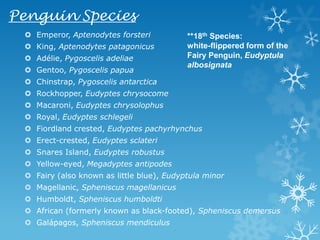
Penguin SpeciesEmperor, Aptenodytes forsteriKing, Aptenodytes patagonicusAdélie, Pygoscelis adeliaeGentoo, Pygoscelis papuaChinstrap, Pygoscelis antarcticaRockhopper, Eudyptes chrysocomeMacaroni, Eudyptes chrysolophusRoyal, Eudyptes schlegeliFiordland crested, Eudyptes pachyrhynchusErect-crested, Eudyptes sclateriSnares Island, Eudyptes robustusYellow-eyed, Megadyptes antipodesFairy (also known as little blue), Eudyptula minorMagellanic, Spheniscus magellanicusHumboldt, Spheniscus humboldtiAfrican (formerly known as black-footed), Spheniscus demersusGalápagos, Spheniscus mendiculus**18th Species:  white-flippered form of the Fairy Penguin, Eudyptula albosignata
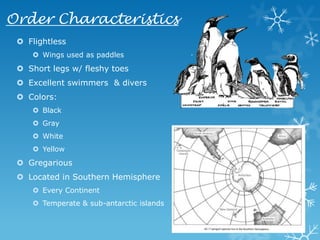
Order CharacteristicsFlightlessWings used as paddlesShort legs w/ fleshy toesExcellent swimmers  & diversColors:BlackGrayWhiteYellowGregariousLocated in Southern HemisphereEvery ContinentTemperate & sub-antarctic islands
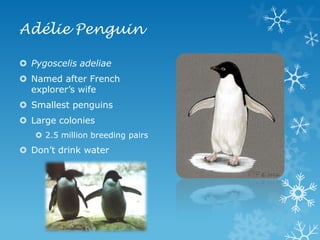
Adélie PenguinPygoscelis adeliaeNamed after French explorer’s wifeSmallest penguinsLarge colonies2.5 million breeding pairsDon’t drink water
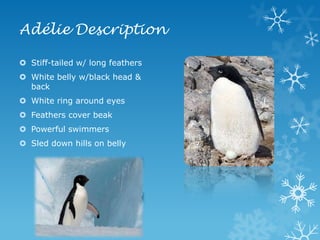
Adélie DescriptionStiff-tailed w/ long feathersWhite belly w/black head & backWhite ring around eyesFeathers cover beakPowerful swimmersSled down hills on belly
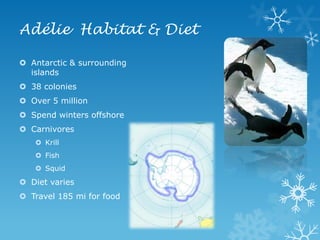
Adélie  Habitat & DietAntarctic & surrounding islands38 coloniesOver 5 millionSpend winters offshoreCarnivoresKrillFishSquidDiet variesTravel 185 mi for food
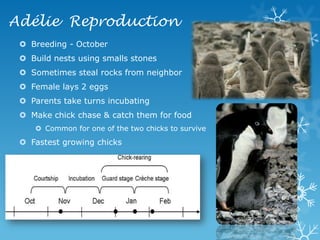
Adélie  ReproductionBreeding - OctoberBuild nests using smalls stonesSometimes steal rocks from neighborFemale lays 2 eggsParents take turns incubatingMake chick chase & catch them for foodCommon for one of the two chicks to surviveFastest growing chicks
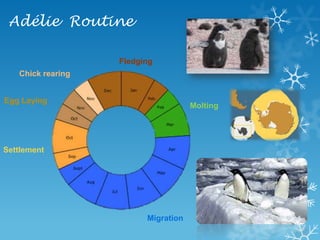
Adélie  RoutineFledgingChick rearingEgg LayingMoltingSettlementMigration
Order Sphenisciformes

Order Sphenisciformes

  • 1.
  • 2.
    Background Info.ClassificationClass: AvesSubclass: Neornithes“True Birds”Order: SphenisciformesFamilySpheniscinae17 species, sometimes 18
  • 3.
    Penguin SpeciesEmperor, AptenodytesforsteriKing, Aptenodytes patagonicusAdélie, Pygoscelis adeliaeGentoo, Pygoscelis papuaChinstrap, Pygoscelis antarcticaRockhopper, Eudyptes chrysocomeMacaroni, Eudyptes chrysolophusRoyal, Eudyptes schlegeliFiordland crested, Eudyptes pachyrhynchusErect-crested, Eudyptes sclateriSnares Island, Eudyptes robustusYellow-eyed, Megadyptes antipodesFairy (also known as little blue), Eudyptula minorMagellanic, Spheniscus magellanicusHumboldt, Spheniscus humboldtiAfrican (formerly known as black-footed), Spheniscus demersusGalápagos, Spheniscus mendiculus**18th Species: white-flippered form of the Fairy Penguin, Eudyptula albosignata
  • 4.
    Order CharacteristicsFlightlessWings usedas paddlesShort legs w/ fleshy toesExcellent swimmers & diversColors:BlackGrayWhiteYellowGregariousLocated in Southern HemisphereEvery ContinentTemperate & sub-antarctic islands
  • 5.
    Adélie PenguinPygoscelis adeliaeNamedafter French explorer’s wifeSmallest penguinsLarge colonies2.5 million breeding pairsDon’t drink water
  • 6.
    Adélie DescriptionStiff-tailed w/long feathersWhite belly w/black head & backWhite ring around eyesFeathers cover beakPowerful swimmersSled down hills on belly
  • 7.
    Adélie Habitat& DietAntarctic & surrounding islands38 coloniesOver 5 millionSpend winters offshoreCarnivoresKrillFishSquidDiet variesTravel 185 mi for food
  • 8.
    Adélie ReproductionBreeding- OctoberBuild nests using smalls stonesSometimes steal rocks from neighborFemale lays 2 eggsParents take turns incubatingMake chick chase & catch them for foodCommon for one of the two chicks to surviveFastest growing chicks
  • 9.
    Adélie RoutineFledgingChickrearingEgg LayingMoltingSettlementMigration

Editor's Notes

  • #5 Penguins are flightless. Their wings have been modified as paddles. They have very short legs and fleshy toes that are joined by webs. Their posture is erect when on land or ice except when they’re “sledding” on their bellies. They are superb swimmers and divers, often leaping porpoise-like into the water. Prevailing colors are black or gray dorsally, white ventrally, sometimes with yellow feathering on the head or neck. They are gregarious. All 17 species of penguins live in the Southern Hemisphere.Penguins are found on every continent in the Southern Hemisphere. They are abundant on many temperate and sub-antarctic islands.Penguins generally live on islands and remote continental regions free from land predators, where their inability to fly is not detrimental to their survival.
  • #6 I chose the Adelie penguin. Its scientific name is Pygoscelis adeliaenamed after the wife of a French explorer in the 1830sThey are the smallest of the penguins living on the continent of AntarcticaThey are about 28 inches (70 cm) tall and weigh about 8 to 9 lbs.These penguins nest and breed on the rocky, ice-free beaches in large colonies of tens of thousands of birdsThere are over 2.5 million breeding pairs living in the Antarctica region. They don’t drink water, but eat snow
  • #7 These penguins are one of the stiff-tailed penguins with long tail feathers that drags the ground when they walk. They have a white belly with a black head and back. They have a white ring around the eye. Feathers cover most of the short beak. They are powerful swimmers and can jump straight out of the water onto the land. They often move on the land by sledding down hills on their bellies.
  • #8 Adélie penguins live on the Antarctic continent and on many small, surrounding coastal islandsThere are 38 colonies of Adélie penguins, and there are over 5 million Adélies in the Ross Sea region. Ross Island supports a colony of approximately half a million Adélies. They spend the winter offshore in the seas surrounding the Antarctic pack iceAdélies feed on tiny aquatic creatures, such as shrimp-like krill, but also eat fish and squiddiet varies depending on geographic locationThey may travel 185 miles round-trip to procure a meal.
  • #9 Adelie Penguins arrive at their breeding grounds in OctoberAdélies build nests and line them with small stones. Sometimes the competition for breeding sites gets so fierce that mothers will steal stones from neighbors’ nestsAfter bonding and mating, the female lays two eggs in the nestIn December, the parents take turns incubating the egg; one goes to feed and the other stays to warm the eggWhen parents return with food for the chicks they will run from the chicks making the chicks chase and catch them for the food. Often only one chick will surviveTheir chicks grow the fastest of all penguins.
  • #10 April to September – MigrationSeptember to October – SettlementOctober to November – Egg layingNovember to December – Chick rearingDecember to February – FledgingFebruary to March – MoltingThen starts all over again