T
H
E
P
E
N
G
U
I
N
T
H
E
P
E
N
G
U
I
N
THE
PENGUIN
• The largest living species is the emperor
penguin (Aptenodytes FORSTERI): on average adults are about
1.1 m tall and weigh 35 kg or more. The smallest penguin
species is the little blue penguin (Eudyptula minor), also
known as the fairy penguin, which stands around 40 cm tall
and weighs 1 kg.
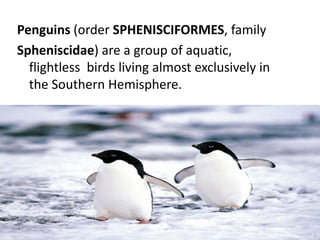
Penguins (order SPHENISCIFORMES, family
Spheniscidae) are a group of aquatic,
flightless birds living almost exclusively in
the Southern Hemisphere.
• Although all penguin species are native to the Southern Hemisphere,
they are not found only in cold climates, such as Antarctica. In fact,
only a few species of penguin live so far south. Several species are
found in the temperate zone, and one species, the Galápagos
penguin, lives near the equator.
• Penguins are aquatic, flightless birds that are highly
adapted to life in the water. Their distinct tuxedo-like
appearance is called countershading a form of
camouflage that helps keep them safe in the water.
Penguins do have wing-bones, though they are flipper-
like and extremely suited to swimming.
BY ANA MARIA 5º

Ana maria 5

  • 1.
  • 3.
    • The largestliving species is the emperor penguin (Aptenodytes FORSTERI): on average adults are about 1.1 m tall and weigh 35 kg or more. The smallest penguin species is the little blue penguin (Eudyptula minor), also known as the fairy penguin, which stands around 40 cm tall and weighs 1 kg.
  • 4.
    Penguins (order SPHENISCIFORMES,family Spheniscidae) are a group of aquatic, flightless birds living almost exclusively in the Southern Hemisphere.
  • 5.
    • Although allpenguin species are native to the Southern Hemisphere, they are not found only in cold climates, such as Antarctica. In fact, only a few species of penguin live so far south. Several species are found in the temperate zone, and one species, the Galápagos penguin, lives near the equator.
  • 6.
    • Penguins areaquatic, flightless birds that are highly adapted to life in the water. Their distinct tuxedo-like appearance is called countershading a form of camouflage that helps keep them safe in the water. Penguins do have wing-bones, though they are flipper- like and extremely suited to swimming.
  • 8.

Editor's Notes

  • #2 THE PENGUIN
  • #4 La especie viva más grande es el pingüino emperador (Aptenodytes forsteri): el promedio de los adultos son alrededor de 1,1 m de altura y pesan 35 kg o más. La especie más pequeña es el pequeño pingüino azul (Eudyptula minor), también conocido como el pingüino de hadas, que mide alrededor de 40 cm de alto y pesa 1 kg.
  • #5 Pingüinos (orden Sphenisciformes, familia Spheniscidae) son un grupo de aves acuáticas, no voladoras que viven casi exclusivamente en el hemisferio sur.
  • #6 A pesar de todas las especies de pingüino son nativas del hemisferio sur, que no sólo se encuentran en climas fríos, como la Antártida. De hecho, sólo unas pocas especies de pingüinos viven tan al sur. Varias especies se encuentran en la zona templada, y una especie, el pingüino de Galápagos, vive cerca del ecuador.
  • #7 Los pingüinos son aves acuáticas, no voladoras que están altamente adaptados a la vida en el agua. Su apariencia como de smoking se llama contra coloración una forma de camuflaje que ayuda a mantenerse a salvo en el agua. Los pingüinos tienen huesos en las alas, que son como aletas y muy adecuado para la natación.