Oral ulcers Diagnosis
• A-Multiple ulcers:
• 1-acute
• 2- chronic
• B-recurrent ulcers
• C-single ulcer
Acute multiple ulcers
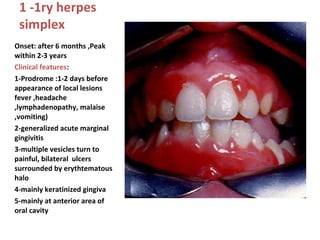
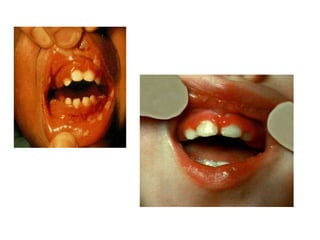
1 -1ry herpes
simplex
Onset: after 6 months ,Peak
within 2-3 years
Clinical features:
1-Prodrome :1-2 days before
appearance of local lesions
fever ,headache
,lymphadenopathy, malaise
,vomiting)
2-generalized acute marginal
gingivitis
3-multiple vesicles turn to
painful, bilateral ulcers
surrounded by erythtematous
halo
4-mainly keratinized gingiva
5-mainly at anterior area of
oral cavity
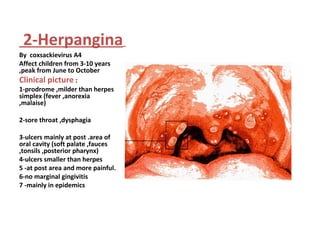
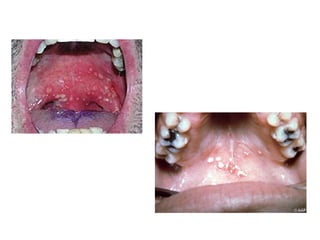
2-Herpangina
By coxsackievirus A4
Affect children from 3-10 years
,peak from June to October
Clinical picture :
1-prodrome ,milder than herpes
simplex (fever ,anorexia
,malaise)
2-sore throat ,dysphagia
3-ulcers mainly at post .area of
oral cavity (soft palate ,fauces
,tonsils ,posterior pharynx)
4-ulcers smaller than herpes
5 -at post area and more painful.
6-no marginal gingivitis
7 -mainly in epidemics
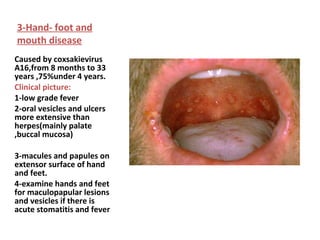
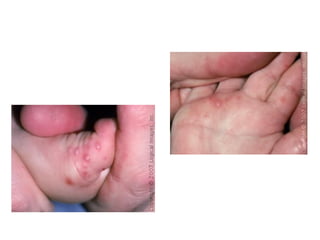
3-Hand- foot and
mouth disease
Caused by coxsakievirus
A16,from 8 months to 33
years ,75%under 4 years.
Clinical picture:
1-low grade fever
2-oral vesicles and ulcers
more extensive than
herpes(mainly palate
,buccal mucosa)
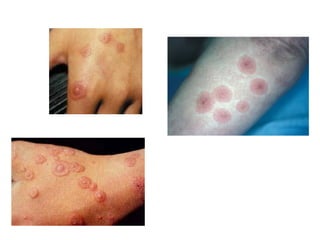
3-macules and papules on
extensor surface of hand
and feet.
4-examine hands and feet
for maculopapular lesions
and vesicles if there is
acute stomatitis and fever
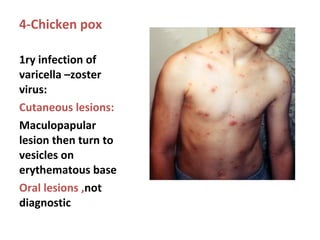
4-Chicken pox
1ry infection of
varicella –zoster
virus:
Cutaneous lesions:
Maculopapular
lesion then turn to
vesicles on
erythematous base
Oral lesions ,not
diagnostic
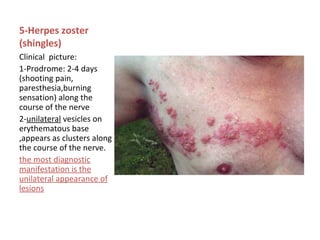
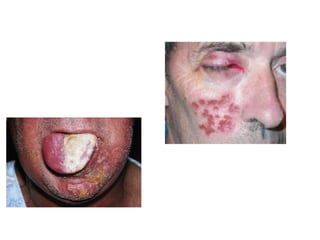
5-Herpes zoster
(shingles)
Clinical picture:
1-Prodrome: 2-4 days
(shooting pain,
paresthesia,burning
sensation) along the
course of the nerve
2-unilateral vesicles on
erythematous base
,appears as clusters along
the course of the nerve.
the most diagnostic
manifestation is the
unilateral appearance of
lesions
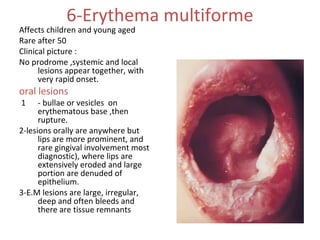
6-Erythema multiforme

Affects children and young aged
Rare after 50
Clinical picture :
No prodrome ,systemic and local
lesions appear together, with
very rapid onset.

oral lesions
1

- bullae or vesicles on
erythematous base ,then
rupture.
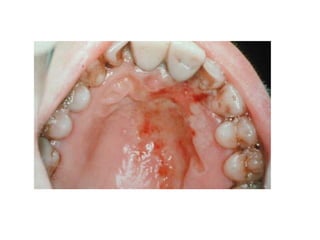
2-lesions orally are anywhere but
lips are more prominent, and
rare gingival involvement most
diagnostic), where lips are
extensively eroded and large
portion are denuded of
epithelium.
3-E.M lesions are large, irregular,
deep and often bleeds and
there are tissue remnants
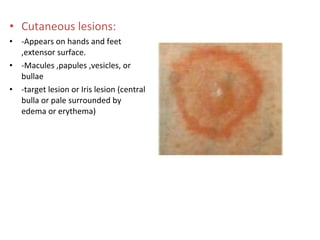
• Cutaneous lesions:
•
•
•

-Appears on hands and feet
,extensor surface.
-Macules ,papules ,vesicles, or
bullae
-target lesion or Iris lesion (central
bulla or pale surrounded by
edema or erythema)
B-Chronic multiple ulcers
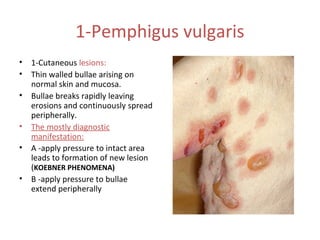
1-Pemphigus vulgaris
•
•
•
•
•
•

1-Cutaneous lesions:
Thin walled bullae arising on
normal skin and mucosa.
Bullae breaks rapidly leaving
erosions and continuously spread
peripherally.
The mostly diagnostic
manifestation:
A -apply pressure to intact area
leads to formation of new lesion
(KOEBNER PHENOMENA)
B -apply pressure to bullae
extend peripherally
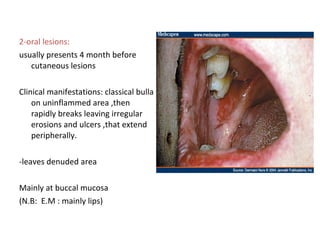
2-oral lesions:
usually presents 4 month before
cutaneous lesions
Clinical manifestations: classical bulla
on uninflammed area ,then
rapidly breaks leaving irregular
erosions and ulcers ,that extend
peripherally.
-leaves denuded area
Mainly at buccal mucosa
(N.B: E.M : mainly lips)
Differential diagnosis
1- Its chronic appearance differentiate it from (H.S,
H.Z and E.M)
2-From R.A.S that its lesions are recurrent and heals
rapidly, but pemphigous lesions extends peripherally
and takes a period of weeks to months.
3-lesions of pemphigous are not small ,rounded and
symmetrical like R.A.S and viral ulcers, and there is
detached epithelium at the peripheries.
4-+ve nikolysks sign AND KOEBNER PHENOMENA
5-bullae extend peripherally
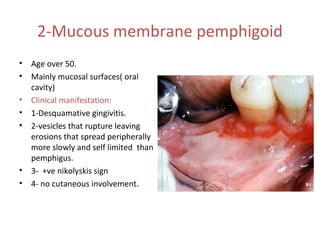
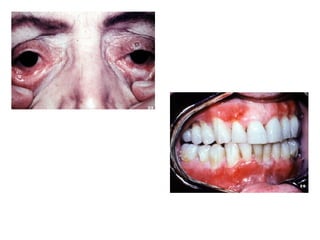
2-Mucous membrane pemphigoid
•
•
•
•
•

•
•

Age over 50.
Mainly mucosal surfaces( oral
cavity)
Clinical manifestation:
1-Desquamative gingivitis.
2-vesicles that rupture leaving
erosions that spread peripherally
more slowly and self limited than
pemphigus.
3- +ve nikolyskis sign
4- no cutaneous involvement.
C-recurrent oral ulcers
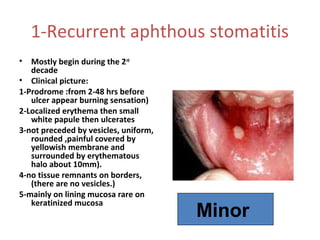
1-Recurrent aphthous stomatitis
•

Mostly begin during the 2nd
decade
• Clinical picture:
1-Prodrome :from 2-48 hrs before
ulcer appear burning sensation)
2-Localized erythema then small
white papule then ulcerates
3-not preceded by vesicles, uniform,
rounded ,painful covered by
yellowish membrane and
surrounded by erythematous
halo about 10mm).
4-no tissue remnants on borders,
(there are no vesicles.)
5-mainly on lining mucosa rare on
keratinized mucosa

Minor
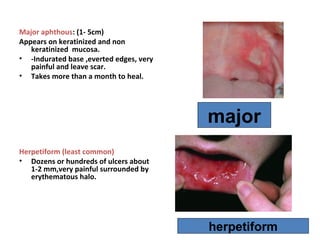
Major aphthous: (1- 5cm)
Appears on keratinized and non
keratinized mucosa.
• -Indurated base ,everted edges, very
painful and leave scar.
• Takes more than a month to heal.

major
major
Herpetiform (least common)
• Dozens or hundreds of ulcers about
1-2 mm,very painful surrounded by
erythematous halo.

herpetiform
•
•

•
•
•
•

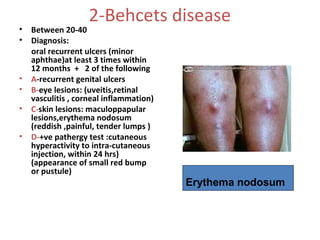
2-Behcets disease

Between 20-40
Diagnosis:
oral recurrent ulcers (minor
aphthae)at least 3 times within
12 months + 2 of the following
A-recurrent genital ulcers
B-eye lesions: (uveitis,retinal
vasculitis , corneal inflammation)
C-skin lesions: maculoppapular
lesions,erythema nodosum
(reddish ,painful, tender lumps )
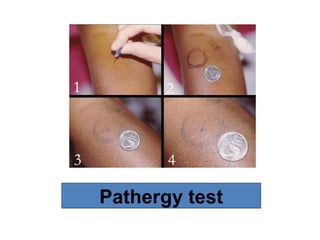
D-+ve pathergy test :cutaneous
hyperactivity to intra-cutaneous
injection, within 24 hrs)
(appearance of small red bump
or pustule)

Erythema nodosum
Pathergy test
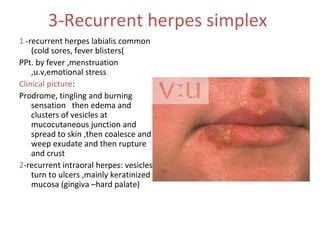
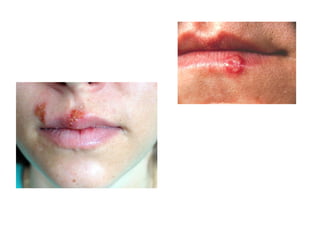
3-Recurrent herpes simplex
1 -recurrent herpes labialis common
(cold sores, fever blisters(
PPt. by fever ,menstruation
,u.v,emotional stress
Clinical picture:
Prodrome, tingling and burning
sensation then edema and
clusters of vesicles at
mucocutaneous junction and
spread to skin ,then coalesce and
weep exudate and then rupture
and crust
2-recurrent intraoral herpes: vesicles
turn to ulcers ,mainly keratinized
mucosa (gingiva –hard palate)
Oral ulcers

Oral ulcers

  • 1.
    Oral ulcers Diagnosis •A-Multiple ulcers: • 1-acute • 2- chronic • B-recurrent ulcers • C-single ulcer
  • 2.
  • 3.
    1 -1ry herpes simplex Onset:after 6 months ,Peak within 2-3 years Clinical features: 1-Prodrome :1-2 days before appearance of local lesions fever ,headache ,lymphadenopathy, malaise ,vomiting) 2-generalized acute marginal gingivitis 3-multiple vesicles turn to painful, bilateral ulcers surrounded by erythtematous halo 4-mainly keratinized gingiva 5-mainly at anterior area of oral cavity
  • 5.
    2-Herpangina By coxsackievirus A4 Affectchildren from 3-10 years ,peak from June to October Clinical picture : 1-prodrome ,milder than herpes simplex (fever ,anorexia ,malaise) 2-sore throat ,dysphagia 3-ulcers mainly at post .area of oral cavity (soft palate ,fauces ,tonsils ,posterior pharynx) 4-ulcers smaller than herpes 5 -at post area and more painful. 6-no marginal gingivitis 7 -mainly in epidemics
  • 7.
    3-Hand- foot and mouthdisease Caused by coxsakievirus A16,from 8 months to 33 years ,75%under 4 years. Clinical picture: 1-low grade fever 2-oral vesicles and ulcers more extensive than herpes(mainly palate ,buccal mucosa) 3-macules and papules on extensor surface of hand and feet. 4-examine hands and feet for maculopapular lesions and vesicles if there is acute stomatitis and fever
  • 9.
    4-Chicken pox 1ry infectionof varicella –zoster virus: Cutaneous lesions: Maculopapular lesion then turn to vesicles on erythematous base Oral lesions ,not diagnostic
  • 10.
    5-Herpes zoster (shingles) Clinical picture: 1-Prodrome:2-4 days (shooting pain, paresthesia,burning sensation) along the course of the nerve 2-unilateral vesicles on erythematous base ,appears as clusters along the course of the nerve. the most diagnostic manifestation is the unilateral appearance of lesions
  • 13.
    6-Erythema multiforme Affects childrenand young aged Rare after 50 Clinical picture : No prodrome ,systemic and local lesions appear together, with very rapid onset. oral lesions 1 - bullae or vesicles on erythematous base ,then rupture. 2-lesions orally are anywhere but lips are more prominent, and rare gingival involvement most diagnostic), where lips are extensively eroded and large portion are denuded of epithelium. 3-E.M lesions are large, irregular, deep and often bleeds and there are tissue remnants
  • 14.
    • Cutaneous lesions: • • • -Appearson hands and feet ,extensor surface. -Macules ,papules ,vesicles, or bullae -target lesion or Iris lesion (central bulla or pale surrounded by edema or erythema)
  • 16.
  • 17.
    1-Pemphigus vulgaris • • • • • • 1-Cutaneous lesions: Thinwalled bullae arising on normal skin and mucosa. Bullae breaks rapidly leaving erosions and continuously spread peripherally. The mostly diagnostic manifestation: A -apply pressure to intact area leads to formation of new lesion (KOEBNER PHENOMENA) B -apply pressure to bullae extend peripherally
  • 18.
    2-oral lesions: usually presents4 month before cutaneous lesions Clinical manifestations: classical bulla on uninflammed area ,then rapidly breaks leaving irregular erosions and ulcers ,that extend peripherally. -leaves denuded area Mainly at buccal mucosa (N.B: E.M : mainly lips)
  • 19.
    Differential diagnosis 1- Itschronic appearance differentiate it from (H.S, H.Z and E.M) 2-From R.A.S that its lesions are recurrent and heals rapidly, but pemphigous lesions extends peripherally and takes a period of weeks to months. 3-lesions of pemphigous are not small ,rounded and symmetrical like R.A.S and viral ulcers, and there is detached epithelium at the peripheries. 4-+ve nikolysks sign AND KOEBNER PHENOMENA 5-bullae extend peripherally
  • 20.
    2-Mucous membrane pemphigoid • • • • • • • Ageover 50. Mainly mucosal surfaces( oral cavity) Clinical manifestation: 1-Desquamative gingivitis. 2-vesicles that rupture leaving erosions that spread peripherally more slowly and self limited than pemphigus. 3- +ve nikolyskis sign 4- no cutaneous involvement.
  • 22.
  • 23.
    1-Recurrent aphthous stomatitis • Mostlybegin during the 2nd decade • Clinical picture: 1-Prodrome :from 2-48 hrs before ulcer appear burning sensation) 2-Localized erythema then small white papule then ulcerates 3-not preceded by vesicles, uniform, rounded ,painful covered by yellowish membrane and surrounded by erythematous halo about 10mm). 4-no tissue remnants on borders, (there are no vesicles.) 5-mainly on lining mucosa rare on keratinized mucosa Minor
  • 24.
    Major aphthous: (1-5cm) Appears on keratinized and non keratinized mucosa. • -Indurated base ,everted edges, very painful and leave scar. • Takes more than a month to heal. major major Herpetiform (least common) • Dozens or hundreds of ulcers about 1-2 mm,very painful surrounded by erythematous halo. herpetiform
  • 25.
    • • • • • • 2-Behcets disease Between 20-40 Diagnosis: oralrecurrent ulcers (minor aphthae)at least 3 times within 12 months + 2 of the following A-recurrent genital ulcers B-eye lesions: (uveitis,retinal vasculitis , corneal inflammation) C-skin lesions: maculoppapular lesions,erythema nodosum (reddish ,painful, tender lumps ) D-+ve pathergy test :cutaneous hyperactivity to intra-cutaneous injection, within 24 hrs) (appearance of small red bump or pustule) Erythema nodosum
  • 26.
  • 27.
    3-Recurrent herpes simplex 1-recurrent herpes labialis common (cold sores, fever blisters( PPt. by fever ,menstruation ,u.v,emotional stress Clinical picture: Prodrome, tingling and burning sensation then edema and clusters of vesicles at mucocutaneous junction and spread to skin ,then coalesce and weep exudate and then rupture and crust 2-recurrent intraoral herpes: vesicles turn to ulcers ,mainly keratinized mucosa (gingiva –hard palate)