ORAL LANGUAGE ASSESSMENT
           YON FREDY ESPINOSA
          MARIA CILENA CUELLAR
       YULIETH QUINTANA MARTINEZ
 At the most basic level, oral language means
communicating with other people.

Oral language development across the curriculum does not
mean teaching children to speak as much as we mean improving
their ability to talk or communicate more effectively.

 To speak in more effective ways requires
particular attention and constant practice.
There are many different oral language assessment
  tools being used by schools.
 Informal tools include observations in a variety of
  contexts:
   in social and academic contexts
• during classroom activities in pairs, small groups
  or whole class
• during presentations (news, debates, speeches
  etc).
• Oral language assessment of English Language learners in
  school aims a student´s ability to communicate for both basic
  communicative and academic porpuse.
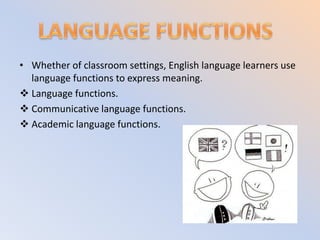
• Whether of classroom settings, English language learners use
  language functions to express meaning.
 Language functions.
 Communicative language functions.
 Academic language functions.
• Assessment tasks should provide students with an
  opportunity to display the knowledge, skills, understanding
  and attitudes they have developed and motivate them by
  recognizing what they have accomplished. Determining how a
  unit of work will be assessed needs to be considered at the
  start of unit planning so that it ensures the characteristics of
  effective assessment are addressed.
 In the primary grades, a child’s oral language ability is
  the basis for beginning literacy instruction.
 Initial formal assessments, ongoing formative
  assessments during the year, as well as summative
  assessments will provide information regarding a
  child’s oral language skills

Oral language assessment

  • 1.
    ORAL LANGUAGE ASSESSMENT YON FREDY ESPINOSA MARIA CILENA CUELLAR YULIETH QUINTANA MARTINEZ
  • 2.
     At themost basic level, oral language means communicating with other people. Oral language development across the curriculum does not mean teaching children to speak as much as we mean improving their ability to talk or communicate more effectively.  To speak in more effective ways requires particular attention and constant practice.
  • 3.
    There are manydifferent oral language assessment tools being used by schools.  Informal tools include observations in a variety of contexts: in social and academic contexts • during classroom activities in pairs, small groups or whole class • during presentations (news, debates, speeches etc).
  • 4.
    • Oral languageassessment of English Language learners in school aims a student´s ability to communicate for both basic communicative and academic porpuse.
  • 5.
    • Whether ofclassroom settings, English language learners use language functions to express meaning.  Language functions.  Communicative language functions.  Academic language functions.
  • 7.
    • Assessment tasksshould provide students with an opportunity to display the knowledge, skills, understanding and attitudes they have developed and motivate them by recognizing what they have accomplished. Determining how a unit of work will be assessed needs to be considered at the start of unit planning so that it ensures the characteristics of effective assessment are addressed.
  • 8.
     In theprimary grades, a child’s oral language ability is the basis for beginning literacy instruction.  Initial formal assessments, ongoing formative assessments during the year, as well as summative assessments will provide information regarding a child’s oral language skills