

By
Mahir Mahtab Haque
ID: B17231042
Operations Management
of
IKEA Overview
• Founded by Swedish carpenter Ingvar Kamprad in 1943
• A multinational that designs and sells ready-to-assemble furniture, kitchen
appliances and home accessories, all at affordable prices making it the world’s
largest furniture retailer since at least 2008
• Currently owned by INGKA Holding B.V. , a Dutch corporation that is controlled by
a non-profit Dutch foundation known as the Stichting Ingka Foundation, which was
founded by Kamprad in 1982
• IKEA Vision: “To create a better everyday life for the many people”
• IKEA Mission: “To offer a wide range of well-designed, functional home furnishing
products at prices so low that as many people as possible will be able to afford
them”
• Currently, there are 433 IKEA stores operating worldwide, with over 210,000
employees
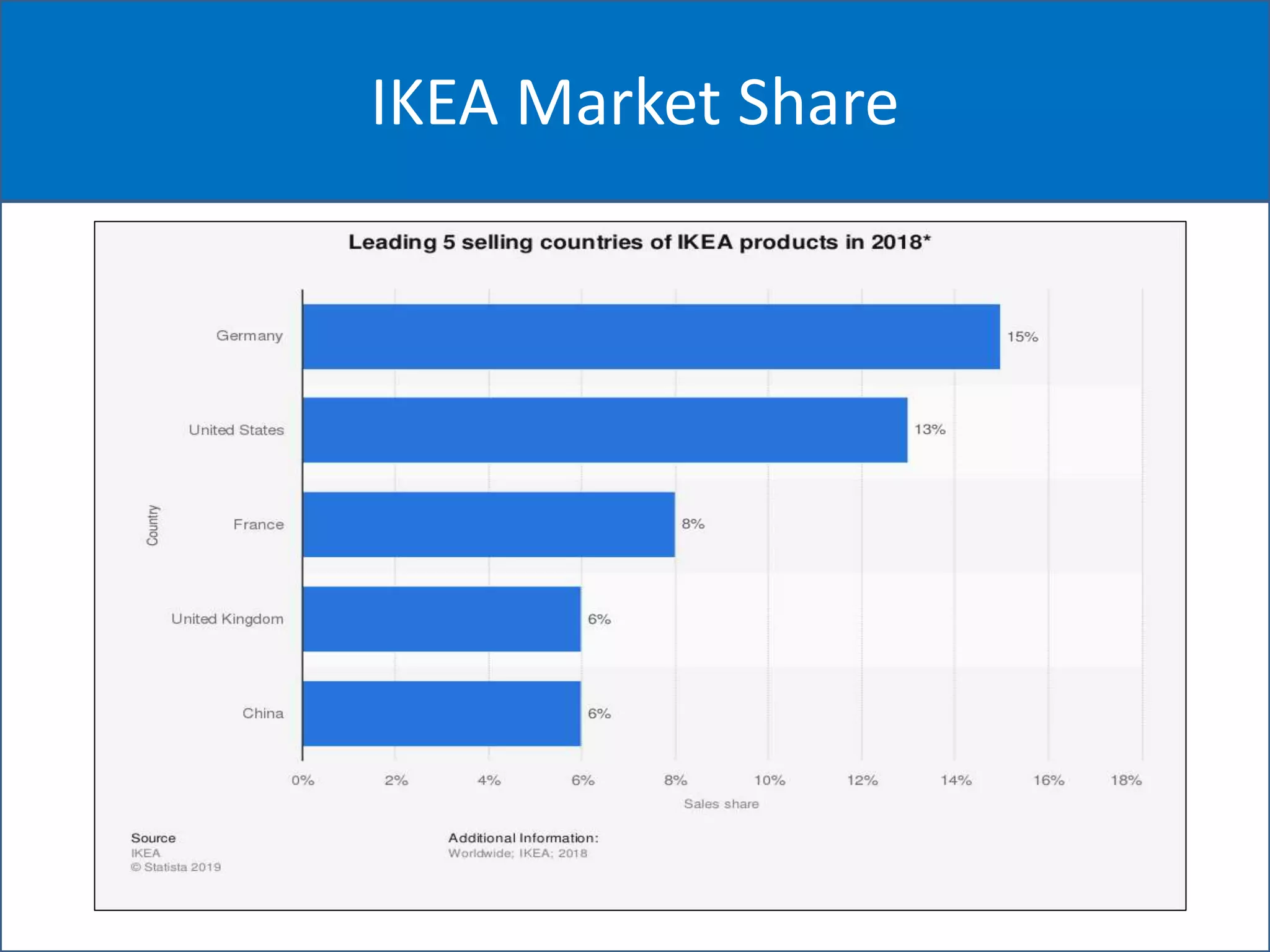
• Germany with 53 stores, is IKEA's biggest market, followed by the United States,
with 50 stores
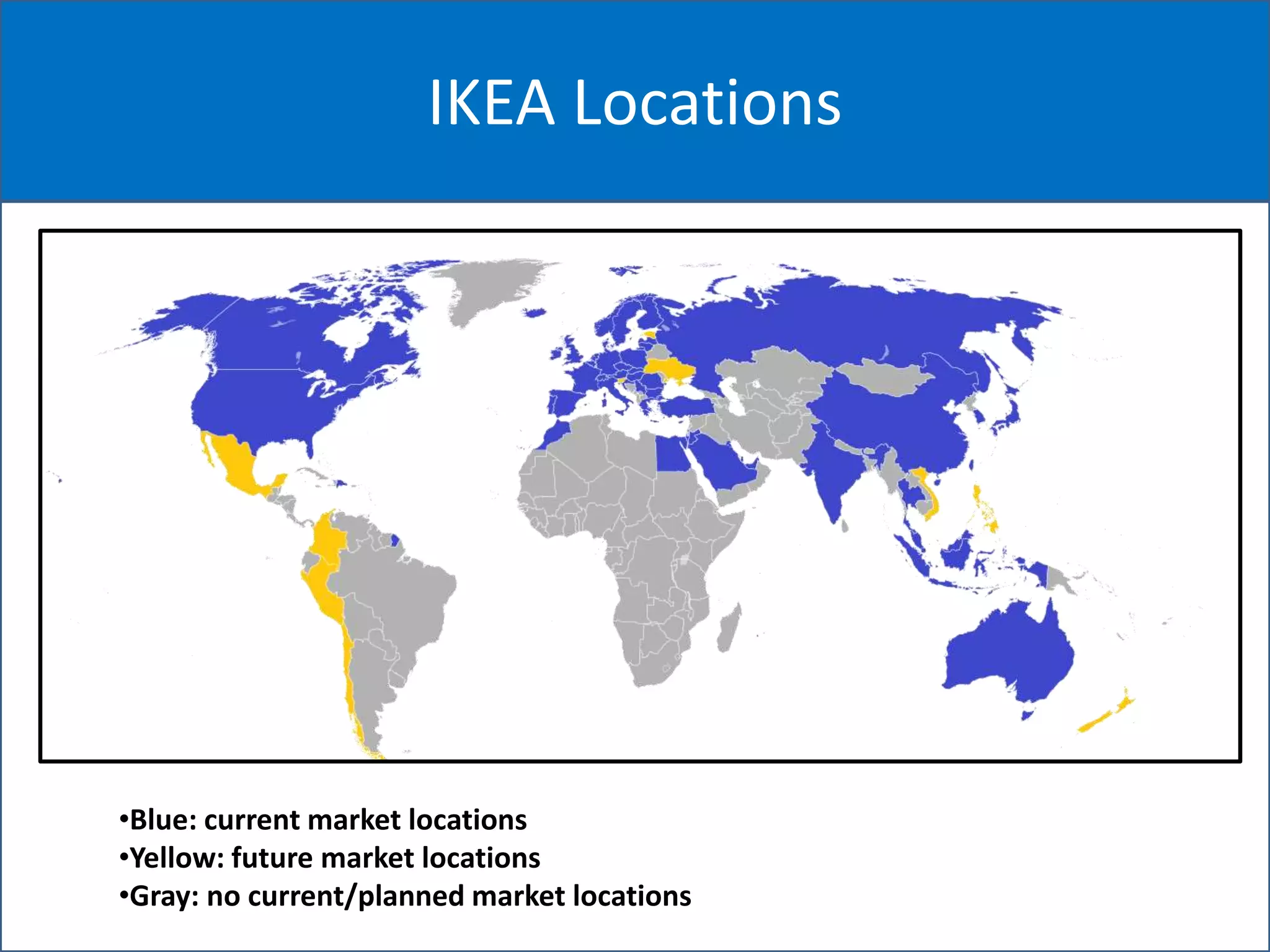
IKEA Locations
•Blue: current market locations
•Yellow: future market locations
•Gray: no current/planned market locations
IKEA Market Share
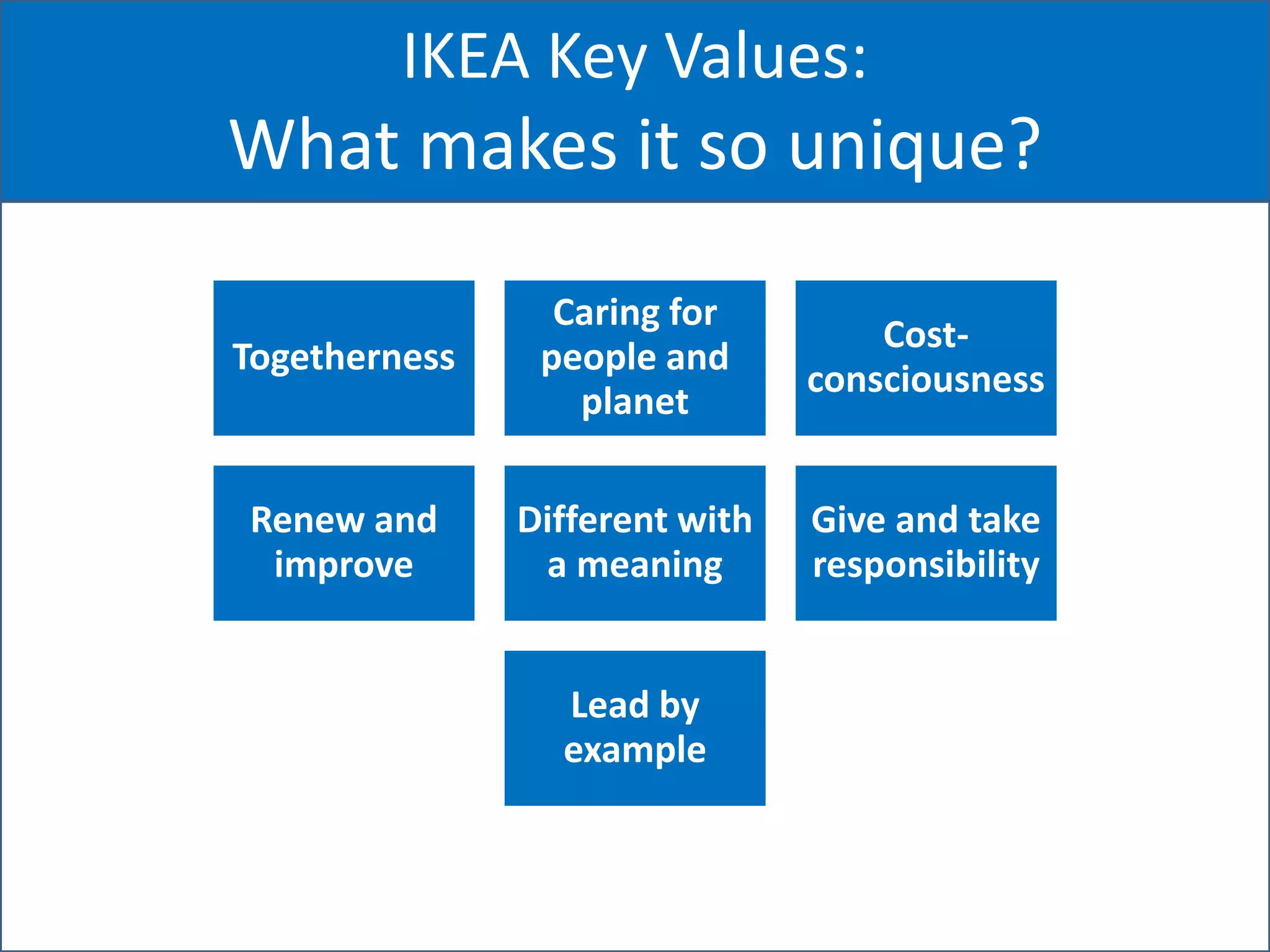
IKEA Key Values:
What makes it so unique?
Togetherness
Caring for
people and
planet
Cost-
consciousness
Renew and
improve
Different with
a meaning
Give and take
responsibility
Lead by
example
IKEA Range
IKEA’s major business areas
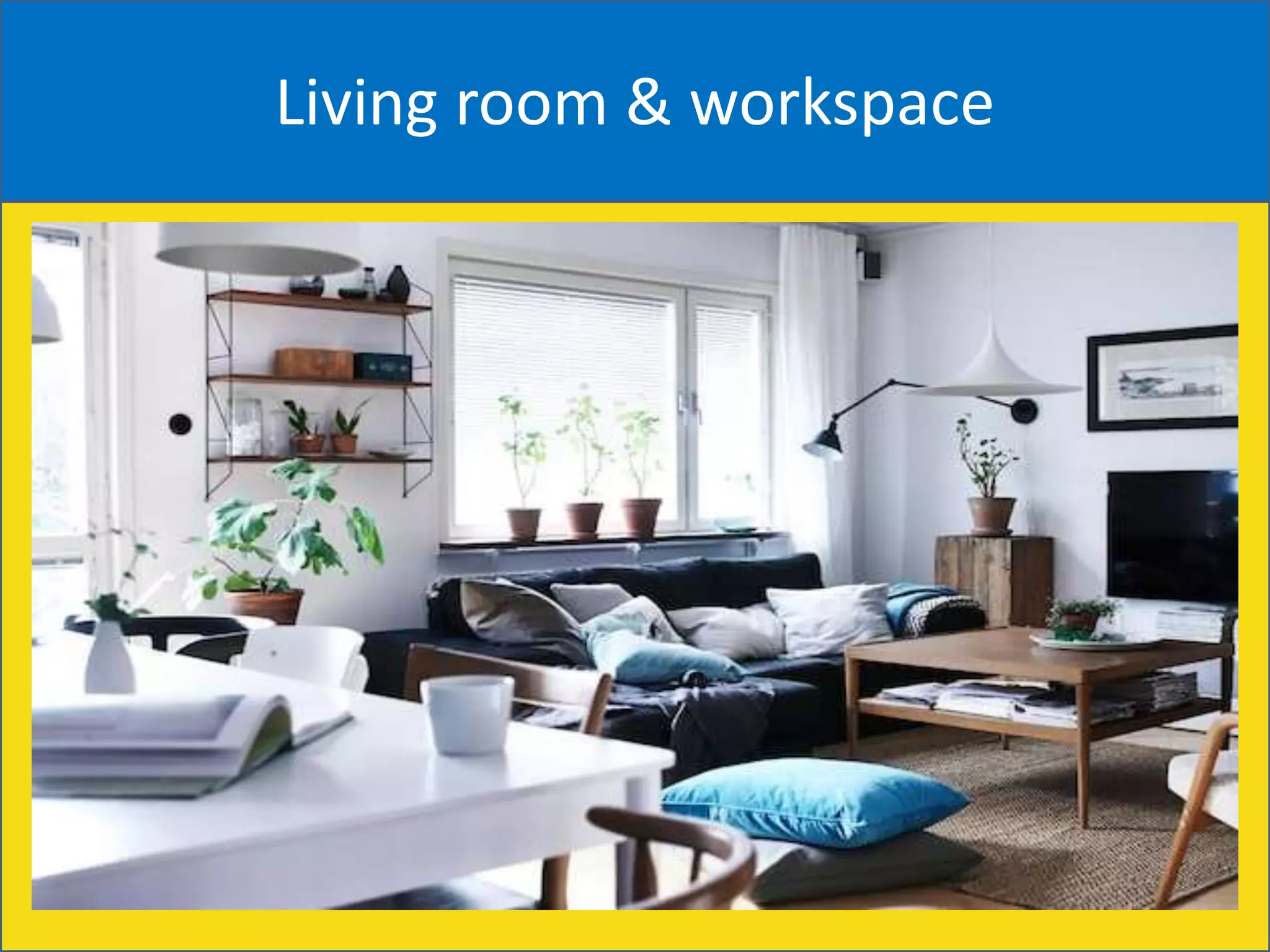
Living room & workspace
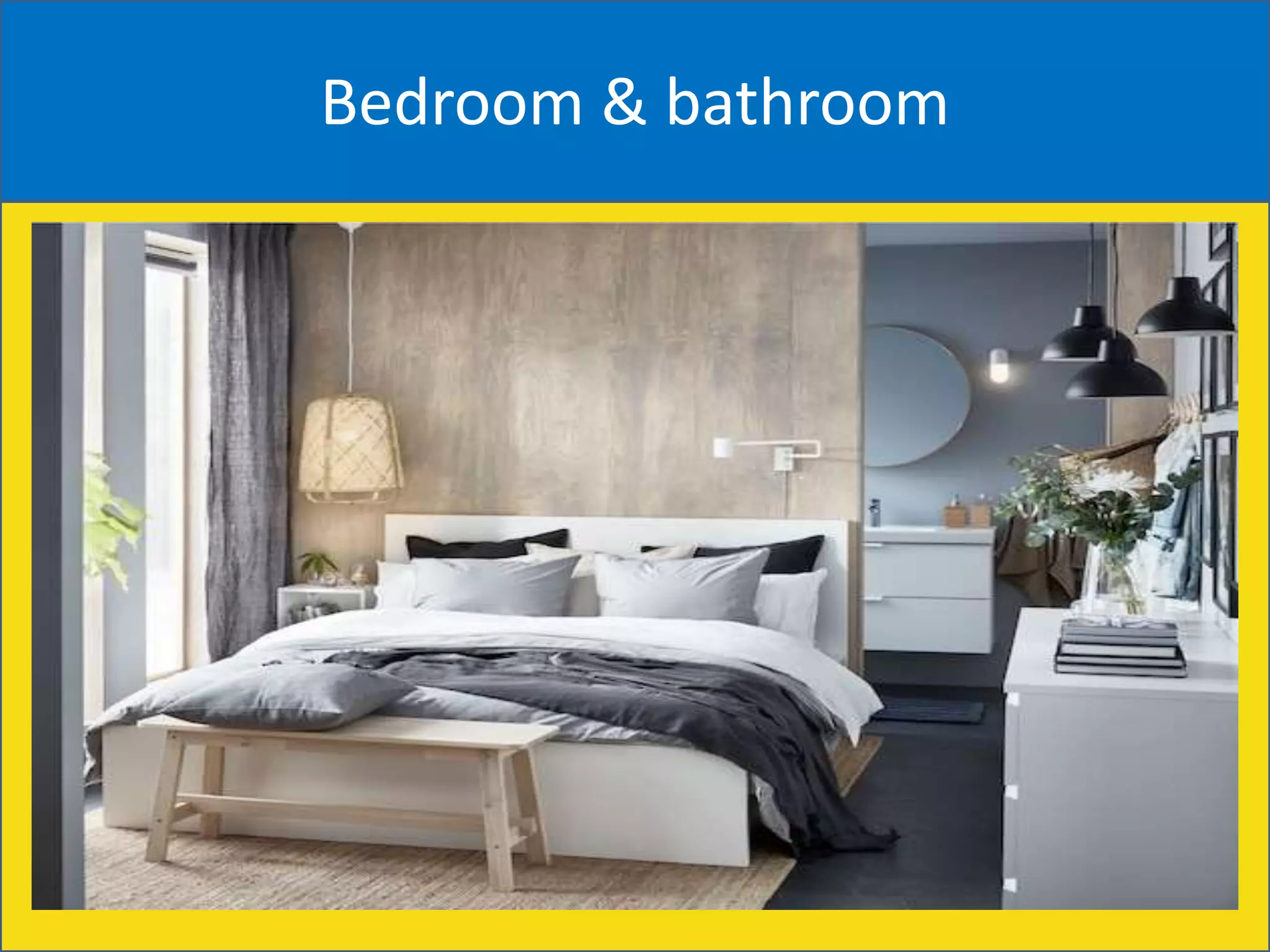
Bedroom & bathroom
Kitchen & dining
Lighting & home smarts
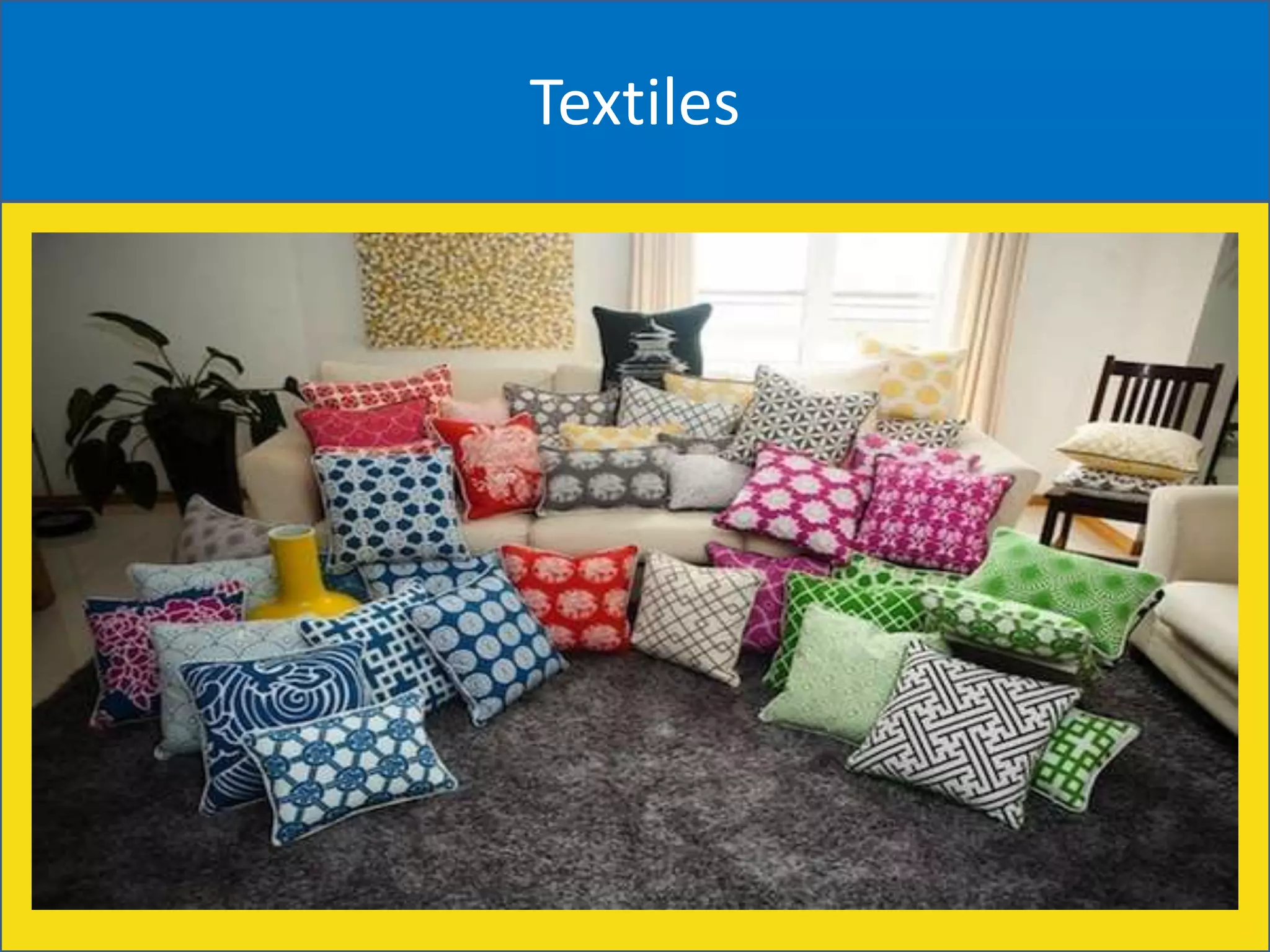
Textiles
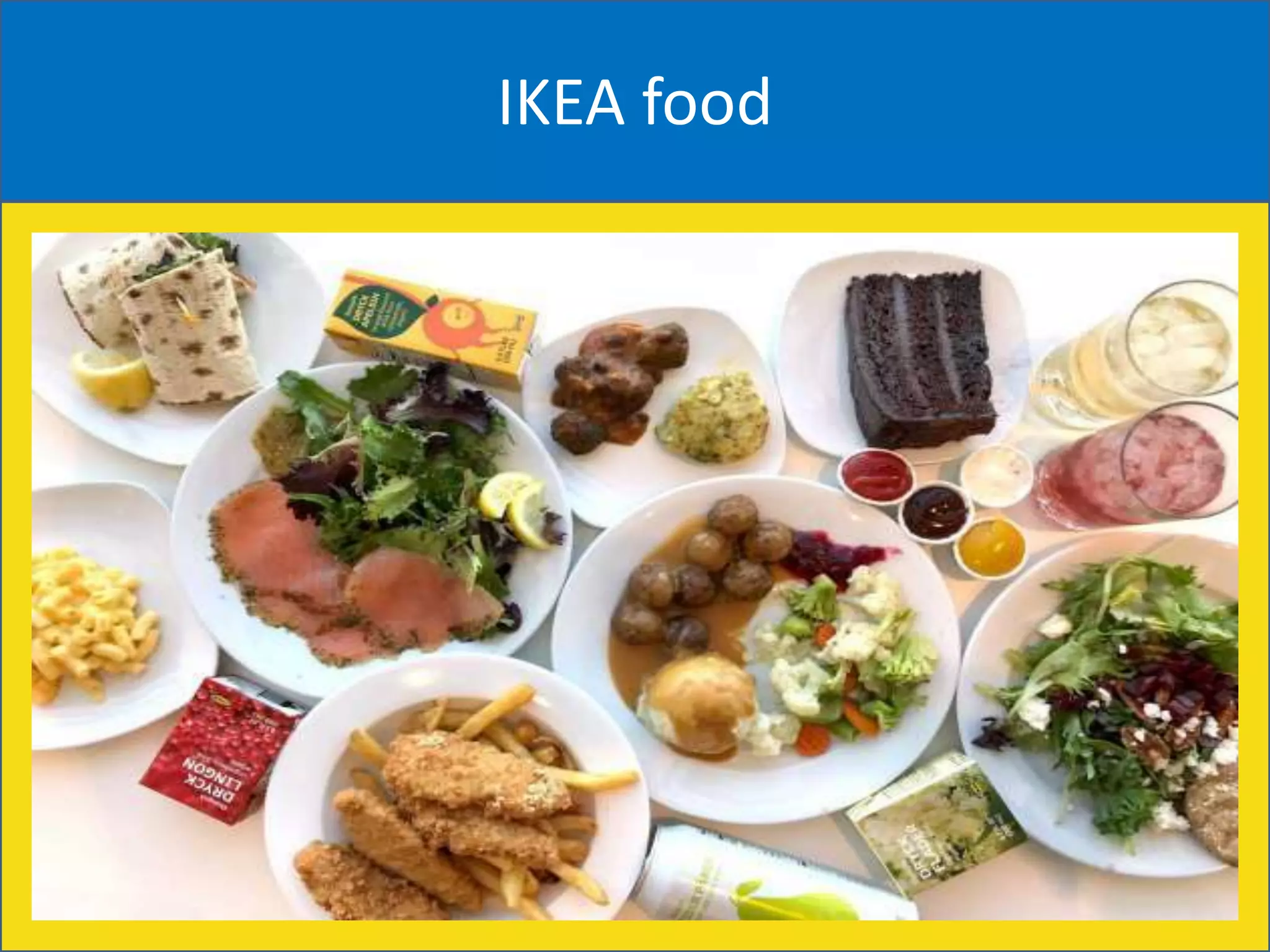
IKEA food
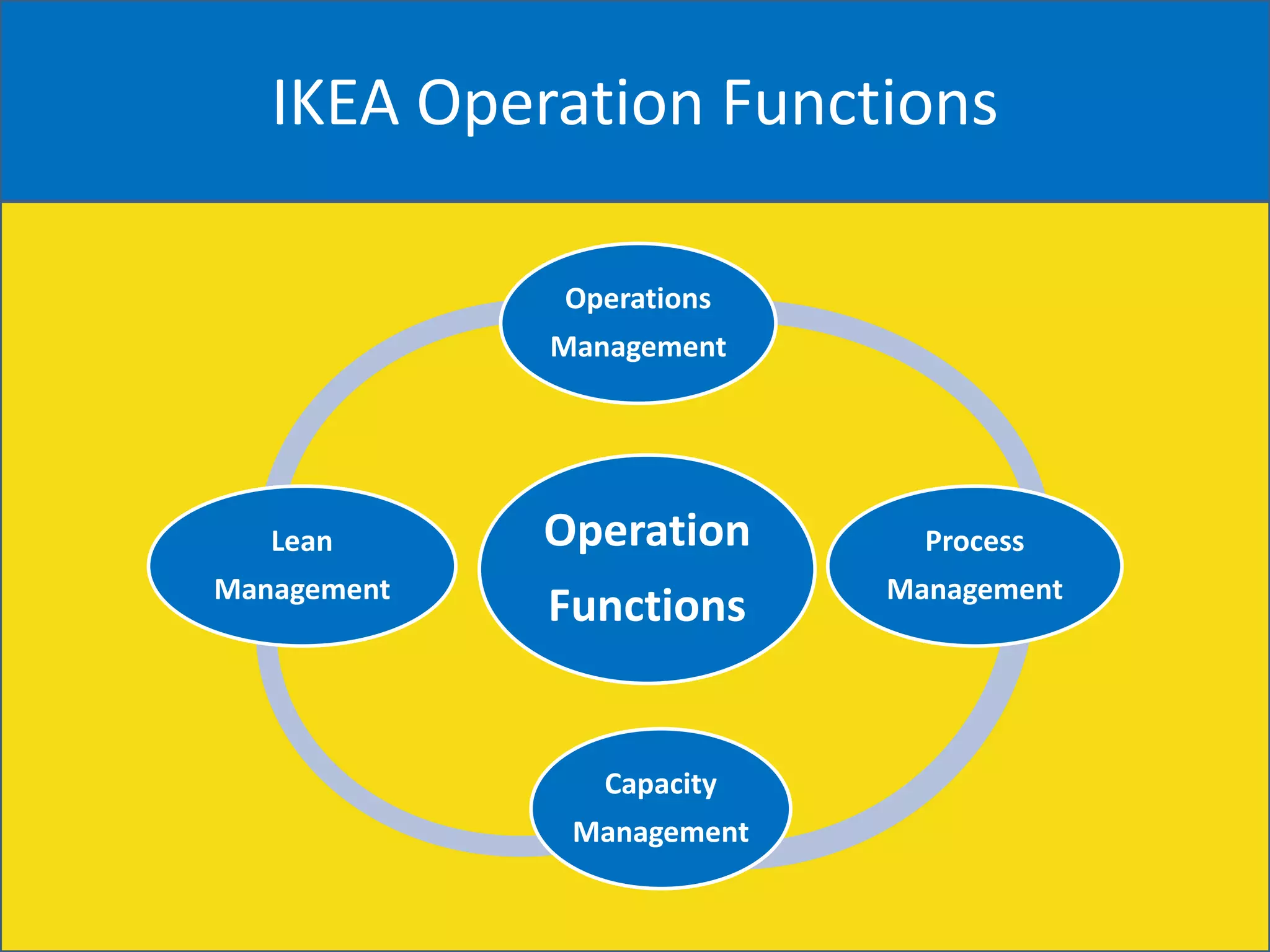
IKEA Operation Functions
Operation
Functions
Operations
Management
Process
Management
Capacity
Management
Lean
Management
IKEA Operations Management
Cost
• Focuses on low
manufacturing costs
• Uses self-service model
• Low-cost, modular and
ready-to-assemble
furniture
• Low price attracts
consumers
Supply chain
management
• Adopted global supply
chain management
• Supply chain divided
into 3 categories:
primary, secondary &
tertiary
• Primary: extracts and
develops natural
resources that fit
company quality
standards
• Secondary: develops
finished goods from raw
materials
• Tertiary: distributes
products to suppliers
Quality management
• Suppliers are committed
to Total Quality
Management
• High quality products at
low/affordable prices
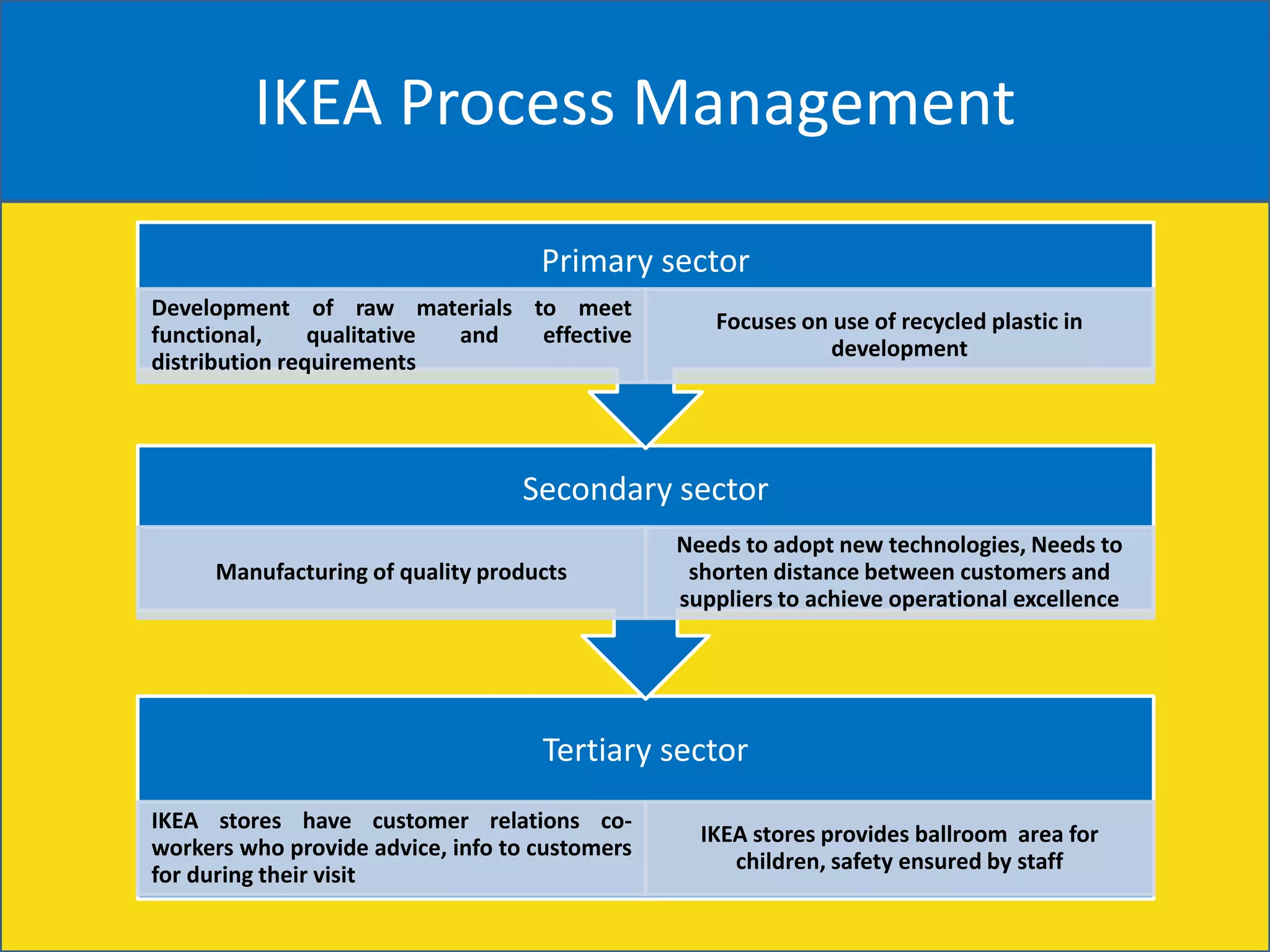
IKEA Process Management
Tertiary sector
IKEA stores have customer relations co-
workers who provide advice, info to customers
for during their visit
IKEA stores provides ballroom area for
children, safety ensured by staff
Secondary sector
Manufacturing of quality products
Needs to adopt new technologies, Needs to
shorten distance between customers and
suppliers to achieve operational excellence
Primary sector
Development of raw materials to meet
functional, qualitative and effective
distribution requirements
Focuses on use of recycled plastic in
development
IKEA Capacity Management
Adequate infrastructure has
allowed storing of
manufactured products
Layout of IKEA stores are like
warehouses
Keeping products always in
stock, irrespective of high/low
demands, is ensured by IKEA
IKEA Lean Management
Increased
customer
satisfaction
Increase in
productivity
Improvement
of employee
morale
Total
involvement
of company
Reduction
of
manpower
Increase in
efficiency
Reduction in
cost,
eco-friendly
IKEA SWOT Analysis
•Wal-mart, homed depot, pier
•Other competitors entering low price
household and furnishing markets
•Global economic crisis
•Increase online sales and internet
presence
•Must expand to other
cities/countries
• Educate consumers through ad
campaigns
•Relatively few locations
•Swedish design may not appeal
to all markets
•Advertising doesn’t appeal
enough to target market
•Powerful brand image
•Wide range of products
•Cheap and affordable
•Strong global outsourcing
Strengths Weaknesses
ThreatsOpportunities
Conclusion
• IKEA’s focus on its primary areas of operation management have led it to become
the leading furniture retailer in the world :
- cost: low manufacturing costs along with eco-friendly simplicity
- quality management: meeting customer needs and demands, on-time delivery,
space-saving products
- supply chain management: modernist approach in the designing, manufacturing
and warehousing of products
•Through Lean Management, IKEA has been able to:
-Reduce cost
-Increase efficiency and productivity
-Reduce manpower
-Improve employee morale
-Involve the entire company
-Increase customer satisfaction
• Current Revenue: €41.3 billion (US$45.4 billion) (FY 2019)
• Potential markets for IKEA:
-Latin America
-Africa
-Asia
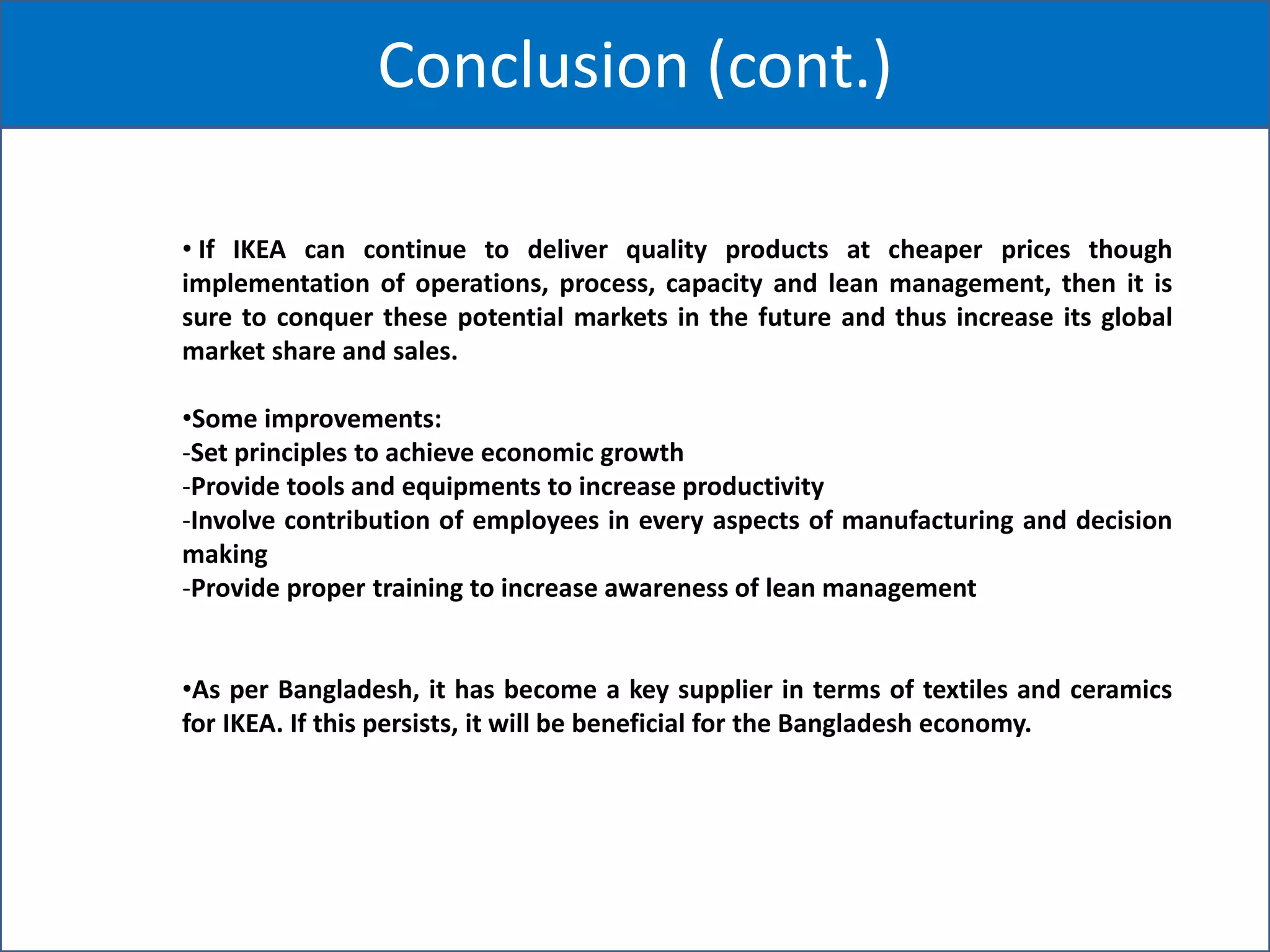
Conclusion (cont.)
• If IKEA can continue to deliver quality products at cheaper prices though
implementation of operations, process, capacity and lean management, then it is
sure to conquer these potential markets in the future and thus increase its global
market share and sales.
•Some improvements:
-Set principles to achieve economic growth
-Provide tools and equipments to increase productivity
-Involve contribution of employees in every aspects of manufacturing and decision
making
-Provide proper training to increase awareness of lean management
•As per Bangladesh, it has become a key supplier in terms of textiles and ceramics
for IKEA. If this persists, it will be beneficial for the Bangladesh economy.

Operations management of IKEA

  • 1.
    By Mahir Mahtab Haque ID:B17231042 Operations Management of
  • 2.
    IKEA Overview • Foundedby Swedish carpenter Ingvar Kamprad in 1943 • A multinational that designs and sells ready-to-assemble furniture, kitchen appliances and home accessories, all at affordable prices making it the world’s largest furniture retailer since at least 2008 • Currently owned by INGKA Holding B.V. , a Dutch corporation that is controlled by a non-profit Dutch foundation known as the Stichting Ingka Foundation, which was founded by Kamprad in 1982 • IKEA Vision: “To create a better everyday life for the many people” • IKEA Mission: “To offer a wide range of well-designed, functional home furnishing products at prices so low that as many people as possible will be able to afford them” • Currently, there are 433 IKEA stores operating worldwide, with over 210,000 employees • Germany with 53 stores, is IKEA's biggest market, followed by the United States, with 50 stores
  • 3.
    IKEA Locations •Blue: currentmarket locations •Yellow: future market locations •Gray: no current/planned market locations
  • 4.
  • 5.
    IKEA Key Values: Whatmakes it so unique? Togetherness Caring for people and planet Cost- consciousness Renew and improve Different with a meaning Give and take responsibility Lead by example
  • 6.
  • 7.
    Living room &workspace
  • 8.
  • 9.
  • 10.
  • 11.
  • 12.
  • 13.
  • 14.
    IKEA Operations Management Cost •Focuses on low manufacturing costs • Uses self-service model • Low-cost, modular and ready-to-assemble furniture • Low price attracts consumers Supply chain management • Adopted global supply chain management • Supply chain divided into 3 categories: primary, secondary & tertiary • Primary: extracts and develops natural resources that fit company quality standards • Secondary: develops finished goods from raw materials • Tertiary: distributes products to suppliers Quality management • Suppliers are committed to Total Quality Management • High quality products at low/affordable prices
  • 15.
    IKEA Process Management Tertiarysector IKEA stores have customer relations co- workers who provide advice, info to customers for during their visit IKEA stores provides ballroom area for children, safety ensured by staff Secondary sector Manufacturing of quality products Needs to adopt new technologies, Needs to shorten distance between customers and suppliers to achieve operational excellence Primary sector Development of raw materials to meet functional, qualitative and effective distribution requirements Focuses on use of recycled plastic in development
  • 16.
    IKEA Capacity Management Adequateinfrastructure has allowed storing of manufactured products Layout of IKEA stores are like warehouses Keeping products always in stock, irrespective of high/low demands, is ensured by IKEA
  • 17.
    IKEA Lean Management Increased customer satisfaction Increasein productivity Improvement of employee morale Total involvement of company Reduction of manpower Increase in efficiency Reduction in cost, eco-friendly
  • 18.
    IKEA SWOT Analysis •Wal-mart,homed depot, pier •Other competitors entering low price household and furnishing markets •Global economic crisis •Increase online sales and internet presence •Must expand to other cities/countries • Educate consumers through ad campaigns •Relatively few locations •Swedish design may not appeal to all markets •Advertising doesn’t appeal enough to target market •Powerful brand image •Wide range of products •Cheap and affordable •Strong global outsourcing Strengths Weaknesses ThreatsOpportunities
  • 19.
    Conclusion • IKEA’s focuson its primary areas of operation management have led it to become the leading furniture retailer in the world : - cost: low manufacturing costs along with eco-friendly simplicity - quality management: meeting customer needs and demands, on-time delivery, space-saving products - supply chain management: modernist approach in the designing, manufacturing and warehousing of products •Through Lean Management, IKEA has been able to: -Reduce cost -Increase efficiency and productivity -Reduce manpower -Improve employee morale -Involve the entire company -Increase customer satisfaction • Current Revenue: €41.3 billion (US$45.4 billion) (FY 2019) • Potential markets for IKEA: -Latin America -Africa -Asia
  • 20.
    Conclusion (cont.) • IfIKEA can continue to deliver quality products at cheaper prices though implementation of operations, process, capacity and lean management, then it is sure to conquer these potential markets in the future and thus increase its global market share and sales. •Some improvements: -Set principles to achieve economic growth -Provide tools and equipments to increase productivity -Involve contribution of employees in every aspects of manufacturing and decision making -Provide proper training to increase awareness of lean management •As per Bangladesh, it has become a key supplier in terms of textiles and ceramics for IKEA. If this persists, it will be beneficial for the Bangladesh economy.