IKEA CASE STUDY
By –
SHIRIN SONALI
CET BBSR
What is IKEA?
Largest Global
Furniture Retailer!
Operates in around
41 countries!
32 Bn Euros
revenue in 2015!
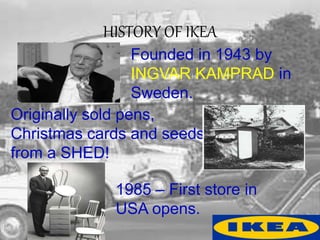
HISTORY OF IKEA
Founded in 1943 by
INGVAR KAMPRAD in
Sweden.
Originally sold pens,
Christmas cards and seeds
from a SHED!
1985 – First store in
USA opens.
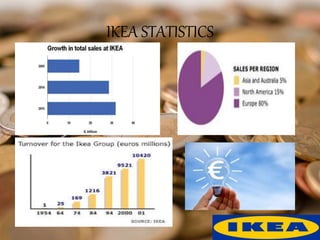
IKEA STATISTICS
IKEA Attributes
USP – Leading edge
Scandinavian
Design at extremely LOW prices.
Unusual Swedish
product names.
Most items come BOXED,
to be ASSEMBLED by
customers.
KAMPRAD’S Visions
“People have very
thin wallets. We
should take care of
their interests”.
Brand Positioning
HIGH Quality at LOW Prices.
“Do-It-Yourself”.
INNOVATIVE designs which can be
FLAT PACKED.
Family-friendly.
SAVINGS passed on to customers.
SWOT Analysis
Competitors
Enjoys 10% margins, higher than Target
(7.7%) and Pier 1 Imports (5%).
Cost Reduction and Customer Satisfaction Strategies
Stores located a good
distance from cities.
Stores optimized to SAVE
ENERGY and open for
long hours.
One way format floor.
(Contd.)
Restaurant stops at
store’s centres.
In-store Child Care Centres.
Finds RIGHT manufacturer
for RIGHT product.
Creative advertisements.
Promotional Strategies
Additional facilities –
Child Care, Restaurants
and Help Desks.
Promise of price reduction
by 2-3% on all products
annually.
(Contd.)
Caters to local tastes
of each country.
Smart product
placement in stores.
Incentives during
store launch.
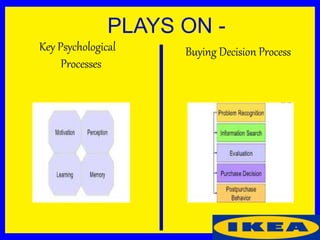
PLAYS ON -
Key Psychological
Processes
Buying Decision Process
1)a. What are some of the things IKEA is doing right to reach
consumers in different markets?
Affordable pricing and looks after
customer’s interests.
Stores located at a good distance
from the city.
Boxed items make it cheaper and
easier to transport for both itself
and customers.
Sources its products from multiple
companies all over the world.
2)b. What else could it be doing?
It can develop a marketing strategy to
influence the reference groups of their target
customers.
Could build stores near cities
for greater accessibility.
Could invest in eco-friendly
products.
Product customization according to customers.
2. IKEA has essentially changed the way people shop for
furniture. Discuss the pros and cons of this strategy.
-> PROS:
“Ambassador of Kul” like events.
Successfully combined low cost with
good quality. Items come boxed.
Greater outreach to customers,
maintaining their loyalty.
->
CONS:
Assembling own items.
Not maximising on the growing
technology available for marketing and
advertising.
Having to travel long
distances.
Lack of innovation in products.
Conclusion
IKEA has expanded too fast in the world which
has led to problems.
It would be recommended that IKEA expands
slowly,
It should keep working
hard to keep customers satisfied.
RECAP
DISCLAIMER
Created By SHIRIN SONALI, CET
BBSR, during a marketing internship
by Prof. SAMEER MATHUR, IIM
LUCKNOW.

IKEA Case Study

  • 1.
    IKEA CASE STUDY By– SHIRIN SONALI CET BBSR
  • 2.
    What is IKEA? LargestGlobal Furniture Retailer! Operates in around 41 countries! 32 Bn Euros revenue in 2015!
  • 3.
    HISTORY OF IKEA Foundedin 1943 by INGVAR KAMPRAD in Sweden. Originally sold pens, Christmas cards and seeds from a SHED! 1985 – First store in USA opens.
  • 4.
  • 5.
    IKEA Attributes USP –Leading edge Scandinavian Design at extremely LOW prices. Unusual Swedish product names. Most items come BOXED, to be ASSEMBLED by customers.
  • 6.
    KAMPRAD’S Visions “People havevery thin wallets. We should take care of their interests”.
  • 7.
    Brand Positioning HIGH Qualityat LOW Prices. “Do-It-Yourself”. INNOVATIVE designs which can be FLAT PACKED. Family-friendly. SAVINGS passed on to customers.
  • 8.
  • 9.
    Competitors Enjoys 10% margins,higher than Target (7.7%) and Pier 1 Imports (5%).
  • 10.
    Cost Reduction andCustomer Satisfaction Strategies Stores located a good distance from cities. Stores optimized to SAVE ENERGY and open for long hours. One way format floor.
  • 11.
    (Contd.) Restaurant stops at store’scentres. In-store Child Care Centres. Finds RIGHT manufacturer for RIGHT product.
  • 12.
    Creative advertisements. Promotional Strategies Additionalfacilities – Child Care, Restaurants and Help Desks. Promise of price reduction by 2-3% on all products annually.
  • 13.
    (Contd.) Caters to localtastes of each country. Smart product placement in stores. Incentives during store launch.
  • 14.
    PLAYS ON - KeyPsychological Processes Buying Decision Process
  • 15.
    1)a. What aresome of the things IKEA is doing right to reach consumers in different markets? Affordable pricing and looks after customer’s interests. Stores located at a good distance from the city. Boxed items make it cheaper and easier to transport for both itself and customers. Sources its products from multiple companies all over the world.
  • 16.
    2)b. What elsecould it be doing? It can develop a marketing strategy to influence the reference groups of their target customers. Could build stores near cities for greater accessibility. Could invest in eco-friendly products. Product customization according to customers.
  • 17.
    2. IKEA hasessentially changed the way people shop for furniture. Discuss the pros and cons of this strategy. -> PROS: “Ambassador of Kul” like events. Successfully combined low cost with good quality. Items come boxed. Greater outreach to customers, maintaining their loyalty.
  • 18.
    -> CONS: Assembling own items. Notmaximising on the growing technology available for marketing and advertising. Having to travel long distances. Lack of innovation in products.
  • 19.
    Conclusion IKEA has expandedtoo fast in the world which has led to problems. It would be recommended that IKEA expands slowly, It should keep working hard to keep customers satisfied.
  • 20.
  • 21.
    DISCLAIMER Created By SHIRINSONALI, CET BBSR, during a marketing internship by Prof. SAMEER MATHUR, IIM LUCKNOW.