Presented by:
Mr. Loukik .G .Patil
MHA Semester-I
Batch 2024-26
“UNDERSTANDING OPERATION THEATRE MANAGEMENT:
FUNCTIONS, EFFICIENCY, AND PATIENT SAFETY”
Guided by :
DR. B.S Nagaonkar
Faculty and Coordina
MHA, MPH, Clinical UG
and PG Courses Under SBS
 Operation theatres (OTs) are specialized areas in hospitals where surgeries are performed, playing a
crucial role in patient care. They are designed to maintain a sterile environment, reduce the risk of
infections, and ensure that medical procedures are carried out with precision and safety. The success
of any surgery largely depends on the efficiency of the OT, the technology used, and the expertise of
the surgical team.
 OTs are equipped with advanced medical equipment, instruments, and tools required for various
surgical procedures. The role of OT staff, including surgeons, anesthesiologists, nurses, and
technicians, is vital to ensure that surgeries are performed effectively and safely. In addition to the
technical aspects, effective management of the OT is essential for optimizing resources, reducing
delays, and maintaining high standards of hygiene and safety.
 This project explores the importance of operation theatres in healthcare, examining their design,
functioning, and the protocols that govern their operation. By highlighting key factors such as
infection control, equipment maintenance, and staff coordination, the project aims to provide a
comprehensive understanding of how OTs contribute to improved patient outcomes and overall
hospital efficiency.
INTRODUCTION
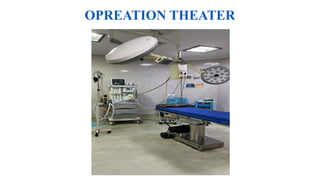
OPREATION THEATER
 Aim: To study the functions and operational aspects of an operation theatre, analyzing its
management practices to improve efficiency and ensure patient safety.
Aim:
 To understand the key functions and workflow processes within an operation
theatre.
 To evaluate the role of staffing, equipment, and infrastructure in OT
management.
 To assess infection control, sterilization, and patient safety protocols.
OBJECTIVE :
 STUDY LOCATION: The study location for this project is the Department of Quality
Assurance in MGM Medical College and Hospital, Kamothe, Navi Mumbai, a tertiary care
hospital located in Raigad district in the State of Maharashtra.
METHODOLOGY:
METHOD OF DATA COLLECTION:
 Prior permission was obtained from the appropriate authority to conduct the study.
 The required data for this project was collected through primary sources such as Informal
interviews of the staff in the department, Documentation in the department, Observation, &
asking questions to the staff .
STUDY DESIGN:
 Descriptive Observational Study
METHODOLOGY:
 Major Operation Theatre: Used for major surgeries that require general anesthesia,
complex procedures, and advanced surgical interventions. Examples include heart surgery,
neurosurgery, and orthopedic surgeries.
 Minor Operation Theatre: Used for less complex surgeries that may require local or
regional anesthesia. These procedures are usually less invasive, such as minor wound
suturing or minor dermatological surgeries.
Classification of Operation Theatres (OTs)
 Emergency Operation Theatre: Dedicated to urgent and life-threatening surgeries, such as
trauma, accidents, or acute conditions that need immediate intervention.
 Elective Operation Theatre: Used for scheduled surgeries, such as planned surgeries for
non-emergency conditions (e.g., appendectomy, joint replacement).
 Specialized Operation Theatre: Designed for specific types of surgeries that require
specialized equipment and setups. For example :
 Orthopedic OT: Specifically for bone and joint surgeries.
 Cardiothoracic OT: For heart and lung surgeries.
 Neurosurgical OT: For brain and spinal surgeries.
 3rd
floor of MGM Hospital , dust free environment & reduced bacterial load in area.
 Accessibility to ICU, Post surgical wards, CSSD, and pharmacy .
 Access to lifts .
 Quiet environment: No Noise, Dust, Wind, Heat and Direct Sun light Problem .
LOCATION OF OPERATION THEATER OF MGM
HOSPITAL
 Total there are 14 operation theaters in MGM hospital .
 3 Operation theater for Orthopedics
 3 Operation theater for surgery
 2 Operation theater for Urology
 1 Operation theater for endoscopy
 1 Operation theater for cardiac patient
 1 Operation theater for ENT
 1 Operation theater for Ophthalmology
 1 Operation theater for OMFS dental surgery
 1 Operation theater for neuro
NUMBER OF OPERATION THEATER IN MGM
HOSPITAL
ORGANOGRAM
 Scrub area
 Clean up area
 Male dressing room
 Female dressing room
 Nurse station
 Wheeled stretcher area
 Major operating room
 Pre- operative area
 Recovery room
 Sub sterilizing area
 Sterile instruments supply and
storage
 Pharmacy
 Hand washing Area
MGM HOSPITAL OPERATION THEATERS IS CONSIST OF
Design
Pre-operative area
Recovery room
 "Zoning in OT" refers to the division of an operating theatre (OT) complex into
distinct areas with varying levels of cleanliness and sterility
 Minimizes risk of hospital infection in the operating room
 Minimizes unproductive movement of staff, supplies and patients
 Ensures smooth work flow
 Reduces hazards in the operation suites
 Ensures proper positioning of the equipment
ZONING in OTs
 Protective Zone
 Clean Zone
 Sterile Zone
 Disposal Zone
 Neutral zone
Types of ZONES
 This includes entrance for patients, staff & supplies where normal hospital
standards of cleanliness applies & where normal everyday clothes are worn.
 Reception
 Waiting room
 Changing room
 Store room
 Autoclave/TSSU
 Trolley Bay
 Control area of electricity
Protective Zone
 This is the main area of the OT where all patients, staff should undergo complete
changing of clothes before entering.
 Pre-operating room
 Recovery room
 Theatre work room
 Plaster room
 X-ray unit with dark room
 Sisters work room
 Staff work room
 Anaesthesia Store
Clean Zone
 This is the inner zone, where conditions are as near sterile as possible. It applies to
2 rooms in a suite, the theatre & theatre supply room. All staffs who might handle
the exposed instruments, must be scrubbed & gowned.
 Operating Room
 Scrub Room
 Anesthesia Room
 Instant instrument sterilization
 Instrument trolley area
Sterile / Aseptic Zone
 This is where all exposed instruments (used or unused), pathological specimens,
lotions, suction jars, soiled linen are passed from the theatre to disposal corridor &
returned for changing, sterilizing or any other necessary procedure.
 Dirty wash up room
 Disposal Corridor
Disposal Zone
 A neutral zone in an operating theater is a designated area where sharps are placed
and retrieved during a surgical procedure. The purpose of the neutral zone is to
reduce the risk of injury to healthcare workers by preventing the direct transfer of
sharps between people .
Neutral Zone
 Aseptic Technique :
All personnel must adhere to strict aseptic techniques to minimize the risk of introducing pathogens into
the surgical site. This includes proper hand hygiene, wearing sterile gowns, gloves, and masks, and
ensuring that all instruments are sterilized before use .
 Environmental Controls :
Operating theatres should maintain a controlled environment with positive air pressure to prevent
airborne contaminants from entering. This involves using high-efficiency particulate air (HEPA) filters
and ensuring adequate ventilation with a minimum of 20 air changes per hour4
 Regular Cleaning and Disinfection:
Surfaces in the operating theatre must be cleaned and disinfected regularly. This includes operating
tables, lights, and any equipment used during surgery. The choice of cleaning agents should be effective
against a broad spectrum of pathogens
Infection Control in the Operating Theatre
 Proper Instrument Handling :
Instruments must be handled carefully to avoid contamination. This includes using
sterile drapes to cover instrument trolleys and passing instruments in a manner that
prevents contact with non-sterile surfaces
 Preoperative Preparation :
Patients should undergo thorough skin antisepsis using antimicrobial solutions before
surgery to reduce the microbial load at the surgical site. This is crucial for minimizing
infection risks
 Postoperative Protocols :
After surgery, protocols should be in place for wound care and monitoring for signs of
infection. This includes educating patients on how to care for their surgical sites at
home
Thank you

Operation THEATER .........................

  • 1.
    Presented by: Mr. Loukik.G .Patil MHA Semester-I Batch 2024-26 “UNDERSTANDING OPERATION THEATRE MANAGEMENT: FUNCTIONS, EFFICIENCY, AND PATIENT SAFETY” Guided by : DR. B.S Nagaonkar Faculty and Coordina MHA, MPH, Clinical UG and PG Courses Under SBS
  • 2.
     Operation theatres(OTs) are specialized areas in hospitals where surgeries are performed, playing a crucial role in patient care. They are designed to maintain a sterile environment, reduce the risk of infections, and ensure that medical procedures are carried out with precision and safety. The success of any surgery largely depends on the efficiency of the OT, the technology used, and the expertise of the surgical team.  OTs are equipped with advanced medical equipment, instruments, and tools required for various surgical procedures. The role of OT staff, including surgeons, anesthesiologists, nurses, and technicians, is vital to ensure that surgeries are performed effectively and safely. In addition to the technical aspects, effective management of the OT is essential for optimizing resources, reducing delays, and maintaining high standards of hygiene and safety.  This project explores the importance of operation theatres in healthcare, examining their design, functioning, and the protocols that govern their operation. By highlighting key factors such as infection control, equipment maintenance, and staff coordination, the project aims to provide a comprehensive understanding of how OTs contribute to improved patient outcomes and overall hospital efficiency. INTRODUCTION
  • 3.
  • 4.
     Aim: Tostudy the functions and operational aspects of an operation theatre, analyzing its management practices to improve efficiency and ensure patient safety. Aim:
  • 5.
     To understandthe key functions and workflow processes within an operation theatre.  To evaluate the role of staffing, equipment, and infrastructure in OT management.  To assess infection control, sterilization, and patient safety protocols. OBJECTIVE :
  • 6.
     STUDY LOCATION:The study location for this project is the Department of Quality Assurance in MGM Medical College and Hospital, Kamothe, Navi Mumbai, a tertiary care hospital located in Raigad district in the State of Maharashtra. METHODOLOGY:
  • 7.
    METHOD OF DATACOLLECTION:  Prior permission was obtained from the appropriate authority to conduct the study.  The required data for this project was collected through primary sources such as Informal interviews of the staff in the department, Documentation in the department, Observation, & asking questions to the staff . STUDY DESIGN:  Descriptive Observational Study METHODOLOGY:
  • 8.
     Major OperationTheatre: Used for major surgeries that require general anesthesia, complex procedures, and advanced surgical interventions. Examples include heart surgery, neurosurgery, and orthopedic surgeries.  Minor Operation Theatre: Used for less complex surgeries that may require local or regional anesthesia. These procedures are usually less invasive, such as minor wound suturing or minor dermatological surgeries. Classification of Operation Theatres (OTs)
  • 9.
     Emergency OperationTheatre: Dedicated to urgent and life-threatening surgeries, such as trauma, accidents, or acute conditions that need immediate intervention.  Elective Operation Theatre: Used for scheduled surgeries, such as planned surgeries for non-emergency conditions (e.g., appendectomy, joint replacement).  Specialized Operation Theatre: Designed for specific types of surgeries that require specialized equipment and setups. For example :  Orthopedic OT: Specifically for bone and joint surgeries.  Cardiothoracic OT: For heart and lung surgeries.  Neurosurgical OT: For brain and spinal surgeries.
  • 10.
     3rd floor ofMGM Hospital , dust free environment & reduced bacterial load in area.  Accessibility to ICU, Post surgical wards, CSSD, and pharmacy .  Access to lifts .  Quiet environment: No Noise, Dust, Wind, Heat and Direct Sun light Problem . LOCATION OF OPERATION THEATER OF MGM HOSPITAL
  • 11.
     Total thereare 14 operation theaters in MGM hospital .  3 Operation theater for Orthopedics  3 Operation theater for surgery  2 Operation theater for Urology  1 Operation theater for endoscopy  1 Operation theater for cardiac patient  1 Operation theater for ENT  1 Operation theater for Ophthalmology  1 Operation theater for OMFS dental surgery  1 Operation theater for neuro NUMBER OF OPERATION THEATER IN MGM HOSPITAL
  • 12.
  • 14.
     Scrub area Clean up area  Male dressing room  Female dressing room  Nurse station  Wheeled stretcher area  Major operating room  Pre- operative area  Recovery room  Sub sterilizing area  Sterile instruments supply and storage  Pharmacy  Hand washing Area MGM HOSPITAL OPERATION THEATERS IS CONSIST OF Design
  • 15.
  • 16.
  • 17.
     "Zoning inOT" refers to the division of an operating theatre (OT) complex into distinct areas with varying levels of cleanliness and sterility  Minimizes risk of hospital infection in the operating room  Minimizes unproductive movement of staff, supplies and patients  Ensures smooth work flow  Reduces hazards in the operation suites  Ensures proper positioning of the equipment ZONING in OTs
  • 18.
     Protective Zone Clean Zone  Sterile Zone  Disposal Zone  Neutral zone Types of ZONES
  • 19.
     This includesentrance for patients, staff & supplies where normal hospital standards of cleanliness applies & where normal everyday clothes are worn.  Reception  Waiting room  Changing room  Store room  Autoclave/TSSU  Trolley Bay  Control area of electricity Protective Zone
  • 20.
     This isthe main area of the OT where all patients, staff should undergo complete changing of clothes before entering.  Pre-operating room  Recovery room  Theatre work room  Plaster room  X-ray unit with dark room  Sisters work room  Staff work room  Anaesthesia Store Clean Zone
  • 21.
     This isthe inner zone, where conditions are as near sterile as possible. It applies to 2 rooms in a suite, the theatre & theatre supply room. All staffs who might handle the exposed instruments, must be scrubbed & gowned.  Operating Room  Scrub Room  Anesthesia Room  Instant instrument sterilization  Instrument trolley area Sterile / Aseptic Zone
  • 22.
     This iswhere all exposed instruments (used or unused), pathological specimens, lotions, suction jars, soiled linen are passed from the theatre to disposal corridor & returned for changing, sterilizing or any other necessary procedure.  Dirty wash up room  Disposal Corridor Disposal Zone
  • 23.
     A neutralzone in an operating theater is a designated area where sharps are placed and retrieved during a surgical procedure. The purpose of the neutral zone is to reduce the risk of injury to healthcare workers by preventing the direct transfer of sharps between people . Neutral Zone
  • 24.
     Aseptic Technique: All personnel must adhere to strict aseptic techniques to minimize the risk of introducing pathogens into the surgical site. This includes proper hand hygiene, wearing sterile gowns, gloves, and masks, and ensuring that all instruments are sterilized before use .  Environmental Controls : Operating theatres should maintain a controlled environment with positive air pressure to prevent airborne contaminants from entering. This involves using high-efficiency particulate air (HEPA) filters and ensuring adequate ventilation with a minimum of 20 air changes per hour4  Regular Cleaning and Disinfection: Surfaces in the operating theatre must be cleaned and disinfected regularly. This includes operating tables, lights, and any equipment used during surgery. The choice of cleaning agents should be effective against a broad spectrum of pathogens Infection Control in the Operating Theatre
  • 25.
     Proper InstrumentHandling : Instruments must be handled carefully to avoid contamination. This includes using sterile drapes to cover instrument trolleys and passing instruments in a manner that prevents contact with non-sterile surfaces  Preoperative Preparation : Patients should undergo thorough skin antisepsis using antimicrobial solutions before surgery to reduce the microbial load at the surgical site. This is crucial for minimizing infection risks  Postoperative Protocols : After surgery, protocols should be in place for wound care and monitoring for signs of infection. This includes educating patients on how to care for their surgical sites at home
  • 27.