Chapter 1 Management
What Would You Do? Mario had founded a small management consulting firm in Moncton. Opportunities to help firms build and manage competitive intelligence were many. What are the challenges Mario faces? What should Mario do?
Learning Objectives:  What is Management? After discussing this section you should be able to: 1. describe what management is. 2. explain the three functions of  management.
Management is … Getting work done through others. Managers are concerned with: efficiency getting work done with a minimum of  effort, expense or waste. effectiveness accomplishing tasks that help fulfill  organizational objectives.
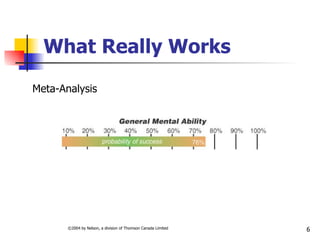
Meta-analysis A study of studies. A statistical approach that provides the best scientific estimate of how well management theories and practices work.
What Really Works Meta-Analysis
Management Functions “ Old” Planning Organizing Leading Controlling “ New” Making Things Happen Meeting the Competition Organizing People, Projects, and Processes
Making Things Happen Determining what you want to accomplish. Planning how to achieve those goals. Gathering and managing the information needed to make good decisions. Controlling performance.
Meeting the Competition Consider the threat from international competitors. Have a well-thought-out competitive strategy. Be able to embrace change and foster new product and service ideas. Structure their organizations to quickly adapt to changing customers and competitors.
Organizing People, Projects, and Processes Consideration of people issues. Consideration of work processes.
Learning Objectives:  What Do Managers Do? After discussing this section, you should be able to: 3. describe different kinds of managers. 4. explain the major roles and subroles  that managers perform in their jobs.
Kinds of Managers Top Managers Middle Managers First-Line Managers Team Leaders
Top Managers Responsible for: Creating a context for change. Developing attitudes of commitment and ownership in employees. Creating a positive organizational culture through language and action. Monitoring their business environments.
Middle Managers Responsible for: Planning and allocating resources to meet objectives. Coordinating and linking groups, department and divisions. Monitoring and managing the performance of the subunits and individual managers who report to them. Implementing the changes or strategies generated by top managers.
First-Line Managers Responsible for: Managing the performance of entry-level employees. Teaching entry-level employees how to do their jobs. Making detailed schedules and operating plans on middle management’s intermediate range plans.
Team Leaders Responsible for: Facilitating team performance. Managing external relationships. Internal team relationships.
Managerial Roles Interpersonal figurehead - leader - liaison Informational monitor disseminator spokesperson Decisional entrepreneur disturbance handler resource allocator negotiator Adapted from Exhibit 1.3
Learning Objectives:  What Does It Take to Be a Manager? After discussing this section, you should be able to: 5. explain what companies look for in  managers. 6. discuss the top mistakes that managers  make in their jobs. 7. describe the transition that employees go  through when they are promoted to  management.
What Companies  Look for in Managers Technical Skills Specialized knowledge Human Skill Ability to work with others Conceptual Skill Ability to see the whole organization Motivation to Manage A desire to be in charge
Relative Importance  of Managerial Skills to  Different Managerial Jobs Exhibit 1.4
Mistakes Managers Make Insensitive to others Cold, aloof, and/or arrogant Betraying a trust Overly ambitious Specific performance problems with the business
Mistakes Managers Make Overmanaging: unable to delegate or build a team Unable to staff effectively Unable to think strategically Unable to boss with different style Overdependent on advocate or mentor
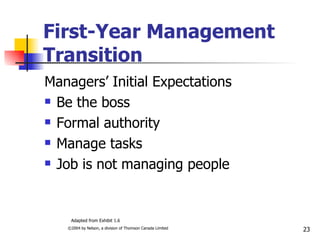
First-Year Management Transition Managers’ Initial Expectations Be the boss Formal authority Manage tasks Job is not managing people Adapted from Exhibit 1.6
First-Year Management Transition After Six Months as a Manager Initial expectations were wrong Fast pace Heavy workload Job is to be problem-solver and trouble-shooter for subordinates Adapted from Exhibit 1.6
First-Year Management Transition After a Year as a Manager No longer “doers” Communication, listening, & positive reinforcement Job is people development Adapted from Exhibit 1.6
The Transition to Management Initial Assumptions Exercise formal authority Managing tasks not people Help employees do their jobs Hire and fire Reality Cannot be “bossy” Manage people not tasks Coach employee performance Fast pace, heavy workload
Learning Objectives: Why Management Matters After reading this section, you should be able to: 8. explain how and why  companies can create  competitive advantage  through people
Competitive Advantage Through People: Management Practices Employment security Selective hiring Self-managed teams and decentralization High wages contingent on organizational performance Training and skill development Reduction of status differences Sharing information Adapted from Exhibit 1.7
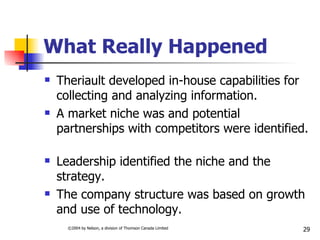
What Really Happened Theriault developed in-house capabilities for collecting and analyzing information. A market niche was and potential partnerships with competitors were identified.  Leadership identified the niche and the strategy. The company structure was based on growth and use of technology.

operation management

  • 1.
  • 2.
    What Would YouDo? Mario had founded a small management consulting firm in Moncton. Opportunities to help firms build and manage competitive intelligence were many. What are the challenges Mario faces? What should Mario do?
  • 3.
    Learning Objectives: What is Management? After discussing this section you should be able to: 1. describe what management is. 2. explain the three functions of management.
  • 4.
    Management is …Getting work done through others. Managers are concerned with: efficiency getting work done with a minimum of effort, expense or waste. effectiveness accomplishing tasks that help fulfill organizational objectives.
  • 5.
    Meta-analysis A studyof studies. A statistical approach that provides the best scientific estimate of how well management theories and practices work.
  • 6.
    What Really WorksMeta-Analysis
  • 7.
    Management Functions “Old” Planning Organizing Leading Controlling “ New” Making Things Happen Meeting the Competition Organizing People, Projects, and Processes
  • 8.
    Making Things HappenDetermining what you want to accomplish. Planning how to achieve those goals. Gathering and managing the information needed to make good decisions. Controlling performance.
  • 9.
    Meeting the CompetitionConsider the threat from international competitors. Have a well-thought-out competitive strategy. Be able to embrace change and foster new product and service ideas. Structure their organizations to quickly adapt to changing customers and competitors.
  • 10.
    Organizing People, Projects,and Processes Consideration of people issues. Consideration of work processes.
  • 11.
    Learning Objectives: What Do Managers Do? After discussing this section, you should be able to: 3. describe different kinds of managers. 4. explain the major roles and subroles that managers perform in their jobs.
  • 12.
    Kinds of ManagersTop Managers Middle Managers First-Line Managers Team Leaders
  • 13.
    Top Managers Responsiblefor: Creating a context for change. Developing attitudes of commitment and ownership in employees. Creating a positive organizational culture through language and action. Monitoring their business environments.
  • 14.
    Middle Managers Responsiblefor: Planning and allocating resources to meet objectives. Coordinating and linking groups, department and divisions. Monitoring and managing the performance of the subunits and individual managers who report to them. Implementing the changes or strategies generated by top managers.
  • 15.
    First-Line Managers Responsiblefor: Managing the performance of entry-level employees. Teaching entry-level employees how to do their jobs. Making detailed schedules and operating plans on middle management’s intermediate range plans.
  • 16.
    Team Leaders Responsiblefor: Facilitating team performance. Managing external relationships. Internal team relationships.
  • 17.
    Managerial Roles Interpersonalfigurehead - leader - liaison Informational monitor disseminator spokesperson Decisional entrepreneur disturbance handler resource allocator negotiator Adapted from Exhibit 1.3
  • 18.
    Learning Objectives: What Does It Take to Be a Manager? After discussing this section, you should be able to: 5. explain what companies look for in managers. 6. discuss the top mistakes that managers make in their jobs. 7. describe the transition that employees go through when they are promoted to management.
  • 19.
    What Companies Look for in Managers Technical Skills Specialized knowledge Human Skill Ability to work with others Conceptual Skill Ability to see the whole organization Motivation to Manage A desire to be in charge
  • 20.
    Relative Importance of Managerial Skills to Different Managerial Jobs Exhibit 1.4
  • 21.
    Mistakes Managers MakeInsensitive to others Cold, aloof, and/or arrogant Betraying a trust Overly ambitious Specific performance problems with the business
  • 22.
    Mistakes Managers MakeOvermanaging: unable to delegate or build a team Unable to staff effectively Unable to think strategically Unable to boss with different style Overdependent on advocate or mentor
  • 23.
    First-Year Management TransitionManagers’ Initial Expectations Be the boss Formal authority Manage tasks Job is not managing people Adapted from Exhibit 1.6
  • 24.
    First-Year Management TransitionAfter Six Months as a Manager Initial expectations were wrong Fast pace Heavy workload Job is to be problem-solver and trouble-shooter for subordinates Adapted from Exhibit 1.6
  • 25.
    First-Year Management TransitionAfter a Year as a Manager No longer “doers” Communication, listening, & positive reinforcement Job is people development Adapted from Exhibit 1.6
  • 26.
    The Transition toManagement Initial Assumptions Exercise formal authority Managing tasks not people Help employees do their jobs Hire and fire Reality Cannot be “bossy” Manage people not tasks Coach employee performance Fast pace, heavy workload
  • 27.
    Learning Objectives: WhyManagement Matters After reading this section, you should be able to: 8. explain how and why companies can create competitive advantage through people
  • 28.
    Competitive Advantage ThroughPeople: Management Practices Employment security Selective hiring Self-managed teams and decentralization High wages contingent on organizational performance Training and skill development Reduction of status differences Sharing information Adapted from Exhibit 1.7
  • 29.
    What Really HappenedTheriault developed in-house capabilities for collecting and analyzing information. A market niche was and potential partnerships with competitors were identified. Leadership identified the niche and the strategy. The company structure was based on growth and use of technology.