ASSINGMENT WORK
OPERATING SYSTEM
SESSION – 2016-19
MU BATCH-1
NITISH KUMAR SANDHAWAR
B.Sc. IT
ROLL NO-52
Presented By:
Nitish Kumar
Sandhawar
SOME COMPONENTS OF OPERATING SYSTEM
WHAT IS AN OPERATING SYSTEM
HISTORY OF OPERATING SYSTEM
FUNCTIONS OF OPERATING SYSTEM
i). EVOLUTION OF OPERATING SYSTEM
ii). WORK OF OPERATING SYSTEM
iii). BENEFITS OF OPERATING SYSTEM
MODERN DAY OPERATING SYSTEM
 Operating system is an integrated set of program that
controls the resources of a computer system and provides
its users with an interface or virtual machine that is easier
to use than the bare machine
 Operating System is a software, which makes a computer
to actually work.
 It is the software the enables all the programs we use.
 OS acts as an interface between the application programs
and the machine hardware.
Microsoft Windows operating system was developed by
Microsoft to overcome the limitation of its own MS-DOS
operating system.
First successful version were Windows 3.0, released in 1990.
Subsequently released version were Windows 95, Windows
98, Windows 2000,etc.
Microsoft initially announced the Windows product seven
years earlier and released the first version in 1983.
 A separate module of operating system software performs
each of the function:
(1).Process management:- Process management module
takes care of creation and deletion of processes, and
providing mechanisms for synchronization and
communication among processes.
(2). Memory management:- Memory management module
takes care of allocation and de-allocation of memory space
to programs in need of this resources.
(3). File management:- It takes care of file-related
activities such as organization storage, retrieval, naming,
sharing, and protection of files.
(Contd..)
(4). Security:- Security module protects the resources and
information of a computer system against destruction and
unauthorized access.
(5). Command interpretation:- Command interpretation
module takes care of interpreting user commands, and
directing system resources to process the commands.
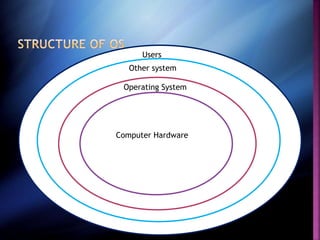
Users
Other system
Operating System
Computer Hardware
 The two primary objectives of an operating system are:
(1). Make a computer system easier to use:- An
operating system hides details of hardware resources
from programmers and other users and provides them
with a convenient interface for using a computer system.
(2). Manage the resources of a computer system:- An
operating system manages all the resources of a
computer system. Efficient and fair sharing of system
resources among users and/or programs is a key goal of
all operating systems.
Windows 1.0
Windows 2.0
Windows 3.0
Windows 3.1
Windows 3.1
Windows 95
Windows 98
Windows 2000
Windows XP
Windows Vista
Windows 7
Windows 8-8.1
Windows 10
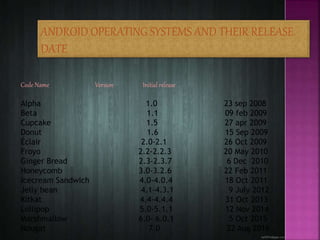
ANDROID OPERATING SYSTEMS AND THEIR RELEASE
DATE
Code Name Version Initial release
Alpha 1.0 23 sep 2008
Beta 1.1 09 feb 2009
Cupcake 1.5 27 apr 2009
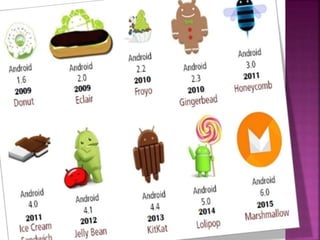
Donut 1.6 15 Sep 2009
Éclair 2.0-2.1 26 Oct 2009
Froyo 2.2-2.2.3 20 May 2010
Ginger Bread 2.3-2.3.7 6 Dec 2010
Honeycomb 3.0-3.2.6 22 Feb 2011
Icecream Sandwich 4.0-4.0.4 18 Oct 2011
Jelly bean 4.1-4.3.1 9 July 2012
Kitkat 4.4-4.4.4 31 Oct 2013
Lollipop 5.0-5.1.1 12 Nov 2014
Marshmallow 6.0- 6.0.1 5 Oct 2015
Nougat 7.0 22 Aug 2016
Operating system
Operating system
Operating system
Operating system
Operating system

Operating system

  • 1.
    ASSINGMENT WORK OPERATING SYSTEM SESSION– 2016-19 MU BATCH-1 NITISH KUMAR SANDHAWAR B.Sc. IT ROLL NO-52
  • 2.
  • 3.
    SOME COMPONENTS OFOPERATING SYSTEM WHAT IS AN OPERATING SYSTEM HISTORY OF OPERATING SYSTEM FUNCTIONS OF OPERATING SYSTEM i). EVOLUTION OF OPERATING SYSTEM ii). WORK OF OPERATING SYSTEM iii). BENEFITS OF OPERATING SYSTEM MODERN DAY OPERATING SYSTEM
  • 4.
     Operating systemis an integrated set of program that controls the resources of a computer system and provides its users with an interface or virtual machine that is easier to use than the bare machine  Operating System is a software, which makes a computer to actually work.  It is the software the enables all the programs we use.  OS acts as an interface between the application programs and the machine hardware.
  • 5.
    Microsoft Windows operatingsystem was developed by Microsoft to overcome the limitation of its own MS-DOS operating system. First successful version were Windows 3.0, released in 1990. Subsequently released version were Windows 95, Windows 98, Windows 2000,etc. Microsoft initially announced the Windows product seven years earlier and released the first version in 1983.
  • 6.
     A separatemodule of operating system software performs each of the function: (1).Process management:- Process management module takes care of creation and deletion of processes, and providing mechanisms for synchronization and communication among processes. (2). Memory management:- Memory management module takes care of allocation and de-allocation of memory space to programs in need of this resources. (3). File management:- It takes care of file-related activities such as organization storage, retrieval, naming, sharing, and protection of files. (Contd..)
  • 7.
    (4). Security:- Securitymodule protects the resources and information of a computer system against destruction and unauthorized access. (5). Command interpretation:- Command interpretation module takes care of interpreting user commands, and directing system resources to process the commands.
  • 8.
  • 9.
     The twoprimary objectives of an operating system are: (1). Make a computer system easier to use:- An operating system hides details of hardware resources from programmers and other users and provides them with a convenient interface for using a computer system. (2). Manage the resources of a computer system:- An operating system manages all the resources of a computer system. Efficient and fair sharing of system resources among users and/or programs is a key goal of all operating systems.
  • 10.
    Windows 1.0 Windows 2.0 Windows3.0 Windows 3.1 Windows 3.1
  • 11.
    Windows 95 Windows 98 Windows2000 Windows XP Windows Vista Windows 7 Windows 8-8.1 Windows 10
  • 14.
    ANDROID OPERATING SYSTEMSAND THEIR RELEASE DATE Code Name Version Initial release Alpha 1.0 23 sep 2008 Beta 1.1 09 feb 2009 Cupcake 1.5 27 apr 2009 Donut 1.6 15 Sep 2009 Éclair 2.0-2.1 26 Oct 2009 Froyo 2.2-2.2.3 20 May 2010 Ginger Bread 2.3-2.3.7 6 Dec 2010 Honeycomb 3.0-3.2.6 22 Feb 2011 Icecream Sandwich 4.0-4.0.4 18 Oct 2011 Jelly bean 4.1-4.3.1 9 July 2012 Kitkat 4.4-4.4.4 31 Oct 2013 Lollipop 5.0-5.1.1 12 Nov 2014 Marshmallow 6.0- 6.0.1 5 Oct 2015 Nougat 7.0 22 Aug 2016