ANATOMY & PHYSIOLOGY 
Chapter 17 THE ENDOCTRINE SYSTEM 
PowerPoint Image Slideshow
FIGURE 17.1 
A Child Catches a Falling Leaf 
Hormones of the endocrine system coordinate and control growth, metabolism, 
temperature regulation, the stress response, reproduction, and many other functions. 
(credit: “seenthroughmylense”/flickr.com)
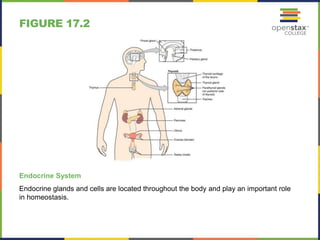
FIGURE 17.2 
Endocrine System 
Endocrine glands and cells are located throughout the body and play an important role 
in homeostasis.
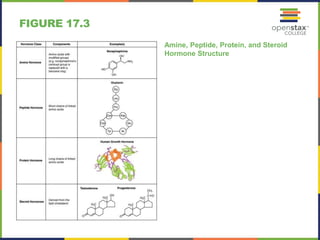
FIGURE 17.3 
Amine, Peptide, Protein, and Steroid 
Hormone Structure
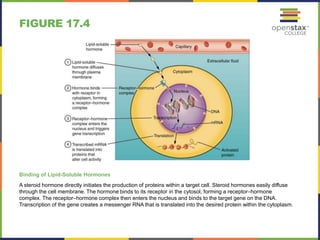
FIGURE 17.4 
Binding of Lipid-Soluble Hormones 
A steroid hormone directly initiates the production of proteins within a target cell. Steroid hormones easily diffuse 
through the cell membrane. The hormone binds to its receptor in the cytosol, forming a receptor–hormone 
complex. The receptor–hormone complex then enters the nucleus and binds to the target gene on the DNA. 
Transcription of the gene creates a messenger RNA that is translated into the desired protein within the cytoplasm.
FIGURE 17.5 
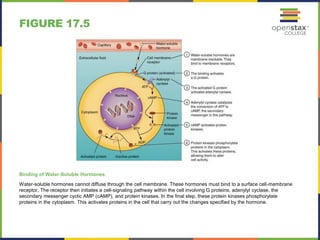
Binding of Water-Soluble Hormones 
Water-soluble hormones cannot diffuse through the cell membrane. These hormones must bind to a surface cell-membrane 
receptor. The receptor then initiates a cell-signaling pathway within the cell involving G proteins, adenylyl cyclase, the 
secondary messenger cyclic AMP (cAMP), and protein kinases. In the final step, these protein kinases phosphorylate 
proteins in the cytoplasm. This activates proteins in the cell that carry out the changes specified by the hormone.
FIGURE 17.6 
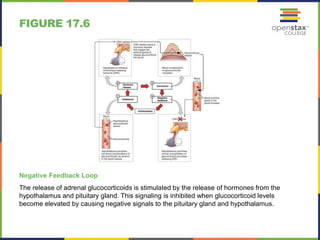
Negative Feedback Loop 
The release of adrenal glucocorticoids is stimulated by the release of hormones from the 
hypothalamus and pituitary gland. This signaling is inhibited when glucocorticoid levels 
become elevated by causing negative signals to the pituitary gland and hypothalamus.
FIGURE 17.7 
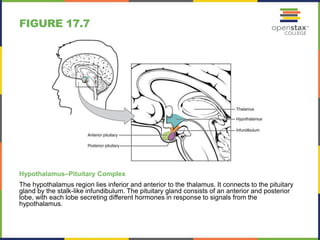
Hypothalamus–Pituitary Complex 
The hypothalamus region lies inferior and anterior to the thalamus. It connects to the pituitary 
gland by the stalk-like infundibulum. The pituitary gland consists of an anterior and posterior 
lobe, with each lobe secreting different hormones in response to signals from the 
hypothalamus.
FIGURE 17.8 
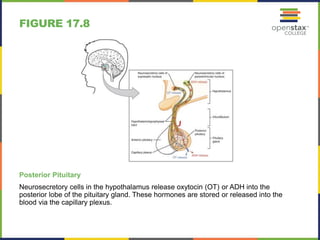
Posterior Pituitary 
Neurosecretory cells in the hypothalamus release oxytocin (OT) or ADH into the 
posterior lobe of the pituitary gland. These hormones are stored or released into the 
blood via the capillary plexus.
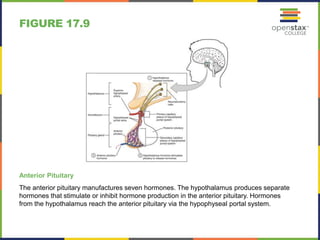
FIGURE 17.9 
Anterior Pituitary 
The anterior pituitary manufactures seven hormones. The hypothalamus produces separate 
hormones that stimulate or inhibit hormone production in the anterior pituitary. Hormones 
from the hypothalamus reach the anterior pituitary via the hypophyseal portal system.
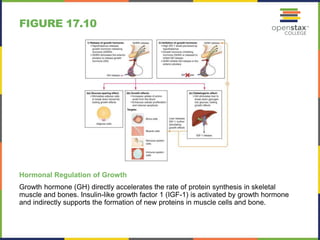
FIGURE 17.10 
Hormonal Regulation of Growth 
Growth hormone (GH) directly accelerates the rate of protein synthesis in skeletal 
muscle and bones. Insulin-like growth factor 1 (IGF-1) is activated by growth hormone 
and indirectly supports the formation of new proteins in muscle cells and bone.
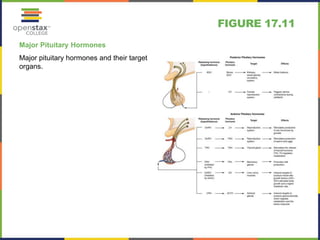
FIGURE 17.11 
Major Pituitary Hormones 
Major pituitary hormones and their target 
organs.
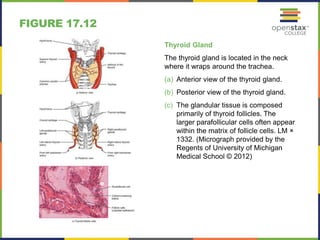
FIGURE 17.12 
Thyroid Gland 
The thyroid gland is located in the neck 
where it wraps around the trachea. 
(a) Anterior view of the thyroid gland. 
(b) Posterior view of the thyroid gland. 
(c) The glandular tissue is composed 
primarily of thyroid follicles. The 
larger parafollicular cells often appear 
within the matrix of follicle cells. LM × 
1332. (Micrograph provided by the 
Regents of University of Michigan 
Medical School © 2012)
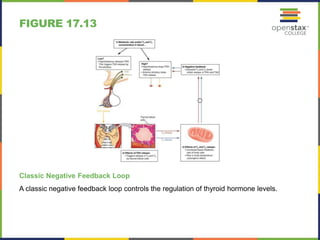
FIGURE 17.13 
Classic Negative Feedback Loop 
A classic negative feedback loop controls the regulation of thyroid hormone levels.
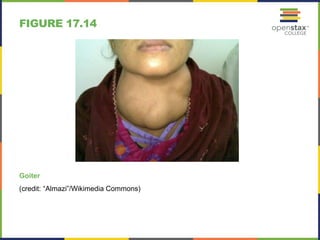
FIGURE 17.14 
Goiter 
(credit: “Almazi”/Wikimedia Commons)
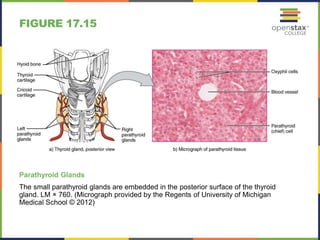
FIGURE 17.15 
Parathyroid Glands 
The small parathyroid glands are embedded in the posterior surface of the thyroid 
gland. LM × 760. (Micrograph provided by the Regents of University of Michigan 
Medical School © 2012)
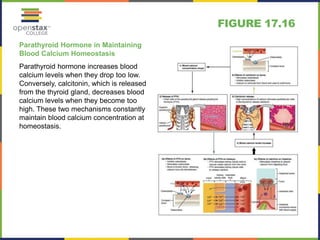
FIGURE 17.16 
Parathyroid Hormone in Maintaining 
Blood Calcium Homeostasis 
Parathyroid hormone increases blood 
calcium levels when they drop too low. 
Conversely, calcitonin, which is released 
from the thyroid gland, decreases blood 
calcium levels when they become too 
high. These two mechanisms constantly 
maintain blood calcium concentration at 
homeostasis.
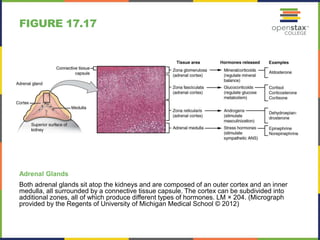
FIGURE 17.17 
Adrenal Glands 
Both adrenal glands sit atop the kidneys and are composed of an outer cortex and an inner 
medulla, all surrounded by a connective tissue capsule. The cortex can be subdivided into 
additional zones, all of which produce different types of hormones. LM × 204. (Micrograph 
provided by the Regents of University of Michigan Medical School © 2012)
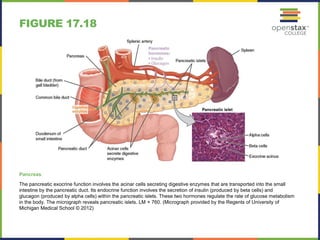
FIGURE 17.18 
Pancreas 
The pancreatic exocrine function involves the acinar cells secreting digestive enzymes that are transported into the small 
intestine by the pancreatic duct. Its endocrine function involves the secretion of insulin (produced by beta cells) and 
glucagon (produced by alpha cells) within the pancreatic islets. These two hormones regulate the rate of glucose metabolism 
in the body. The micrograph reveals pancreatic islets. LM × 760. (Micrograph provided by the Regents of University of 
Michigan Medical School © 2012)
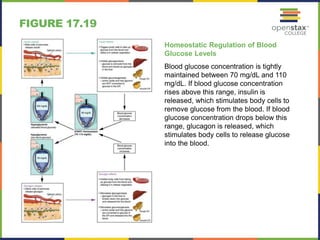
FIGURE 17.19 
Homeostatic Regulation of Blood 
Glucose Levels 
Blood glucose concentration is tightly 
maintained between 70 mg/dL and 110 
mg/dL. If blood glucose concentration 
rises above this range, insulin is 
released, which stimulates body cells to 
remove glucose from the blood. If blood 
glucose concentration drops below this 
range, glucagon is released, which 
stimulates body cells to release glucose 
into the blood.
This PowerPoint presentation is copyright 2011-2013, Rice University. 
All Rights Reserved.

Open Stax Anatomy & Physiology Ch 17

  • 1.
    ANATOMY & PHYSIOLOGY Chapter 17 THE ENDOCTRINE SYSTEM PowerPoint Image Slideshow
  • 2.
    FIGURE 17.1 AChild Catches a Falling Leaf Hormones of the endocrine system coordinate and control growth, metabolism, temperature regulation, the stress response, reproduction, and many other functions. (credit: “seenthroughmylense”/flickr.com)
  • 3.
    FIGURE 17.2 EndocrineSystem Endocrine glands and cells are located throughout the body and play an important role in homeostasis.
  • 4.
    FIGURE 17.3 Amine,Peptide, Protein, and Steroid Hormone Structure
  • 5.
    FIGURE 17.4 Bindingof Lipid-Soluble Hormones A steroid hormone directly initiates the production of proteins within a target cell. Steroid hormones easily diffuse through the cell membrane. The hormone binds to its receptor in the cytosol, forming a receptor–hormone complex. The receptor–hormone complex then enters the nucleus and binds to the target gene on the DNA. Transcription of the gene creates a messenger RNA that is translated into the desired protein within the cytoplasm.
  • 6.
    FIGURE 17.5 Bindingof Water-Soluble Hormones Water-soluble hormones cannot diffuse through the cell membrane. These hormones must bind to a surface cell-membrane receptor. The receptor then initiates a cell-signaling pathway within the cell involving G proteins, adenylyl cyclase, the secondary messenger cyclic AMP (cAMP), and protein kinases. In the final step, these protein kinases phosphorylate proteins in the cytoplasm. This activates proteins in the cell that carry out the changes specified by the hormone.
  • 7.
    FIGURE 17.6 NegativeFeedback Loop The release of adrenal glucocorticoids is stimulated by the release of hormones from the hypothalamus and pituitary gland. This signaling is inhibited when glucocorticoid levels become elevated by causing negative signals to the pituitary gland and hypothalamus.
  • 8.
    FIGURE 17.7 Hypothalamus–PituitaryComplex The hypothalamus region lies inferior and anterior to the thalamus. It connects to the pituitary gland by the stalk-like infundibulum. The pituitary gland consists of an anterior and posterior lobe, with each lobe secreting different hormones in response to signals from the hypothalamus.
  • 9.
    FIGURE 17.8 PosteriorPituitary Neurosecretory cells in the hypothalamus release oxytocin (OT) or ADH into the posterior lobe of the pituitary gland. These hormones are stored or released into the blood via the capillary plexus.
  • 10.
    FIGURE 17.9 AnteriorPituitary The anterior pituitary manufactures seven hormones. The hypothalamus produces separate hormones that stimulate or inhibit hormone production in the anterior pituitary. Hormones from the hypothalamus reach the anterior pituitary via the hypophyseal portal system.
  • 11.
    FIGURE 17.10 HormonalRegulation of Growth Growth hormone (GH) directly accelerates the rate of protein synthesis in skeletal muscle and bones. Insulin-like growth factor 1 (IGF-1) is activated by growth hormone and indirectly supports the formation of new proteins in muscle cells and bone.
  • 12.
    FIGURE 17.11 MajorPituitary Hormones Major pituitary hormones and their target organs.
  • 13.
    FIGURE 17.12 ThyroidGland The thyroid gland is located in the neck where it wraps around the trachea. (a) Anterior view of the thyroid gland. (b) Posterior view of the thyroid gland. (c) The glandular tissue is composed primarily of thyroid follicles. The larger parafollicular cells often appear within the matrix of follicle cells. LM × 1332. (Micrograph provided by the Regents of University of Michigan Medical School © 2012)
  • 14.
    FIGURE 17.13 ClassicNegative Feedback Loop A classic negative feedback loop controls the regulation of thyroid hormone levels.
  • 15.
    FIGURE 17.14 Goiter (credit: “Almazi”/Wikimedia Commons)
  • 16.
    FIGURE 17.15 ParathyroidGlands The small parathyroid glands are embedded in the posterior surface of the thyroid gland. LM × 760. (Micrograph provided by the Regents of University of Michigan Medical School © 2012)
  • 17.
    FIGURE 17.16 ParathyroidHormone in Maintaining Blood Calcium Homeostasis Parathyroid hormone increases blood calcium levels when they drop too low. Conversely, calcitonin, which is released from the thyroid gland, decreases blood calcium levels when they become too high. These two mechanisms constantly maintain blood calcium concentration at homeostasis.
  • 18.
    FIGURE 17.17 AdrenalGlands Both adrenal glands sit atop the kidneys and are composed of an outer cortex and an inner medulla, all surrounded by a connective tissue capsule. The cortex can be subdivided into additional zones, all of which produce different types of hormones. LM × 204. (Micrograph provided by the Regents of University of Michigan Medical School © 2012)
  • 19.
    FIGURE 17.18 Pancreas The pancreatic exocrine function involves the acinar cells secreting digestive enzymes that are transported into the small intestine by the pancreatic duct. Its endocrine function involves the secretion of insulin (produced by beta cells) and glucagon (produced by alpha cells) within the pancreatic islets. These two hormones regulate the rate of glucose metabolism in the body. The micrograph reveals pancreatic islets. LM × 760. (Micrograph provided by the Regents of University of Michigan Medical School © 2012)
  • 20.
    FIGURE 17.19 HomeostaticRegulation of Blood Glucose Levels Blood glucose concentration is tightly maintained between 70 mg/dL and 110 mg/dL. If blood glucose concentration rises above this range, insulin is released, which stimulates body cells to remove glucose from the blood. If blood glucose concentration drops below this range, glucagon is released, which stimulates body cells to release glucose into the blood.
  • 21.
    This PowerPoint presentationis copyright 2011-2013, Rice University. All Rights Reserved.