





Open Source InvestingBy Dave Haeffner
My aim (hah, get it?!) is that each of you leave here with either one useful idea, OR, one piece of schwag.If you end up leaving with both, then I consider this a phenomenal success.If you end up with neither, then I have failed.
To help give context, I’d like to share a bit about myself and my career, which has been a fairly windy road for such a short amount of time
6.5461
It’s been 6.5 years since I graduated from undergradI’ve worked for 4 different companiesHeld 6 different rolesAnd have changed careers once
I’ve spent over half my career at The Motley Fool, and have held 3 different roles while thereI worked in IT Operations and now in Software Development and learned about investing along the way. But before I get too much into that, I’d like to share my view on technology
I believe it is a purposeful enablerIt can help people realize and achieve their potential if applied correctlyWhich is the fundamental impetus of this lecture: Open Source Investing
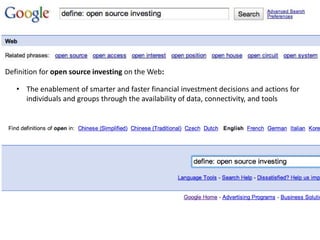
Definition for open source investing on the Web:The enablement of smarter and faster financial investment decisions and actions for individuals and groups through the availability of data, connectivity, and toolsSo what?Why should Investing matter to the individual?
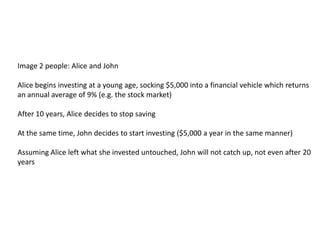
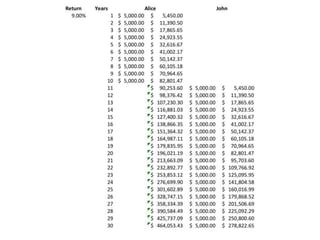
Image 2 people: Alice and JohnAlice begins investing at a young age, socking $5,000 into a financial vehicle which returns an annual average of 9% (e.g. the stock market)After 10 years, Alice decides to stop savingAt the same time, John decides to start investing ($5,000 a year in the same manner)Assuming Alice left what she invested untouched, John will not catch up, not even after 20 years
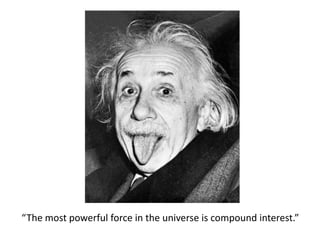
“The most powerful force in the universe is compound interest.”
To be an investor, to take advantage of compound interest, it used to be pretty difficult
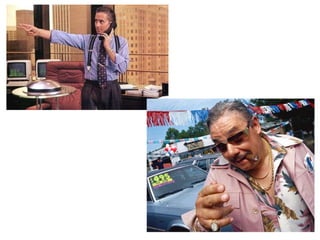
Things were different back in the days of Gordon GeckoTo invest, you had to know enough to be a shareholder and slog through annual reports
This implies that you knew the inside baseball and how to place trades (or be like Warren Buffett and hang out in the basement of Standard and Poor’s basement and sift through their research)
Had to call and/or fax trades into a broker which went to a trading desk which then went to the trading floor
Incentives of the broker were (and are) aligned to volume of trades; not in best interest of the customerBrokers always struck me as more like used car salesman
Is there a better way? How do you think things have changed since then?
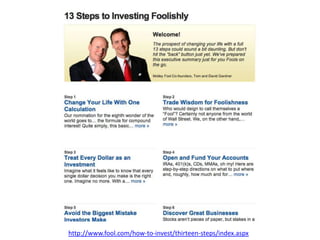
Data has become ubiquitous. You just have to want to open your eyes.With it, businesses emerged, leveraging free and premium data and creating content. Offering advice. Even creating investing methodologies around it.
http://www.fool.com/how-to-invest/thirteen-steps/index.aspx
Some of these businesses emerged and helped forge a sense of communityLike minded people for the first time could come together and talk about investingIt’s a lot like coffee shops. Collaborative spaces where diverse minds come together to share their ideas and new ones come about as a results
There are also DIY broker services at peoples’ fingertips.So now you have well informed, collaborative individuals, able to place trades no longer by telephone, but by smart phone.
Be your own broker
By having a community of individual investors, an interesting evolution occurred; community intelligenceBack in ‘97 Kasparov was defeated by a computer: Deep BlueThis computer was not just a single entity, it was programmed by many people to accomplish this feat. So in essence, Kasparov was defeated by a community of diverse skill sets working together for a common goalIt’s this concept that led Motley Fool co-founder David Gardner to come up with the idea of “CAPS”
Another trend in the industry is that technology has taken place of a lot of human interactions bringing about things like high-volume tradingBy leveraging quantitative analysts (“quants”), sexy algorithms, raw computing power, and some investment capital, some firms are able to generate consistent market beating returns
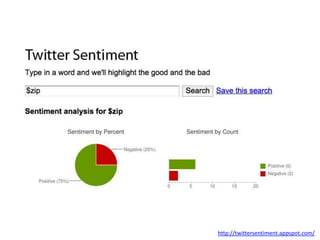
But we’re starting to see the next evolution of high volume trading start to occur with qualitative data being used; leveraging subjective community intelligenceAn example of this would be sentiment analysis of social networks
http://twittersentiment.appspot.com/
To put a nice bow on all of these points, I’d like to close out with these pointsCompound interest is your friend; be like Alice, not John
Don’t sweat it if you aren’t there yet, you can start tomorrow

Open Source Investing

  • 1.
  • 3.
    My aim (hah,get it?!) is that each of you leave here with either one useful idea, OR, one piece of schwag.If you end up leaving with both, then I consider this a phenomenal success.If you end up with neither, then I have failed.
  • 4.
    To help givecontext, I’d like to share a bit about myself and my career, which has been a fairly windy road for such a short amount of time
  • 5.
  • 6.
    It’s been 6.5years since I graduated from undergradI’ve worked for 4 different companiesHeld 6 different rolesAnd have changed careers once
  • 7.
    I’ve spent overhalf my career at The Motley Fool, and have held 3 different roles while thereI worked in IT Operations and now in Software Development and learned about investing along the way. But before I get too much into that, I’d like to share my view on technology
  • 9.
    I believe itis a purposeful enablerIt can help people realize and achieve their potential if applied correctlyWhich is the fundamental impetus of this lecture: Open Source Investing
  • 10.
    Definition for opensource investing on the Web:The enablement of smarter and faster financial investment decisions and actions for individuals and groups through the availability of data, connectivity, and toolsSo what?Why should Investing matter to the individual?
  • 11.
    Image 2 people:Alice and JohnAlice begins investing at a young age, socking $5,000 into a financial vehicle which returns an annual average of 9% (e.g. the stock market)After 10 years, Alice decides to stop savingAt the same time, John decides to start investing ($5,000 a year in the same manner)Assuming Alice left what she invested untouched, John will not catch up, not even after 20 years
  • 13.
    “The most powerfulforce in the universe is compound interest.”
  • 14.
    To be aninvestor, to take advantage of compound interest, it used to be pretty difficult
  • 15.
    Things were differentback in the days of Gordon GeckoTo invest, you had to know enough to be a shareholder and slog through annual reports
  • 16.
    This implies thatyou knew the inside baseball and how to place trades (or be like Warren Buffett and hang out in the basement of Standard and Poor’s basement and sift through their research)
  • 17.
    Had to calland/or fax trades into a broker which went to a trading desk which then went to the trading floor
  • 18.
    Incentives of thebroker were (and are) aligned to volume of trades; not in best interest of the customerBrokers always struck me as more like used car salesman
  • 20.
    Is there abetter way? How do you think things have changed since then?
  • 22.
    Data has becomeubiquitous. You just have to want to open your eyes.With it, businesses emerged, leveraging free and premium data and creating content. Offering advice. Even creating investing methodologies around it.
  • 23.
  • 24.
    Some of thesebusinesses emerged and helped forge a sense of communityLike minded people for the first time could come together and talk about investingIt’s a lot like coffee shops. Collaborative spaces where diverse minds come together to share their ideas and new ones come about as a results
  • 26.
    There are alsoDIY broker services at peoples’ fingertips.So now you have well informed, collaborative individuals, able to place trades no longer by telephone, but by smart phone.
  • 27.
  • 28.
    By having acommunity of individual investors, an interesting evolution occurred; community intelligenceBack in ‘97 Kasparov was defeated by a computer: Deep BlueThis computer was not just a single entity, it was programmed by many people to accomplish this feat. So in essence, Kasparov was defeated by a community of diverse skill sets working together for a common goalIt’s this concept that led Motley Fool co-founder David Gardner to come up with the idea of “CAPS”
  • 30.
    Another trend inthe industry is that technology has taken place of a lot of human interactions bringing about things like high-volume tradingBy leveraging quantitative analysts (“quants”), sexy algorithms, raw computing power, and some investment capital, some firms are able to generate consistent market beating returns
  • 32.
    But we’re startingto see the next evolution of high volume trading start to occur with qualitative data being used; leveraging subjective community intelligenceAn example of this would be sentiment analysis of social networks
  • 33.
  • 34.
    To put anice bow on all of these points, I’d like to close out with these pointsCompound interest is your friend; be like Alice, not John
  • 35.
    Don’t sweat itif you aren’t there yet, you can start tomorrow

Editor's Notes

  • #6 Interesting and windy road6.5 - # of years since graduating from undergrad4 - # of companies I’ve worked for 6 - # of roles I’ve held in my career1 - # of times I changed careersSpent the last 3-1/2 years @ The Motley Fool QUESTION: Show of hands, who here’s heard of The Motley Fool? In your own words, what do you think they do? This is a great opportunity for me to gauge perceptionWhat I’ve done there and do now:DesktopsNetworkApp serversPhysically touching the web serversAnd involved in how the website is builtMaking sure it is done well and with the customer in mind.Learned about investing through osmosis…. And the clubs, classes, conversations, and guest speakers that TMF offers
  • #9 My motivation for getting into technologyDriven by my view of technologyIt is a purposeful enabler.It can help people realize and achieve their potential if applied correctly. Which is the fundamental impetus of this lecture
  • #11 open source investing defined[1’s and 0’s pic?]definition
  • #13 QUESTION: Why is investing important?QUESTION: Who said this quote?
  • #15 QUESTION:What were things like back when Oliver Stone’s 1987 movie (or ‘documentary’ as I like to call it) Wall Street came out?Used to have to pay a broker,be in the dark, They make money based on commission by trade volumeIf you wanted to DIY, it was pretty difficult - shareholders, 1 share, get annual reports - sift through data - that implies that you knew the inside baseball and how to place trades (or be like Warren Buffett and hang out in the basement of Standard and Poor’s basement and sift through their research) - needed written confirmation - teacher in ny calls their stock broker, they call their trading desk, trading desk calls trading floor - fax in trades, same process different medium - (can still do this today) - incentives of the broker aligned to volume of trades; not in best interest of the customer
  • #19 Frameworks for investingPersonal Finance and Beginning Investing adviceBridging the gap between the two for the initiated
  • #21 This enticed like-minded people, and a sense of community started to form.Much like a neighborhood watch keeps your neighborhood safe from burglars and hooligans, The Fool’s Discussion Boards helped keep your portfolio safe of greedy brokersYou start to see a sharing of investing ideas, success stories, failures, etc.
  • #23 With all of this information at your fingertips, placing trades has changed too. No longer having to fax in trades, you can do real-time investing from your smart phone if you wished
  • #25 Deep Blue – ’97, the computer that beat world chess champion Gary KasparovIt wasn’t just the computer, it was the 70 chess grandmasters and developers working together to build it, to make it smarterQUESTION: What does CAPS stands for?:Give away schwag for accuracy and creativityJester capsMarket capsCommunity association for picking stocks (unofficial)
  • #26 The next evolution
  • #27 High volume tradingTechnology driving the boat now – billlions of transactions dailyShops with “quants” to create applications to perform day trading and outperform the marketWe’re starting to see an evolution of this from this into the next phaseQUESTION: can anyone guess what this next thing is?
  • #32 How you can get started