Open Educational
Resources
(OER)
presented by: Nixon T. Palivino Jr.
Open Education
Open education is an educational
movement founded on openness, with
connections to other educational
movements such as critical pedagogy,
and with an educational stance which
favours widening participation and
inclusiveness in society.
Open Educational
Resources
OER are freely and publicly available
teaching, learning, and research
resources that reside in the public
domain or have been released under an
intellectual property license that
permits their free use and re-purposing
by others.
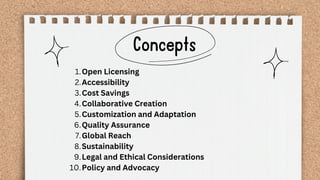
Concepts
Open Licensing
1.
Accessibility
2.
Cost Savings
3.
Collaborative Creation
4.
Customization and Adaptation
5.
Quality Assurance
6.
Global Reach
7.
Sustainability
8.
Legal and Ethical Considerations
9.
Policy and Advocacy
10.
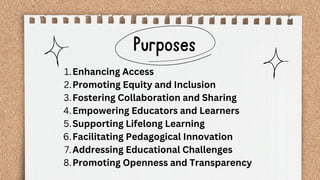
Purposes
Enhancing Access
1.
Promoting Equity and Inclusion
2.
Fostering Collaboration and Sharing
3.
Empowering Educators and Learners
4.
Supporting Lifelong Learning
5.
Facilitating Pedagogical Innovation
6.
Addressing Educational Challenges
7.
Promoting Openness and Transparency
8.
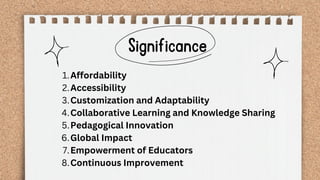
Significance
Affordability
1.
Accessibility
2.
Customization and Adaptability
3.
Collaborative Learning and Knowledge Sharing
4.
Pedagogical Innovation
5.
Global Impact
6.
Empowerment of Educators
7.
Continuous Improvement
8.
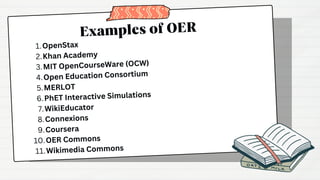
Examples of OER
OpenStax
1.
Khan Academy
2.
MIT OpenCourseWare (OCW)
3.
Open Education Consortium
4.
MERLOT
5.
PhET Interactive Simulations
6.
WikiEducator
7.
Connexions
8.
Coursera
9.
OER Commons
10.
Wikimedia Commons
11.
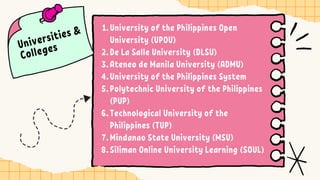
Universities &
Colleges
University of the Philippines Open
University (UPOU)
1.
De La Salle University (DLSU)
2.
Ateneo de Manila University (ADMU)
3.
University of the Philippines System
4.
Polytechnic University of the Philippines
(PUP)
5.
Technological University of the
Philippines (TUP)
6.
Mindanao State University (MSU)
7.
Siliman Online University Learning (SOUL)
8.
Challenges
Challenges
Awareness and Capacity Building
1.
Quality Assurance
2.
Sustainability
3.
Copyright and Licensing
4.
Technological Infrastructure
5.
Language and Cultural Diversity
6.
Digital Literacy Skills
7.
Resistance to Change
8.
Lack of Incentives
9.
Integration with Institutional Policies and
Practices
10.
Impacts of OER
Increased Access to Education
1.
Cost Savings for Students
2.
Improved Learning Outcomes
3.
Empowerment of Educators
4.
Global Knowledge Sharing and Collaboration
5.
Promotion of Openness and Transparency
6.
Support for Lifelong Learning
7.
Economic Benefits
8.
Environmental Sustainability
9.
Thank You!

Open Educational Resources_EdTechnology.pdf

  • 1.
  • 2.
    Open Education Open educationis an educational movement founded on openness, with connections to other educational movements such as critical pedagogy, and with an educational stance which favours widening participation and inclusiveness in society.
  • 3.
    Open Educational Resources OER arefreely and publicly available teaching, learning, and research resources that reside in the public domain or have been released under an intellectual property license that permits their free use and re-purposing by others.
  • 4.
    Concepts Open Licensing 1. Accessibility 2. Cost Savings 3. CollaborativeCreation 4. Customization and Adaptation 5. Quality Assurance 6. Global Reach 7. Sustainability 8. Legal and Ethical Considerations 9. Policy and Advocacy 10.
  • 5.
    Purposes Enhancing Access 1. Promoting Equityand Inclusion 2. Fostering Collaboration and Sharing 3. Empowering Educators and Learners 4. Supporting Lifelong Learning 5. Facilitating Pedagogical Innovation 6. Addressing Educational Challenges 7. Promoting Openness and Transparency 8.
  • 6.
    Significance Affordability 1. Accessibility 2. Customization and Adaptability 3. CollaborativeLearning and Knowledge Sharing 4. Pedagogical Innovation 5. Global Impact 6. Empowerment of Educators 7. Continuous Improvement 8.
  • 7.
    Examples of OER OpenStax 1. KhanAcademy 2. MIT OpenCourseWare (OCW) 3. Open Education Consortium 4. MERLOT 5. PhET Interactive Simulations 6. WikiEducator 7. Connexions 8. Coursera 9. OER Commons 10. Wikimedia Commons 11.
  • 8.
    Universities & Colleges University ofthe Philippines Open University (UPOU) 1. De La Salle University (DLSU) 2. Ateneo de Manila University (ADMU) 3. University of the Philippines System 4. Polytechnic University of the Philippines (PUP) 5. Technological University of the Philippines (TUP) 6. Mindanao State University (MSU) 7. Siliman Online University Learning (SOUL) 8.
  • 10.
    Challenges Challenges Awareness and CapacityBuilding 1. Quality Assurance 2. Sustainability 3. Copyright and Licensing 4. Technological Infrastructure 5. Language and Cultural Diversity 6. Digital Literacy Skills 7. Resistance to Change 8. Lack of Incentives 9. Integration with Institutional Policies and Practices 10.
  • 11.
    Impacts of OER IncreasedAccess to Education 1. Cost Savings for Students 2. Improved Learning Outcomes 3. Empowerment of Educators 4. Global Knowledge Sharing and Collaboration 5. Promotion of Openness and Transparency 6. Support for Lifelong Learning 7. Economic Benefits 8. Environmental Sustainability 9.
  • 12.