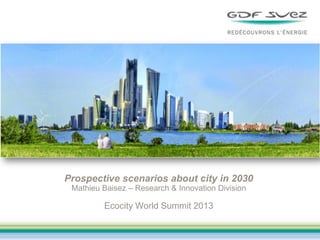
Prospective scenarios about city in 2030
Mathieu Baisez – Research & Innovation Division

Ecocity World Summit 2013
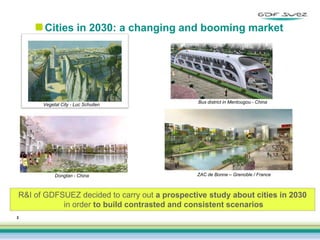
 Cities in 2030: a changing and booming market

Vegetal City - Luc Schuiten

Dongtan - China

Bus district in Mentougou - China

ZAC de Bonne – Grenoble / France

R&I of GDFSUEZ decided to carry out a prospective study about cities in 2030
in order to build contrasted and consistent scenarios
2
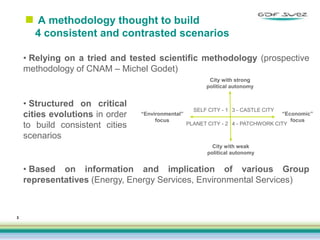
 A methodology thought to build
4 consistent and contrasted scenarios
• Relying on a tried and tested scientific methodology (prospective
methodology of CNAM – Michel Godet)
City with strong
political autonomy

• Structured on critical
cities evolutions in order
to build consistent cities
scenarios

“Environmental”
focus

SELF CITY - 1 3 - CASTLE CITY

“Economic”
focus
PLANET CITY - 2 4 - PATCHWORK CITY

City with weak
political autonomy

• Based on information and implication of various Group
representatives (Energy, Energy Services, Environmental Services)

3
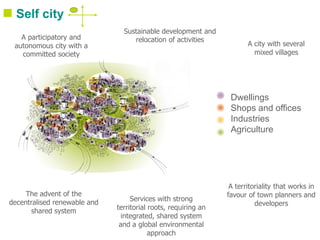
 Self city
A participatory and
autonomous city with a
committed society

Sustainable development and
relocation of activities

A city with several
mixed villages

Dwellings
Shops and offices
Industries
Agriculture

The advent of the
decentralised renewable and
shared system

Services with strong
territorial roots, requiring an
integrated, shared system
and a global environmental
approach

A territoriality that works in
favour of town planners and
developers
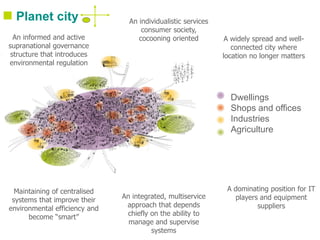
 Planet city
An informed and active
supranational governance
structure that introduces
environmental regulation

An individualistic services
consumer society,
cocooning oriented

A widely spread and wellconnected city where
location no longer matters

Dwellings
Shops and offices
Industries
Agriculture

Maintaining of centralised
systems that improve their
environmental efficiency and
become “smart”

An integrated, multiservice
approach that depends
chiefly on the ability to
manage and supervise
systems

A dominating position for IT
players and equipment
suppliers
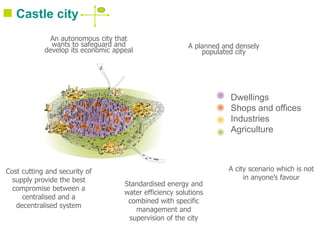
 Castle city
An autonomous city that
wants to safeguard and
develop its economic appeal

A planned and densely
populated city

Dwellings
Shops and offices
Industries
Agriculture

Cost cutting and security of
supply provide the best
compromise between a
centralised and a
decentralised system

Standardised energy and
water efficiency solutions
combined with specific
management and
supervision of the city

A city scenario which is not
in anyone’s favour
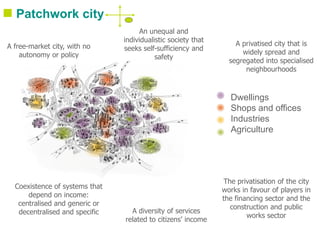
 Patchwork city
A free-market city, with no
autonomy or policy

An unequal and
individualistic society that
seeks self-sufficiency and
safety

A privatised city that is
widely spread and
segregated into specialised
neighbourhoods

Dwellings
Shops and offices
Industries
Agriculture

Coexistence of systems that
depend on income:
centralised and generic or
decentralised and specific

A diversity of services
related to citizens’ income

The privatisation of the city
works in favour of players in
the financing sector and the
construction and public
works sector
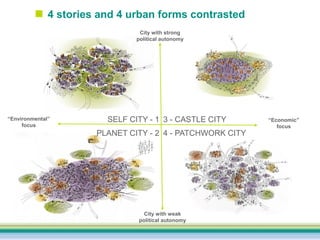
 4 stories and 4 urban forms contrasted
City with strong
political autonomy

“Environmental”
focus

SELF CITY - 1 3 - CASTLE CITY

PLANET CITY - 2 4 - PATCHWORK CITY

City with weak
political autonomy

“Economic”
focus
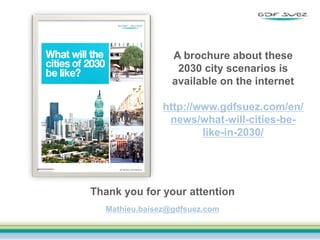
A brochure about these
2030 city scenarios is
available on the internet
http://www.gdfsuez.com/en/
news/what-will-cities-belike-in-2030/

Thank you for your attention
Mathieu.baisez@gdfsuez.com

OP4 Mathieu Baisez

  • 1.
    Prospective scenarios aboutcity in 2030 Mathieu Baisez – Research & Innovation Division Ecocity World Summit 2013
  • 2.
     Cities in2030: a changing and booming market Vegetal City - Luc Schuiten Dongtan - China Bus district in Mentougou - China ZAC de Bonne – Grenoble / France R&I of GDFSUEZ decided to carry out a prospective study about cities in 2030 in order to build contrasted and consistent scenarios 2
  • 3.
     A methodologythought to build 4 consistent and contrasted scenarios • Relying on a tried and tested scientific methodology (prospective methodology of CNAM – Michel Godet) City with strong political autonomy • Structured on critical cities evolutions in order to build consistent cities scenarios “Environmental” focus SELF CITY - 1 3 - CASTLE CITY “Economic” focus PLANET CITY - 2 4 - PATCHWORK CITY City with weak political autonomy • Based on information and implication of various Group representatives (Energy, Energy Services, Environmental Services) 3
  • 4.
     Self city Aparticipatory and autonomous city with a committed society Sustainable development and relocation of activities A city with several mixed villages Dwellings Shops and offices Industries Agriculture The advent of the decentralised renewable and shared system Services with strong territorial roots, requiring an integrated, shared system and a global environmental approach A territoriality that works in favour of town planners and developers
  • 5.
     Planet city Aninformed and active supranational governance structure that introduces environmental regulation An individualistic services consumer society, cocooning oriented A widely spread and wellconnected city where location no longer matters Dwellings Shops and offices Industries Agriculture Maintaining of centralised systems that improve their environmental efficiency and become “smart” An integrated, multiservice approach that depends chiefly on the ability to manage and supervise systems A dominating position for IT players and equipment suppliers
  • 6.
     Castle city Anautonomous city that wants to safeguard and develop its economic appeal A planned and densely populated city Dwellings Shops and offices Industries Agriculture Cost cutting and security of supply provide the best compromise between a centralised and a decentralised system Standardised energy and water efficiency solutions combined with specific management and supervision of the city A city scenario which is not in anyone’s favour
  • 7.
     Patchwork city Afree-market city, with no autonomy or policy An unequal and individualistic society that seeks self-sufficiency and safety A privatised city that is widely spread and segregated into specialised neighbourhoods Dwellings Shops and offices Industries Agriculture Coexistence of systems that depend on income: centralised and generic or decentralised and specific A diversity of services related to citizens’ income The privatisation of the city works in favour of players in the financing sector and the construction and public works sector
  • 8.
     4 storiesand 4 urban forms contrasted City with strong political autonomy “Environmental” focus SELF CITY - 1 3 - CASTLE CITY PLANET CITY - 2 4 - PATCHWORK CITY City with weak political autonomy “Economic” focus
  • 9.
    A brochure aboutthese 2030 city scenarios is available on the internet http://www.gdfsuez.com/en/ news/what-will-cities-belike-in-2030/ Thank you for your attention Mathieu.baisez@gdfsuez.com